Best Boot Laces for Work Boots – Heavy Duty, Unbreakable & Most Durable
by Jason Flores
You're standing in the middle of a job site, and your boot lace snaps clean off. It's not a hypothetical — it happens constantly to workers in construction, welding, firefighting, and outdoor trades. The wrong laces fray, melt, or just give up after a few months of hard use. In 2026, you have better options.
The best boot laces for work boots aren't just long pieces of string — they're engineered components with real breaking strength ratings, heat resistance specs, and materials that outlast the boots themselves. Whether you work in extreme heat, wet conditions, or simply need laces that stay tied all shift, the picks below cover every serious scenario. Check out our full boot accessories guide for more gear that keeps your work boots performing at their best.

This guide covers seven of the most durable boot laces available right now, with honest assessments of who each one is actually built for. We've broken down the specs, materials, and real-world use cases so you can make the right call without guessing. If you're also shopping for the boots themselves, our rundown of the main types of work boots is a solid starting point before you commit to new laces.
Contents
- Editor's Recommendation: Top Picks of 2026
- In-Depth Reviews
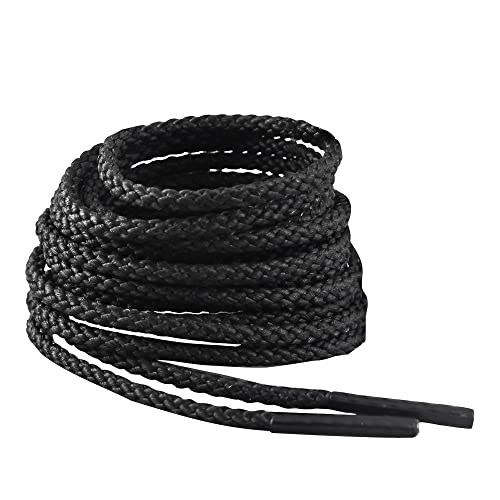
- IRONLACE Unbreakable Round Bootlaces 54" — Best Overall
- IRONLACE Paracord 550 Laces — Best Paracord Option
- Miscly Round Boot Laces 54" — Best Budget Pick
- Miscly Round Boot Laces 72" — Best for Tall Work Boots
- IRONLACE Unbreakable Round Bootlaces 72" — Best for High Boots
- Greatlaces Kevlar Reinforced Boot Laces — Best Made in USA
- Stepace Round Shoelaces 2-Pack 63" — Best Value Multi-Pack
- Buying Guide
- What People Ask
- Next Steps
Editor's Recommendation: Top Picks of 2026
- #PreviewProductRating
- Bestseller No. 1
 Rating:

- Bestseller No. 2
 Rating:
 - Bestseller No. 3
 Rating:
 - Bestseller No. 4Rating:
- Bestseller No. 5Rating:
- Bestseller No. 6
 Rating:
 - Bestseller No. 7
 Rating:
In-Depth Reviews
1. IRONLACE Unbreakable Round Bootlaces 54" — Best Overall
If you want the most indestructible boot lace money can buy in 2026, this is it. The IRONLACE Unbreakable Bootlace is made from 100% advanced para-aramid fiber — the same material class that stops bullets — giving it a 1,500-pound breaking strength per pair. That is not a typo. These laces are rated 10x stronger than steel wire of comparable diameter and outlast Kevlar laces by a factor of 20. At 3.2mm (⅛ inch) diameter, they thread through standard boot eyelets without modification.
The heat and fire resistance specs set these apart from every other lace on this list. They handle temperatures up to 630°F (332°C), which makes them a legitimate choice for welders, foundry workers, and firefighters. They are also fully waterproof and chemically resistant — no swelling, no degradation from oils, solvents, or UV exposure. IRONLACE backs them with a lifetime guarantee, which says everything about their confidence in the product. The 54-inch length covers most standard 6-inch to 8-inch work boots with room to spare for a secure double-knot.
The only real trade-off here is feel. Para-aramid fiber has a stiffer hand than woven polyester or paracord, so these laces take a short break-in period before they feel natural in the eyelets. Once seated, they hold position well and don't stretch. For anyone working in high-risk environments where lace failure creates a safety hazard, the stiffness is a minor inconvenience worth accepting.
Pros:
- 1,500-lb breaking strength per pair — highest on this list
- Fire and heat resistant up to 630°F — suitable for welding and firefighting
- Waterproof, UV-resistant, and chemical-resistant
- Fits standard boot eyelets at 3.2mm diameter
- Lifetime guarantee
Cons:
- Stiffer than standard laces — short break-in period required
- Premium price point compared to paracord or polyester options
2. IRONLACE Paracord 550 Laces Type III — Best Paracord Option
Paracord 550 Type III is the standard military-grade cordage that has been trusted in parachute systems and survival applications for decades. IRONLACE takes that foundation and turns it into a proper boot lace — US-manufactured, with durable clear aglets and a 550-pound breaking strength. That's a significant step down from the para-aramid version above, but for most construction and outdoor work environments, 550 pounds per lace is more than enough margin. The flexible nylon construction means these lace up and tie far more naturally than the stiffer Unbreakable line.
The 9/64-inch (3.5mm) tip diameter gives these a universal fit across 99% of boot, hiking shoe, and sneaker eyelets. IRONLACE offers 10 color options, which matters if your boots need to maintain a professional appearance on a job site that enforces dress codes. The stretchable nylon core also absorbs some impact during dynamic movement — relevant if your work involves climbing, jumping, or uneven terrain. These laces are still covered by IRONLACE's lifetime guarantee, so if they fail, you get replacements at no cost.
Compared to the para-aramid version, these trade raw strength and fire resistance for comfort and flexibility. If your work environment doesn't involve direct flame, extreme heat, or chemical exposure, the Paracord 550 is the better everyday choice — it feels like a normal lace while still outperforming every budget option on durability.
Pros:
- 550-lb breaking strength — well above standard laces
- Flexible nylon construction — comfortable and natural-feeling
- Universal 3.5mm tip fits 99% of boot eyelets
- 10 color options available
- Made in the USA with lifetime guarantee
Cons:
- Not fire or heat resistant — not suitable for welding/firefighting
- Lower breaking strength than the para-aramid IRONLACE model
3. Miscly Round Boot Laces 54" — Best Budget Pick
Not every worker needs para-aramid fiber or paracord construction. If you want a durable, reliable lace at a significantly lower price point, the Miscly Round Boot Lace delivers solid performance without any gimmicks. These are reinforced with dual inner nylon cords — the same basic cordage used in parachute construction — wrapped in an outer polyester weave. The 3/16-inch diameter sits slightly thicker than standard dress laces, giving them a premium look that suits most work boot styles.
The outer polyester weave is the key feature here. Polyester grips better than nylon against itself, which is why these laces stay tied throughout a full shift without constant re-tying. That's a practical win on job sites where stopping to re-lace mid-task is a real annoyance. The 54-inch length is the right call for most standard 6-inch and 8-inch boots — refer to your existing lace length when ordering to confirm fit. Available in black and brown to match the most common work boot colorways.
These won't survive a direct flame or a chemical spill the way the IRONLACE para-aramid will, and they're not rated to any specific breaking strength. But for general construction, landscaping, warehouse work, and hiking, they're a practical everyday workhorse. Buy a couple of pairs and rotate them, and you'll get excellent cost-per-use numbers.
Pros:
- Dual inner nylon cord construction for real durability
- Outer polyester weave grips well — laces stay tied all day
- 3/16-inch diameter looks and feels premium
- Affordable price — easy to stock multiple pairs
- Available in black and brown
Cons:
- No specific breaking strength rating published
- Not fire or chemical resistant
4. Miscly Round Boot Laces 72" — Best for Tall Work Boots
Same construction as the 54-inch Miscly above — dual nylon cord core, outer polyester weave, 3/16-inch diameter — but sized for taller boots. If you wear 10-inch, 12-inch, or 14-inch work boots, 54 inches of lace simply won't cut it. The 72-inch version gives you the extra length needed to lace up tall logging boots, lineman boots, or any high-cut footwear that demands more cord. Attempting to stretch a short lace on a tall boot results in loose eyelets and a security risk — especially when you're climbing or working at height.
The materials and performance characteristics are identical to the 54-inch version. You get the same grip-enhancing polyester outer weave, the same dual nylon cord core, and the same stay-tied performance through long shifts. If you're unsure which length to buy, pull your current laces out and measure them before ordering — it's the fastest way to confirm without guesswork.
If you're investing in quality boots like the Wolverine Overpass or similar tall-cut options, matching them with a proper 72-inch lace is the obvious move. The lace is an extension of the boot's performance — the wrong length undermines an otherwise solid setup.
Pros:
- 72-inch length fits 10" to 14" tall work boots
- Same proven dual nylon + polyester weave as the 54" version
- Stays tied through extended shifts
- 3/16-inch diameter — looks proportionate on tall boots
Cons:
- Overkill for standard 6" or 8" boots — order the 54" instead
- No fire or chemical resistance

5. IRONLACE Unbreakable Round Bootlaces 72" — Best for High Boots
This is the 72-inch version of the top-ranked para-aramid IRONLACE — every spec is identical except the length. Same 1,500-pound breaking strength per pair. Same fire resistance up to 630°F. Same waterproof, UV-resistant, and chemical-resistant construction. The 72-inch length makes this the right choice for tall logger boots, lineman boots, or any high-shaft footwear that requires extra lace run. If your work involves exposure to open flame, molten metal, or aggressive chemicals and you're wearing a 10-inch or taller boot, this is the single best lace you can buy in 2026.
At 3.2mm diameter, these thread through standard eyelets without modification — the same universal fit as the 54-inch para-aramid version. The break-in period applies here too: para-aramid fiber is stiffer than nylon or polyester, so give these a few days of wear before expecting the feel of a conventional lace. After that, they seat into position and stay there, maintaining consistent tension across the eyelet stack even on tall boots where lace tension management becomes more complex.
The lifetime guarantee transfers to this size as well. IRONLACE replaces these at no charge if they fail — and given the material's track record, that guarantee is more of a marketing statement than a practical expectation. These laces routinely outlast the boots they're installed in.
Pros:
- Full 1,500-lb breaking strength — same as the 54" model
- 72-inch length for tall work and logger boots
- Fire resistant to 630°F — ideal for welders and firefighters with tall boots
- Waterproof, UV-resistant, chemical-resistant
- Lifetime guarantee
Cons:
- Stiff para-aramid fiber requires break-in period
- Premium pricing — higher cost than paracord or polyester alternatives
6. Greatlaces 2-Pair Pack Round 40" Kevlar Reinforced — Best Made in USA
Greatlaces takes a different approach to durability: Kevlar stitching woven directly into the lace structure rather than a para-aramid or paracord core. The result is a 6mm thick, 3/16-inch diameter lace with exceptional resistance to fraying and abrasion at the contact points — the spots where standard laces fail first. The larger diameter serves a dual purpose: it allows for a very tight tie without the lace cutting into the boot tongue or pinching the instep, and it creates a more secure knot that resists loosening under vibration and movement.
These are 100% made in the USA — designed, manufactured, and sourced from American yarns and American labor. That's a meaningful distinction if you buy American-made gear as a matter of principle. They're colorfast, meaning they won't fade after washing and won't bleed color onto your boot leather. The 2-pair pack at the 40-inch length makes these a cost-effective option for lower-cut work shoes or casual boots where shorter laces are appropriate. If you're pairing these with American-made footwear, check out our guide to the best American-made boots for boots that match the same standard of domestic craftsmanship.
The 40-inch length is the limitation here — it's the right fit for 6-eyelet work shoes and low-cut boots, but it won't reach on taller footwear. Greatlaces does offer other lengths in their lineup, so confirm your eyelet count before ordering. The Kevlar stitching is engineered to remain tied under tension but release cleanly when you pull the lace end — a practical design detail that makes these easy to take on and off after a long shift.
Pros:
- Kevlar stitching for exceptional abrasion resistance at contact points
- 6mm thick diameter prevents instep pinching under a tight tie
- 100% made in USA from American yarns
- Colorfast — won't fade or bleed onto boot leather
- 2-pair pack delivers excellent value per lace
Cons:
- 40-inch length only suits low-cut to mid-cut boots (6 eyelets or fewer)
- Not rated for fire or heat resistance
7. Stepace Round Shoelaces 2-Pair Pack 63" — Best Value Multi-Pack
If you need to lace multiple pairs of boots — or simply want backup pairs on hand — the Stepace 2-pair pack hits the right balance of quality and economy. These are 100% polyester, woven with high-quality silk thread for a smooth surface texture and natural-looking finish. The 63-inch length covers most 8-inch and 9-inch work boots with comfortable lacing slack. You get 4 individual laces in the pack, which means one order stocks both your primary boots and your backup pair.
Stepace offers these in two diameter options: 4.5mm with a high-density dot texture pattern, and 4mm with a lower-density stripe pattern. The texture difference matters practically — the dot pattern creates more surface friction at the knot, so it tends to hold the tie slightly more securely. The stripe pattern threads more easily through tight eyelets. Both are wear-resistant and non-slip. At 63 inches, these work well for 8-eyelet work boots like the kind worn on most construction and industrial sites. If you routinely wear your work boots with jeans, check out our guide on how to wear work boots with jeans — the right lace color and finish makes a visible difference in the overall look.
These won't match the breaking strength of IRONLACE para-aramid or even the Miscly paracord-reinforced options. But for general work environments where your main concern is laces that stay tied, look good, and last a season without fraying, the Stepace 2-pair pack delivers more laces per dollar than anything else on this list. It's a smart buy for workers who go through laces regularly and want to maintain a clean appearance without spending heavily on each replacement.
Pros:
- 2-pair pack (4 laces total) — excellent value per lace
- 63-inch length suits most 8-inch work boots
- High-quality polyester weave — wear-resistant and non-slip
- Choice of dot (4.5mm) or stripe (4mm) texture for different eyelet fits
- Works across hiking boots, work boots, and walking sneakers
Cons:
- No reinforced core — lower durability than paracord or Kevlar options
- Not rated for fire, heat, or chemical resistance
Buying Guide: How to Choose the Best Boot Laces for Work Boots
Material and Breaking Strength
The single most important spec on a heavy-duty work boot lace is the material, because it determines every other performance characteristic. Here's how the main options stack up:
- Para-aramid fiber (like IRONLACE Unbreakable): Highest strength (1,500 lbs/pair), fire and heat resistant to 630°F, chemical and UV resistant. Best for welders, firefighters, and industrial workers in extreme environments. Stiffer feel.
- Paracord 550 Type III: 550-lb breaking strength, flexible nylon, good all-around durability. Best for construction, outdoor trades, and general heavy use without fire or chemical hazards.
- Kevlar-reinforced polyester: Excellent abrasion resistance at friction points (eyelets, knot zone), stays tied securely. Best for workers who prioritize a consistently tied lace and domestic manufacturing.
- Dual nylon core / polyester weave: Solid everyday durability, good grip, stays tied. The practical budget choice for general work environments.
- 100% polyester: Lightest, most affordable, decent durability for moderate use. Best for workers who replace laces frequently and prioritize cost.
If your work environment involves open flame, molten metal, or temperatures above 200°F, only para-aramid fiber laces are appropriate. Everything else on this list is not rated for direct heat or fire exposure.
Lace Length: Getting It Right
Ordering the wrong length is the most common mistake when buying replacement laces. The right length depends on your boot's eyelet count, not the boot's height in inches. Use this as a general guide:
- 5–6 eyelets: 40–45 inches
- 6–7 eyelets: 45–54 inches
- 7–8 eyelets: 54–63 inches
- 9–10 eyelets: 63–72 inches
- 11–13 eyelets (tall logger or lineman boots): 72+ inches
The fastest method is to pull your current laces and measure them. Add a few inches of margin if you prefer a double-knot or a specific lacing technique. Ordering too short means you can't complete the eyelet run; too long and you end up with excess lace flopping around — a snag hazard on active job sites.
Diameter and Eyelet Compatibility
Boot lace diameter affects both fit and function. Most standard work boot eyelets accept laces between 3mm and 6mm in diameter. Narrower laces (3–3.5mm) thread easily through tight or corroded eyelets and work for fine lacing techniques. Wider laces (5–6mm) fill the eyelet more completely, which looks cleaner and often ties more securely — but they can be difficult to thread through small D-rings or speed hooks on tactical boots.
Check your boot's eyelet type before ordering a 6mm lace. Speed hooks grip thicker laces differently than standard round eyelets, and in some cases a very thick lace will bind in a speed hook and resist threading. When in doubt, 3.2mm to 4.5mm is the safe universal range that works across the full spectrum of work boot eyelet systems.
Stay-Tied Performance and Knot Security
A lace that won't stay tied isn't just annoying — it's a trip hazard on a job site. The outer surface texture of the lace determines how well the knot holds. Smooth nylon tends to slip; polyester weaves with texture grip against themselves and resist loosening. Kevlar stitching in the knot zone adds a mechanical locking effect.
If you consistently find your laces coming untied mid-shift, the solution is usually switching to a lace with more surface texture rather than simply tying harder. The Greatlaces Kevlar-stitched option and the Miscly polyester-weave laces both score well on stay-tied performance. You can also improve knot security on any lace by using a double surgeon's knot — it holds significantly better than a standard bow under active movement.
What People Ask
What length boot laces do I need for work boots?
The right length depends on your boot's eyelet count. As a general rule: 6 eyelets needs about 45–54 inches, 8 eyelets needs 54–63 inches, and 10 or more eyelets needs 63–72 inches or longer. The fastest method is to remove your current laces and measure them — that gives you the exact length without guesswork.
What are the strongest boot laces available?
The IRONLACE Unbreakable para-aramid fiber laces are the strongest boot laces currently available for consumers, with a 1,500-pound breaking strength per pair. They are made from advanced para-aramid fiber — the same material class used in body armor — and rated 10x stronger than steel wire of comparable diameter. Paracord 550 Type III laces come in second with a 550-pound rating.
Are there fire-resistant boot laces for welding and firefighting?
Yes. The IRONLACE Unbreakable line (both 54-inch and 72-inch versions) is rated fire-resistant and heat-resistant up to 630°F (332°C). These are the correct choice for welders, foundry workers, and firefighters. Standard polyester, nylon, and paracord laces will melt or burn under direct flame and are not appropriate for those environments.
Do thick laces fit all work boot eyelets?
Not always. Standard round eyelets (the most common type) accept laces from roughly 3mm to 6mm in diameter without issue. Speed hooks and D-ring eyelets used on tactical and climbing boots can be difficult to thread with laces above 4.5mm. Check your boot's eyelet type before ordering a 6mm lace. If your boot uses speed hooks, stay in the 3mm to 4mm range for reliable threading.
How do I stop my boot laces from coming untied?
The knot security of a boot lace depends primarily on surface texture. Smooth nylon laces slip easily; textured polyester weaves and Kevlar-stitched laces grip against themselves and hold the knot. Switching to a higher-grip lace material solves most stay-tied problems. You can also reinforce any lace with a double surgeon's knot, which holds significantly better than a standard bow under movement and vibration.
What is the difference between paracord laces and regular boot laces?
Standard boot laces are typically 100% polyester or nylon with no core reinforcement. Paracord 550 Type III laces use the same construction as military-grade parachute cord — a multi-strand nylon core surrounded by a braided nylon sheath — giving them a 550-pound breaking strength compared to the 50–100 pounds typical of standard laces. Paracord laces are significantly more durable, more abrasion-resistant, and less likely to snap under hard use. They also tend to hold knots more securely due to the braided sheath texture.
Buy on Walmart
- IRONLACE Unbreakable Round Bootlaces - Indestructible, Water — Walmart Link
- IRONLACE - Paracord 550 Laces Type III, Heavy-Duty, Universa — Walmart Link
- Miscly Round Boot Laces [1 Pair] Heavy Duty and Durable Shoe — Walmart Link
- Miscly Round Boot Laces [1 Pair] Heavy Duty and Durable Shoe — Walmart Link
- IRONLACE Unbreakable Round Bootlaces - Indestructible, Water — Walmart Link
- Greatlaces 2 pair pack round 40 inch Tan Rust w/Black proTOU — Walmart Link
- Stepace Round Shoelaces [2 Pairs] Heavy Duty Boot Shoe Laces — Walmart Link
Buy on eBay
- IRONLACE Unbreakable Round Bootlaces - Indestructible, Water — eBay Link
- IRONLACE - Paracord 550 Laces Type III, Heavy-Duty, Universa — eBay Link
- Miscly Round Boot Laces [1 Pair] Heavy Duty and Durable Shoe — eBay Link
- Miscly Round Boot Laces [1 Pair] Heavy Duty and Durable Shoe — eBay Link
- IRONLACE Unbreakable Round Bootlaces - Indestructible, Water — eBay Link
- Greatlaces 2 pair pack round 40 inch Tan Rust w/Black proTOU — eBay Link
- Stepace Round Shoelaces [2 Pairs] Heavy Duty Boot Shoe Laces — eBay Link
Next Steps
- Measure your current laces before ordering — pull them out and check the length, then match to the correct size from the picks above.
- Check current prices on Amazon for your top pick — pricing fluctuates, and multi-pack deals occasionally drop the per-lace cost significantly.
- If you work around open flame or extreme heat, verify the IRONLACE Unbreakable specs match your environment's temperature requirements before purchasing any other option.
- While you're upgrading your boot accessories, browse the full insoles and accessories section for other boot upgrades that extend comfort and performance across your whole shift.
- If you're due for new boots as well, compare the Wolverine Floorhand — an affordable and durable work boot that pairs well with any of the heavy-duty laces reviewed here.


About Jason Flores
Jason Flores is a multi-talented individual whose unique journey has led him to blend his passion for craftsmanship and fashion into a creative endeavor. During his formative years, he found himself immersed in the world of handiwork, spending countless hours in his grandfather's workshop. These early experiences allowed him to develop a deep understanding of practical skills and a keen eye for detail.Simultaneously, Jason harbored an innate love for fashion, drawn to the artistry and self-expression it offers. As he grew older, he recognized the potential to combine his proficiency in craftsmanship with his fashion sensibilities. This realization led him to a path where he began to explore and write about the intersection of fieldwork fashion.
Get FREE Boots Gifts now. Or latest free toolsets from our best collections.
Disable Ad block to get all the secrets. Once done, hit any button below