Which boot oil is actually worth your money in 2026 — and which ones are just repackaged mineral oil in a fancy bottle? If you've ever ruined a pair of expensive work boots by letting the leather dry out and crack, you already know how important the right conditioner is. Our top pick is Huberd's Shoe Oil, a formula that's been trusted since 1921 and still outperforms most modern competitors when it comes to deep conditioning and waterproofing.
Good boot oil does more than make your boots look shiny. It replaces the natural oils that leather loses over time — especially if you wear your boots hard in wet, muddy, or cold conditions. Cracked leather isn't just ugly; it's structurally compromised and lets moisture straight to your socks. Whether you're breaking in a stiff new pair of work boots or trying to revive a beloved pair that's been neglected for a season, the right oil makes a real difference. The wrong one can darken your leather permanently or leave a greasy residue that never fully absorbs.
We tested and reviewed seven of the best boot oils available on Amazon in 2026, from legacy brands like Red Wing and Fiebing's to newer contenders like Eagle Leather. This guide covers what each product does well, where it falls short, and exactly which type of boot owner should reach for it. We also included a buying guide and FAQ at the bottom so you can shop with confidence. For broader boot maintenance tips, check out our boot care guide to keep your footwear in top shape year-round.
Contents
Best Choices for 2026
- #PreviewProductRating
- Bestseller No. 1
 Rating:

- Bestseller No. 2
 Rating:
- Bestseller No. 3
 Rating:
 - Bestseller No. 4
 Rating:
 - Bestseller No. 5
 Rating:
 - Bestseller No. 6
 Rating:
 - Bestseller No. 7
 Rating:
In-Depth Reviews
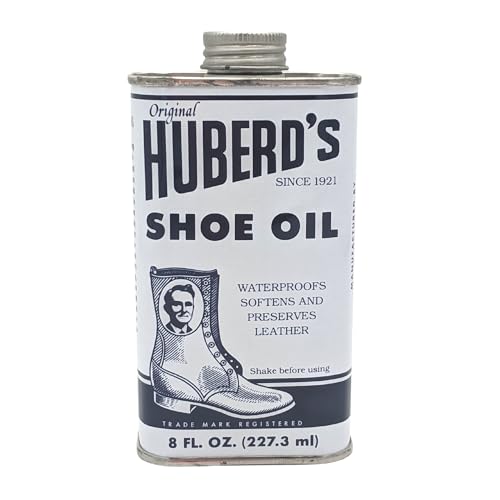
1. Huberd's Shoe Oil — Best Overall Boot Oil
Huberd's has been making this exact formula since 1921, and that kind of staying power doesn't happen by accident. This is a deep-penetrating leather conditioning oil that soaks into the fiber of the leather rather than sitting on the surface. If your boots are stiff, dry, or starting to show stress lines, Huberd's brings them back faster than almost anything else on this list. The liquid formula flows easily into stitching, seams, and tooled details — places where paste conditioners tend to skip over.
The waterproofing is genuine, not cosmetic. It forms a moisture barrier that holds up in rain, snow, and mud — which makes it a solid choice for hunters, hikers, and anyone working outdoors year-round. You won't need to reapply every time it rains. One solid treatment lasts several weeks of regular wear. The formula does darken leather slightly, so test it on a hidden spot first if you're working with lighter-colored boots.
One thing to know: the "easy pour" bottle design lives up to the label. You get precise control over how much oil you apply, which matters because over-saturating leather with oil is a real problem that can soften the structure too much. Apply a thin coat, let it sit for 15 minutes, and buff off the excess. That's all it takes.
Pros:
- Over 100 years of proven formula — not a gimmick product
- Penetrates deep into leather fibers, not just surface-level conditioning
- Flows into seams and stitching where paste can't reach
- Solid waterproofing performance in wet and muddy conditions
- Works on boots, gloves, leather jackets, and gear
Cons:
- Will darken leather — not ideal for light tan or natural-finish boots
- Liquid format can be messy if you tip the bottle too far
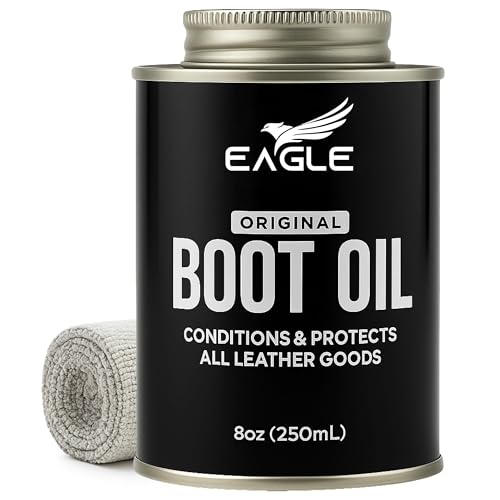
2. Eagle Leather Boot Oil — Best Kit Value
Eagle Leather gives you everything you need to do the job right — the oil itself, an applicator top built into the bottle, and a premium 12x12 inch waffle-weave towel. That's a detail most brands skip, and it actually matters. You don't need to grab a rag or use an old t-shirt that might transfer lint or dye onto your leather. Everything comes ready to use out of the box.
The oil is all-natural and designed for deep conditioning, not just surface treatment. At 8.45 oz (250mL), you get a generous amount — enough to treat several pairs of boots multiple times. The formula works on work boots, cowboy boots, and dress shoes. It penetrates into even extremely dry, stiff leather and brings flexibility back without leaving a greasy film. After it absorbs, your leather feels noticeably suppler and softer.
Like most quality boot oils, Eagle Leather will darken your leather — the brand is upfront about this. That's not a defect; it's physics. Oil fills the pores in leather and changes how it reflects light. If your boots are already dark brown or black, you'll barely notice. On natural or light tan leather, the darkening is significant. Test a small hidden area before going all-in.
Pros:
- Includes applicator top and premium waffle-weave towel — nothing extra to buy
- All-natural formula with no harsh chemicals
- Works on work boots, cowboy boots, and regular shoes
- 8.45oz is a generous size for the price
- Penetrates even severely dried-out leather
Cons:
- Will noticeably darken lighter-colored leather
- Newer brand — less long-term track record than legacy options
3. Red Wing All Natural Boot Oil — Best for Oil-Tanned Leather
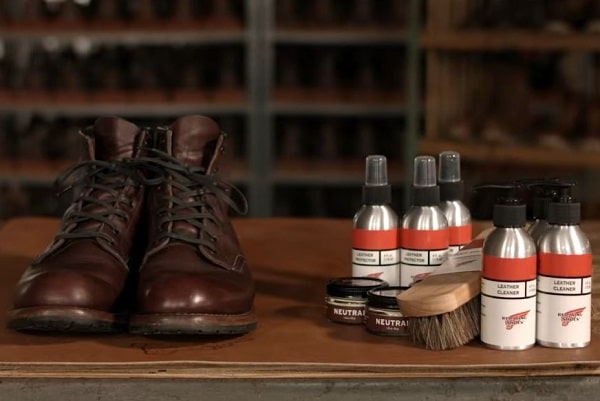
Red Wing is one of the most respected American boot brands, and they've applied that same expertise to their leather care products. This boot oil is made with pine pitch and mink oil — a combination that's been used in leather preservation for generations. It's specifically formulated for oil-tanned leather, the type used in most heavy-duty work boots including Red Wing's own Heritage and Iron Ranger lines. If you own a pair of oil-tanned boots, this is the conditioner designed for them.
The formula deeply restores moisture, color, and flexibility to leather that's been beaten up by hard work or harsh weather. It prevents the drying and cracking that shortens the life of expensive boots — and it does this without introducing synthetic chemicals that can break down leather over time. Everything in this bottle is natural. That matters if you're investing in quality boots meant to last 10+ years. You can check out our American made boots guide if you want to see the premium footwear this oil is designed to protect.
The darkening effect is significant with this product — Red Wing warns you clearly on the label. This is a feature for worn-out leather that's lost its color saturation, but it's a drawback if you want to preserve a light natural finish. Best used on dark brown, black, or russet leather where rich, deeper color is desirable.
Pros:
- Made specifically for oil-tanned leather — not a generic formula
- All-natural pine pitch and mink oil blend
- Restores both moisture and color simultaneously
- No harsh chemicals that can degrade leather long-term
- Comes from a brand with 150+ years of boot-making knowledge
Cons:
- Significantly darkens leather — avoid on light or natural finishes
- Not ideal for waxed, chrome-tanned, or suede leather types
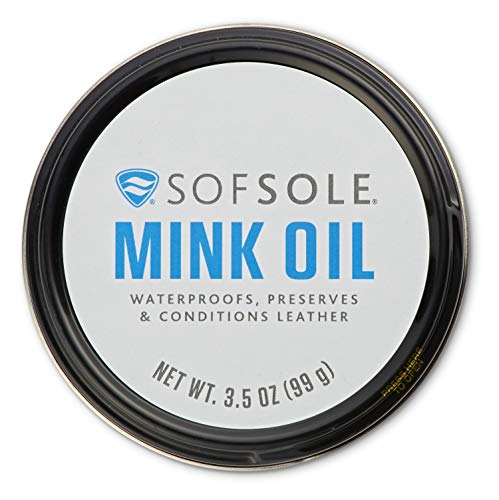
4. Sof Sole Mink Oil — Best Budget Pick
If you want a reliable, no-frills mink oil at a low price point, Sof Sole delivers. At 3.5 ounces, it's the smallest size on this list — but that's also what keeps the cost down, and a little mink oil goes a long way. This is a solid option if you want to try mink oil conditioning for the first time without committing to a large bottle, or if you just need to treat one pair of boots a couple of times per season.
Mink oil (a natural byproduct of mink pelt processing) has been used on leather for centuries. It conditions, waterproofs, and preserves leather by mimicking the natural oils that leather loses through wear and exposure. Sof Sole's version creates a waterproof barrier that repels rain and resists salt and perspiration stains — the two things that destroy leather fastest. It works on boots, shoes, purses, jackets, baseball gloves, and saddles.
The trade-off with this product is size versus convenience. You won't have trouble finding a use for a 3.5oz tin, but if you're maintaining multiple pairs of boots or doing a heavy conditioning session on very dry leather, you might run out faster than expected. For most people with one or two pairs of leather boots, this size is perfectly adequate for a full season.
Pros:
- Low price makes it easy to try mink oil without a big commitment
- Conditions, waterproofs, and preserves in one step
- Works on a wide range of leather goods beyond just boots
- Repels water, salt, and perspiration stains effectively
Cons:
- 3.5oz is small — may not be enough for heavy conditioning sessions
- Will darken leather like all mink oil products
- Limited Edition label means availability may fluctuate
5. Fiebing's Mink Oil (2-Pack) — Best Bulk Value
Fiebing's is a brand that leather craftspeople and boot enthusiasts have trusted for decades. This 2-pack gives you two 6oz bottles — 12oz total — of their premium mink oil formula. If you're maintaining multiple pairs of boots, treating leather saddles or jackets, or you just go through conditioner quickly because you work hard outdoors, this 2-pack is the best value per ounce on this list by a significant margin.
The formula does everything you'd expect from quality mink oil: it softens and preserves smooth leather and vinyl, conditions from the inside out, and creates a waterproof layer that protects against moisture, rain, and salt stains. Salt stains in particular are a leather killer — they draw moisture out of the leather and leave white residue that permanently damages the surface if not addressed. Regular treatment with Fiebing's prevents this entirely. It also works on vinyl, which makes it genuinely versatile for households that have leather and synthetic leather items to maintain.
The product positions itself as a leather cleaner and conditioner in one, though like most mink oils its cleaning action is mild. It won't remove heavy mud or built-up grime on its own — you'll want to wipe your boots down with a damp cloth before applying. Once the surface is clean, Fiebing's absorbs well and leaves a soft, supple finish without a greasy residue. After a good session with a quality boot dryer to remove moisture, follow up with Fiebing's to rehydrate the leather — it's a powerful one-two punch for boot care.
Pros:
- 2-pack of 6oz bottles — best value per ounce on this list
- Prevents salt stains, moisture damage, and leather cracking
- Works on both leather and vinyl surfaces
- Trusted brand with a long history in leather care
- Absorbs cleanly without greasy residue
Cons:
- Limited cleaning power — pre-clean your boots before applying
- Darkens leather noticeably, like all mink oil products
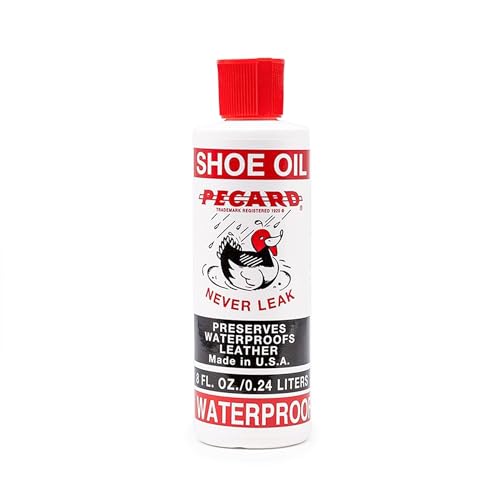
6. PECARD Shoe & Boot Oil — Best for Quick Application
PECARD takes a different approach from most boot oils on this list. Their formula is pH-balanced and designed specifically for smooth oil-tanned leathers — the same type found in most quality work boots and hunting boots. The key differentiator is their fast-absorbing liquid formula. Where paste conditioners can take 30 minutes or more to fully absorb (and often require multiple applications), PECARD soaks in quickly. You can condition your boots in under 10 minutes and have them ready to wear, which matters when you don't have time to wait.
The formula cleans, lubricates, and preserves leather in one pass. It restores natural softness and flexibility without leaving a sticky or greasy feel. The pH-neutral formulation is a specific technical advantage here — leather has a natural pH range, and products that are too acidic or alkaline can degrade it over time. PECARD respects the chemistry of leather, which is why it's a favorite among people who work with high-end footwear and tack (horse saddles and bridles).
The waterproofing creates a breathable barrier — meaning it repels water without trapping heat and sweat inside your boot. That's an important distinction from heavy wax-based waterproofers that can make leather stiff and non-breathable. PECARD keeps your boots flexible and weather-resistant at the same time. At 8 fl oz, it's a practical size that will last you through a full season of regular use.
Pros:
- Fast-absorbing liquid formula — boots ready to wear in minutes
- pH-balanced formula respects leather chemistry for long-term preservation
- Breathable waterproof barrier — not a heavy sealant
- Cleans, lubricates, and conditions in one step
- Great for quick maintenance sessions before or after work
Cons:
- Primarily for smooth oil-tanned leather — not recommended for suede or nubuck
- Less intensive conditioning than heavier oils for severely dried boots
7. Angelus Prime Neatsfoot Oil — Best for Softening Stiff Leather
Neatsfoot oil is one of the oldest leather conditioners in existence — it comes from the shin bones and feet of cattle and has been used to preserve leather for hundreds of years. Angelus packages it in a modern 8oz bottle with a formula that's been refined for contemporary leatherwork. If you have a pair of new boots that feel like cardboard, or old boots that have hardened from neglect, neatsfoot oil is the most powerful softening agent you can apply without damaging the leather structure.
According to Wikipedia's entry on neatsfoot oil, this substance has been used in leather preservation for centuries, prized for its ability to penetrate deeply into animal-derived materials. Angelus's version maintains that same penetration performance while also providing lubrication, waterproofing, and long-term preservation. It's particularly popular among people who work with saddles, harnesses, and baseball gloves — equipment that sees serious stress and needs aggressive conditioning.
The important warning with neatsfoot oil: it darkens leather. Not subtly — it darkens it noticeably. Angelus recommends testing on a small, hidden area first, and that's advice you should take seriously. For dark brown or black work boots, this is a non-issue and the darkening actually looks great. For lighter leathers, test first. It also has one quirk worth knowing: over time, heavy neatsfoot oil applications can soften leather so much that it loses structural rigidity — so use it conservatively on structured leather like boot uppers and be more liberal on flexible items like gloves and straps.
Pros:
- Most powerful softening formula on this list — ideal for very stiff or neglected leather
- Deep penetrating formula lubricates, waterproofs, and preserves simultaneously
- Centuries-proven leather care ingredient in a modern formulation
- Works on smooth leathers, saddles, gloves, harnesses, and boots
- 8oz bottle provides excellent value for the price
Cons:
- Darkens leather significantly — test on hidden area first
- Excessive use can over-soften structured leather — apply conservatively
- Not suitable for suede, nubuck, or non-smooth leather finishes
Key Features to Consider When Choosing Boot Oil
Oil Type: Mink, Neatsfoot, or Blend?
The base ingredient in your boot oil determines how it behaves on leather. Understanding the differences helps you match the product to your specific boots and needs.
- Mink oil — Derived from mink pelts. Excellent conditioner that penetrates well and softens without over-saturating. Creates a good waterproof barrier. Slight darkening effect. Most versatile option for everyday boot care.
- Neatsfoot oil — From cattle shin bones. The most powerful softener available for very stiff or dried-out leather. Darkens more aggressively than mink oil. Best for neglected boots or breaking in new stiff leather.
- Pine pitch blends — Natural tree resin combined with oil. Used by Red Wing in their formula. Great for oil-tanned leather specifically — restores color and moisture simultaneously.
- Proprietary blends — Products like Huberd's and PECARD use custom formulations that balance conditioning, waterproofing, and absorption speed. Often the best performers when you need all three benefits at once.
Darkening Effect
Every oil-based conditioner on this list will darken your leather to some degree. This is unavoidable chemistry — oil fills the pores in leather and changes how it reflects light. Here's how to think about it:
- Dark brown or black boots: darkening is not a concern — it often improves the look
- Medium brown boots: expect 1-2 shades darker, which usually looks good after it absorbs
- Light tan, natural, or cream leather: avoid oil conditioners entirely — use a wax-based or cream conditioner instead
- Always test on a hidden spot (tongue, inside of the shaft) before treating the full boot
Leather Type Compatibility
Not all leather is the same, and not all oils work on all leather types. Before you buy, identify what kind of leather your boots are made from.
- Oil-tanned leather — The most common leather in work boots. Works with all oils on this list. Oil-tanned leather is literally tanned with oils and responds exceptionally well to re-oiling.
- Chrome-tanned leather — Used in dress shoes and some casual boots. Accepts most boot oils but benefits most from lighter, faster-absorbing formulas like PECARD.
- Suede and nubuck — Do NOT use oil conditioners. These have a textured, fuzzy surface that oil will permanently flatten and stain. Use suede-specific sprays instead.
- Waxed leather — Already has a protective wax coating. Light oil conditioning is fine, but heavy oils can dissolve the wax layer. Apply sparingly.
If you're investing in quality boots worth conditioning, it's worth understanding what type of work boot construction you have — it affects what care products are appropriate.
Application Format: Liquid vs. Paste
Boot conditioners come in liquid and paste form. Both work, but they have different strengths.
- Liquid oils (Huberd's, Eagle Leather, PECARD, Angelus) — Flow into seams, stitching, and tooled details. Faster absorption. Better for detailed leather with decorative work. Easier to over-apply if you're not careful.
- Paste/semi-solid (Sof Sole, Fiebing's in paste form) — Easier to control the amount applied. Better for smooth, flat leather surfaces. Takes longer to absorb but can feel more thorough.
- Application tip: Apply a small amount, work it in with your fingers or a soft cloth, let it sit 10–15 minutes, then buff off the excess. More product does not mean more conditioning — it means more residue buildup.
Common Questions
How often should I oil my boots?
For boots worn daily in tough conditions (construction sites, outdoor work, hiking), oil them every 4–6 weeks during heavy use. Boots worn casually or stored for long periods should be oiled at the start and end of each season. A simple visual test: if the leather looks dry, feels stiff, or shows stress lines near the flex points, it's time to condition. Don't wait until you see actual cracking — by then, some damage is already permanent.
Will boot oil darken my leather permanently?
Yes — oil-based conditioners darken leather permanently, though the degree varies by product and leather type. The darkening happens because oil fills the microscopic pores in leather and changes how light reflects off the surface. Some of this darkening fades slightly as the oil fully absorbs over 24–48 hours, but the leather will generally remain a shade or two darker than it was before. For dark brown or black boots, this is usually a non-issue or even an improvement. For light-colored leather, choose a wax-based conditioner or a product specifically designed for light leather instead.
Can I use boot oil on suede or nubuck boots?
No. Never use oil-based conditioners on suede or nubuck leather. These materials have a delicate textured surface created by buffing the leather fibers. Oil will flatten this texture permanently, leave dark stains, and ruin the appearance of the boot. For suede and nubuck, use a specialty suede brush, suede eraser, and a water-resistant suede spray instead. The products listed in this guide are all intended for smooth leather only.
What's the difference between mink oil and neatsfoot oil?
Both are animal-derived fats used to condition leather, but they behave slightly differently. Mink oil (from mink fat) is lighter and absorbs more quickly, making it a good all-around maintenance conditioner. It conditions, softens, and waterproofs without being overly aggressive. Neatsfoot oil (from cattle bones) is heavier and more penetrating — it's the better choice for severely dried, cracked, or very stiff leather that needs intensive restoration. The trade-off is that neatsfoot oil darkens leather more aggressively and can over-soften structured leather if applied too heavily. For routine maintenance, mink oil is the better daily driver. For restoration of neglected boots, reach for neatsfoot oil.
Is boot oil the same as boot wax or boot cream?
No — these are three different products with different purposes. Boot oil penetrates deep into leather fibers to condition, soften, and add moisture from the inside. Boot wax (like beeswax-based products) sits on the surface and creates a protective barrier, adding waterproofing and a shine but less deep conditioning. Boot cream falls in between — it conditions the surface and adds a light sheen without penetrating as deeply as oil. For maximum boot longevity, many people use a combination: oil for deep conditioning every few months, and cream or wax for routine maintenance and shine in between.
Can boot oil fix cracked leather?
Boot oil can improve and prevent worsening of surface-level cracks, but it cannot fully reverse deep cracks that have already formed. If the leather has cracked all the way through, those splits are structural and no conditioner will fuse them back together. What boot oil does is restore flexibility to the leather around existing cracks, which prevents them from spreading and deepening further. For best results, apply a generous coat of a heavy oil (neatsfoot or Huberd's work well here), let it soak in fully over 24 hours, and repeat every few days for a week. You'll see significant improvement in shallow cracks. Prevention is always better than restoration — oil your boots before they crack, not after.
Buy on Walmart
- Huberd's Shoe Oil – Leather Conditioner & Waterproofer for B — Walmart Link
- Eagle Leather Boot Oil for Work Boots, Cowboy Boots, & Shoes — Walmart Link
- Red Wing Shoes All Natural Boot Oil, Pine Pitch and Mink Oil — Walmart Link
- Sof Sole Mink Oil for Conditioning and Waterproofing Leather — Walmart Link
- Fiebing's Mink Oil for Leather Boots (2 Pack, 6 oz Each) - L — Walmart Link
- PECARD Shoe & Boot Oil – Leather Waterproofing & Conditionin — Walmart Link
- Angelus Brand Prime Neatsfoot Oil Compound Shoes Boots Leath — Walmart Link
Buy on eBay
- Huberd's Shoe Oil – Leather Conditioner & Waterproofer for B — eBay Link
- Eagle Leather Boot Oil for Work Boots, Cowboy Boots, & Shoes — eBay Link
- Red Wing Shoes All Natural Boot Oil, Pine Pitch and Mink Oil — eBay Link
- Sof Sole Mink Oil for Conditioning and Waterproofing Leather — eBay Link
- Fiebing's Mink Oil for Leather Boots (2 Pack, 6 oz Each) - L — eBay Link
- PECARD Shoe & Boot Oil – Leather Waterproofing & Conditionin — eBay Link
- Angelus Brand Prime Neatsfoot Oil Compound Shoes Boots Leath — eBay Link
The best boot oil is the one you actually use consistently — a $12 bottle applied every month beats a premium product that stays on the shelf all season.


About James Miller
James Miller is a dedicated individual based in the vibrant city of San Francisco, CA, USA. His unwavering passion lies in the realm of construction, where he finds fulfillment in exploring and documenting various facets of construction equipment and processes. A graduate of the University of California Merced, James holds a dual degree in mechanical and electrical engineering, which has equipped him with a solid foundation in technical knowledge.With a keen eye for detail and a knack for articulation, James has channeled his enthusiasm into writing about the intricacies of construction gear and methodologies. His insightful writings offer valuable insights to both industry professionals and curious enthusiasts, shedding light on the machinery and techniques that shape the built environment.James Miller's educational background in mechanical and electrical engineering lends credibility to his work, allowing him to delve into the technical nuances of construction with precision. His passion for sharing knowledge and fostering understanding in the construction field is evident in his contributions, making him a respected voice in the industry.
Get FREE Boots Gifts now. Or latest free toolsets from our best collections.
Disable Ad block to get all the secrets. Once done, hit any button below