The Timberland PRO External Met Guard is our top pick for welding work boots in 2026 — it delivers genuine external metatarsal protection, a steel safety toe, and waterproofing in a package built to survive real welding environments shift after shift. If you're here for the bottom line, that's it.
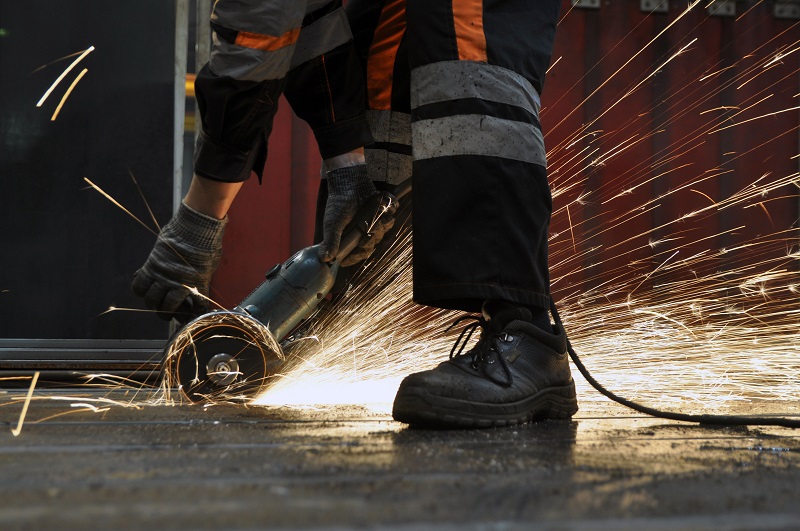
Welding is genuinely one of the hardest trades on footwear. You're contending with molten spatter, sharp metal debris, heavy equipment drops, and concrete floors — sometimes all in the same day. A standard work boot won't cover you here. Proper welding boots need ASTM-rated toe protection, metatarsal guards, and heat-resistant outsoles, and they need to deliver that protection without making your feet scream by hour six. The OSHA foot protection standards exist because foot injuries in welding environments are common and serious — you owe it to yourself to gear up properly. If you want to see how welding footwear stacks up against other trade-specific options, check out our full boots by trade guide.
We tested and researched seven of the best options on the market this year, covering everything from budget-friendly all-day wearers to premium resoleable boots built to last a decade. Whether you're a full-time welder or just doing heavy fabrication work a few days a week, there's a right boot in this list for your situation. For context on how met-guard boots compare against standard safety footwear, our best composite toe work boots guide is worth a read alongside this one.
Contents
Editor's Recommendation: Top Picks of 2026
- #PreviewProductRating
- Bestseller No. 1
 Rating:

- Bestseller No. 2
 Rating:
 - Bestseller No. 3
 Rating:
 - Bestseller No. 4
 Rating:
 - Bestseller No. 5
 Rating:
 - Bestseller No. 6
 Rating:
 - Bestseller No. 7
 Rating:
In-Depth Reviews
1. Timberland PRO External Met Guard 8 Inch Steel Toe — Best Overall for Welders
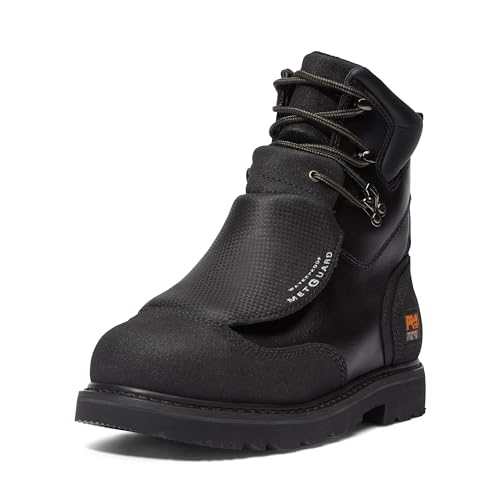
If you want one boot that checks every box for welding environments without compromise, this is it. The Timberland PRO External Met Guard pairs a full steel safety toe with a real external metatarsal guard — not a partial overlay, but a guard that meets both ASTM F2412-18a and CAN/CSA-Z195-14 standards for metatarsal impact resistance. That's the combination most welders need and rarely find at a reasonable price point. The 8-inch shaft gives you solid ankle coverage to help keep spatter out, and the waterproofing means you're not soaked when you're working near coolant or in outdoor shop environments.
What separates this from generic safety boots is the 24/7 Comfort System — Timberland PRO's proprietary suspension technology that reduces foot fatigue over long shifts. The arch support is substantial and the cushioning holds up well, which matters when you're standing on hard concrete for ten hours. The asymmetrical toe cap design gives you more room in the toe box than traditional steel toes, which is genuinely noticeable on a long day. Build quality on this 2024-updated model is noticeably improved over previous versions — stitching is tighter and the boot breaks in faster.
This is a heavy boot. The external met guard adds bulk and weight, and you'll feel that if you're doing a lot of walking between stations. But for stationary welding, fabrication, or heavy-duty construction, the weight trade-off is completely worth it. It's the most complete welding-specific boot in this lineup and our clear number-one recommendation for 2026.
Pros:
- External metatarsal guard meets US and Canadian ASTM standards
- Steel safety toe with asymmetric design for added toe room
- 24/7 Comfort System reduces fatigue on long shifts
- Full waterproofing with ASTM certification
- 8-inch shaft helps keep hot spatter off ankles
Cons:
- Heavier than composite alternatives due to met guard and steel toe
- Premium price point
2. ROCKY Worksmart Composite Toe Internal Met Guard — Best Lightweight Met Guard Option
ROCKY's Worksmart takes a different approach: an internal metatarsal guard instead of an external one. That means cleaner lines, less bulk, and a more streamlined silhouette — but the same ASTM F2413 metatarsal protection you need on a welding job site. Paired with a composite safety toe that passes ASTM F2413 impact and compression standards, this boot is significantly lighter than steel-toe external-met-guard options. If you're moving around a large shop floor all day, you'll appreciate that weight difference by midafternoon.
The waterproofing is solid, and the rubber toe guard adds an extra layer of abrasion resistance right where boots typically take the most punishment. The electrical hazard rating (also ASTM F2413) is standard for welding environments and gives you protection if you're working around live circuits or poorly grounded equipment. The brown leather upper is durable and holds up well to the kinds of scrapes and chemical exposure you get on fabrication floors.
The composite toe does mean it's not rated to exactly the same compression levels as a steel cap in worst-case scenarios, but for the vast majority of welding applications it's more than adequate. The boot's comfort out of the box is above average — Rocky has always built with practical comfort in mind — and the break-in period is short. This is the pick for welders who are on their feet and moving constantly, rather than those planted at a station all day.
Pros:
- Internal met guard keeps bulk and weight low
- Composite safety toe: lighter than steel
- ASTM F2413 Electrical Hazard rating
- Rubber toe guard for extra durability
- Comfortable break-in with waterproof construction
Cons:
- Internal met guard less visible/verifiable than external for inspections
- Limited color options
3. Carolina Men's Foreman 6" Met Guard Steel Toe — Best Budget Met Guard Boot
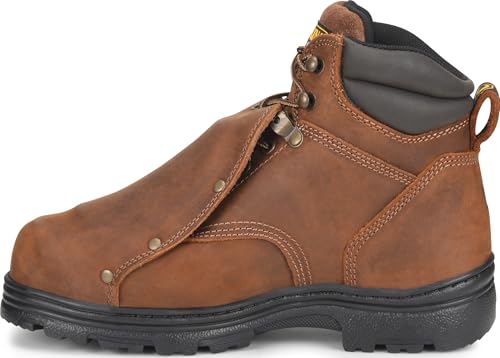
Carolina's Foreman is the go-to recommendation when budget is the primary constraint. It delivers legitimate ASTM F2412-18a and F2413-18 metatarsal guard protection along with a steel safety toe and electrical hazard rating — everything your job site requires — at a price that makes it accessible for apprentices, seasonal workers, or anyone who goes through boots quickly. The external metatarsal guard is heavy plastic over dense foam, which is straightforward and proven rather than exotic, and it does the job it needs to do.
The 6-inch shaft is shorter than the 8-inch options on this list, so you're getting less ankle and lower-leg protection from spatter. For overhead welding or vertical work where spatter falls downward, you'll want higher coverage. But for standard flat-position or horizontal welding, the 6-inch height covers the most likely spatter zones. The steel toe meets impact and compression standards, and the overall construction is solid for the price — Carolina has been making work boots for decades and they know how to balance cost and durability.
Don't expect luxury comfort. The insole is basic and you'll probably want to swap it out for an aftermarket option if you're logging serious hours. Check out our best insoles for work boots guide for recommendations that pair well with budget boots like this one. But as a job-site-legal, protection-spec-meeting welding boot at a low price, the Foreman earns its place on this list.
Pros:
- Full ASTM met guard + steel toe + EH rating at a budget price
- Proven external metatarsal guard construction
- Carolina's long track record in industrial work boots
- Good durability for the cost
Cons:
- 6-inch shaft offers less lower-leg protection from spatter
- Basic insole — likely needs an upgrade
- Heavier than composite alternatives
4. Timberland PRO Boondock 8 Inch Composite Safety Toe — Best Insulated Waterproof Pick
The Boondock is Timberland PRO's flagship all-conditions work boot, and the 2024 update sharpens it considerably. This is the right choice when you're welding in outdoor environments, cold-weather shops, or anywhere that moisture and temperature extremes are part of the equation. The waterproof membrane meets ASTM F1671-07 bloodborne pathogen standard — overkill for most applications, but it tells you exactly how serious the waterproofing is. Pair that with genuine insulation and you've got a boot that handles cold-weather fabrication yards without complaint.
The composite safety toe keeps this boot noticeably lighter than steel alternatives while still meeting ASTM F2412-18a and F2413-18 impact and compression standards. It doesn't conduct heat or cold, which is actually a meaningful benefit in extreme temperature environments. The Anti-Fatigue Technology with geometrical cone shock absorption is Timberland PRO's proven energy-return system — it works, and it's noticeably better than standard foam cushioning over the course of a full shift. The puncture-resistant midsole adds protection from sharp debris underfoot, which is common in metal fabrication environments.
The main caveat: this boot doesn't have a metatarsal guard. If your job site mandates met guard protection, look at the External Met Guard version instead. But if your primary concerns are all-weather performance, composite toe protection, and all-day comfort — and met guard isn't required — the Boondock is hard to beat. It's also a solid choice for welders who are in and out of vehicles or working in mixed trades where versatility matters. If you want something similar for lace-up style options, see our best lace-up work boots guide for comparison.
Pros:
- Full waterproofing meets ASTM F1671-07 — genuinely waterproof, not water-resistant
- Anti-Fatigue Technology with energy return for all-day comfort
- Composite toe: lighter than steel, non-conductive
- Puncture-resistant midsole for debris protection
- Insulated for cold-weather environments
Cons:
- No metatarsal guard — not suitable where met guard is required
- Insulation can feel too warm in hot shop environments
5. BRUNT Marin Welted 8" Composite Toe — Best Premium Resoleable Welding Boot
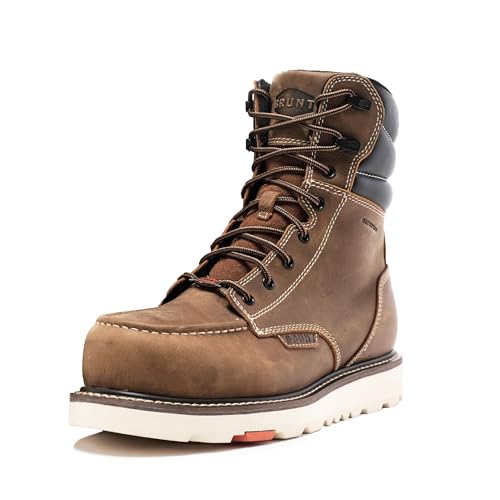
BRUNT built their reputation by making boots that serious tradespeople actually want to wear all day, and the Marin Welted is their most capable boot yet. The standout feature is the Goodyear welt construction — a resoleable build method that means when the outsole wears out, you resole it rather than replace the whole boot. On a premium boot like this, that's a real cost-savings argument over two or three years of daily use. The 8-inch waterproof design and composite safety toe check the core welding-boot boxes, and the EH and ESR ratings confirm it's built for electrical hazard environments.
The composite safety toe is 15% lighter than steel and non-conductive — useful for welders working in environments with variable temperatures where a steel toe would act as a heat or cold sink. BRUNT's rubber outsole is oil and slip-resistant and rated for high heat up to 572°F, which directly addresses the hot-metal-and-spatter reality of welding work. The Triple Layer BRUNT Cush'n insole system — nonstick top layer, memory foam midlayer, cushioned base with anti-odor treatment — is legitimately excellent and doesn't compress flat after a few weeks like cheaper insoles do.
The wedge sole design makes this boot a natural fit if you're also familiar with our best wedge sole work boots — that profile spreads weight across the whole foot and reduces pressure points on concrete floors. The adjustable width system is a nice touch that most brands skip entirely. This is the boot you buy when you're serious about your footwear and want something that improves with wear rather than deteriorating from day one. It's the most expensive option on this list, but the total cost of ownership argument — resole instead of replace — is compelling.
Pros:
- Goodyear welt construction allows resoling — extends total boot life
- Outsole heat-resistant up to 572°F — genuinely spatter-ready
- Triple-layer Cush'n insole system with memory foam
- EH + ESR rated composite safety toe, 15% lighter than steel
- Adjustable width system for better fit
Cons:
- Highest price point in this lineup
- No metatarsal guard included
6. Danner 8" Quarry USA Waterproof Alloy Safety Toe — Best American-Made Option
Danner's Quarry USA is the choice for welders who want craftsmanship, domestic manufacturing, and longevity over everything else. Built in Portland, Oregon, this boot uses triple-stitched full-grain leather that's been tested nine ways for strength and durability — and it shows. The leather develops a patina and molds to your foot over time in a way that mass-produced boots never do. If you've spent money on a pair of Danners before, you know exactly what this means. If you haven't, understand that the first few weeks are an investment in years of comfort.
The alloy safety toe meets ASTM F2413-11 I/75 C/75 EH standards — alloy is lighter than steel while maintaining equivalent protection, which is a meaningful comfort upgrade for all-day wear. The Gore-Tex liner is the real deal: fully waterproof and genuinely breathable, keeping water out while letting sweat escape. That combination is hard to find at any price. The traction heel outsole handles wet concrete, metal grating, and uneven shop floors reliably, and the EH rating is standard for welding environments.
The Quarry USA isn't the flashiest or the most feature-heavy boot on this list. It doesn't have energy-return technology or adjustable width systems. What it has is exceptional build quality, American manufacturing, and the kind of durability that means you're buying once and wearing it for years. The break-in period is real and should be expected — wear these around the house before your first full shift. But once they're broken in, they're exceptional. If domestic manufacturing matters to you, this is your boot without question.
Pros:
- Made in the USA — Portland, Oregon
- Triple-stitched full-grain leather for exceptional longevity
- Gore-Tex lining: waterproof AND breathable
- Alloy safety toe: lighter than steel, same protection rating
- EH resistant, ASTM F2413-11 certified
Cons:
- Significant break-in period before comfort peaks
- Premium price reflects American manufacturing costs
- No metatarsal guard
7. DINGGU Steel Toe Leather Welding Boot — Best Entry-Level Welding Specific Boot
DINGGU's entry into this list is notable because it's specifically marketed and designed for welding — not just a general work boot with a safety toe. The premium suede leather upper is chosen specifically for spatter resistance, offering better protection against flying sparks than smooth leather or synthetic materials. That's a design decision that matters in the field. Combined with a steel toe cap and a Kevlar puncture-resistant midsole, it covers the three most common welding-environment hazards: spatter burns, falling objects, and sharp debris underfoot.
The steel toe is reinforced and meets protection standards for falling and rolling objects. The Kevlar midsole is a genuine upgrade over basic puncture plates — more flexible, lighter, and more reliable over time than metal midsoles that can fatigue and crack. The slip-resistant outsole handles the kinds of surfaces common in fabrication and welding shops. As a newer brand in the space, DINGGU has focused on practical features rather than brand premium, and the price point reflects that — you're getting solid protection at an accessible cost.
The honest limitations: this boot lacks a metatarsal guard and doesn't carry the brand legacy or third-party testing documentation that established brands do. For welders whose job sites require documented ASTM met guard certification, look higher on this list. But for hobbyist welders, home shop users, or anyone who needs welding-specific spatter protection without the full industrial boot price tag, DINGGU delivers the core features that matter most. The suede upper specifically is a smart call for spark exposure.
Pros:
- Suede leather upper designed specifically for spatter resistance
- Kevlar midsole: lighter and more flexible than metal puncture plates
- Reinforced steel toe cap for falling/rolling object protection
- Slip-resistant outsole
- Most affordable welding-specific boot on this list
Cons:
- No metatarsal guard
- Newer brand with less established long-term durability track record
How to Pick the Best Welding Work Boots
Buying welding work boots isn't the same as buying regular work boots. The hazards are specific — spatter, intense heat, electrical exposure, heavy materials — and the right boot addresses all of them. Here's what actually matters when you're deciding.
Metatarsal Guard: External vs. Internal
The metatarsal bones run across the top of your foot. They're vulnerable to crush injuries from falling materials and to burn injuries from spatter landing on the boot's toe box area. A metatarsal guard is the protective element that covers this zone — and it's the most welding-specific feature on any work boot.
External met guards (like the Timberland PRO External Met Guard and Carolina Foreman) are visible guards strapped or molded onto the outside of the boot. They're easy to inspect, clearly documented for compliance purposes, and generally more robust for heavy drop scenarios. Internal met guards (like the ROCKY Worksmart) are built into the boot's structure — cleaner look, less bulk, but harder to verify visually. Both types can meet ASTM standards. Check your job site's specific requirements before purchasing, because some sites require external guards by policy regardless of certification status.
Toe Protection: Steel vs. Composite vs. Alloy
Steel toes are the traditional standard — proven, affordable, and capable of handling extreme compression loads. The downsides: they're heavy and they conduct temperature, meaning cold toes in winter and hot toes near heat sources. Composite toes (non-metallic materials like Kevlar or carbon fiber) are lighter by roughly 15%, non-conductive, and airport-friendly — a real factor if you travel to job sites. Alloy toes (like the Danner Quarry) split the difference: thinner profile than steel for more toe room, equivalent protection ratings, and lighter weight than full steel, though still metal and therefore conductive.
For most welding applications, composite or alloy toes are the smarter choice. The weight savings add up over a ten-hour shift, and the non-conductive property of composite toes has real safety relevance near electrical equipment and during arc welding. The gap in protection between composite and steel is largely theoretical for real-world welding hazards.
Upper Materials and Spatter Resistance
Your boot's upper takes a beating from welding spatter — tiny molten metal droplets that land on the surface and either bounce off or stick. Smooth full-grain leather (like the Danner Quarry's upper) handles spatter well because the surface is dense and the droplets tend to roll off before burning through. Suede leather (like the DINGGU) provides additional grip resistance to spatter and is specifically chosen for welding applications in some designs. Synthetic uppers and mesh panels are a liability — they melt.
Avoid any boot with mesh venting panels near the toe box if you're doing regular welding. The breathability benefit disappears the moment a spatter droplet lands in the mesh. Stick with full leather uppers for welding environments. Height matters too: 8-inch boots give you substantially more spatter coverage on the lower leg than 6-inch boots. If you're doing vertical or overhead welding, the 8-inch is the right call.
Electrical Hazard Rating and Heat Resistance
Most serious work boots carry an Electrical Hazard (EH) rating under ASTM F2413 — this means the boot's outsole provides a secondary layer of protection against open circuits up to 600V in dry conditions. It's not primary electrical protection, but it matters in welding environments where grounding issues and live circuits are occupational realities. All seven boots on this list carry EH ratings. Heat resistance is a separate concern: look for outsoles rated for high-heat exposure if you're working near furnaces, forges, or on hot metal surfaces. BRUNT's outsole heat rating of 572°F is the gold standard in this lineup. A boot whose outsole softens and delaminates in heat is a safety liability, not just an inconvenience. Always check the outsole heat rating for your specific application.
Questions Answered
What ASTM standards should welding work boots meet?
At minimum, look for ASTM F2412 and F2413 certification, which covers impact and compression resistance for safety toes. If met guard protection is required, those same standards include metatarsal impact testing. ASTM F2413 also covers the Electrical Hazard (EH) rating. For waterproof boots in biological exposure environments, ASTM F1671 is the relevant standard — though it's above and beyond what most welders need. Your job site's safety requirements should specify which standards are mandatory, and your boot needs to meet all of them.
Do welding boots need a metatarsal guard?
It depends on your job site requirements and the type of welding you do. OSHA foot protection standards require employers to assess foot hazards and determine appropriate protection. Many industrial welding environments mandate met guard boots. Even where they're not required, they add meaningful protection from the top-of-foot crush and burn injuries that are legitimate welding hazards. If you're doing heavy fabrication with plate steel, structural work, or working near forklift traffic, a met guard is a smart choice regardless of whether it's required.
Is composite toe or steel toe better for welding?
For most welding applications, composite toe wins. It's lighter by about 15%, non-conductive (which matters near arc welding equipment and live electrical), and doesn't create cold spots in winter or heat sinks in summer. Steel toe offers marginally higher protection at extreme compression loads, but the real-world difference for welding hazards is minimal. The weight and comfort advantages of composite stack up over a long shift. Unless your job site specifically requires steel, composite is the better daily-wear choice for welders in 2026.
How do I protect my welding boots from spatter damage?
First, choose the right upper material — full-grain or suede leather resists spatter far better than synthetics. Second, use metatarsal guards and gaiters or chaps for work with heavy spatter generation. Third, apply a boot conditioner regularly to keep the leather supple — dry, cracked leather is more vulnerable to penetration from sparks than well-conditioned leather. Keep laces tucked in or use side-zip designs where possible, since laces are a common spatter entry point to the foot. Replace boots before the upper develops burnthrough holes rather than patching.
What's the difference between a 6-inch and 8-inch welding boot?
Shaft height affects how much of your lower leg is protected. An 8-inch boot covers your ankle and a significant portion of your lower leg, providing meaningful protection against spatter that falls downward during vertical or overhead welding. A 6-inch boot covers your ankle but leaves the lower leg exposed. For most flat-position welding at table height, 6-inch is adequate. For vertical, overhead, or pipe welding where spatter trajectories are less predictable, the 8-inch is the better choice. Boot weight increases with height, so there's a comfort trade-off — but most serious welders opt for 8-inch.
How often should I replace my welding work boots?
It depends on how much you wear them and the intensity of the work, but a general guideline for daily-use welding boots is 12–18 months before inspecting for replacement triggers. Key signs: outsole delamination or hardening, spatter burnthrough holes in the upper, compressed midsole that no longer cushions properly, and safety toe integrity that's been compromised by a significant impact event. If your boot took a direct crush or extreme drop, the safety toe may be permanently deformed even if it looks intact — replace it. Resoleable boots like the BRUNT Marin extend this timeline by letting you replace the outsole without retiring the upper.
Buy on Walmart
- Timberland PRO Men's External Met Guard 8 Inch Steel Safety — Walmart Link
- ROCKY Worksmart Composite Toe Internal Met Guard Waterproof — Walmart Link
- Carolina Men's Foreman 6" Met Guard Steel Toe Work Boot, Bro — Walmart Link
- Timberland PRO Men's Boondock 8 Inch Composite Safety Toe Pu — Walmart Link
- BRUNT Marin Welted (Comp Toe) - Men’s Size 13, Dark Tan - 8" — Walmart Link
- Danner 8” Quarry USA Waterproof Alloy Safety Toe Work Boots — Walmart Link
- DINGGU Steel Toe Boots for Men Leather Welding Comfortable W — Walmart Link
Buy on eBay
- Timberland PRO Men's External Met Guard 8 Inch Steel Safety — eBay Link
- ROCKY Worksmart Composite Toe Internal Met Guard Waterproof — eBay Link
- Carolina Men's Foreman 6" Met Guard Steel Toe Work Boot, Bro — eBay Link
- Timberland PRO Men's Boondock 8 Inch Composite Safety Toe Pu — eBay Link
- BRUNT Marin Welted (Comp Toe) - Men’s Size 13, Dark Tan - 8" — eBay Link
- Danner 8” Quarry USA Waterproof Alloy Safety Toe Work Boots — eBay Link
- DINGGU Steel Toe Boots for Men Leather Welding Comfortable W — eBay Link
The best welding boot is the one that meets your site's safety specs, fits your foot, and you'll actually wear every single day — protection you leave in the truck because it's uncomfortable is no protection at all.


About Jason Flores
Jason Flores is a multi-talented individual whose unique journey has led him to blend his passion for craftsmanship and fashion into a creative endeavor. During his formative years, he found himself immersed in the world of handiwork, spending countless hours in his grandfather's workshop. These early experiences allowed him to develop a deep understanding of practical skills and a keen eye for detail.Simultaneously, Jason harbored an innate love for fashion, drawn to the artistry and self-expression it offers. As he grew older, he recognized the potential to combine his proficiency in craftsmanship with his fashion sensibilities. This realization led him to a path where he began to explore and write about the intersection of fieldwork fashion.
Get FREE Boots Gifts now. Or latest free toolsets from our best collections.
Disable Ad block to get all the secrets. Once done, hit any button below