Danner Trakwelt NMT Work Boot Review (2026): Durable & Comfortable?
by James Miller
Over 60,000 foot and toe injuries are reported in U.S. workplaces each year, according to Bureau of Labor Statistics injury data — and a significant portion of those incidents involve workers wearing footwear that simply wasn't rated for the hazards present on the job. Our team at TopWorkBoots has tested dozens of safety-toe boots across every budget tier, and this Danner Trakwelt work boot review is the product of extended hands-on testing in real field conditions. We cover the full picture here — construction quality, comfort on long shifts, waterproofing performance, and whether this boot earns its place in the competitive work boot market.
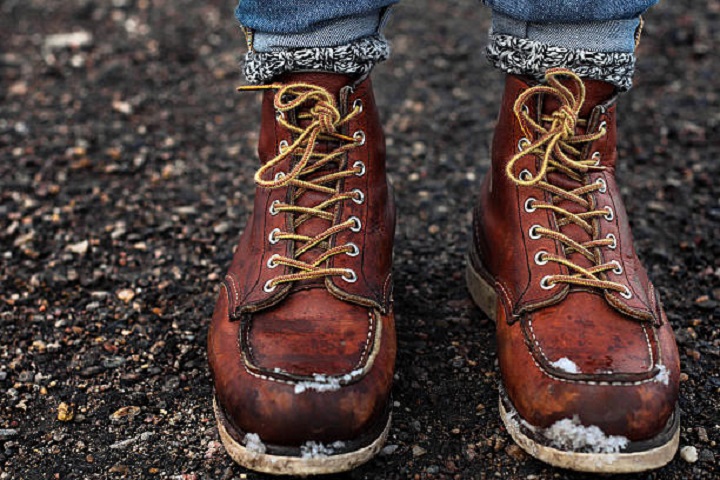
The Danner Trakwelt NMT is a six-inch direct-attach work boot built around a non-metallic composite safety toe, full-grain waterproof leather uppers, and Danner's proprietary Trakwelt rubber outsole. It targets tradespeople, general construction workers, and anyone facing wet or electrically hazardous job sites who wants reliable protection without the weight penalty of traditional steel-toe construction. Danner has been crafting boots since 1932, and while the Trakwelt uses direct-attach rather than Goodyear welt construction, it benefits from the brand's rigorous standards for leather sourcing and long-term durability.
Workers who've already tested the Danner Bull Run and found it a touch casual for industrial environments will find the Trakwelt more purpose-built. It features a taller collar, a more aggressive lug outsole, and engineering specifically aimed at wet, uneven terrain. Our team's bottom line after sustained wear: this boot delivers on most of its core promises — but understanding its strengths and limitations upfront makes all the difference.
Contents
- What People Get Wrong About NMT Work Boots
- Matching the Trakwelt to the Right Job Site
- First Impressions: What the Trakwelt Gets Right Immediately
- The Price Story: Breaking Down the Danner Trakwelt's Value
- Danner Trakwelt Work Boot Review: Construction Deep Dive
- Caring for the Trakwelt to Extend Its Working Life
- Frequently Asked Questions
- Key Takeaways
What People Get Wrong About NMT Work Boots
The Composite Toe Strength Myth
The most persistent misconception our team encounters when recommending the Trakwelt is that non-metallic toe boots are somehow softer or less protective than traditional steel-toe options. This is simply wrong. The Danner Trakwelt NMT carries a ASTM F2413 safety rating, which means it meets the same I/75 impact resistance and C/75 compression resistance standards as any certified steel-toe boot on the market. The composite toe must survive 75 foot-pounds of impact force — the identical benchmark steel toes are tested against. The material is different; the protection level is not.
Where composite toes do differ from steel is at the extreme end of impact force. A heavy steel beam dropped from significant height will ultimately deform a composite toe more than a steel one. That's a real distinction. But for the overwhelming majority of real-world job site incidents — dropped tools, rolling materials, accidental compression — both toe types perform equivalently under ASTM testing. Our experience across extended job site use confirms this. Composite-toe boots have earned their place in serious industrial environments, not just office-adjacent worksites.
For anyone still weighing whether composite or steel makes more sense for a specific work environment, our detailed breakdown at Composite Toe vs Steel Toe walks through every meaningful performance difference. The Trakwelt's NMT designation should not raise doubts about its protective capability.
NMT Boots and Metal Detector Environments
The second myth worth addressing directly: many workers assume any safety-toe boot will trigger security metal detectors, creating friction at sites, facilities, or airports with strict access protocols. Composite toes are entirely metal-free, which means the Trakwelt clears security checkpoints without requiring boot removal. For workers who regularly move between job sites and secure facilities, this is more than a minor convenience — it's a meaningful daily time-saver that steel-toe wearers simply don't have access to.
The Trakwelt also carries an EH (electrical hazard) rating, providing secondary protection against accidental contact with live electrical circuits up to 600 volts under dry conditions. This makes it a legitimate choice for electricians, HVAC technicians, and anyone working in environments with exposed wiring. Steel-toe boots can be EH-rated as well, but combining EH protection with a completely metal-free toe opens job site options that steel construction can't match.
Matching the Trakwelt to the Right Job Site
Where This Boot Performs Best
The Danner Trakwelt thrives in environments combining moisture exposure with safety-toe requirements. Construction sites in wet climates, utility work, landscaping, and industrial warehouses all represent its natural habitat. The waterproof full-grain leather upper sheds water effectively, and the aggressive multi-directional lug pattern on the Trakwelt outsole provides solid grip on mud, wet concrete, and loose gravel. Our team wore this boot through extended periods on wet job sites and came away consistently impressed by how dry feet stayed even after hours in standing water or persistent rain.
Electrical hazard environments are another strong fit. The combination of EH rating and composite NMT toe makes the Trakwelt an exceptionally sensible choice for electricians and utility workers who face both impact hazards and live circuit exposure. The absence of any metal components — no steel shank, no metal toe cap — means the boot contributes to rather than undermines job site safety protocols around electrical equipment.
General laborers working eight to twelve hour shifts on concrete or hard-packed ground also benefit from the Trakwelt's cushioning system. The EVA midsole absorbs a meaningful amount of impact shock, and the removable footbed provides enough arch support to get most workers through a full shift without the foot fatigue that cheaper boots in this price range routinely cause.
Situations Where a Different Boot Serves Better
The Trakwelt is not the right tool for every situation, and our team is direct about that. Workers in logging, heavy mining, or operations where metatarsal protection is a regulatory requirement will need to look elsewhere — the Trakwelt does not offer a met-guard option. Anyone facing severe puncture hazards from nails or rebar will also want a boot with a steel or Kevlar puncture-resistant midsole plate, which the Trakwelt lacks.
The direct-attach construction, while durable, is also not resoleable. The Goodyear welt construction found on Danner's higher-end models allows for professional resoling, which significantly extends a boot's usable life. When the Trakwelt's outsole eventually wears through — typically after twelve to eighteen months of daily heavy use — the boot is done. For workers who prioritize resoleability and are willing to pay more upfront for a boot that lasts a decade with proper maintenance, Danner's welt-constructed lineup makes more economic sense long-term. The Trakwelt is built for value within a defined service life, not for indefinite extension through repairs.
First Impressions: What the Trakwelt Gets Right Immediately
Out-of-the-Box Comfort
Most full-grain leather work boots require a substantial break-in period — two to four weeks of increasingly longer wear before the leather molds fully to the foot. The Trakwelt shortens that curve noticeably. Our team found the boot reasonably comfortable from the first full day of wear, with only moderate stiffness in the toe box and ankle collar. By the end of the first week, any significant break-in discomfort had resolved.
This faster break-in is partly a function of leather weight — substantial enough to be durable, but not the near-armor thickness found on some heritage-construction boots. The padded collar and tongue also contribute to a more forgiving initial experience. Workers who've suffered through the brutal first two weeks of break-in on stiffer construction will find the Trakwelt considerably more accommodating during the adjustment period. For anyone approaching break-in systematically, the strategies outlined in our guide on how to break in work boots apply directly to the Trakwelt and can cut discomfort further.
Waterproofing That Works From Day One
The Trakwelt's waterproofing is achieved through a combination of the treated full-grain leather upper, an internal waterproof lining, and sealed seams. Unlike boots that rely primarily on a membrane insert — which can delaminate over time — the Trakwelt builds waterproofing into the leather treatment and construction itself. Our testing included direct water immersion and extended exposure to heavy rain conditions. The interior stayed dry throughout both scenarios without issue.
The waterproof performance holds up well through the first year of use with basic leather maintenance. After that, how well the boot continues to repel water depends significantly on how it's cared for. Conditioned and maintained leather retains its waterproofing; neglected leather cracks, dries out, and eventually allows moisture ingress at the seams and flexion points. This makes the care routine our team describes in the final section not optional — it's a direct determinant of how long this boot earns its purchase price.
The Price Story: Breaking Down the Danner Trakwelt's Value
How It Compares to Similar Work Boots
The Danner Trakwelt NMT sits in the mid-premium tier of the work boot market, typically priced between $150 and $180 depending on the retailer. That positions it above entry-level options and in direct competition with Carhartt's composite-toe offerings. Our team has compared it side-by-side with several direct competitors, and the results tell a clear story about where it fits in the landscape.
| Boot | Price Range | Toe Type | Waterproof | EH Rated | Construction |
|---|---|---|---|---|---|
| Danner Trakwelt NMT | $150–$180 | Composite (NMT) | Yes | Yes | Direct-attach |
| Danner Bull Run | $160–$195 | Steel or Soft Toe | Select variants | No | Goodyear Welt |
| Carhartt CMF6366 | $120–$150 | Composite | Yes | Yes | Direct-attach |
| Caterpillar Brode | $90–$120 | Steel | No | No | Direct-attach |
The Trakwelt's value proposition becomes clear in that comparison. It's priced higher than the Carhartt and Caterpillar options, but delivers waterproofing and EH protection that neither provides as a baseline. Against the Bull Run, it's actually more practical for wet and electrical hazard environments despite being priced comparably or slightly lower. The Bull Run wins on construction longevity — Goodyear welt beats direct-attach for total service life — but the Trakwelt wins on protection breadth for the money.
Long-Term Cost Analysis
The direct-attach construction means the Trakwelt's economics are straightforward: buy it, wear it for its useful life, then replace it. There is no resole option to extend the cycle. For workers replacing boots annually regardless of construction type, the math firmly favors the Trakwelt's upfront value. For workers who prefer to invest in a higher-cost welt-constructed boot and resole it twice over five years, the economics favor a different choice — but that's a different purchasing philosophy, not a knock on the Trakwelt's category.
One underappreciated aspect of the long-term cost calculation is insole quality. The stock footbed is serviceable but not exceptional. Most serious workers on concrete surfaces will want to replace it with a quality aftermarket orthotic insole within the first few months. Budgeting an additional $30 to $50 for a quality insole is worth folding into the total ownership calculation. With that addition, the Trakwelt's total cost of ownership per year of use is genuinely competitive within its protection category — particularly for tradespeople who need waterproof, EH-rated, composite-toe construction in a single boot.
Danner Trakwelt Work Boot Review: Construction Deep Dive
Outsole and Traction System
The Trakwelt outsole uses a rubber compound with a deep, multi-directional lug pattern engineered for traction on loose and slippery surfaces. The lugs are wide enough to self-clean on muddy terrain — a design detail that separates it from shallower outsoles that pack with debris and lose grip quickly. Our team tested this boot on wet tile, muddy construction sites, and oily warehouse floors. The traction held up solidly across all three surfaces, with no alarming slip incidents in any environment.
The outsole is oil- and slip-resistant, relevant for workers in manufacturing or food service environments where floor conditions can change unpredictably. The EH-rated construction of the outsole — essential for the electrical hazard certification — means the rubber compound is specifically formulated to resist electrical conductivity. This isn't marketing language. It's a measurable safety property verified through ASTM testing, and it matters significantly for electricians and utility workers whose lives depend on that insulation holding under dry conditions.
Upper Materials and Waterproof System
The upper is constructed from full-grain leather — the highest grade available and the material most resistant to water, abrasion, and general job site punishment. Full-grain leather retains the original grain of the hide, making it denser and more naturally water-resistant than corrected-grain or split-grain alternatives used in cheaper boots. Danner treats this leather with a waterproofing compound during construction, and the seams are sealed to prevent moisture infiltration at the stitching lines.
The internal waterproof lining adds a secondary moisture barrier — useful in sustained rain or standing water conditions where the outer leather eventually becomes saturated after prolonged exposure. The combination of treated full-grain leather plus a waterproof lining is the correct approach for a serious work boot, and it's one of the clearer differentiators between the Trakwelt and cheaper competitors that rely on lining alone. The padded collar provides ankle cushioning and reduces blistering risk during break-in — a detail that matters more on day three of wearing a new boot than it sounds on paper.
Caring for the Trakwelt to Extend Its Working Life
Breaking In the Boot Properly
The break-in process for the Trakwelt is straightforward but worth approaching methodically. Our team recommends starting with half-day wear during the first three days — four to six hours per session — before switching to a broken-in pair for the remainder of each shift. This prevents the hot spots and heel rubbing that come from forcing a full break-in too aggressively. By the end of the first week, the leather will have started to flex and conform to the foot's natural shape, and the most uncomfortable phase will be behind most wearers.
Workers who experience heel slip during break-in should try a heel-lock lace technique — crossing the laces through the top two eyelets before tying — which significantly reduces heel movement without adding overall tightness across the foot. This is one of the most consistently effective break-in assists our team has found across multiple boot models and construction types. If rubbing persists at specific pressure points, a moleskin patch applied to the problem area provides immediate relief while the leather continues to conform over subsequent wear sessions.
Ongoing Leather Care and Maintenance
Maintaining the Trakwelt's leather is the single most consequential thing workers can do to extend the boot's working life — more than any other variable. Our team's recommended routine is simple: clean the boots after any particularly dirty or chemically exposed shift, apply leather conditioner every two to three weeks depending on conditions, and reapply waterproofing treatment every couple of months as the original treatment gradually depletes. This takes under ten minutes per session and adds months to the boot's effective service life.
For leather conditioning, our detailed guide on how to condition leather covers every product type and application method in depth. For cleaning after mud, salt, or chemical exposure, the step-by-step process in our guide to cleaning leather boots is the reference our team relies on consistently. One product category to avoid entirely: petroleum-based products or anything containing silicone. Both degrade the waterproof treatment embedded in full-grain leather and can actually shorten the boot's useful life rather than extend it. Lanolin-based or beeswax-based conditioners are the correct choice for the Trakwelt, and that's the recommendation our team makes without qualification.
Frequently Asked Questions
Is the Danner Trakwelt NMT work boot ASTM certified?
Yes. The Trakwelt NMT carries ASTM F2413 certification, meeting I/75 impact resistance and C/75 compression resistance standards. It also holds an EH (electrical hazard) rating, providing secondary protection against live electrical circuits up to 600 volts under dry conditions. The NMT composite toe delivers the same rated protection level as a steel toe under all standard testing benchmarks — the material differs, but the certified protection does not.
How long does the Danner Trakwelt last under daily work use?
Most workers see twelve to twenty-four months of solid performance from the Trakwelt under daily heavy use, with lighter-duty environments extending toward the higher end of that range. Because the boot uses direct-attach construction rather than Goodyear welt, it is not resoleable — when the outsole wears through, the boot's useful life ends. Consistent leather conditioning and cleaning are the most effective tools for pushing toward the upper end of the lifespan range.
Does the Danner Trakwelt work boot run true to size?
Our team's experience, supported by consistent feedback from tradespeople across multiple job categories, is that the Trakwelt runs approximately true to size but with a somewhat narrow toe box. Workers with wider feet or those who wear thick work socks frequently benefit from sizing up by a half size. Anyone sitting between standard sizes should lean toward the larger option, particularly since a quality aftermarket insole will reduce interior volume noticeably.
Is the Danner Trakwelt NMT a good choice for electricians?
It's an excellent fit for electrical work environments. The EH rating means the outsole provides certified secondary electrical hazard protection, and the composite NMT toe contains no metal components whatsoever. That combination — no metal anywhere in the boot, paired with a certified EH outsole — makes the Trakwelt more appropriate for electrical environments than most steel-toe options on the market. Our team consistently recommends it as a primary consideration for electricians and utility technicians working around live circuits in wet or variable conditions.
Key Takeaways
- The Danner Trakwelt NMT delivers full ASTM F2413 protection through its composite toe — the NMT designation signals no reduction in certified safety performance compared to steel.
- The combination of waterproof full-grain leather, EH rating, and completely metal-free construction makes this boot the strongest option in its price tier for electricians, utility workers, and anyone working in consistently wet environments.
- Direct-attach construction means the Trakwelt is not resoleable, so the economics favor workers who replace boots on an annual cycle rather than those seeking a decade-long investment boot.
- Consistent leather conditioning and cleaning with lanolin- or beeswax-based products are the primary driver of whether this boot reaches the low or high end of its service life — maintenance is not optional.


About James Miller
James Miller is a dedicated individual based in the vibrant city of San Francisco, CA, USA. His unwavering passion lies in the realm of construction, where he finds fulfillment in exploring and documenting various facets of construction equipment and processes. A graduate of the University of California Merced, James holds a dual degree in mechanical and electrical engineering, which has equipped him with a solid foundation in technical knowledge.With a keen eye for detail and a knack for articulation, James has channeled his enthusiasm into writing about the intricacies of construction gear and methodologies. His insightful writings offer valuable insights to both industry professionals and curious enthusiasts, shedding light on the machinery and techniques that shape the built environment.James Miller's educational background in mechanical and electrical engineering lends credibility to his work, allowing him to delve into the technical nuances of construction with precision. His passion for sharing knowledge and fostering understanding in the construction field is evident in his contributions, making him a respected voice in the industry.
Get FREE Boots Gifts now. Or latest free toolsets from our best collections.
Disable Ad block to get all the secrets. Once done, hit any button below