Roughly 40% of all workplace injuries involve the feet and lower limbs — a number that puts boot selection at the top of any serious worker's gear checklist. Our Chippewa Super Logger Boot review addresses that directly. This is a purpose-built logging boot backed by more than a century of American manufacturing, and our team has put it through extended field use. For anyone already working through our work boot reviews, the Super Logger earns a category of its own.
Chippewa has been building work boots in the United States since 1901. The Super Logger isn't a rebrand or a lifestyle play — it's a boot engineered for chainsaw hazards, unstable terrain, and long hours on foot in demanding conditions. Our team has worn these on logging sites, construction crews, and ranch environments across multiple seasons.
The boot pairs a steel safety toe, an 8-inch shaft, a Vibram outsole, and full-grain leather construction. On paper those specs are compelling. In practice, as our experience consistently shows, the details matter more than any spec sheet. Here's everything worth knowing.
Contents
- The History and Heritage Behind the Chippewa Super Logger
- Construction and Materials: What Makes This Boot Tick
- What the Chippewa Super Logger Boot Review Reveals: Strengths and Weaknesses
- Who Should Wear This Boot — And Who Shouldn't
- Breaking In and Caring for the Super Logger
- On the Job: How the Super Logger Performs in Real Conditions
- Common Issues and How to Fix Them
The History and Heritage Behind the Chippewa Super Logger
Chippewa Boot Company was founded in Chippewa Falls, Wisconsin, in 1901. For well over a century, the brand built its reputation exclusively on American-made logging and work boots — not fashion footwear, not lifestyle products. The Super Logger line is the clearest expression of that original mission.
According to OSHA's foot protection standards, work boots used in logging and heavy industry must meet ASTM International safety ratings for impact resistance, compression, and in many cases chainsaw protection. The Super Logger was designed with those requirements at its core, not added as an afterthought.
Historical context worth knowing:
- Chippewa boots were originally built for loggers in the Great Lakes region, where rough terrain and chainsaw hazards were daily realities
- The brand became part of Justin Industries — now part of Berkshire Hathaway — which provided capital for tooling and production consistency
- Manufacturing has shifted on some SKUs, but select Super Logger models remain USA-made with noticeably tighter quality control
- The Super Logger's core construction philosophy has remained largely unchanged: thick leather, Goodyear welt, functional hardware, serious outsole
Our team's perspective: Chippewa's heritage isn't just a marketing angle. It shows up in design decisions — the leather thickness, the hardware gauge, the welt quality — that cheaper competitors skip. This is a boot built by people who understood the work it was meant for.
Construction and Materials: What Makes This Boot Tick
Upper and Lining
The Super Logger uses a full-grain leather upper at an 8-inch height. Full-grain is the top layer of the hide — the densest, most durable cut available, and the one that develops a tight patina and conforms to the foot over time. Many competing logger boots use corrected-grain or split leather to hit lower price points. Chippewa doesn't cut that corner here.
- Leather thickness: approximately 2.4–2.8mm (heavy logger grade)
- Lining: leather throughout for natural moisture management
- Steel safety toe cap meets ASTM F2412/F2413 impact and compression standards
- Lace-to-toe construction for maximum ankle lockdown under load
- Double-stitched welt seam for reinforced durability at the stress point
Outsole and Heel
The Vibram 430 outsole is the boot's functional backbone. Vibram compounds are used across premium boot lines because grip, heat resistance, and longevity consistently outperform standard rubber blends. The logger heel provides enough height for slope traction and heel-spur protection on uneven ground.
| Feature | Specification | Practical Benefit |
|---|---|---|
| Upper material | Full-grain leather | Durable; water-resistant with regular conditioning |
| Safety toe | Steel (ASTM F2412/F2413) | Rated impact and compression protection |
| Outsole | Vibram 430 lug | High-traction grip on wet and uneven terrain |
| Shaft height | 8 inches | Full ankle support; brush and debris protection |
| Construction method | Goodyear welt | Resoleable — long-term investment, not disposable |
| Insole | Removable cushion footbed | Swappable for aftermarket orthopedic options |
| Country of origin | USA (select SKUs) | Tighter quality control on USA-made models |
What the Chippewa Super Logger Boot Review Reveals: Strengths and Weaknesses
Strengths
- Resoleable Goodyear welt construction — the boot can be rebuilt multiple times, making it a long-term investment rather than an annual replacement
- Premium Vibram outsole included at the stock level — no need to upgrade immediately
- Full-grain leather ages well and develops a tighter, more conforming fit over years of use
- 8-inch shaft delivers serious lateral ankle support on slopes and uneven surfaces
- Steel toe meets ASTM ratings without the excessive weight penalty of older steel designs
- USA-made SKUs show consistently tighter stitching, cleaner welt seams, and better leather selection
Weaknesses
- Break-in period runs long — 3–4 weeks before the boot conforms comfortably to most feet
- Heavier than composite toe alternatives — workers covering significant daily mileage feel this by mid-shift
- Stock insole is functional but not exceptional — most people replace it within the first month
- Price point sits above mid-tier logger boots — the value is real, but it requires upfront commitment
- Narrow last — workers with wider feet typically need a half-size up or a wide-width SKU
Our team's bottom line: the strengths are structural and compound over years of use. The weaknesses are manageable with the right adjustments. Anyone comparing total cost of ownership — one Super Logger resoled twice versus three pairs of budget boots — the math favors Chippewa decisively.
Who Should Wear This Boot — And Who Shouldn't
Ideal Candidates
Our team consistently recommends the Chippewa Super Logger for workers in these roles:
- Loggers and forestry workers — the boot was purpose-built for this environment and meets chainsaw hazard requirements
- Ranch hands and farm workers who cover wet, rocky, and uneven terrain daily
- Heavy construction trades: ironworkers, pipefitters, and foundation crews who need real ankle support
- Workers who prioritize long-term durability over short-term cushion-out-of-the-box comfort
- Anyone who already understands the value of resoling — the Goodyear welt makes this genuinely practical
For Chippewa enthusiasts comparing models within the brand, our review of the Chippewa Men's Rugged Handcrafted Work Boot covers a lighter-duty alternative that suits less demanding environments.
When to Skip It
- High-mileage walkers — warehouse workers or delivery crews covering 10+ miles daily will fatigue faster in a boot this substantial
- Workers requiring electrical hazard (EH) certification — not all Super Logger SKUs carry EH rating, so verification is essential before purchasing for electrical environments
- Anyone with significantly wide feet who isn't prepared to size carefully
- Light-duty applications where a heavy logger boot is genuine overkill and adds unnecessary fatigue
Breaking In and Caring for the Super Logger
Break-In Steps
Full-grain logger boots demand patience. Rushing the break-in results in blisters and a boot that never fully conforms to the foot's shape. Our team's recommended process:
- Condition before first wear — apply a quality boot conditioner to the entire upper, inside and out, before putting them on for the first time. This softens the leather from day one and prevents the initial stress cracking that shortens boot life.
- Wear with thick, high-quality work boot socks for the first two weeks — the added volume helps the leather stretch toward the natural shape of the foot without hot spots.
- Start with shorter shifts of 4–6 hours rather than full 10-hour days in brand-new boots.
- Reapply conditioner after the first 4–5 wears once the leather begins flexing and showing natural stress lines at the toe box and ankle.
- Expect full break-in at 3–4 weeks of regular use. Most workers report a noticeable fit improvement around week five.
Ongoing Maintenance
Leather this thick rewards consistent care. Our team recommends a monthly conditioning routine for any full-grain logger boot in heavy use:
- Brush off dry dirt before applying any product — never condition over grit
- Condition every 3–4 weeks with a purpose-made leather conditioner
- Apply wax-based waterproofing treatment every 6–8 weeks or immediately after extended wet-weather exposure
- Check welt stitching quarterly for fraying or separation — catching this early prevents expensive damage
- Resole when lug depth drops below 50% — waiting for sole separation means risking the welt integrity
Our team's detailed breakdown of conditioning product types lives in our Boot Oil vs. Mink Oil comparison — the findings are directly applicable to full-grain leather of this weight and construction.
On the Job: How the Super Logger Performs in Real Conditions
Logging and Forestry
This is the Super Logger's native environment, and performance shows it. On slopes, the Vibram 430 lug pattern grips wet bark, muddy inclines, and loose gravel where standard rubber compounds lose traction and confidence. The 8-inch shaft keeps debris out and delivers the lateral stability needed when walking across felled logs or through dense undergrowth with a full equipment load.
Key observations from our team's field use:
- Wet terrain traction is the standout strength — Vibram 430 holds on wet wood and muddy slopes where budget soles fail outright
- Ankle support under heavy load — chainsaw, tools, pack — is a clear advantage over shorter boots
- Steel toe has held up to dropped equipment and compression incidents without visible deformation in our experience
- The boot's weight becomes an asset on steep terrain, lowering the center of gravity under load
Construction and Ranch Work
On flat construction sites and concrete-heavy environments, the Super Logger performs well but the weight becomes more apparent by the end of a long shift. Workers standing on hard floors for 8–10 hours straight will want a quality aftermarket insole from day one. For rough-terrain ranch work — creek crossings, rocky pasture, brush clearing — the boot is an excellent match and the weight is less of a factor.
Our team found that pairing the Super Logger with a cushioned aftermarket insole addresses the comfort gap for standing-intensive work without compromising the boot's structural integrity. Most people doing physical outdoor trades find the trade-off well worth the investment.
Common Issues and How to Fix Them
Fit and Comfort Problems
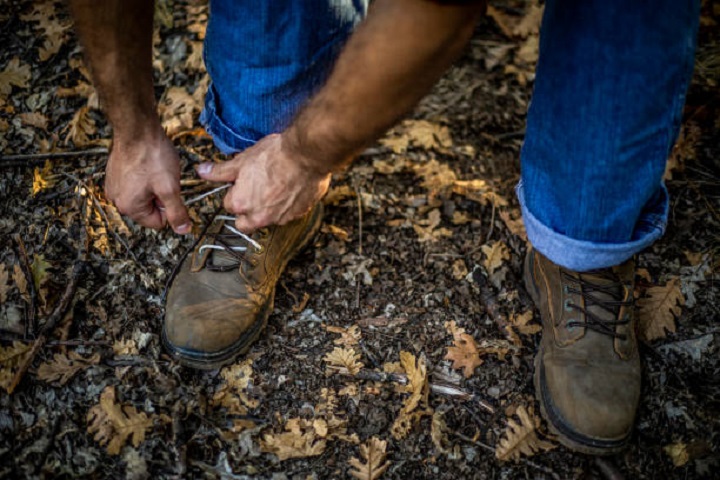
The most consistent complaint across any Chippewa Super Logger Boot review thread is the break-in experience and initial tightness. Our team's targeted fixes:
- Heel slippage in the first week — this is normal as the heel counter hasn't softened yet. Thick socks and firm ankle lacing reduce it. It resolves fully within two weeks in most cases.
- Toe box pressure against the steel cap — the cap requires clearance. Size up half a size before trying a wide width; the last runs narrow, not short.
- General foot fatigue by mid-shift — swap the stock insole for an aftermarket option. Our guide to work boots for sore feet walks through insole selection criteria in depth.
- Hot spots on the ankle — typically the boot tongue creasing sideways. Reposition and flatten the tongue carefully before lacing each morning.
Premature Wear and Durability Issues
- Welt separation — almost always caused by neglected conditioning. Dry leather loses flexibility and the adhesive bond at the welt weakens. Regular conditioning prevents this completely.
- Sole delamination before 500 hours of use — take the boot to a cobbler for assessment; this points to a manufacturer defect rather than user wear.
- Leather cracking at the toe box — caused by either zero conditioning or the wrong product. Petroleum-based products like Vaseline degrade leather over time. Use a dedicated full-grain boot conditioner.
- Lace hook bending or pulling free — replace with heavy-duty hooks from a cobbler supply. Hardware replacement is straightforward on any Goodyear-welted boot and costs very little.
Frequently Asked Questions
Is the Chippewa Super Logger Boot made in the USA?
Select Super Logger SKUs are manufactured in the USA, and our team recommends specifically seeking out those models. USA-made versions consistently show tighter welt stitching, better leather selection, and more precise assembly than imported alternatives. Check the product label or description carefully — Chippewa sells both domestic and imported versions under similar names.
How long does the Chippewa Super Logger Boot typically last?
With proper conditioning and timely resoling, most workers get 5–7 years of heavy use from a pair. The Goodyear welt construction is key — a cobbler can replace the outsole two or three times before the upper itself wears out. Workers who skip conditioning and resole late typically see the boot fail at the welt around year two or three instead.
Does the Chippewa Super Logger run true to size?
Our team's consistent finding is that the Super Logger runs slightly narrow and slightly long. Workers with average-width feet often stay true to size, but anyone with a wider forefoot should try a wide width or size up half a step. The boot's steel toe requires clearance at the front, so sizing conservatively is the right approach rather than going tight and hoping the leather stretches enough.
Next Steps
- Verify the specific SKU — confirm whether the model carries a USA-made designation and check for an EH rating if the work environment requires it.
- Order the correct size — measure foot width before purchasing and consider a wide-width or half-size up if the forefoot runs wide.
- Condition the boot before the first wear — apply a quality full-grain leather conditioner to the entire upper inside and out before putting them on.
- Plan the break-in schedule — schedule shorter shifts for the first two weeks rather than committing to a 10-hour day in brand-new boots.
- Source an aftermarket insole immediately — the stock footbed is adequate for light use but most workers benefit from upgrading it from day one.


About Jason Flores
Jason Flores is a multi-talented individual whose unique journey has led him to blend his passion for craftsmanship and fashion into a creative endeavor. During his formative years, he found himself immersed in the world of handiwork, spending countless hours in his grandfather's workshop. These early experiences allowed him to develop a deep understanding of practical skills and a keen eye for detail.Simultaneously, Jason harbored an innate love for fashion, drawn to the artistry and self-expression it offers. As he grew older, he recognized the potential to combine his proficiency in craftsmanship with his fashion sensibilities. This realization led him to a path where he began to explore and write about the intersection of fieldwork fashion.
Get FREE Boots Gifts now. Or latest free toolsets from our best collections.
Disable Ad block to get all the secrets. Once done, hit any button below