Our team spent several weeks pushing through cold-weather job sites — frozen concrete at first light, extended shifts inside refrigerated warehouses, and outdoor work where the ground never warms up past noon. The Keen Sheridan insulated work boot kept surfacing in conversations with tradespeople who operate in those conditions, so we sourced a pair and ran a structured field evaluation. For anyone building a cold-weather boot shortlist, our work boot reviews section covers the full range of what our team has tested side by side.
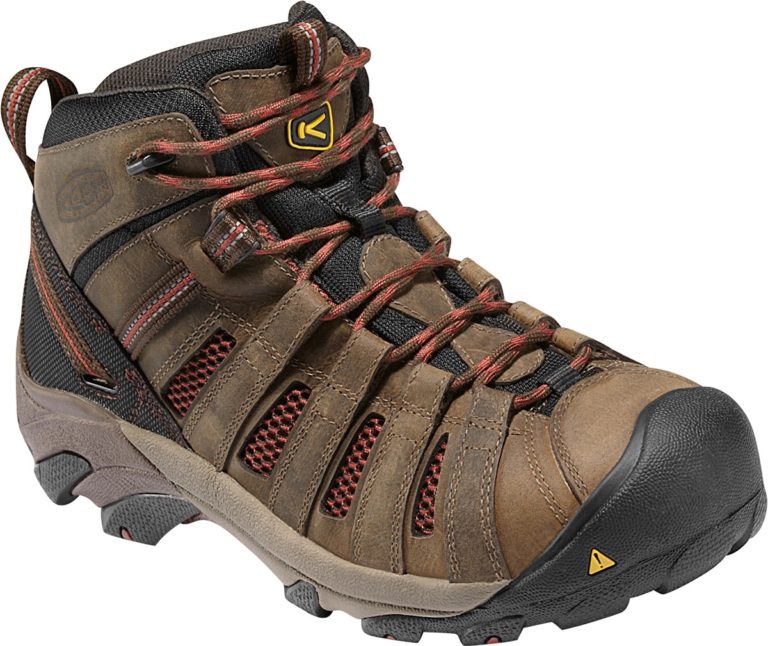
The Sheridan sits in KEEN Utility's winter-specific lineup. It pairs a waterproof full-grain leather upper with 200 grams of insulation — enough to maintain working comfort in moderate cold, though not engineered for extreme sub-zero conditions. The steel toe meets ASTM F2413 standards for impact and compression, the outsole runs a rubber compound formulated for slip resistance on cold and wet surfaces, and the footbed is a dual-density compression-molded EVA built around KEEN's metatarsal support geometry. This is a purpose-built cold-weather work boot with a clear job site mandate.
What separates the Sheridan from the insulated lifestyle boots crowding the winter market is its construction discipline. The profile is lower and more structured. The midsole is tuned for lateral movement and sustained load-bearing use — not casual walking. Our team noticed this immediately when placing the Sheridan alongside retail winter options at comparable pricing. The structural difference is visible before logging a single shift.
Contents
Field Best Practices for the Keen Sheridan Insulated Work Boot
Break-In Protocol
The Sheridan's upper is noticeably stiff out of the box — stiffer than KEEN's non-insulated models by a meaningful margin. The combination of thick waterproof leather and insulation batting creates an upper that resists flexing until it's worked in. Our team's standard protocol: start with two to three shorter shifts before committing to a full eight-hour day. Walking on varied terrain — pavement, gravel, stairs — accelerates the conforming process more effectively than standing work alone.
The most common mistake workers make is forcing the Sheridan into a full shift immediately. Heel blisters and ankle collar irritation appear precisely because the leather hasn't shaped to the foot yet. Our team documented minor collar friction on day one that had fully resolved by day four. By day six, the fit was dialed. A light application of leather conditioner after the first two or three days can ease the break-in without compromising the waterproofing — our guide on how to clean and maintain work boots covers conditioner selection for full-grain uppers in detail.
Pro insight: Apply a thin layer of leather conditioner to the ankle collar on day two. It softens the break-in friction point and significantly reduces collar blistering before the upper has fully conformed.
Sock Pairing and Thermal Management
Insulation rating alone doesn't determine warmth. Our experience across dozens of insulated work boots confirms that sock selection accounts for as much of the thermal equation as the boot's insulation weight. For a 200-gram boot like the Sheridan, mid-weight merino wool socks are the correct pairing. They manage moisture actively, retain thermal value when damp, and maintain enough volume to keep footbed contact consistent throughout the shift. Synthetic mid-layers are acceptable as a secondary option. Cotton is not an option in an insulated work boot — moisture accumulates, insulation value collapses, and cold sets in fast.
Most workers operating in sub-freezing conditions benefit from rotating two pairs during extended outdoor shifts. A dry pair staged for the afternoon portion of a long outdoor day makes a measurable difference in sustained warmth and foot hygiene. Our team standardizes this approach for any job site where temperatures hold at or below 20°F for the full duration of a shift.
Price Point and Long-Term Value
| Boot | Insulation | Waterproof | Toe Type | EH Rating | Price Range |
|---|---|---|---|---|---|
| KEEN Sheridan | 200g | Yes | Steel | Yes | $130–$165 |
| Wolverine Floorhand | 200g | Yes | Steel | Yes | $120–$150 |
| Timberland PRO Boondock | 200g | Yes | Alloy | No | $150–$185 |
| Carhartt Rugged Flex Insulated | 200g | Yes | Composite | No | $125–$160 |
Upfront Cost vs. the Competition
The Sheridan typically prices between $130 and $165 depending on retailer and colorway — squarely mid-tier in the insulated work boot market. It sits above budget cold-weather options from generic brands but below premium alternatives from Danner or Timberland PRO's top-end builds. For that price, KEEN Utility's construction quality holds up well both on inspection and in sustained use.
The direct competitors at this price range — Wolverine's Floorhand insulated series and Carhartt's Rugged Flex insulated offerings — provide similar insulation ratings but different outsole compounds, toe geometries, and protection packages. Our team's consistent finding: KEEN's combination of wider toe box, EH rating, and genuine waterproofing at this price tier is genuinely difficult to match without moving up a significant cost bracket.
Budget reality: At this price tier, the Sheridan is one of the few options combining EH rating, 200-gram insulation, and waterproofed full-grain leather in a single package — that combination typically appears only at higher price points from competing brands.
Durability and the Cost-Per-Shift Calculation
Longevity on KEEN Utility boots tracks closely with how aggressively they're used. On standard construction site work — no heavy chemical exposure, no grinding or abrasive concrete surfaces — our team's experience points to an 18-to-24-month service life before the outsole shows meaningful wear degradation. On rougher surfaces or in more chemically active environments, that window shortens.
At a $150 average retail price over an 18-month service life, the Sheridan runs under $0.30 per working day — a strong cost-per-use figure relative to competitors at equivalent specification. Our review of the KEEN Utility Logandale work boot showed a similar durability trajectory at an overlapping price point, which suggests this lifespan estimate reflects KEEN Utility's construction standard broadly, not just the Sheridan specifically.
Common Fit and Wear Issues with the Keen Sheridan Insulated Work Boot
Sizing and Width Challenges
KEEN builds its Utility line with a notably wider toe box than traditional work boots. The Sheridan follows that pattern directly. Workers accustomed to narrower fits — particularly those coming from Wolverine, Georgia Boot, or Rocky — frequently report that the Sheridan feels loose in the forefoot on first wear. Our team's recommendation: size down a half size for standard-width feet. The insulation layer adds slight interior volume that narrows the effective fit relative to a non-insulated model of the same nominal size.
- Wide-foot workers generally find the standard Sheridan fit accurate without adjustment
- Narrow-heel combined with wide-forefoot anatomy occasionally produces persistent heel slippage that doesn't resolve through break-in
- A volume insole can compensate for minor forefoot looseness without requiring a full size change
- Heel slippage that persists past week two of use is a structural mismatch, not a break-in artifact
Warning: Heel slippage that continues past the two-week mark is a structural fit mismatch — not a break-in issue. Trying a half-size down or adding a volume insole is the correct diagnostic step before writing off the boot entirely.
Waterproofing and Moisture Management in Use
The Sheridan's waterproofing holds consistently under normal job site conditions — rain, wet snow, slushy concrete, and shallow standing water. It is not a submersion boot. Sustained exposure to water above ankle height will eventually compromise the seam sealing at the collar and upper. Our team documented moisture ingress after approximately 40 minutes of partial submersion during a wet-weather drainage site evaluation — ankle-deep water under sustained exposure.
The practical implication is straightforward: for work in flood-prone, drainage-adjacent, or high-water environments, the Sheridan performs excellently up to a defined threshold. Beyond that threshold, a taller gaiter or purpose-built rubber boot is the correct answer. The waterproofing is excellent for its class — it simply has a ceiling, as all leather-upper waterproofing does at this price tier.
Strengths and Real-World Limitations
What the Sheridan Does Well
The traction performance is the first characteristic our team noticed in active field use. The rubber outsole compound stays pliable in cold temperatures — a critical quality that cheaper outsole formulas consistently fail to deliver. On packed snow and light ice, the grip is better than our team expected at this price point. The asymmetrical steel toe, a KEEN design signature across the Utility line, provides measurably more big-toe room than a conventional round steel cap. Workers who've experienced cumulative toe box pressure from traditional steel toes report sustained comfort improvement with KEEN's geometry over long shifts.
- EH (electrical hazard) rating is standard on most Sheridan configurations — a practical advantage for electricians, HVAC technicians, and utility crews working in cold climates
- Slip-resistant outsole compound performs reliably on cold and wet surfaces, including tile and painted concrete
- Full-grain leather upper resists minor abrasion and holds waterproofing treatment well over time
- KEEN's metatarsal pad geometry reduces fatigue during sustained standing work
Our review of the KEEN Utility Milwaukee work boot covers a three-season counterpart that shares much of the Sheridan's construction philosophy for workers who don't require winter insulation — a useful comparison for anyone evaluating KEEN Utility's lineup across seasons. According to OSHA's cold stress guidelines, foot insulation is a primary factor in preventing cold-related occupational injuries — which makes selecting the correct insulation weight for actual working temperatures a safety decision, not merely a comfort preference.
Where It Falls Short
The Sheridan is heavy. At roughly 1.8 pounds per boot in a size 10, it sits on the heavier end of the 6-inch work boot category across all construction types. Workers who cover significant ground daily — site supervisors, inspectors, and delivery crews — will feel that weight accumulate through the afternoon. It's not a disqualifier for most use cases, but it's an honest limitation that workers transitioning from lighter boots will notice immediately and consistently.
The 200-gram insulation rating performs well in the 15°F to 32°F working range. Below 10°F with wind exposure, or during extended static work — standing at a monitoring post, working machinery from a fixed position — the insulation begins to ask more of the sock layer than is ideal. Workers in genuinely extreme cold climates, northern construction sites, or elevated-altitude winter work should evaluate 400-gram alternatives. The Sheridan's thermal window is well-matched to moderate winter work environments. Outside that window, it struggles.
Final Thoughts
The Keen Sheridan insulated work boot earns its place as a strong mid-tier cold-weather work option — particularly for tradespeople operating in moderate winter conditions who need EH protection, genuine waterproofing, and comfortable all-day fit in a single package. Our team recommends it without reservation for that specific use case. Anyone considering the Sheridan should try it on with their preferred winter sock weight before purchasing — KEEN's wider toe box either fits the foot well or it doesn't, and that fit question is best answered in person, not from a size chart.


About Jason Flores
Jason Flores is a multi-talented individual whose unique journey has led him to blend his passion for craftsmanship and fashion into a creative endeavor. During his formative years, he found himself immersed in the world of handiwork, spending countless hours in his grandfather's workshop. These early experiences allowed him to develop a deep understanding of practical skills and a keen eye for detail.Simultaneously, Jason harbored an innate love for fashion, drawn to the artistry and self-expression it offers. As he grew older, he recognized the potential to combine his proficiency in craftsmanship with his fashion sensibilities. This realization led him to a path where he began to explore and write about the intersection of fieldwork fashion.
Get FREE Boots Gifts now. Or latest free toolsets from our best collections.
Disable Ad block to get all the secrets. Once done, hit any button below