Last fall, I laced up a pair of boots I'd worn for two seasons and pushed five miles through hardwood ridges to reach my stand. By mile three, my toes were burning from pressure and my heel was lifting with every step. I'd sized them to match my sneaker size — and paid for it with a hunt cut short. If you've wondered about how hunting boots should fit, you're asking the right question at the right time. A poor fit doesn't just cause blisters; it drains your energy, shortens your time in the field, and creates foot problems that follow you home. For footwear safety principles that apply across all boot categories, see the safety standards section on this site.
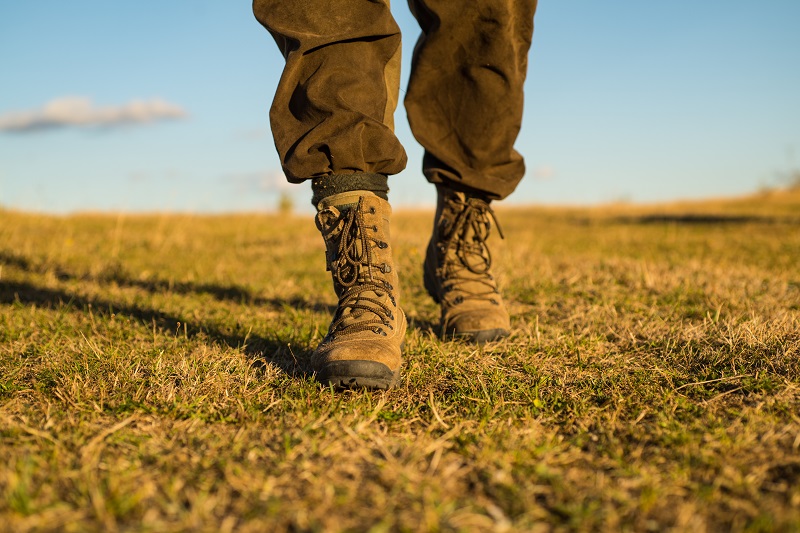
Hunting boots carry you through terrain that tests every aspect of your footwear — mud, brush, freezing temperatures, and long miles on steep grades. They're engineered differently from everyday shoes, with stiff shanks, aggressive outsoles, and layered insulation that all change how they feel on your foot. The right fit accounts for all of that and still leaves you comfortable at mile eight.
This guide walks through the process from start to finish: how to measure correctly, what to check before you buy, how terrain changes what you need, and what mistakes to avoid. Whether you hunt flat agricultural ground or steep mountain backcountry, the core principles of a proper fit stay the same.
Contents
- Understanding How Hunting Boots Should Fit: Start With Accurate Measurements
- Simple Checks Before You Buy
- How Terrain and Hunt Type Affect the Fit You Need
- Breaking In Your Hunting Boots the Right Way
- Fit at Different Price Points: What to Expect
- Common Fitting Mistakes That Cost You in the Field
- Hunting Boot Fit vs. Work Boot Fit: Key Differences
- Frequently Asked Questions
- Final Thoughts
Understanding How Hunting Boots Should Fit: Start With Accurate Measurements
Before you walk into a store or click "add to cart," you need real measurements. Most people assume their shoe size is fixed because they've bought the same size for years. But foot size shifts with age, weight, and activity level — and hunting boots are sized differently than casual footwear. A measurement taken today is the only reliable starting point.
The Brannock Device and Why It Matters
The Brannock Device — the metal measuring tool you see at most shoe retailers — gives you three key numbers: overall foot length, arch length, and width. All three matter. Most hunters measure only length and ignore width, which is one of the top reasons boots feel wrong after a full day in the field.
- Measure both feet — most people have one foot slightly larger. Always fit to the larger foot.
- Measure in the afternoon or after walking. Feet swell as the day progresses, often by a half size or more.
- Wear the socks you plan to hunt in during the measurement. Thick wool adds real volume inside the boot.
Pro tip: Always measure your feet later in the day — feet swell significantly after hours of walking, and hunting boots sized in the morning can feel like a vice by afternoon.
Measuring for Volume, Not Just Length
Foot volume is the combination of width, arch height, and overall girth. A narrow boot on a wide foot is just as bad as a boot that's too short. Many hunting boot manufacturers offer multiple widths — D (standard), EE (wide), and EEE (extra wide). If you have flat feet or high arches, volume fit becomes even more critical because foot shape directly affects how your foot fills the boot under load. A flat foot spreads wider under pressure; a high arch leaves dead space in the midfoot that allows sliding and generates friction with every step.
Simple Checks Before You Buy
Once you have your measurements, test the boot in person whenever possible. These three checks take under five minutes and give you a clear picture of whether a boot will actually work for your foot in the field.
The Thumb-Width Test
With the boot on and laced to your normal tension, press your thumb down between your longest toe and the end of the boot. You should feel roughly a thumb's width of space — about half an inch. Less than that and your toes jam into the toe box on downhill terrain. More than that and your foot slides forward, generating friction at the heel with every uphill step. This single check eliminates more bad purchases than anything else.
The Heel Slip Check
Stand flat-footed and lift your heel slightly while the boot is laced. A small amount of movement — no more than a quarter inch — is acceptable in a new leather boot before break-in. Anything beyond that means the boot is too big or too wide in the heel cup. Heel slip creates friction. Friction creates blisters. The equation is that direct, and the problem will not improve with time on the trail.
Checking the Toe Box
Wiggle your toes. They should move freely without pressing against the sides or ceiling of the boot. A cramped toe box cuts circulation — especially dangerous in cold weather when blood flow to your extremities matters most. Check that your pinky toe isn't pressing the boot wall. If it is, the boot is either too narrow or the wrong shape for your foot. Don't assume it'll stretch enough to accommodate. Most synthetic hunting boots don't stretch meaningfully at the toe box, and even leather boots won't stretch in the right direction to solve a width problem.
How Terrain and Hunt Type Affect the Fit You Need
There is no single correct fit for every hunting situation. The terrain you cover and the conditions you hunt in directly shape what you need from a boot — including how precisely it needs to fit. A waterfowl hunter standing in a blind for four hours has different requirements than an elk hunter covering ten miles of vertical terrain with a full pack.
Flat Ground vs. Steep Terrain
On flat agricultural land, food plots, or open meadows, fit tolerances are wider. Your foot doesn't shift as aggressively inside the boot, so minor volume mismatches are less punishing. On steep terrain, the rules tighten considerably:
- Descending: Your foot drives forward into the toe box. Too little space means bruised toenails and nail loss on long descents.
- Ascending: Your heel lifts with each step. Too much heel cup volume causes relentless friction at the back of the foot.
- Side-hilling: Your foot rolls laterally. A loose midfoot fit causes ankle fatigue and reduces stability on uneven ground.
If you hunt western big game or mountain terrain, prioritize a snug, precise fit through the heel and midfoot over out-of-the-box comfort. You can break in a stiff boot. You cannot fix a fundamentally poor fit after the fact.
Cold Weather Hunting and Sock Thickness
Insulated hunting boots — anything with 400g Thinsulate or more — are designed to be worn with a medium-to-heavy wool sock, not a thin athletic sock. If you try on an insulated boot while wearing a thin sock, it will feel correct in the store and loose in the field when you switch to heavy wool. Our boot insulation guide explains exactly how gram ratings translate to real-world warmth and which sock weight pairs with each insulation level. The bottom line: bring your actual hunting socks to every fitting. The volume difference is significant and measurable.
Warning: Never buy hunting boots expecting them to break in to the right width — if the toe box or heel cup feels wrong in the store, it will still feel wrong on the mountain.
Breaking In Your Hunting Boots the Right Way
Even a perfectly fitted boot needs a break-in period. The upper material — especially full-grain leather — needs time to conform to the specific contours of your foot. The midsole needs to compress to your gait pattern. Skipping this process is the primary reason hunters end up in pain on opening day, regardless of how well the boots fit when they bought them.
A Practical Break-In Schedule
Start at least three weeks before opening day. Here is a schedule that works reliably:
- Week 1: Wear the boots around the house for one to two hours per day. The upper begins conforming without the stress of trail miles or pack weight.
- Week 2: Short walks of thirty to sixty minutes on varied surfaces — pavement, gravel, grass. Begin loading the boot progressively.
- Week 3: Two- to three-mile hikes with a loaded pack. Replicate your hunting conditions as closely as possible during these walks.
- Before opening day: One or two full-length outings at full pack weight. By this point the boot should feel natural and any hot spots should have resolved.
If a specific hot spot keeps reappearing after week two, that is a fit problem — not a break-in problem. Reassess the boot. Pairing your boots with quality wool hiking socks during the break-in phase also helps manage friction and accelerates conforming by adding consistent cushion and wicking moisture away from the skin.
Pro insight: A hot spot that reappears in the same location every time is a fit signal, not a break-in issue — the boot is wrong for your foot shape, not just new.
Fit at Different Price Points: What to Expect
Price and fit quality are related, but the relationship is not always obvious. More expensive boots do not automatically fit better out of the box — but they tend to use materials that conform more precisely over time, and they are far more likely to be available in multiple widths and half sizes. Here is what each tier typically delivers:
| Price Range | Upper Material | Fit Precision | Width Options | Break-In Period |
|---|---|---|---|---|
| Under $100 | Synthetic / Nylon | Basic — generic lasts | Usually D only | 1–2 weeks |
| $100–$200 | Leather / Synthetic blend | Good — more last variety | D, some EE | 2–3 weeks |
| $200–$350 | Full-grain leather | Very good — anatomical lasts | D, EE, some EEE | 3–4 weeks |
| $350 and up | Premium leather / GORE-TEX | Excellent — close conforming | D, EE, EEE + half sizes | 2–4 weeks |
The biggest jump in fit quality happens at the $100–$150 threshold. Below that, boots are built on generic lasts that fit average feet adequately but struggle with foot shapes outside the middle of the bell curve. If your foot is wide, narrow, or has a pronounced arch, spending at least $150 is almost always necessary to find a boot that fits correctly. According to Wikipedia's overview of shoe sizing systems, last design and regional sizing standards vary significantly across manufacturers — which is another reason why trying boots on in person, with your actual hunting socks, remains the most reliable approach regardless of price tier.
Common Fitting Mistakes That Cost You in the Field
Most hunting boot fit failures trace back to a handful of predictable errors. Knowing what they are lets you skip the trial-and-error entirely and get it right on the first purchase.
Sizing From Your Sneaker Size
This is the most common mistake hunters make. Hunting boots typically run a half to a full size smaller than athletic shoes because of the thicker insole, heavier materials, and different last geometry. A size 11 running shoe does not translate to a size 11 hunting boot. Always size from a fresh Brannock measurement, not from whatever number is printed on your current sneakers. Those numbers rarely line up, and assuming they do is how you end up with boots that fail you by mile three.
Ignoring Sock Thickness
If you try on boots wearing thin socks but plan to hunt in heavy wool, the fit you feel in the store will not match what you experience in the field. Heavy hunting socks can add up to half a size of volume inside the boot. Fit every boot in the exact socks you plan to wear on your hunt — no exceptions. A few additional sock rules worth following:
- Avoid cotton entirely. It compresses under load, loses insulation when wet, and dramatically increases blister risk.
- Mid-weight merino wool — around 18 to 20 micron — is the standard for most three-season and early-winter hunting conditions.
- For extreme cold, a thin liner sock under a heavy outer sock adds warmth without sacrificing too much boot volume — but account for both layers when you size the boot.
Hunting Boot Fit vs. Work Boot Fit: Key Differences
If you have bought work boots before, you already understand the fundamentals of functional footwear fit. But hunting boots differ from work boots in ways that matter when you are evaluating a new pair. Understanding those differences helps you make a smarter decision, especially if you are crossing over between categories or buying your first dedicated pair of hunting boots.
- Toe room: Work boots prioritize protection over extra forward space. Hunting boots need more toe room to absorb the foot's forward drive on descents without causing nail damage.
- Heel security: Both categories require a secure heel, but hunting boots — especially on mountain terrain — demand an even tighter hold because of constant uphill and lateral movement.
- Break-in expectations: Work boots built for daily use need to be comfortable quickly. Stiff leather hunting boots are expected to conform closely over several weeks and become more precise with use, not less demanding.
- Insulation impact on fit: Most work boots are uninsulated or lightly insulated. Hunting boots in the 400–1000g insulation range require deliberate sock pairing that changes how the boot fits — a variable work boots rarely introduce.
- Width availability: Work boots frequently offer wide-width options across the entire size range. Hunting boot width options are more limited, especially below the $200 tier.
The underlying principles are the same: secure heel, appropriate toe room, correct width, and proper sock pairing. The difference is that hunting terrain amplifies every fit error. A minor heel slip that is tolerable on a job site becomes a blister factory after four miles of steep trail with a loaded pack.
Frequently Asked Questions
Should hunting boots fit tight or loose?
Neither extreme is correct. Hunting boots should fit snugly through the heel and midfoot with about a thumb's width of space in the toe box. A tight boot cuts circulation and causes pressure blisters. A loose boot allows the foot to slide, creating friction at the heel and toe with every step. Snug — but not constricting — is the target, and that line is easier to find than most hunters expect once you run the basic fit checks.
How much bigger should hunting boots be than my regular shoe size?
Hunting boots typically run a half to a full size smaller than athletic shoes because of thicker insoles and heavier materials. Do not assume your sneaker size translates directly to a hunting boot size. Measure your foot with a Brannock Device while wearing your hunting socks, then use that measurement as your starting point. The numbers between athletic shoes and hunting boots rarely align, and assuming they do is one of the most common and costly fitting mistakes hunters make.
Can hunting boots be worn right out of the box without breaking them in?
Technically yes, but it is not recommended for any meaningful hunt. Full-grain leather hunting boots need two to four weeks of progressive break-in to conform to your specific foot shape and eliminate potential hot spots. Wearing stiff, unbroken boots on a multi-mile hunt with pack weight significantly increases your blister and foot fatigue risk. Start the break-in process at least three weeks before opening day and build up mileage gradually.
Final Thoughts
Getting hunting boot fit right is one of the highest-return investments you can make before any season. Measure accurately, bring your hunting socks to every fitting, run the three basic fit checks before you commit to any pair, and give yourself enough time to break them in properly. If you are ready to find your next pair, use the terrain type and insulation needs that match your hunts as your first filter — then apply the fit standards in this guide to find a boot that performs through every mile of the season.


About James Miller
James Miller is a dedicated individual based in the vibrant city of San Francisco, CA, USA. His unwavering passion lies in the realm of construction, where he finds fulfillment in exploring and documenting various facets of construction equipment and processes. A graduate of the University of California Merced, James holds a dual degree in mechanical and electrical engineering, which has equipped him with a solid foundation in technical knowledge.With a keen eye for detail and a knack for articulation, James has channeled his enthusiasm into writing about the intricacies of construction gear and methodologies. His insightful writings offer valuable insights to both industry professionals and curious enthusiasts, shedding light on the machinery and techniques that shape the built environment.James Miller's educational background in mechanical and electrical engineering lends credibility to his work, allowing him to delve into the technical nuances of construction with precision. His passion for sharing knowledge and fostering understanding in the construction field is evident in his contributions, making him a respected voice in the industry.
Get FREE Boots Gifts now. Or latest free toolsets from our best collections.
Disable Ad block to get all the secrets. Once done, hit any button below