A few years back, a friend of mine showed up to his first day on a construction site wearing a pair of beat-up sneakers. His foreman sent him home before he'd even clocked in. That moment stuck with both of us — the right footwear isn't a suggestion in most trades, it's the baseline. Understanding the different types of work boots can save you from injury, job-site rejection, and a whole lot of discomfort. Our boot tips and guides section is a great place to start if you want the full picture on work footwear.
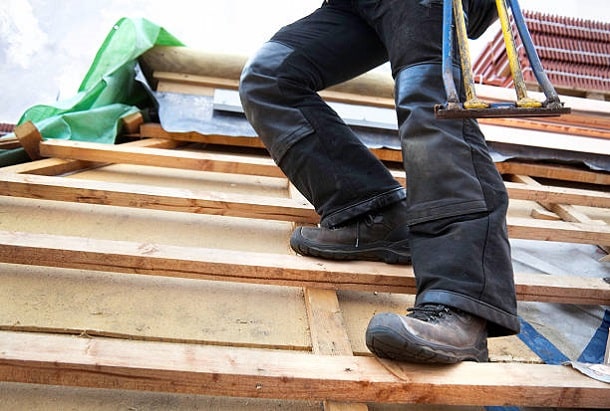
Work boots come in a surprisingly wide range of styles, materials, and protection levels. A logger needs something completely different from an electrician, and a warehouse worker has different priorities than someone dealing with sub-zero outdoor conditions every day. The good news is that manufacturers have designed boots for nearly every scenario — you just need to know what separates one type from another.
This guide walks through the major categories of work boots, what makes each one distinct, how to compare key features side by side, and how to keep whatever you buy working properly for as long as possible.
Contents
What Work Boots Are Actually Built For
Safety Standards You Should Know
Work boots aren't just sturdy shoes. They're engineered against specific safety benchmarks. In the U.S., most occupational footwear is tested to OSHA foot protection standards, which reference ASTM F2413 ratings covering impact resistance, compression resistance, and other hazard categories. Your employer or job site may require boots that meet certain ratings before you step foot on the floor — so knowing what the labels mean is genuinely useful.
Here are the most common ratings you'll see stamped inside a boot or listed on the box:
- I/75 and C/75 — impact and compression resistance rated at 75 foot-pounds
- EH — electrical hazard protection against accidental contact with live circuits
- PR — puncture-resistant sole for nail-heavy or debris-heavy environments
- WP — waterproof construction to keep moisture out
- MT — metatarsal guard that protects the bones across the top of the foot, not just the toes
How Work Boots Differ From Regular Boots
A casual boot might look rugged, but it won't protect you from a dropped beam or electrical contact. Work boots use reinforced toe caps, slip-resistant outsoles, and specialized midsoles designed to absorb impact across a full shift. The upper material also plays a big role in long-term performance and day-to-day comfort — for a closer look at that tradeoff, this comparison of leather vs. synthetic work shoe materials breaks it down clearly and fairly.

Types of Work Boots by Job and Hazard
Most work boots fall into recognizable categories based on the hazards they're designed to address. Here's what you need to know about each one.
Steel Toe and Composite Toe Boots
These are the most common types of work boots you'll encounter. Both protect your toes from impact and compression, but they take different approaches. Steel toe caps are heavier and conduct temperature — they get cold in winter and warm in summer. Composite toes, made from carbon fiber, fiberglass, or hard plastic, are lighter and non-conductive, which matters a great deal in environments with live electrical hazards or metal detectors at security checkpoints.
For a detailed side-by-side, see our guide on steel toe vs. composite toe work boots. The right choice depends on your trade, your work environment, and how much you're on your feet each day.
Electrical Hazard (EH) Boots
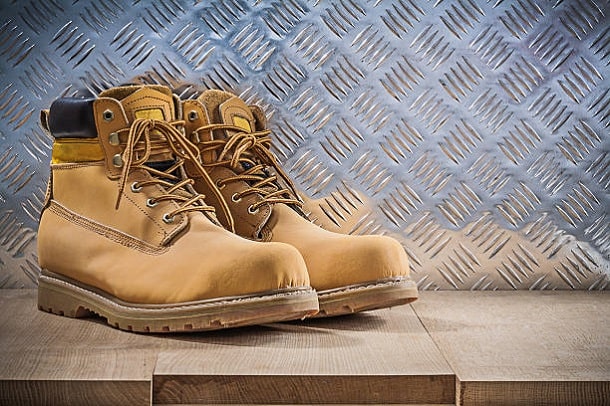
If your job puts you near live electrical circuits, EH-rated boots are not optional. These boots have non-conductive soles and heels that create a secondary barrier between you and an energized surface. They're standard issue for electricians, utility workers, and anyone pulling wire in active panels or working around overhead lines.
One important detail: EH protection is a secondary safeguard, not a replacement for proper electrical safety procedures. The boots are designed for accidental contact scenarios — they're not built for intentional or sustained exposure to live current.
Waterproof and Insulated Boots
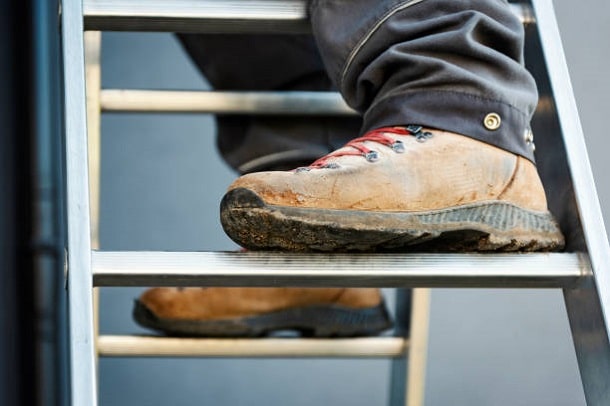
Outdoor workers — landscapers, construction crews, utility technicians — often deal with wet or cold conditions that standard boots simply weren't built for. Waterproof boots use membranes like Gore-Tex or treated full-grain leather to block moisture from the outside. Insulated boots add a lining, typically measured in grams, to trap warmth during cold-weather work.
Keep in mind that waterproofing and heavy insulation reduce breathability. If you're moving quickly or working in milder temperatures, you may end up sweating more than the weather demands inside a boot built for blizzard conditions. Match your insulation rating to the temperatures you'll actually face — not worst-case assumptions.
Logger and Lineman Boots
Logger boots are tall — usually 8 to 10 inches — with aggressive lug soles and a pronounced heel. That heel isn't just aesthetic. It locks into chainsaw kickback guards and helps you maintain footing on uneven, sloped, or unstable terrain. They're purpose-built for demanding outdoor conditions where ankle support and ground grip are survival tools. If you're weighing whether a logger boot fits your actual needs, our breakdown of logger boots vs. work boots is a useful read before you spend the money.
Tactical and Military-Style Boots
Originally designed for military personnel and law enforcement, tactical boots have crossed over into trades that need lightweight protection combined with quick mobility. They're generally lighter than traditional work boots and often feature side zippers or speed-lace systems for fast on and off. You'll see them on security professionals, emergency responders, and field technicians who cover a lot of ground during a shift.

Weighing Your Options: Features Compared
Protection vs. Weight
The more protection a boot packs in, the heavier it tends to be. A full steel toe with metatarsal guard, puncture-resistant plate, and thick insulation will noticeably outweigh a lightweight composite toe sneaker-style safety boot. Over an eight-hour shift on hard floors, that weight difference compounds faster than most people expect.
Pro tip: Pick up the boots in your hands before buying — if they feel heavy just holding them, imagine wearing them for ten hours on concrete. Unnecessary weight causes fatigue faster than most hazards you'll face.
Here's a side-by-side look at common boot types across the features that matter most:
| Boot Type | Toe Protection | Typical Weight | EH Rated | Best For |
|---|---|---|---|---|
| Steel Toe | High | Heavy | Sometimes | Construction, manufacturing |
| Composite Toe | High | Medium | Often | Electrical work, airports |
| EH Boot | Varies | Medium | Yes | Electricians, utility workers |
| Waterproof Boot | Varies | Medium–Heavy | Sometimes | Outdoor, wet environments |
| Logger Boot | High | Heavy | Rarely | Logging, forestry, linework |
| Tactical Boot | Low–Medium | Light | Sometimes | Security, emergency response |
Durability vs. Comfort
Full-grain leather boots tend to last longer and eventually conform to the shape of your foot, but they require a real break-in period and need regular conditioning to stay in good shape. Synthetic uppers are softer right out of the box and weigh less, though they typically don't hold up as long through years of punishing daily use. Both materials have their place — it depends on what you value more in the short and long term.
Your closure system also affects how a boot feels across a full shift. The tradeoffs between lace-up vs. slip-on work boots come down to ankle support, how frequently you're removing your boots, and personal preference. And underneath all of it, the outsole is what actually determines grip, durability, and surface compatibility — understanding the different types of boot soles will help you avoid picking a boot that's technically safe but wrong for your actual floor or terrain.
How to Choose and Care for Your Work Boots
Matching the Boot to the Hazard
Start with what your job site actually requires. OSHA regulations and your employer may mandate specific ratings — EH, PR, steel toe — before you're legally allowed on a work floor. Once you've covered the required minimums, think through the secondary factors: how many hours are you on your feet, what surface are you walking on, and what temperatures are you working in?
- Warehouse or factory on concrete: prioritize cushioning and arch support over maximum protection ratings
- Outdoor construction: waterproofing and ankle stability matter most, especially on uneven ground
- Electrical trades: composite toe plus EH rating is the standard combination — non-conductive throughout
- Logging and forestry: tall shaft, aggressive outsole, and a heel built for terrain grip are non-negotiable
- Light industrial or warehouse receiving: a composite toe sneaker-style boot may cover everything you need at a fraction of the weight
Boot Care Basics
Work boots are a real investment. How you maintain them determines how long they stay protective and comfortable. Leather boots need regular cleaning and conditioning — dried-out leather cracks faster than you'd think and loses its waterproof treatment in the process. Synthetic boots are lower maintenance but still need periodic checks for sole separation, upper tears, or worn-through toe protection.
Know when it's time to replace your boots — pushing them past the point of usefulness creates its own risks:
- The outsole is worn smooth in key traction zones
- The midsole has gone flat and no longer absorbs impact
- The upper is cracked, torn, or compromised at the toe cap area
- Waterproofing no longer repels water even after re-treatment with a conditioner or spray
Most work boots hold up for six to twelve months of daily heavy use before the sole or midsole degrades significantly. Quality full-grain leather boots — cleaned, conditioned, and resoled when needed — can stretch well beyond that timeline.
Frequently Asked Questions
What are the main types of work boots?
The main types of work boots include steel toe, composite toe, electrical hazard (EH), waterproof, insulated, logger, and tactical boots. Each type is designed for a different set of workplace hazards and trade environments.
What is the difference between steel toe and composite toe boots?
Steel toe caps are made from metal and offer high impact protection but add significant weight and conduct both heat and cold. Composite toes use materials like carbon fiber or hard plastic — they're lighter, non-conductive, and won't trigger metal detectors, making them a better fit for electrical work or airport security environments.
Do I need EH-rated boots if I'm not an electrician?
Not necessarily, but EH-rated boots are worth considering if your work puts you near exposed wiring, electrical panels, or live circuits in any capacity. Many composite toe boots also carry an EH rating, so you can get both protections without added bulk.
Are waterproof work boots breathable?
Waterproof boots are generally less breathable than non-waterproof versions. The membrane that blocks moisture from entering also slows sweat from escaping. If breathability matters in your work environment, look for boots that use a breathable waterproof membrane like Gore-Tex rather than a fully sealed construction.
How do I know what safety rating my work boots need?
Start by checking with your employer and reviewing your job site's PPE requirements. OSHA standards often reference ASTM F2413 ratings for occupational footwear. If you're unsure which specific ratings apply to your role, your safety officer or a PPE supplier can point you to the right combination.
What is the difference between logger boots and regular work boots?
Logger boots are taller — typically 8 to 10 inches — with a more aggressive lug sole and a raised heel designed for stability on uneven terrain and compatibility with chainsaw safety equipment. Regular work boots are lower-cut and built for flatter or mixed surfaces rather than rough outdoor terrain.
How long do work boots typically last?
With daily heavy use, most work boots last between six and twelve months before the outsole or midsole breaks down enough to affect protection or comfort. High-quality full-grain leather boots, maintained with regular conditioning and resoled when needed, can last considerably longer. Replace boots as soon as protection is compromised — worn soles and cracked uppers are safety risks, not just cosmetic problems.
Key Takeaways
- Match your boot type to the specific hazards of your job — required safety ratings are your starting point, not a nice-to-have.
- Steel toe, composite toe, EH, waterproof, logger, and tactical boots each serve distinct purposes, and no single type covers every trade.
- Weight and comfort matter just as much as protection levels, especially during long shifts on hard surfaces.
- Regular cleaning and conditioning extends boot life and preserves the safety properties that protect you on the job.


About James Miller
James Miller is a dedicated individual based in the vibrant city of San Francisco, CA, USA. His unwavering passion lies in the realm of construction, where he finds fulfillment in exploring and documenting various facets of construction equipment and processes. A graduate of the University of California Merced, James holds a dual degree in mechanical and electrical engineering, which has equipped him with a solid foundation in technical knowledge.With a keen eye for detail and a knack for articulation, James has channeled his enthusiasm into writing about the intricacies of construction gear and methodologies. His insightful writings offer valuable insights to both industry professionals and curious enthusiasts, shedding light on the machinery and techniques that shape the built environment.James Miller's educational background in mechanical and electrical engineering lends credibility to his work, allowing him to delve into the technical nuances of construction with precision. His passion for sharing knowledge and fostering understanding in the construction field is evident in his contributions, making him a respected voice in the industry.
Get FREE Boots Gifts now. Or latest free toolsets from our best collections.
Disable Ad block to get all the secrets. Once done, hit any button below