You're standing at the workwear counter, a Thorogood in one hand and a Red Wing in the other. Both feel substantial. Both cost real money. That moment of indecision — trying to choose between two of the most respected American boot brands — is one thousands of tradespeople face every year. When it comes to Thorogood vs Red Wing boots, the answer isn't obvious, but it is clear once you know what to look for. Browse our full work boot reviews to see how other top brands stack up alongside these two heavyweights.
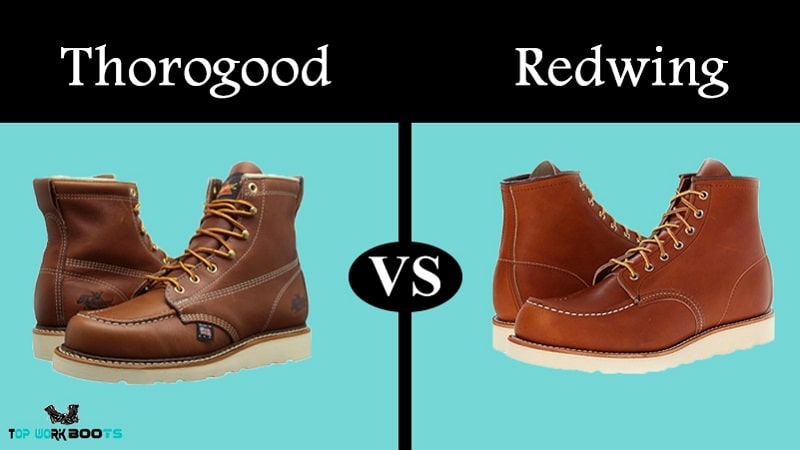
Both brands are American-made, heritage-driven, and built to last for years on demanding job sites. But they're not the same boot, and they're not aimed at the same type of worker. Your trade, your terrain, your foot shape, and your budget all factor into which brand actually serves you better on a daily basis.
This comparison covers everything: construction methods, comfort out of the box, safety certifications, leather care, and total cost of ownership over years of hard use. By the end, you'll have a concrete answer — not a vague "it depends" but an actual recommendation based on how you work and what you need from your footwear.
Contents
Two American Icons: The Story Behind These Brands
Thorogood's Wisconsin Roots
Thorogood has been making boots in Merrill, Wisconsin since 1892. That's over a century of domestic manufacturing without outsourcing production overseas — a claim that's genuinely rare in the footwear industry. The company operates under Weinbrenner Shoe Company and built its reputation on the MAXwelt construction, a variation of the Goodyear welt that uses a wider welt strip for increased waterproofing and structural integrity.
What makes Thorogood stand out is accessibility. Their boots are priced to compete with imported footwear while still being made domestically. You get a well-constructed, job-ready boot at a price point that doesn't require a second mortgage. The American Heritage line in particular has become a go-to for tradespeople who want reliable quality without paying a premium brand tax. Thorogood keeps its lineup focused and practical — safety toes, electrical hazard ratings, slip-resistant soles, and a handful of proven silhouettes that have been refined over generations.
Red Wing's Minnesota Legacy
Red Wing Shoe Company started in Red Wing, Minnesota in 1905 and built its name on boots that could handle the toughest industrial environments. Their Iron Ranger and Moc Toe models have cult followings that span multiple generations of workers. Red Wing operates branded retail stores across the country — a move that lets customers get professionally fitted rather than just sized by a number on the box.
Red Wing uses Goodyear welt construction, the gold standard for resoleable work boots. Their leather comes from their own S.B. Foot Tanning Co. in Minnesota, which gives them direct control over hide quality — something very few boot companies in the world can claim. That vertical integration is a large part of why Red Wing leather develops a patina and ages the way it does. When you condition Red Wing leather year after year, the boot doesn't just stay functional — it gets better looking.
Thorogood vs Red Wing Boots: Key Differences Explained
Construction and Materials
Both brands use Goodyear welt construction — Thorogood's MAXwelt is a variant of it — which means both can be resoled. That's the foundation of a long-lasting work boot investment. The differences start with the leather sourcing and cascade through the entire ownership experience.
| Feature | Thorogood | Red Wing |
|---|---|---|
| Construction | MAXwelt (Goodyear variant) | Goodyear Welt |
| Leather Source | Third-party tanneries | S.B. Foot Tanning Co. (owned) |
| Made in USA | Yes — Merrill, WI | Yes — Red Wing, MN |
| Resoleable | Yes | Yes |
| Safety Toe Options | Steel, composite, soft toe | Steel, composite, soft toe |
| EH Rating Available | Yes | Yes |
| Price Range | $170–$260 | $200–$360+ |
| Resole Cost (approx.) | $80–$120 (third-party cobbler) | $90–$140 (Red Wing stores) |
| In-Store Fitting | No branded stores | Yes, nationwide locations |
If you're weighing a steel toe against a composite option in either brand's lineup, it's worth understanding the trade-offs first. Our breakdown of steel toe vs composite toe work boots covers the key differences in protection level, weight, and temperature performance — factors that matter more than most workers realize before they're standing in a metal detector or working through a Minnesota January.
Fit and Break-In Period
Red Wing holds a clear advantage in fit precision. Their retail stores staff trained boot fitters who measure your foot in multiple dimensions — not just length, but width, arch height, and instep volume. If you have wide feet, high arches, or any non-standard dimension, that fitting experience is genuinely worth the premium. Thorogood runs closer to standard sizing and is sold primarily online and through workwear retailers without dedicated fitting specialists on staff.
Break-in time is a real differentiator. Thorogood's American Heritage models break in relatively quickly — most workers report full comfort within two to three weeks of consistent daily wear. Red Wing's Vibram-soled models can take longer, sometimes a full month before the leather fully molds to your foot's shape. That's not a flaw in the boot. It's a sign of denser, stiffer leather that will outlast softer competition once it's formed to you.
Pro tip: Wear thick wool socks during the break-in period to speed up leather molding and reduce pressure points — both Thorogood and Red Wing respond well to this method.
Which Boot Is Right for Your Job?
When Thorogood Is the Better Pick
Thorogood wins for workers who need a reliable, American-made safety boot at a lower price point without sacrificing construction quality. The American Heritage 6-inch moc toe is one of the best-value work boots on the market today. Choose Thorogood when:
- You need ASTM-rated electrical hazard protection at a price under $220
- You work in construction, roofing, or carpentry and cycle through boots on a regular basis
- You prefer buying online without needing to visit a specialty retailer for sizing
- You want a boot that breaks in fast and delivers real comfort within the first two weeks
- Your employer's safety boot reimbursement cap sits below $250
- You're on rough terrain that puts heavy sole wear on boots — Thorogood's pricing makes replacement less painful
Thorogood also has a strong showing in outdoor and heavy-terrain trades. If you've ever wondered how purpose-built logger boots compare to standard work boots for your application, our guide to logger boots vs work boots breaks down the key differences in heel height, shank stiffness, and chain-saw protection that separate the two categories.
When Red Wing Is the Better Pick
Red Wing is the better choice when you're buying a boot you plan to own and maintain for five or more years. If the full ownership experience — proper fitting, branded conditioners, in-store resoles, and leather that improves over time — matters to you, Red Wing's ecosystem is difficult to replicate. Choose Red Wing when:
- You want leather that develops a genuine patina and gets better with age
- You have wide feet, a high instep, or any fit challenge that needs professional attention
- You're in a trade where your boots are part of your professional presentation
- You plan to resole the same pair multiple times over many years
- You want access to in-store fitting, conditioning, and resole services in one place
- You're buying as a long-term investment and can absorb the higher upfront cost
Red Wing also excels in electrical-hazard applications. Their EH-rated models meet ASTM F2413 standards — the same federal benchmark governing industrial safety footwear across most regulated work environments. For workers whose jobs involve both visible professionalism and legitimate protection requirements, Red Wing hits both targets consistently.
Strengths and Weaknesses: An Honest Assessment
Thorogood: Where It Wins and Where It Falls Short
What Thorogood gets right:
- Competitive pricing for genuinely American-made construction
- Wide range of safety toe and sole configurations across the lineup
- MAXwelt construction delivers strong waterproof seam performance
- Faster break-in with above-average out-of-box comfort relative to price
- Strong EH, ASTM, and slip-resistance compliance options throughout the catalog
- Widely available through major workwear retailers and online channels
Where Thorogood comes up short:
- Leather quality doesn't match Red Wing's proprietary tanning process
- No branded retail stores means no professional fitting support
- Resole services require third-party cobblers — no in-house brand program
- Some models show inconsistent sole durability reports across different trades and conditions
Red Wing: Where It Wins and Where It Falls Short
What Red Wing gets right:
- Proprietary S.B. Foot Tanning leather is a genuine quality advantage
- In-store fitting, resole, and care services create a complete boot ownership system
- Boots develop character and improve with consistent, proper conditioning
- Iconic models carry decades of proven performance data from real job sites
- Resole program extends boot life well beyond what most competitors can match
Where Red Wing falls short:
- Higher price creates a real barrier for budget-conscious buyers
- Longer break-in period compared to Thorogood's softer initial leather
- Some heritage models prioritize aesthetics over maximum safety certification compliance
- Without a store nearby, online sizing carries more risk than with brands that offer easier returns
The material differences between these brands also connect to a broader question worth considering. If you're weighing whether full-grain leather is worth the premium over synthetic alternatives in your specific work environment, our guide on leather vs synthetic work shoes gives you a framework for that decision that applies beyond just these two brands.
Tips for Getting the Most Out of Your Work Boots
Breaking In Your Boots the Right Way
Whether you go with Thorogood or Red Wing, don't make the mistake of wearing brand-new boots for a full 10-hour shift on day one. That's how you end up with blisters and a lasting negative impression of what are otherwise excellent boots. The leather needs time to mold to your specific foot shape — and that process has to be gradual.
Here's a break-in approach that works for both brands:
- Wear the new boots for two to three hours on your first day, then switch back to your old pair
- Rotate between new and old boots for the first two to three weeks
- Apply a light coat of leather conditioner before first wear to begin softening the upper fibers
- Wear the same socks you'll use on the job — sock thickness affects how the boot molds
- Use a quality boot stretcher on any tight spots rather than forcing your foot to compensate
- Lace snugly but not tight — over-lacing during break-in creates pressure points that persist
Leather Conditioning and Upkeep
How often you condition your leather directly determines how long your boots last. Dry, cracked leather fails at the welt seam and across the toe box — and it's entirely preventable with a basic maintenance routine. Both brands use full-grain leather that responds exceptionally well to regular conditioning.
Red Wing sells their own proprietary Leather Conditioner and Mink Oil, formulated specifically for their S.B. Foot Tanning hides. Thorogood works well with any quality leather conditioner or mink oil product. For a detailed walkthrough of the application process, our guide on how to use mink oil covers timing, quantity, and technique for dense full-grain leather like what you find in both of these brands.
For either brand, stick to this maintenance schedule:
- Weekly: Wipe off dirt, dust, and moisture before storing — never store wet boots
- Monthly: Apply conditioner to the full upper and allow overnight absorption before wearing
- Seasonally: Inspect the welt seam for early separation and reseal with welt edge dressing if needed
- Annually: Evaluate sole wear honestly and schedule a resole before the midsole wears through — waiting too long makes resoling more expensive or impossible
Price, Value, and Long-Term Cost Breakdown
Entry-Level vs. Premium Options
Thorogood's entry point is meaningfully lower. The American Heritage 6-inch moc toe with a soft toe starts around $170–$190. Step up to a steel or composite toe with an electrical hazard rating and you're in the $200–$230 range. For an American-made, resoleable work boot with strong safety certifications, that's genuine value. Most employer boot allowances cover it in full.
Red Wing's entry-level models start around $200 for simpler configurations, but the most popular work-focused models — the Iron Ranger, the 2406, the safety-certified Moc Toe — typically run between $260 and $360. That's a significant difference if you're buying on your own dime and replacing boots every two to three years. If your employer provides a generous boot allowance, Red Wing often fits within that budget. If you're self-paying and hard on boots, Thorogood provides more protection per dollar at the entry level.
Long-Term Cost Per Year of Wear
This is where the math gets genuinely interesting. A $300 Red Wing pair that lasts eight years with two resoles at $110 each costs you roughly $65 per year, all in. A $200 Thorogood pair that lasts five years with one resole at $100 costs roughly $60 per year. The long-term cost converges — the real difference is in the upfront investment and the quality of the experience along the way.
If you're comparing Red Wing to other heritage-made premium options before making a final decision, our detailed head-to-head of the Red Wing Iron Ranger vs Wolverine 1000 Mile gives you another useful data point for understanding where Red Wing sits in the premium American boot market and what you're actually paying for at that tier.
The bottom line on cost: Thorogood gives you more boot per dollar upfront and a lower barrier to entry. Red Wing delivers a better leather experience, a longer lifespan per pair when properly maintained, and a full-service brand ecosystem. Neither is the wrong choice — they're simply different bets on how you want to manage your footwear investment over time.
Frequently Asked Questions
Are Thorogood boots as good as Red Wing?
Thorogood and Red Wing are both excellent American-made boots, but they're not equal across every category. Red Wing's proprietary leather sourcing and full-service resole program give it an edge in long-term quality and the ownership experience. Thorogood provides better value at entry-level pricing and breaks in faster out of the box. Which is "better" depends entirely on your budget and how long you plan to own and maintain the boots.
Which brand is better for electrical hazard protection?
Both brands offer models that meet ASTM F2413 electrical hazard standards. Red Wing's EH lineup is extensive and includes boots built specifically for electricians and utility workers. Thorogood's EH options cover the same certification at a lower price point. Either brand will meet standard EH requirements for regulated work environments — the choice comes down to price and fit, not protection level.
Do Thorogood boots hold up in wet conditions?
Yes. Thorogood's MAXwelt construction creates a wider welt seam that resists water infiltration better than a standard Goodyear welt. Select models also include waterproof membranes for full waterproofing. For consistently wet environments, look specifically for Thorogood's waterproof-labeled models rather than assuming all versions in the lineup carry the same water resistance.
How long do Red Wing boots typically last?
With regular conditioning and timely resoles, Red Wing boots routinely last eight to twelve years of regular work use. The proprietary S.B. Foot Tanning leather holds up exceptionally well to repeated conditioning cycles over time. Workers who maintain their boots consistently and resole before the midsole wears through commonly report a decade or more of service from a single pair.
Can Thorogood boots be resoled?
Yes. Thorogood uses MAXwelt construction — a Goodyear welt variant — that fully supports resoling. Any qualified cobbler can resole Thorogood boots. Unlike Red Wing, Thorogood doesn't operate branded retail stores with in-house resole services, so you'll need a local cobbler or a mail-in resole service, but the construction itself is built for it.
Which brand is better for wide feet?
Red Wing has a clear advantage here. Their retail stores offer professional fitting in multiple widths, and many of their lasts are designed with roomier toe boxes than standard sizing provides. Thorogood offers some wider width options, but without in-store fitting specialists, getting the right fit online carries more risk if you have non-standard foot dimensions.
Is Thorogood or Red Wing better for construction work?
For general construction, Thorogood delivers excellent value with strong ASTM safety certifications, faster break-in, and pricing that fits most employer boot allowances. Red Wing's durability advantage becomes more apparent over a longer ownership period when boots are maintained and resoled. Both are legitimate choices for construction — Thorogood is the smarter budget pick, Red Wing is the better long-term investment if you're willing to commit to the maintenance routine.
The best work boot isn't the one with the biggest reputation — it's the one you'll actually maintain, resole, and keep on your feet long enough to earn back every dollar you spent on it.


About Jason Flores
Jason Flores is a multi-talented individual whose unique journey has led him to blend his passion for craftsmanship and fashion into a creative endeavor. During his formative years, he found himself immersed in the world of handiwork, spending countless hours in his grandfather's workshop. These early experiences allowed him to develop a deep understanding of practical skills and a keen eye for detail.Simultaneously, Jason harbored an innate love for fashion, drawn to the artistry and self-expression it offers. As he grew older, he recognized the potential to combine his proficiency in craftsmanship with his fashion sensibilities. This realization led him to a path where he began to explore and write about the intersection of fieldwork fashion.
Get FREE Boots Gifts now. Or latest free toolsets from our best collections.
Disable Ad block to get all the secrets. Once done, hit any button below