The Red Wing Iron Ranger vs Wolverine 1000 Mile debate has a practical answer most people can use immediately: the Iron Ranger is the tougher boot built for demanding jobsite conditions, while the 1000 Mile prioritizes faster break-in and all-day comfort for lighter professional wear. Both are exceptional American-made heritage boots that appear consistently across our work boot reviews, but they cater to different priorities — and understanding that distinction saves a lot of buyer's remorse.
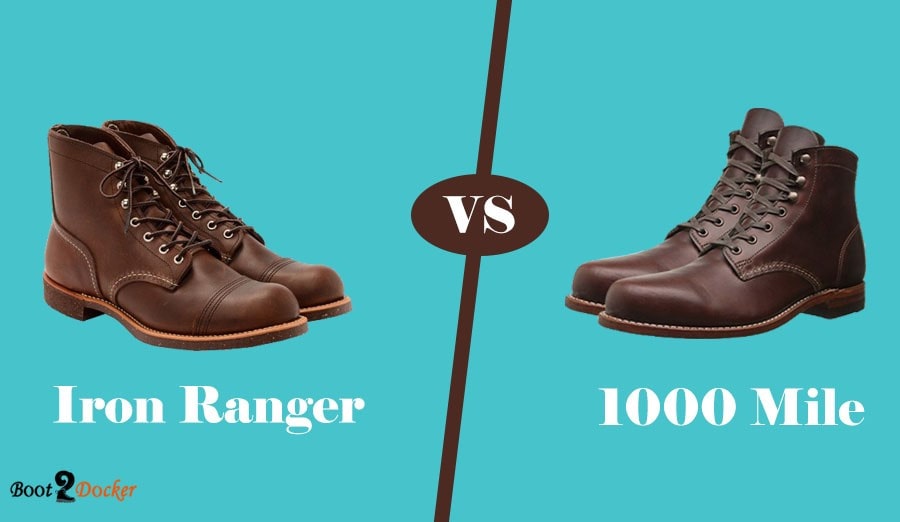
Our team has tested both boots across a range of work environments, from concrete warehouse floors to gravel lots and light trail conditions. The differences go well beyond aesthetics or brand loyalty. Leather source, last shape, welt construction, and sole material all shape how each boot performs on the foot — and those details matter far more than price tags or heritage branding alone.
Both boots use Goodyear welt construction, which is what makes them resoleable and genuinely long-lasting. But from that shared foundation, the two diverge in meaningful ways. Here's the full breakdown our team put together after putting both through their paces.
Contents
The Heritage Behind Two American Boot Icons
Red Wing Iron Ranger: Built for the Iron Range
Red Wing Shoes has been producing work footwear in Red Wing, Minnesota since 1905. The Iron Ranger draws its name directly from the Iron Range mining district of northern Minnesota — a region where boots faced brutal punishment from ore dust, jagged rock, and damp underground conditions. The original design prioritized protection above everything else, and today's version stays true to that working-class DNA.
The double-layered leather toe cap, thick Vibram Traction Tred outsole, and chrome-tanned leather sourced from Red Wing's own S.B. Foot Tanning Co. facility are all direct descendants of those industrial demands. The boot runs on the 8111 last — a narrow, low-volume shape that favors people with slim to medium feet. The Iron Ranger arrives from the factory stiff and unapologetic. It doesn't attempt to be comfortable from day one; it earns comfort through break-in, and longtime owners consider that a feature rather than a flaw.
Red Wing's network of retail stores and repair centers also supports the boot's longevity. Most independent cobblers who work with Goodyear welt construction can handle a resole, making a single pair a multi-decade investment for anyone willing to maintain it properly.
Wolverine 1000 Mile: A Century of Durability Claims
Wolverine World Wide, headquartered in Rockford, Michigan, introduced the original 1000 Mile boot in 1914 with a simple promise: one pair should outlast a thousand miles of hard use. That claim turned out to be conservative. The current 1000 Mile maintains that original spirit with full-grain leather, a storm welt construction, and resoleable architecture that keeps it firmly in the heritage category.
The 1000 Mile's last is wider and higher-volume than the Iron Ranger's 8111. Most people with average to wide feet find it more immediately accommodating — a meaningful advantage for anyone who can't tolerate a long break-in period. The leather outsole gives the 1000 Mile a refined look that bridges workwear and everyday professional environments, though it offers less grip on wet or slick surfaces than the Iron Ranger's Vibram sole. The 1000 Mile closes the gap between jobsite credibility and all-day wearability more naturally than its Minnesota-made counterpart.
Red Wing Iron Ranger vs Wolverine 1000 Mile: Key Differences at a Glance
Our team's quick rule: anyone heading into heavy outdoor work or rough terrain should lean toward the Iron Ranger. For long walking shifts or lighter professional environments, the 1000 Mile is the more practical starting point.
Side-by-Side Specs
The table below covers the specifications our team considers most important when comparing these two boots for everyday work use:
| Feature | Red Wing Iron Ranger | Wolverine 1000 Mile |
|---|---|---|
| Welt Construction | Goodyear welt | Goodyear storm welt |
| Leather Type | Chrome-tanned full-grain (S.B. Foot Tanning) | Full-grain leather |
| Outsole | Vibram Traction Tred (rubber) | Leather with rubber heel |
| Last / Fit Profile | 8111 — narrow, low volume | Wider, higher volume |
| Break-in Period | 2–4 weeks (demanding) | 1–2 weeks (moderate) |
| Resoleable | Yes | Yes |
| Made in USA | Yes | Yes |
| Wet Surface Traction | Strong (Vibram rubber) | Moderate (leather sole) |
| Best Suited For | Rugged jobsites, heavy outdoor use | Light-duty work, long professional shifts |
Fit, Width, and Comfort Differences
Fit is where most people feel the contrast most immediately. The Iron Ranger's 8111 last runs narrow — people with medium or wide feet often find the toe box restrictive, especially across the first metatarsals. Sizing up a half size is common advice, though even then the boot takes time to mold to the foot.
- Narrow feet: Iron Ranger fits cleanly with minimal break-in complications
- Medium feet: either boot works; Iron Ranger may need a half-size up
- Wide feet: the 1000 Mile is the more practical choice without modification
Our team consistently recommends reviewing how to tell if boots fit right before purchasing either pair online, since both have limited return flexibility once worn. Getting sizing wrong on a premium boot is an expensive mistake — especially with the Iron Ranger's demanding break-in ahead.
The 1000 Mile's leather outsole deserves separate attention. It develops beautiful character over time, but it provides meaningfully less grip than the Iron Ranger's Vibram sole on wet concrete, tile, or rain-slicked surfaces. Most people working in environments with moisture underfoot notice this difference within the first few weeks.
Clearing Up Common Misconceptions
Myth: All Heritage Boots Break In the Same Way
The assumption that both boots require the same punishment during break-in is widespread in boot forums — and it's inaccurate. The Iron Ranger's break-in is genuinely difficult. Chrome-tanned leather, a rigid welt, and a firm insole combine to create real pressure points around the heel and ankle for most wearers during the first two to four weeks. Heel blistering is common. Some people find the ankle collar particularly unforgiving.
The 1000 Mile breaks in noticeably faster. Our team found it wearable for a full workday within the first week in most cases. The leather is more flexible from the start, and the wider last reduces the concentrated pressure points that make the Iron Ranger's early days uncomfortable. That difference is significant for anyone who doesn't have the luxury of easing into a new pair gradually.
Myth: The 1000 Mile Is Too Dressy for Real Work
Some boot enthusiasts dismiss the 1000 Mile as a lifestyle boot that doesn't belong on a jobsite. That characterization consistently undersells it. The 1000 Mile handles service industry floors, retail environments, long facility walks, and light construction duties without complaint. It's not built for mining or heavy manufacturing, but most people working in boots aren't in those environments either.
- 1000 Mile IS appropriate for: service trades, facility management, retail, light construction, professional environments requiring extended standing
- 1000 Mile IS NOT the right call for: heavy outdoor excavation, logging, mining, or any role requiring ASTM-rated impact or electrical hazard protection
- Iron Ranger covers the tougher end of that spectrum — though it also lacks safety-toe certification in standard form
Neither boot should be confused with a certified safety-toe work boot in the ASTM or OSHA sense. They're premium heritage boots — exceptional quality and durability, but not rated for electrical hazard or compression protection out of the box.
Breaking In and Caring for Both Boots
Never use heat to accelerate the break-in process — hair dryers, direct sunlight, and leaving boots in a hot car all dry out leather rapidly and can warp the welt or cause sole delamination.
A Practical Break-In Approach
Our team's recommended break-in method works for both boots, though the Iron Ranger demands more patience and consistency across the process:
- Start with short sessions — two to three hours per wear for the first week, rather than committing to a full workday immediately. Overloading fresh leather before it flexes leads to blistering and sets a negative association with the boot.
- Wear thick wool socks — they cushion pressure points and help the leather stretch evenly across the instep and heel rather than creasing unevenly.
- Condition before first wear — applying a quality leather conditioner before the boots touch pavement softens the upper and helps the welt begin flexing sooner. Our team has had reliable results with mink oil, and proper application technique matters more than most people realize; the details are worth reviewing in our guide on how to use mink oil on leather boots.
- Walk on varied terrain — stairs, inclines, and uneven surfaces help the welt flex in multiple directions rather than creasing along a single line.
- Use a boot stretcher for tight spots — particularly useful around the Iron Ranger's toe cap and across the instep for people with medium-width feet.
Ongoing Leather Conditioning
Both boots benefit from regular conditioning, but the cadence differs between them. Chrome-tanned leather — the Iron Ranger's hide — is naturally more moisture-resistant and less "thirsty" than other tanning methods. Conditioning every two to three months under normal use is typically sufficient. The 1000 Mile's full-grain leather benefits from more frequent attention, especially for heavy users in variable weather.
Dry leather fails at the welt seam first — a failure point that's straightforward to prevent but difficult to reverse once cracking sets in. Our team treats conditioning as preventive maintenance, not cosmetic care. Keeping the leather supple also maintains each boot's natural water resistance, which both pairs rely on in lieu of synthetic waterproofing membranes.
Getting the Most From Either Boot
Insole Upgrades Worth Considering
Neither boot ships with an ergonomically sophisticated insole. The Iron Ranger's cork footbed is thin and functional — adequate for most, but not designed with cushioning in mind. The 1000 Mile's leather footbed offers minimal shock absorption by modern standards. For anyone spending eight or more hours on hard surfaces, aftermarket insoles deliver a meaningful comfort upgrade in both boots.
- Superfeet Green: firm, high-arch support — works well in both boots for people with medium to high arches
- Sole Active Medium: cushion-forward design, better suited to concrete warehouse floors and industrial settings
- Powerstep Pinnacle: moderate arch support with added cushioning — a solid middle-ground option for mixed-surface use
One caveat our team has noted consistently: insoles add volume. Placing a thick aftermarket insole into an Iron Ranger that already fits snugly can generate painful instep pressure. Anyone planning to run aftermarket insoles from day one should factor that into the sizing decision before ordering — a half-size up may be warranted.
Making the Investment Last
Both the Iron Ranger and the 1000 Mile are resoleable, which fundamentally shifts the long-term value calculation on boots in this price range. A quality resole — typically $40 to $80 depending on the cobbler and outsole choice — can add several additional years of life to either pair. Our team treats resoleability as a non-negotiable feature for any premium heritage boot.
- Rotate pairs when possible — giving leather 24 hours to dry and decompress between wears meaningfully extends sole life
- Use cedar shoe trees to maintain shape and draw moisture out of the upper after wear
- Clear debris from the welt seam promptly — mud and grit accumulate there and accelerate stitching deterioration
- Schedule a resole before the midsole is fully exposed — waiting too long means a more extensive and costly repair
- Store away from heat sources and direct sunlight, which dry out both the leather and the welt stitching over time
The Iron Ranger's Vibram outsole typically outlasts the 1000 Mile's leather outsole on rough surfaces, particularly for anyone logging significant mileage on gravel or pavement. The 1000 Mile's leather sole wears faster in those conditions — though it develops attractive character as it does, which many owners appreciate as part of the boot's aging process.
Frequently Asked Questions
Which boot is better for wide feet — the Iron Ranger or the 1000 Mile?
The Wolverine 1000 Mile is the better fit for most people with wide feet. Its last is noticeably wider and higher-volume than the Red Wing Iron Ranger's 8111 last, which runs narrow and suits slim to medium foot widths. The Iron Ranger is not a comfortable choice for wider feet without significant break-in time or professional stretching.
How long does it actually take to break in the Red Wing Iron Ranger?
Most people experience a break-in period of two to four weeks for the Iron Ranger under regular daily wear. The stiff chrome-tanned leather, rigid welt, and firm insole create real pressure points early on — particularly around the heel and ankle. Wearing thick wool socks, conditioning the leather before first wear, and starting with shorter sessions helps the process move faster without unnecessary discomfort.
Can both the Iron Ranger and the 1000 Mile be resoled?
Yes — both are Goodyear welt construction, which makes them fully resoleable by any cobbler experienced with welt boots. This is one of the strongest arguments for the price point of either boot. A resole typically costs $40 to $80 and can extend the life of either pair by several years, making them long-term investments rather than consumables.
Is the Wolverine 1000 Mile appropriate for an actual work environment?
The 1000 Mile is well-suited to light-duty professional environments — service industry roles, retail, facility management, professional trades with moderate physical demands, and any role involving extended standing or walking on indoor surfaces. It is not built for heavy construction, excavation, or environments requiring ASTM-rated toe protection or electrical hazard resistance. Neither boot carries standard safety-toe certification in its base form.
Which boot develops a better patina over time — the Iron Ranger or the 1000 Mile?
Both develop distinctive patinas, but they age differently. The Iron Ranger's chrome-tanned leather develops a subtler sheen and holds its color more uniformly over time. The 1000 Mile's full-grain leather tends to develop a richer, more pronounced patina with deeper tonal variation — many owners find it more visually rewarding as years of wear accumulate. Neither ages poorly; it comes down to personal preference for the finished look.
Final Thoughts
The Red Wing Iron Ranger vs Wolverine 1000 Mile comparison ultimately comes down to what most people actually need from a boot day to day — raw durability and jobsite credibility, or faster break-in and all-day walkability. Our team recommends spending time with both options before committing: visit a Red Wing store to try the Iron Ranger on in person, and seek out a Wolverine retailer for the same treatment with the 1000 Mile. For anyone ready to dig deeper into heritage work boot options, our full boot reviews section covers both in greater detail alongside other premium resoleable boots worth considering at this price point.


About Jason Flores
Jason Flores is a multi-talented individual whose unique journey has led him to blend his passion for craftsmanship and fashion into a creative endeavor. During his formative years, he found himself immersed in the world of handiwork, spending countless hours in his grandfather's workshop. These early experiences allowed him to develop a deep understanding of practical skills and a keen eye for detail.Simultaneously, Jason harbored an innate love for fashion, drawn to the artistry and self-expression it offers. As he grew older, he recognized the potential to combine his proficiency in craftsmanship with his fashion sensibilities. This realization led him to a path where he began to explore and write about the intersection of fieldwork fashion.
Get FREE Boots Gifts now. Or latest free toolsets from our best collections.
Disable Ad block to get all the secrets. Once done, hit any button below