Studies show that nearly 70% of first-time cowboy boot wearers report pain or awkward movement within their first 48 hours — not because the boots are bad, but because nobody taught them how to walk in cowboy boots correctly. That single gap in knowledge turns a great pair of boots into a shelf decoration. This guide from TopWorkBoots' boot tips and guides covers every technique fix, gear choice, and habit you need to get confident on your feet fast.
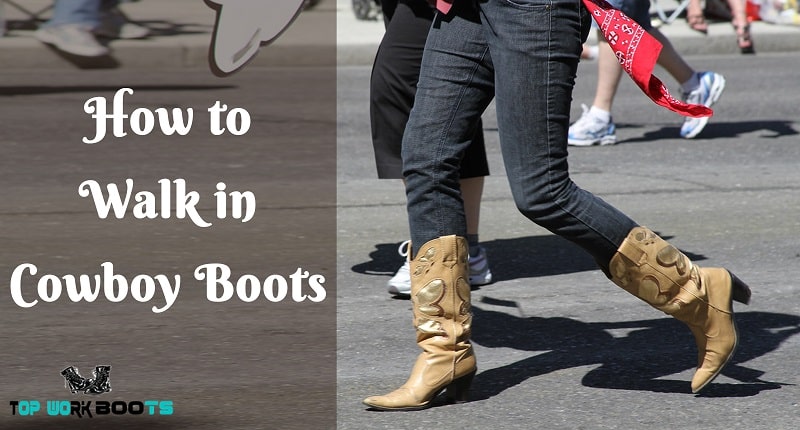
Cowboy boots are built with a slanted heel between 1.5 and 2 inches, a smooth leather outsole, and a narrow toe box. Those three features simultaneously change your foot strike, your posture, and your stride. That's why your first steps feel off — you're not doing anything wrong. Your body just hasn't adapted yet.
Work through this guide from top to bottom. By the end, you'll understand exactly what your body needs to do differently, what to wear inside the boot, and how to protect your boots so they hold up for years.
Contents
- How to Walk in Cowboy Boots: Instant Technique Fixes
- Why Cowboy Boots Change Your Gait
- The Right Socks, Insoles, and Accessories
- Cowboy Boot Styles: What You're Choosing Between
- Where Cowboy Boots Perform Best
- Walking Mistakes That Hurt Your Feet and Your Boots
- Breaking In Cowboy Boots for Long-Term Comfort
- Frequently Asked Questions
How to Walk in Cowboy Boots: Instant Technique Fixes
You don't need to suffer through weeks of pain to walk normally in cowboy boots. A few deliberate adjustments work from your very first day. These are the quick wins that most people never hear about before they buy their first pair.
The Heel Strike That Actually Works
With sneakers, you land flat on the back of your heel and push straight through. Cowboy boots change that equation. The angled heel — originally designed to keep a rider's foot hooked in a stirrup — shifts your center of gravity forward. You need to walk with it, not against it.
- Land on the outer edge of your heel first, then let your weight roll inward toward the ball of your foot.
- Let your foot glide forward naturally through the step — don't slam your toe into the ground.
- Push off from the ball of your foot as you complete each stride.
- Shorten your stride slightly from your usual length until the motion feels automatic.
- Start on flat, smooth surfaces. Avoid stairs, gravel, or wet floors until you've built confidence.
Don't fight the heel — work with it. The angled heel is designed to keep your foot secure, so let your stride adapt to the boot's geometry rather than trying to force your old sneaker gait onto a completely different structure.
Posture and Stride Adjustments
The raised heel tilts your pelvis slightly forward. Left uncorrected, that tilt causes you to hunch at the shoulders or overarch your lower back — both of which lead to fatigue quickly.
- Stand tall with your shoulders pulled back slightly.
- Engage your core (the muscles of your midsection) to keep your spine in a neutral position.
- Keep your chin level — don't look down at your feet while you walk.
- Let your arms swing naturally at your sides. Stiff arms signal a stiff stride.
- Place each foot slightly more straight-ahead than you might otherwise — cowboy boots encourage a slight outward toe angle, but overcorrecting looks unnatural and tires your hips.
Why Cowboy Boots Change Your Gait
Understanding what's happening mechanically underneath your foot explains everything. According to Wikipedia's history of the cowboy boot, the design evolved from working ranch and riding needs — not street walking. Every structural decision reflects that heritage.
The Anatomy of a Cowboy Boot
Before you fix your gait, know what you're working with. These are the features that directly affect how you walk:
- Stacked leather heel (1.5–2 inches): Raises the back of your foot and shifts your weight forward onto the forefoot.
- Smooth leather outsole: Minimal grip compared to rubber — designed for stirrups, not wet tile.
- Narrow pointed or round toe box: Compresses the toes and shifts your balance point toward the ball of your foot.
- Rigid shank: The metal or wooden support between the sole layers limits how much your midfoot can flex during a stride.
- No laces: The boot stays on via the shaft gripping your leg and the heel catching on the insole — fit matters enormously.
Make sure your boots fit before worrying about technique. Learn how to size cowboy boots correctly — an ill-fitting boot makes every walking challenge twice as hard.
How Heel Height Shifts Your Balance
A 2-inch heel changes your biomechanics (the way your body moves mechanically) in three measurable ways. Your ankle flexes less with each step. Your calf muscles work harder to compensate for reduced range of motion. And your forefoot bears more weight than it does in flat footwear. All three of those changes happening at once is why your calves ache after the first couple of wears. It's not weakness — it's your body adapting to a new load pattern.
If the shaft (the tall upper portion of the boot) digs into your calf or feels impossibly tight, that's a separate issue from walking technique. Our guide on how to stretch cowboy boots around the calf has the step-by-step solution.
The Right Socks, Insoles, and Accessories
Technique accounts for half the battle. What goes on your foot inside the boot determines the other half. The wrong socks or a missing insole can make a well-fitted boot feel like torture.
Socks That Work With Cowboy Boots
Use the right sock and the shaft of your boot becomes your friend. Use the wrong one and it chafes you raw within an hour.
- Use: Tall socks that reach at least mid-calf. They protect your leg from the shaft's edge.
- Use: Thin wool or moisture-wicking cotton blends for all-day comfort. Wool regulates temperature better than pure cotton in both warm and cold conditions.
- Use: Socks with smooth, flat toe seams — or seamless toes entirely.
- Avoid: Ankle socks. The shaft will dig directly into bare skin above the ankle.
- Avoid: Thick padded athletic socks. They bulk up the toe box and restrict toe movement in a boot that's already narrow.
- Avoid: Socks with heavy ribbing or seams across the toe — pressure points develop fast.
Insoles Worth Using
The factory insole in most cowboy boots is minimal at best. Adding a thin aftermarket insole (a cushioned insert placed inside the boot) provides arch support your foot needs for multi-hour wear.
- Choose thin-profile insoles. Cowboy boots have a snug fit, and a thick insole will compress your toes and make the boot feel smaller overall.
- Look for arch support sized for a low-volume shoe — not a wide athletic shoe insert.
- Leather-topped insoles breathe better than foam or synthetic tops in a non-breathable leather boot.
- Replace insoles every 6–12 months during active use. Compressed insoles provide no support and make your feet work harder.
Cowboy Boot Styles: What You're Choosing Between
Not all cowboy boots walk the same. The style you choose determines how much technique adjustment you'll need. Here's a side-by-side look at the most common options:
| Style | Heel Height | Toe Shape | Best For | Walking Difficulty |
|---|---|---|---|---|
| Roper Boot | 1 inch | Round | Everyday wear, long-distance walking | Easy |
| Stockman Boot | 1 inch | Round | Walking-heavy jobs, livestock work | Easy |
| Western Work Boot | 1.5 inches | Square or round | Ranch work, job sites | Moderate |
| Classic Cowboy Boot | 1.75–2 inches | Pointed or snip | Traditional style, horseback riding | Moderate to High |
| Fashion/Dress Boot | 2–2.5 inches | Very narrow point | Style occasions, short wear periods | High |
If you're new to cowboy boots, start with a roper or stockman style. The lower heel reduces the biomechanical adjustment, and the round toe gives your foot room to settle. Once your body has adapted over a few weeks, you can move to a taller heel and narrower toe without the early discomfort.
Before committing to any style, confirm the fit is correct first. Read our guide on how to tell if boots fit right — a poor fit multiplies every walking challenge listed in this guide.
Where Cowboy Boots Perform Best
Walking in cowboy boots confidently means knowing which surfaces work in your favor and which ones require extra caution. Match the boot to the environment and you'll walk better immediately.
Outdoor and Ranch Environments
Cowboy boots were engineered for outdoor work. On these surfaces, they perform exceptionally well:
- Packed dirt and loose gravel: The stiff shank stabilizes your foot on unpredictable terrain that would flex a softer boot uncomfortably.
- Tall grass and brush: The tall shaft protects your leg from scrapes, thorns, and snakes.
- Soft mud: The smooth leather sole sheds surface mud more cleanly than a rubber lug sole.
- Uneven field terrain: The heel acts as a natural anchor, keeping your foot from sliding forward in the boot on slopes.
On these surfaces, slow down and be deliberate:
- Smooth concrete or polished tile: Leather soles have almost no grip. Take shorter steps and plant your heel with care.
- Wet stairs: The rigid shank limits your ankle flex on steps. Hold the rail and step fully onto each tread.
- Metal grates and wet decking: The heel can catch in gaps. Lift each foot cleanly rather than sliding it forward.
Everyday and Dress Occasions
Once your boots are broken in, they become one of the most comfortable everyday footwear options available. Here's where they genuinely shine:
- Casual daily wear — the leather molds to your foot over time and becomes genuinely comfortable.
- Social events where you're standing or walking short distances on indoor flooring.
- Office environments with carpet or hardwood — the leather sole is quiet and looks polished.
- Driving — the heel gives you a natural pivot point on the pedals.
Where cowboy boots are not the right call:
- High-mileage days (5+ miles) before full break-in is complete.
- Running or any sport requiring quick lateral cuts.
- Technical hiking terrain — use purpose-built hiking boots instead.

Walking Mistakes That Hurt Your Feet and Your Boots
Most discomfort in cowboy boots comes down to a short list of repeated errors. Identify yours early — these habits compound quickly and become expensive to fix once they've damaged the boot or your feet.
Fit Errors That Show When You Walk
- Excessive heel slippage: A small lift (about 1/4 inch) is normal in new boots. More than 1/2 inch means the boot is too large. Zero movement means it's too small and will create hot spots at the heel.
- Toe pressing the front of the boot: Your longest toe should have a finger's width of clearance. If it doesn't, size up — or address a tight toe box using targeted stretching techniques.
- Pinching at the widest part of the foot: The boot is too narrow. Don't attempt to walk through this. It causes bunions and long-term joint problems.
- Boot rotating on your foot while walking: The instep (the arch of the boot) is too loose. Sizing down a half size usually resolves this.
Gait Habits That Damage Your Boots
- Toe-first walking: Striking the toe before the heel grinds down the toe cap leather and throws off your balance. Always heel first, even on slopes.
- Scuffing the sole: Shuffling your feet along the ground wears through the leather outsole unevenly. Pick your feet up with each step.
- Forcing the boot off with the opposite toe: This crushes the heel counter (the stiff internal cup that gives the boot its structure). Use a boot jack every single time — it takes 5 seconds and saves the boot's shape.
- Skipping leather conditioning: Dry leather cracks under the repeated flex of walking. Use a quality conditioner like mink oil regularly to keep the leather supple and prevent breakdown at stress points.
- Wearing them immediately for full days: New, stiff boots worn all day create blisters and deep pressure sores. Ramp up wear time gradually.
Breaking In Cowboy Boots for Long-Term Comfort
A new pair of cowboy boots is stiff everywhere — the toe box, the shaft, the heel counter, the shank area. The break-in process is when leather fibers loosen and mold to the specific shape of your foot. Most people quit too early. Don't.
The Break-In Timeline
Follow this schedule and you'll avoid the worst of the break-in pain while still making consistent progress:
- Days 1–3: Wear around the house for 1–2 hours at a stretch. Walk on carpet and hardwood. Expect mild calf soreness from the heel height — that's normal.
- Days 4–7: Increase to 3–4 hour sessions. Mix surfaces — walk on pavement, grass, and stairs to flex the leather from multiple angles.
- Week 2: Half-day wear is now the goal. The leather is beginning to soften along your foot's pressure points. You'll notice the heel counter loosening first.
- Weeks 3–4: Full-day wear should become comfortable. The toe box and shank area take the longest to break in. If significant pain persists past week 4, revisit the fit — not the break-in process.
Conditioning Your Leather for Flexibility
Leather conditioning — applying oil or wax to prevent drying and cracking — dramatically accelerates break-in and extends the life of your boots by years. Here's the process:
- Wipe the boot clean with a damp cloth. Dirt and dust prevent conditioner from absorbing.
- Apply a leather conditioner. Mink oil is a traditional, proven choice that softens leather effectively without over-darkening most colors.
- Work the conditioner into the leather using circular motions with a soft cloth. Focus on the toe box, heel counter, and any area that feels stiff or shows crease lines.
- Let it absorb for 20–30 minutes, then buff off any excess with a clean cloth.
- Repeat every 4–6 weeks during regular wear, and always after heavy exposure to water, mud, or road salt.
Once your boots are broken in and conditioned, keep them looking sharp with regular polishing. Our guide on how to polish cowboy boots walks through the full shine process from prep to final buff.
Frequently Asked Questions
How long does it take to get comfortable walking in cowboy boots?
Most people feel noticeably more comfortable after 2 weeks of gradual wear. The leather softens and molds to your foot during that period. If you're still experiencing significant pain after 4 weeks of regular use, the boots almost certainly don't fit correctly — technique alone can't compensate for a poor fit.
Why do cowboys walk with a distinctive swagger?
The elevated heel and rigid shank of a cowboy boot naturally shift the pelvis forward and reduce ankle flex with every step. This creates the rolling, deliberate gait associated with experienced boot wearers. It's a mechanical result of the boot's design — not a stylistic choice. The longer you wear cowboy boots, the more natural that gait becomes.
Should cowboy boots slip at the heel when walking?
Yes — a small amount of heel lift (around 1/4 inch) is normal and actually expected, particularly in new boots. This reduces as the leather breaks in and conforms to your heel. More than 1/2 inch of slippage consistently indicates the boot is too large. No slippage at all suggests it's too tight.
Can you walk long distances in cowboy boots?
Yes, once they're fully broken in. Roper-style and stockman-style boots with lower heels and rounded toes are the most comfortable for extended walking. Classic western boots with 2-inch heels and narrow toes are manageable for moderate distances but tire your calves faster. Fashion dress boots with very high heels and extreme pointed toes are not designed for distance.
What socks are best for walking in cowboy boots all day?
Tall wool or wool-blend socks that reach at least mid-calf. They prevent the shaft from chafing your leg and manage moisture better than pure cotton over a long day. Avoid ankle socks entirely — the shaft edge will contact bare skin and cause painful rubbing within the first hour.
Do cowboy boots need to be broken in before wearing outside?
You can wear them outside from day one, but keep the session short — 1 to 2 hours maximum for the first few days. Wearing brand-new stiff boots for a full workday immediately causes blisters and deep pressure sores that take longer to heal than the break-in itself. Build up wear time gradually and you'll get to full comfort faster.
How do I know if my cowboy boots fit right for walking?
Your heel should have minimal but slight lift (about 1/4 inch). Your toes should not press against the front of the boot. The instep should hold your foot snugly without pinching the sides. And the ball of your foot should align with the widest part of the boot's sole. Our full checklist at how to tell if boots fit right covers every measurement you need.
Learning how to walk in cowboy boots isn't about toughing it out — it's about understanding the design, adjusting your technique, and giving the leather the time it needs to meet your foot halfway.


About Jason Flores
Jason Flores is a multi-talented individual whose unique journey has led him to blend his passion for craftsmanship and fashion into a creative endeavor. During his formative years, he found himself immersed in the world of handiwork, spending countless hours in his grandfather's workshop. These early experiences allowed him to develop a deep understanding of practical skills and a keen eye for detail.Simultaneously, Jason harbored an innate love for fashion, drawn to the artistry and self-expression it offers. As he grew older, he recognized the potential to combine his proficiency in craftsmanship with his fashion sensibilities. This realization led him to a path where he began to explore and write about the intersection of fieldwork fashion.
Get FREE Boots Gifts now. Or latest free toolsets from our best collections.
Disable Ad block to get all the secrets. Once done, hit any button below