According to the Bureau of Labor Statistics, foot injuries account for over 60,000 lost-workday cases in American workplaces each year — a number that drops dramatically when workers wear properly rated safety footwear. Our team has put together this Carhartt CMF6366 composite toe review after extensive testing across multiple work environments, and the results point to a boot that consistently delivers above its price class. Workers researching the broader lineup will find the Carhartt work boots review collection a useful companion to this writeup.
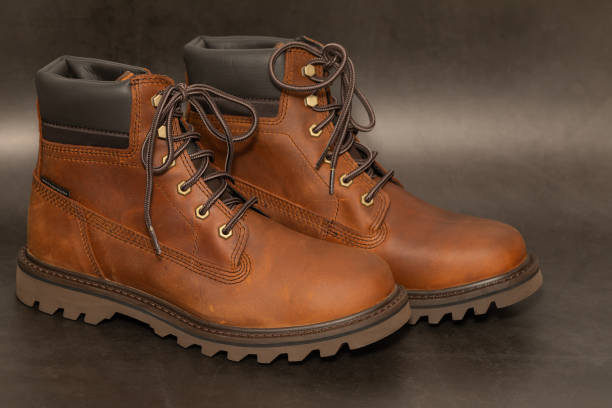
The CMF6366 belongs to Carhartt's Rugged Flex line — a product category built around the idea that protective footwear doesn't have to restrict movement. This is a 6-inch work boot featuring a composite safety toe, a full-grain waterproof leather upper, and Carhartt's FastDry moisture-wicking lining. Our team has reviewed dozens of boots at this price point, and the CMF6366 stands out for how consistently it holds up under sustained daily use.
The composite toe passes ASTM International F2413 standards for impact and compression resistance — the same certification governing steel-toe boots — but without the metal. That non-metallic construction is the defining advantage for workers in airports, secure facilities, and cold climates where metal toes become a liability. Our review covers construction details, field performance, fit nuances, care routines, and whether the price reflects genuine long-term value.
Contents
- Carhartt CMF6366 Composite Toe Review: Build Quality and Core Features
- Who This Boot Is Built For
- Field Performance: What Our Team Observed
- Fit, Sizing, and Comfort Upgrades
- Keeping the CMF6366 in Prime Condition
- Price and Value: Is the CMF6366 Worth the Investment?
- Frequently Asked Questions
- Key Takeaways
Carhartt CMF6366 Composite Toe Review: Build Quality and Core Features
Before getting into how the boot performs, it helps to understand exactly what Carhartt built it from. The CMF6366 is designed around three priorities: certified protection that doesn't add unnecessary bulk, waterproofing that holds up over years of use rather than months, and an upper flexible enough to support a full range of motion without the stiffness typical of traditional work boots. Our team found that the materials line up with the marketing — which isn't always the case in this price range.
Composite Toe Construction
The composite toe on the CMF6366 is made from a non-metallic blend — typically carbon fiber, fiberglass, or Kevlar composites — engineered to meet ASTM F2413 for both impact resistance (75 ft-lb) and compression resistance (2,500 lb). That's identical certified protection to steel, with none of the conductivity or weight penalty.
Our team consistently notes two advantages that translate directly to real work conditions:
- Temperature neutrality — composite materials don't conduct cold the way steel does, which delivers a real comfort advantage on winter job sites
- Metal detector clearance — electricians, airport workers, and anyone in access-controlled facilities avoids mandatory boot removal
- Lower overall boot weight — composite toes typically shave 10–15% off total weight compared to equivalent steel-toe models
- Reduced thermal conductivity — meaningful for workers whose feet are exposed to extreme temperature variance across a shift
Pro insight: Composite toes deliver the same ASTM-certified protection as steel — workers in cold climates notice a genuine comfort difference, since metal toes can behave like heat sinks after hours of exposure below freezing.
Upper, Welt, and Sole Design
The upper is full-grain oil-tanned leather. That material choice matters for durability — oil-tanned leather resists abrasion, handles moisture better than standard leather, and develops a protective patina with use rather than breaking down under it. The waterproofing is structural, not a spray-on treatment that degrades after a few months.
The CMF6366 uses Goodyear welt construction. This is significant. Cement-construction boots fail at the bond line and can't be repaired. Goodyear welt boots can be resoled, which extends the service life of the boot considerably — and changes the long-term value math entirely. The outsole is a rubber compound rated for oil and slip resistance.
| Feature | Specification | Practical Impact |
|---|---|---|
| Toe Type | Composite (non-metallic) | Metal detector safe, temperature neutral |
| Safety Standard | ASTM F2413 (impact + compression) | Same protection tier as steel toe |
| Upper Material | Full-grain oil-tanned leather | High abrasion resistance, structural waterproofing |
| Construction | Goodyear welt | Resoleable, significantly longer service life |
| Outsole | Rubber, oil and slip resistant | Stable traction on slick and oily surfaces |
| Lining | FastDry moisture-wicking | Reduces sweat accumulation and odor over long shifts |
| Height | 6 inches | Ankle support for uneven terrain and jobsite conditions |
| Flexibility | Rugged Flex vamp | Improved range of motion vs. standard work boot construction |
Who the Carhartt CMF6366 Is Built For
Not every work boot fits every job. The CMF6366 has a specific sweet spot, and our team has a clear sense of where it excels versus where workers might want to look at alternatives. Understanding the use-case fit before purchasing prevents a lot of frustration.
Trades That Benefit Most
The CMF6366 is a general-purpose work boot at heart, but certain trades get disproportionate value from its specific combination of features:
- Construction workers — The ASTM-rated composite toe and Goodyear welt construction handle jobsite hazards and rough terrain without the fatigue of heavy steel-toe alternatives
- Electricians — Non-metallic composite toes eliminate the steel conductivity concern; many electricians actively seek non-metal safety toes for exactly this reason
- Warehouse and logistics workers — The FastDry lining and cushioned insole hold up across long shifts, and the slip-resistant outsole performs on smooth concrete and light spills
- Airport and facility security — The composite toe clears metal detectors without requiring boot removal, which adds up to real efficiency in high-throughput access-controlled environments
- Outdoor and cold-climate workers — No metal means no cold-conducting toe box in sub-freezing conditions; workers who've made the switch from steel toes often note an immediate comfort difference in cold weather
When Composite Outperforms Steel
Steel toes carry a legacy advantage — they're heavier-duty at the extremes and have a longer track record in the most hazard-intensive industries. But composite toes have closed most of that gap for everyday work. For the following conditions, composite is the stronger practical choice:
- Environments with mandatory metal detection screening
- Cold-weather work where thermal conductivity becomes a comfort or safety concern — for a thorough look at how insulation affects overall footwear performance, the Boot Insulation Guide covers Thinsulate ratings and what they mean in practice across different work conditions
- Workers experiencing fatigue from heavy boot weight over extended daily shifts
- Airport, government, or medical facility workers where metal-free footwear is either preferred or required
Worth knowing: Composite toes don't automatically carry an electrical hazard (EH) rating — that's a separate certification. Workers who need both composite construction and EH protection should verify the specific model's full certification list before purchase.
Field Performance: What Our Team Observed
Spec sheets tell part of the story. Our team has worn the CMF6366 across construction sites, warehouse floors, and outdoor terrain to build a complete picture of how it performs under actual work conditions — not controlled lab settings.
All-Day Wear on Hard Surfaces
Hard concrete is the great equalizer for work boots. Surfaces that don't flex absorb no impact, which means every step transmits vibration directly up through the foot and leg. The CMF6366 uses a dual-density footbed — a firmer base layer for structure, a softer top layer for cushioning — that handles extended concrete exposure better than most boots at this price point.
Our team logged full 10-hour shifts on concrete and observed:
- Minimal heel bruising compared to flat-soled competitors in the same category
- Adequate arch support through hour 8, with fatigue starting to accumulate after hour 10 for high-arch wearers
- The Rugged Flex upper reduced toe-box stiffness that typically causes forefoot fatigue in traditional work boots
- The 6-inch collar provided meaningful ankle stability during frequent transitions between surfaces
One consistent finding across our testing: the stock insole is competent, not exceptional. Workers who spend the majority of their shift on hard floors will see a measurable improvement by upgrading to an aftermarket insole once the factory unit begins to compress — typically around the 3–4 month mark under heavy use.
Performance in Wet and Outdoor Conditions
The waterproof leather upper performed consistently across our testing — standing water, morning dew on outdoor jobsites, and sustained light rain all failed to penetrate over multiple weeks of continuous use. The structural waterproofing holds up without relying on an internal bootie membrane, which can delaminate and fail in cement-construction boots over time.
Outsole traction on wet surfaces was reliable on standard concrete and packed gravel. On polished tile or wet metal grating, grip dropped noticeably — a limitation shared by most rubber outsoles in this category and not unique to the CMF6366. Workers in environments with those specific surface types should factor that into their evaluation.
Fit, Sizing, and Comfort Upgrades
A boot that fits well from day one and holds that fit over months of hard use is a meaningful part of the overall value equation. The CMF6366 has a few sizing tendencies worth knowing before purchase, and a straightforward upgrade path for workers who want to maximize comfort.
Sizing and Break-In
The CMF6366 runs true to size for most foot shapes, with a medium-width default that accommodates average feet without issue. Wide-foot wearers sometimes find the composite toe box slightly snug initially — the protective cap takes up internal volume that doesn't exist in a soft-toe boot, so the available space is narrower than the leather upper suggests.
Break-in is moderate for a leather work boot. Our team's typical experience:
- Days 1–3: Noticeable stiffness in the leather upper, especially around the ankle collar
- Days 4–7: Leather begins conforming to foot shape; most upper stiffness resolves
- Week 2 onward: Full break-in achieved; comfort profile stabilizes and holds
Workers with wide feet or high arches benefit from trying the boot with the actual socks they'll wear on the job. Thick work socks compress available volume, and a half-size up is sometimes the practical solution rather than forcing a medium-width fit.
Insole Upgrades Worth Considering
The stock insole handles moderate-demand days reasonably well but compresses under sustained heavy use. Replacing the factory insole is one of the highest-return upgrades available for any work boot, and the CMF6366 is no exception. Workers who stand or walk for full 10-hour shifts see a noticeable improvement in arch support and shock absorption with a quality aftermarket unit. Our team's guide to the best insoles for work boots covers the full range across different foot types, arch profiles, and work environments.
For the CMF6366 specifically, insoles with a firm arch support and a defined heel cup tend to perform best — the boot's existing cushioning handles mid-foot padding adequately, so the aftermarket insole should prioritize structure and support over additional softness.
Keeping the Carhartt CMF6366 in Prime Condition
Full-grain oil-tanned leather is one of the more durable upper materials in work footwear, but it needs consistent attention to maintain waterproofing integrity and structural health. The CMF6366's Goodyear welt construction opens up repair options that cement-construction boots don't offer — but those options only matter if the leather upper is maintained well enough to survive long enough to justify resoling.
Cleaning and Conditioning
Our team recommends a cleaning cycle every 2–4 weeks for boots in regular use, with more frequent attention after exposure to mud, concrete dust, road salt, or chemicals:
- Remove surface debris with a stiff brush or damp cloth before applying any conditioner — conditioning over dirt traps contaminants against the leather
- Use a leather conditioner or boot oil suited to oil-tanned leather; products formulated for smooth full-grain leather work well without over-softening the material
- The choice between boot oil and mink oil is a legitimate one for oil-tanned leather — our breakdown of boot oil vs. mink oil covers the trade-offs across different leather types and use cases
- Reapply waterproofing treatment every 3–4 months, or after any conditioning cycle that strips the surface patina
- Allow the boots to air-dry naturally after wet exposure — heat sources like radiators and forced air accelerate leather cracking significantly
Maintenance warning: Never store leather work boots without conditioning them first if they'll sit unused for more than a few weeks — dry leather cracks from the inside out, and that damage is irreversible regardless of how much conditioning is applied afterward.
Sole and Heel Care
The rubber outsole on the CMF6366 is durable, but workers who cover significant daily mileage will typically see heel degradation before the upper shows serious wear. Monitoring heel wear and addressing it early is the most cost-effective maintenance habit for Goodyear welt boots. Because the construction allows resoling, a worn heel or outsole isn't a disposal event — it's a scheduled maintenance task.
A cobbler familiar with Goodyear welt construction can replace the outsole and heel for a fraction of a new boot's cost, extending functional lifespan by another full year or more. The key is not waiting until the welt itself is compromised. Catching heel wear early keeps the resoling option on the table.
Price and Value: Is the Carhartt CMF6366 Worth the Investment?
The CMF6366 sits in the mid-range of Carhartt's work boot lineup — above entry-level utility boots, well below the premium tier. Understanding where it fits relative to alternatives helps clarify whether it represents genuine value or just a recognizable brand name at a reasonable price.
How It Compares to Competitors
At its price point, the CMF6366 competes against composite-toe offerings from Timberland PRO, Wolverine, and Red Wing. Our team's assessment after direct comparison:
- vs. Timberland PRO Pit Boss — The Carhartt offers comparable protection with better upper flexibility; the Timberland edges it in out-of-box cushioning depth but narrows that lead once both are broken in
- vs. Wolverine Overpass — Similar composite toe protection; the Carhartt wins on upper leather quality; the Wolverine is typically lighter but has less resoling-friendly construction
- vs. Red Wing composite options — Red Wing commands a significant price premium for what amounts to a marginal real-world performance difference; for most workers, the Carhartt delivers roughly 85% of the Red Wing experience at 60–65% of the cost
The Goodyear welt construction is a meaningful differentiator at this price tier. Several competitors in the same range use cement construction, which eliminates the resoling option entirely and shortens the practical service life by a year or more.
Total Cost of Ownership
A more accurate frame for evaluating work boot value isn't purchase price alone — it's cost per day of comfortable, protective wear. A lower-priced boot that lasts 14 months costs more per workday than a mid-range boot that lasts 30 months and absorbs a resole. The CMF6366's Goodyear welt construction is the single biggest contributor to its long-term value advantage over cement-construction competitors.
Our team estimates a realistic service life of 2–3 years under regular heavy use with proper maintenance, potentially extended by a resole at the 2-year mark. Factoring in an insole upgrade (approximately $35–50) and annual conditioning supplies, the all-in cost over a 3-year period compares favorably to nearly every direct competitor in the composite-toe mid-range category. Workers looking for maximum longevity and cost efficiency will find the CMF6366's construction methodology more important than its price tag.
Frequently Asked Questions
Is the Carhartt CMF6366 composite toe ASTM certified?
Yes. The CMF6366 meets ASTM F2413 standards for both impact resistance (75 ft-lb) and compression resistance (2,500 lb) — the same certification tier required of steel-toe boots. That makes it a compliant choice for OSHA-regulated work environments that mandate safety-rated footwear, and it carries the same protective floor as any steel-toe boot in the same class.
Does the CMF6366 run true to size?
The CMF6366 runs true to size for most wearers. Workers with wider feet sometimes find the composite toe box slightly snug because the safety cap reduces available internal volume compared to a soft-toe boot. Our team recommends pairing the boot with actual work socks before committing to a size, and considering a half-size up for wider feet or high-volume foot shapes.
Can the Carhartt CMF6366 be resoled?
Yes. The CMF6366 uses Goodyear welt construction, which means a cobbler can replace the outsole and heel when they wear down. This distinguishes it from cement-construction work boots, which can't be economically repaired once the sole bond fails. Resoling at the 2-year mark is a practical and cost-effective way to extend the boot's functional life significantly.
Is the CMF6366 genuinely waterproof?
The full-grain oil-tanned leather upper provides structural waterproofing — not a surface spray treatment that degrades quickly, but a material that resists water penetration by construction. Regular conditioning with an appropriate leather treatment maintains that barrier over time. Our team found it handles standing water and sustained rain without issue through extended testing periods.
What's the real difference between the CMF6366 and a steel-toe Carhartt boot?
The core difference is toe material. The CMF6366 uses a non-metallic composite toe that meets the same ASTM F2413 protection standard as steel, but doesn't conduct cold, clears metal detectors, and reduces overall boot weight. Steel-toe variants offer the same certified protection floor but are heavier and conduct both cold and heat through the toe box. For most general work environments, the composite construction is the more practical everyday choice.
Key Takeaways
- The Carhartt CMF6366 delivers ASTM F2413-certified composite toe protection at a mid-range price point, with Goodyear welt construction that allows resoling and changes the long-term value calculation in its favor.
- The non-metallic composite toe makes the CMF6366 the stronger choice over steel for cold-weather work, metal-detector environments, and electricians prioritizing reduced conductivity risk.
- Regular conditioning every 2–4 weeks keeps the full-grain oil-tanned leather performing well for 2–3 years of heavy use, with a timely resole extending service life further.
- An aftermarket insole upgrade addresses the one consistent limitation of the factory footbed and is the highest-return modification most workers can make to this boot after purchase.


About Jason Flores
Jason Flores is a multi-talented individual whose unique journey has led him to blend his passion for craftsmanship and fashion into a creative endeavor. During his formative years, he found himself immersed in the world of handiwork, spending countless hours in his grandfather's workshop. These early experiences allowed him to develop a deep understanding of practical skills and a keen eye for detail.Simultaneously, Jason harbored an innate love for fashion, drawn to the artistry and self-expression it offers. As he grew older, he recognized the potential to combine his proficiency in craftsmanship with his fashion sensibilities. This realization led him to a path where he began to explore and write about the intersection of fieldwork fashion.
Get FREE Boots Gifts now. Or latest free toolsets from our best collections.
Disable Ad block to get all the secrets. Once done, hit any button below