You've just snapped a lace on your work boots halfway through a shift. You need a replacement fast, so you grab the nearest pack at the hardware store — only to find they're three inches too short to tie a decent knot. Sound familiar? Knowing how to measure boot laces correctly saves you that frustration every single time. This guide covers everything from a quick tape-measure method to a full breakdown by eyelet count. For more resources like this, the boot tips and guides section has you covered.
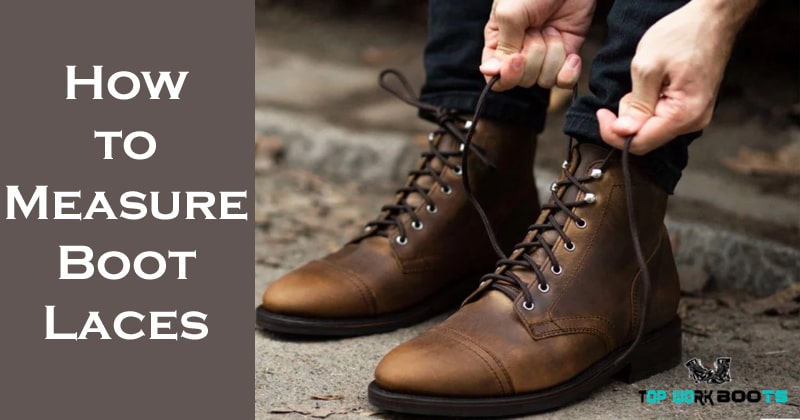
The right lace length isn't just about looks. A lace that's too short leaves you with a weak, loose knot that comes undone mid-shift. A lace that's too long drags on the floor, snags on equipment, and creates a genuine tripping hazard — especially on a construction site or factory floor. Getting this one detail right is one of the easiest ways to protect yourself and keep your boots performing the way they should.
Whether you're lacing up a brand-new pair or stocking up on replacements for the work truck, this guide walks you through every scenario. By the end, you'll know exactly what length to order for any boot in your rotation.
Contents
- How to Measure Boot Laces: Step by Step
- Why Lace Length Affects More Than You Think
- Quick Ways to Estimate Lace Length
- Lace Length Chart by Eyelet Pairs
- What Beginners Get Wrong — and What Pros Know
- Measuring Mistakes That Cost You a Re-Order
- How Much Should You Spend on Boot Laces?
- Frequently Asked Questions
- Final Thoughts
How to Measure Boot Laces: Step by Step
There are two reliable ways to figure out the right lace length: using an old lace as a reference, or counting eyelets and calculating from there. Both work. The method you choose depends on what you have in front of you.
What You'll Need
You don't need special tools. A flexible measuring tape — the kind in a sewing kit works perfectly — or a length of string and a ruler will do the job. If you're measuring an old lace, lay it flat on a hard surface before you start. Don't try to measure it while it's still threaded through the boot, and don't measure it while it's coiled or kinked. You want it completely flat and relaxed.
The Old-Lace Method
Pull the old lace out of your boot completely. Lay it flat and stretched gently — not pulled taut, just laid out naturally. Measure from tip to tip, including the aglets (the plastic or metal caps at each end). Round up to the nearest standard size, which typically runs in 10-inch increments: 27, 36, 40, 45, 54, 60, and 72 inches are the most common. This method is the fastest and most accurate because the lace has already proven it works in your specific boot with your specific lacing style.
Pro tip: Always measure your old lace before you throw it away, even if it snapped in the middle. The broken section gives you the exact reference you need — don't skip this step.
The Count-and-Calculate Method
Count the number of eyelet pairs on your boot. An eyelet pair is one hole on the left side and the corresponding hole on the right — count only one side to get your pair number. A standard 6-inch work boot typically has 6 pairs. An 8-inch boot usually has 7. Then use the chart below to match that pair count to a recommended lace length. This method is especially useful when you're buying laces for a boot still in the box, or ordering in bulk for a crew where you only know the boot model, not the exact lace currently in it.
Why Lace Length Affects More Than You Think
Most people treat boot laces as an afterthought — grab whatever's on the shelf and move on. But the wrong length creates real problems that compound over a full workday, both for your safety and your comfort.
Safety on the Job Site
A lace that's too long creates loose loops that can catch on machinery, scaffolding rungs, or uneven flooring. Trips and falls are consistently among the top causes of workplace injuries, and a dragging bootlace is one of the most preventable contributors. Even if you tuck extra length into the boot, it tends to work loose by midday. A correctly sized lace stays tied with a compact, secure knot that doesn't shift under heavy use. This matters even more in safety-rated footwear environments — if you're choosing between safety boot types, the breakdown of electrical hazard vs. static dissipative work boots is worth reading alongside your lace decisions.
Fit and Foot Support
A lace that's too short forces you to skip eyelets near the top of the boot, which means you lose ankle support exactly where you need it most. This is particularly noticeable on taller boots — 8-inch or 10-inch logger styles — where the upper three or four eyelets are doing the majority of the stabilizing work. Proper lace tension from top to bottom is what locks your heel in place and prevents the kind of micro-movement that causes blisters and fatigue over a long shift. If you're already experiencing heel movement inside your boot, a too-short lace is often the first thing to check. See this guide on fixing heel slippage in cowboy boots for a broader look at solutions.
Warning: Skipping top eyelets to compensate for a short lace reduces ankle support significantly — this is especially risky on uneven terrain or when carrying heavy loads over long distances.
Quick Ways to Estimate Lace Length
When you don't have a tape measure handy and you need to buy laces today, these shortcuts get you close enough to order with confidence.
The Eyelet Count Formula
A widely used rule of thumb — referenced in shoelace guides and confirmed by boot fitters — is to add roughly 8 to 10 inches per eyelet pair beyond a base length. For a standard 6-inch work boot with 6 pairs of eyelets, that puts you squarely at 45 inches. This formula holds well for criss-cross lacing, which is the most common pattern. Ladder lacing (a popular technique for maximizing ankle support) uses more material, so add about 10 percent to the formula result when using that style. Heel-lock lacing adds another 6 to 8 inches on top of that.
Matching Laces to Boot Style
Different boot styles consume lace at different rates. A low Chelsea boot or ankle boot might only use 27 to 30 inches. A steel-toe work boot with 6 eyelet pairs typically takes 45 inches. Logger boots and tall lineman boots regularly need 60 to 72 inches. If you're buying laces for multiple boot styles in one order, measure each style separately. Don't assume they share a size just because they're from the same brand or the same general height category — the difference in build can change your requirement by a full size.
Lace Length Chart by Eyelet Pairs
Use this table as your primary reference when you need to measure boot laces by eyelet count. Values are based on standard criss-cross lacing. Adjust upward for ladder or security lacing patterns as noted.
| Eyelet Pairs | Boot Height (approx.) | Criss-Cross Lacing | Ladder / Lock Lacing |
|---|---|---|---|
| 3 pairs | Ankle boot | 27–30 in | 30–36 in |
| 4 pairs | Low work boot | 36 in | 40 in |
| 5 pairs | Mid work boot | 40–45 in | 45–54 in |
| 6 pairs | 6-inch work boot | 45 in | 54 in |
| 7 pairs | 8-inch work boot | 54 in | 60 in |
| 8 pairs | 10-inch work boot | 60 in | 63 in |
| 9 pairs | Tall logger boot | 63–72 in | 72 in |
| 10+ pairs | Knee-high / lineman | 72+ in | 84+ in |
Work Boot vs. Hiking Boot Differences
Work boots and hiking boots often share the same eyelet count but don't share the same lace length. Hiking boots tend to have a wider footbed and a more pronounced tongue, which means the lace spans a greater side-to-side distance with each crossing. Add 5 to 10 inches to the chart values above when fitting laces to hiking boots. Work boots — especially cap-toe designs — sit closer together across the vamp, so the chart applies directly. If you're choosing between safety-rated footwear for a job that requires certification, the comparison of composite toe vs. steel toe is a useful companion read.
Specialty and Tall Boots
Logger boots, wildland firefighting boots, and lineman boots regularly run 10 to 16 eyelet pairs. For these, don't guess — measure a sample lace from the same model if you can get one. Some manufacturers include a replacement lace in the box for exactly this reason. If yours didn't, check the brand's website for their official lace specification. Cowboy boots are a different case entirely: most use a pull-on design with no eyelets, though roper styles sometimes have 4 to 6 pairs. If you're handling cowboy boot heel replacement or other repairs, it's a natural moment to assess the lace setup at the same time.
What Beginners Get Wrong — and What Pros Know
The learning curve on lace measurement is short. But a handful of mistakes show up again and again — mostly from people who haven't done this before. Here's what separates the first-timers from the experienced tradespeople.
Starting Out
The most common beginner mistake is eyeballing the length in the store and grabbing the closest thing on the rack. This works about half the time. The other half, you end up with a too-short lace that won't reach the top eyelets, or a too-long one you have to double-tie just to keep it off the floor. Take two minutes to count your eyelet pairs before you leave the house and bring that number with you. That's all you need to make the right call at the store.
Another early mistake is assuming all laces sold for the same boot size are the same length. They're not. Round laces, flat laces, and oval laces have different tip-to-tip measurements even when marketed for the same general boot height. Read the packaging carefully. Lace width — measured in millimeters — doesn't change the length you need, but it does determine whether the lace fits comfortably through your eyelets, so match that dimension too.
Advanced Tips for Tradespeople
If you go through laces regularly — every few months or faster — buy in bulk once you've confirmed the right length. Order a dozen pairs and keep spares in your work bag. You'll never be stuck mid-shift without a backup. Some tradespeople keep a second set already laced in a backup pair of boots so a full swap takes less than a minute. If you also deal with persistent sock slippage throughout the day, fixing lace tension and length is always step one before trying anything else. This guide on how to keep socks from falling down in boots covers that problem in full detail.
Pro insight: Write the correct lace length in permanent marker on the inside of your boot bag. When you're ordering at 6 a.m. before a job, you won't have to think twice.
Measuring Mistakes That Cost You a Re-Order
Even people who know the basics make these errors. They're easy to avoid once you know what to watch for — and avoiding them saves you time, money, and a frustrating trip back to the store.
Measuring a Stretched-Out Lace
Laces stretch over time, particularly flat synthetic laces that have been under daily tension for a year or more. If you measure an old lace that's been in heavy rotation, you might be measuring a lace that's anywhere from a quarter to a half inch longer than it was when it was new. Always measure the lace gently laid flat — not stretched taut, but not bunched up either. If your old lace is visibly frayed at the aglets or noticeably deformed in the middle, subtract about half an inch from your measurement before ordering to account for the cumulative stretch. Taking care of lace integrity is part of overall boot maintenance — similar to the attention you give when drying your work boots properly to prevent the upper from deteriorating.
Ignoring Your Lacing Style
The chart in this guide assumes criss-cross lacing, which is the default on most factory-laced boots. If you prefer straight bar lacing, army lacing, or heel-lock lacing, the same eyelet count requires a meaningfully different length. Heel-lock lacing, for example, creates an extra loop at the top two eyelets and can add 6 to 8 inches of consumption to the same boot. If you decide to switch lacing styles, remeasure — don't rely on the length that worked for your previous pattern. It's a small thing, but ordering the wrong size because you changed your lacing method and didn't account for it is an entirely avoidable waste of time.
How Much Should You Spend on Boot Laces?
Boot laces range from under a dollar a pair to twenty dollars or more for specialty options. Where you land on that range should depend on how hard you work your boots and what conditions you're working in — not just what's cheapest on the shelf.
Budget Options
For most everyday work situations, a standard polyester or nylon round lace in the two-to-five dollar range is perfectly adequate. These are widely available at hardware stores, boot retailers, and online suppliers. They hold a knot well, resist moderate abrasion, and come in all standard lengths. If you go through laces every couple of months because of the physical demands of your work — welding, heavy construction, roofing — budget laces are the right call. Just replace them on a schedule before they snap at the worst possible moment.
When to Pay More
Premium laces in the eight-to-twenty dollar range earn their cost in specific situations. Kevlar-reinforced laces are a genuine upgrade if you work near arc flash, weld spatter, or high heat. Waxed cotton laces hold a tighter knot and resist water absorption better than synthetic options — a real advantage for outdoor workers in wet conditions. Heavy-duty leather laces are popular for logger and lineman boots because they're nearly impossible to snap under normal use and they compress into the eyelets for a locked-in feel. For cowboy boots with different heel configurations, braided or waxed decorative laces often serve both a functional and aesthetic purpose, lasting longer than standard replacements under daily wear.
Frequently Asked Questions
How do I measure boot laces without a tape measure?
Count the number of eyelet pairs on your boot and cross-reference with the chart in this guide. For a standard 6-eyelet-pair work boot, 45 inches is the right size for criss-cross lacing. You can also run a piece of string through the eyelets following the lacing path, mark where it ends, then measure that string against any ruler or yardstick.
What lace length do I need for a 6-inch work boot?
A 6-inch work boot typically has 6 pairs of eyelets and takes a 45-inch lace for standard criss-cross lacing. If you prefer ladder or lock lacing on the same boot, move up to 54 inches to ensure you have enough material to reach the top eyelets with a proper finishing knot.
What lace length is right for an 8-inch work boot?
An 8-inch work boot usually has 7 pairs of eyelets and works best with a 54-inch lace for criss-cross lacing. Ladder or security lacing on the same boot typically needs 60 inches. When in doubt, go one size longer — you can always tie a slightly larger knot, but you can't add length to a short lace.
Does lace width affect the length I need?
No — lace width (measured in millimeters) doesn't change the length you need. Width matters for fit through the eyelets: wide flat laces can be tight in small punched eyelets, while round laces thread through more easily. Always check both dimensions when buying replacement laces to make sure the fit through the hardware is smooth.
Why do my laces always feel too short even when I buy the right size?
You're likely using a lacing technique that consumes more material than criss-cross — ladder lacing and heel-lock lacing are the most common culprits. Try ordering one size longer (typically 10 inches more) and see if that solves it. Also double-check that you counted eyelet pairs, not individual eyelets — counting both sides separately is a common error that leads to underestimating the length you need.
Can I use the same laces in work boots and hiking boots?
Only if they share the same eyelet count and similar build dimensions. Hiking boots typically have a wider construction and more pronounced tongue, which requires slightly longer laces than a work boot of the same height. As a rule of thumb, add 5 to 10 inches to your hiking boot measurement compared to a work boot with the same number of eyelets.
How often should I replace boot laces?
Replace laces when you see fraying near the aglets, visible thinning in the middle section, or when the lace no longer holds a firm knot. For high-intensity work environments, inspect laces monthly. Budget polyester laces typically last 6 to 12 months with daily use. Waxed cotton and Kevlar-reinforced options generally last two to three times longer under the same conditions.
Final Thoughts
Getting the right lace length is a two-minute task that pays off every single day you put your boots on. Count your eyelet pairs, measure your old lace before you trash it, and use the chart in this guide to confirm your size before you order. Head over to your local boot retailer or pull up your preferred online supplier — now you have everything you need to get it right the first time.


About Jason Flores
Jason Flores is a multi-talented individual whose unique journey has led him to blend his passion for craftsmanship and fashion into a creative endeavor. During his formative years, he found himself immersed in the world of handiwork, spending countless hours in his grandfather's workshop. These early experiences allowed him to develop a deep understanding of practical skills and a keen eye for detail.Simultaneously, Jason harbored an innate love for fashion, drawn to the artistry and self-expression it offers. As he grew older, he recognized the potential to combine his proficiency in craftsmanship with his fashion sensibilities. This realization led him to a path where he began to explore and write about the intersection of fieldwork fashion.
Get FREE Boots Gifts now. Or latest free toolsets from our best collections.
Disable Ad block to get all the secrets. Once done, hit any button below