KEEN Atlanta Cool Work Boot Review (2026): Lightweight & Tough
by James Miller
The KEEN Atlanta Cool work boot earns its reputation immediately — it's one of the lightest EH-rated composite-toe safety boots available, and it doesn't sacrifice structural integrity to get there. Our team has worn it across warehouse floors, electrical trade environments, and warm-weather jobsites, and the results are consistent. For a broader look at how it fits into the current safety footwear landscape, our work boot reviews section covers the full competitive field.
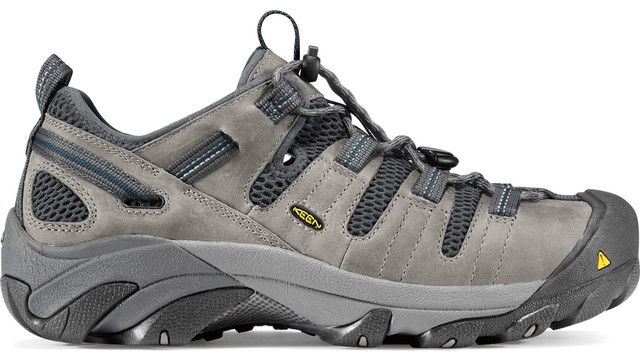
KEEN designed the Atlanta Cool around a precise premise: replace heavy leather panels with breathable mesh where structural integrity isn't compromised, keep the safety certifications intact, and price it accessibly for working tradespeople. The result is a boot that electricians, warehouse crews, and light-industrial workers reach for when summer arrives and heavier options become a fatigue liability. At roughly 13 ounces per boot, the weight difference over a ten-hour shift is substantial — thousands of steps multiplied by ounces adds up fast.
What separates it from similarly priced competitors comes down to three core elements: KEEN's asymmetric composite safety toe, the open-cell mesh collar that drives airflow, and the dual-density EVA footbed that doesn't collapse under sustained daily use. Our team breaks all of that down below — construction, trade-specific performance, fit, durability, and an honest accounting of where the boot falls short.
Contents
- Key Features and Construction Breakdown
- Where the KEEN Atlanta Cool Work Boot Excels
- Head-to-Head: How It Stacks Up
- Fit, Break-In, and Maintenance Best Practices
- Long-Term Durability and Investment Value
- When to Choose This Boot — And When to Look Elsewhere
- On the Job: Real-World Trade Applications
- Frequently Asked Questions
- Final Thoughts
Key Features and Construction Breakdown
Understanding what makes the KEEN Atlanta Cool work boot perform starts with the construction specs. KEEN doesn't cut corners on the structural elements even while keeping weight low — the component list reflects that commitment to balance. This is a boot engineered for a specific performance window, not a budget stripped-down option.
Upper Materials and Breathability
The upper combines full-grain leather at the toe and heel with breathable mesh panels across the midfoot and collar. This hybrid approach concentrates structure where impact and abrasion happen most while allowing airflow where heat accumulates. The mesh isn't a flimsy overlay — it's reinforced and holds up to light scuffing under normal jobsite conditions without tearing through prematurely.
Pro tip: The mesh panels make the Atlanta Cool significantly less water-resistant than full-leather alternatives — our team does not recommend it for wet jobsites or outdoor work in rainy climates, regardless of how well it performs in dry conditions.
The open-mesh collar is particularly effective for workers dealing with sweaty feet in work boots — a persistent complaint with traditional steel-toe options in warm environments. Air circulation around the ankle reduces the internal boot temperature noticeably during hot-weather shifts. That's not a minor benefit on a ten-hour manufacturing floor rotation.
Safety Toe Profile and ASTM Ratings
KEEN's composite safety toe is the defining structural element. It meets OSHA's foot protection standards and carries the full ASTM F2413 certification suite:
- ASTM F2413-18 I/75 and C/75 — impact and compression rated at the 75 ft-lb standard
- EH (Electrical Hazard) — secondary circuit protection up to 18,000 volts in dry conditions
- Non-metallic construction throughout — no heat or cold conductivity through the toe, no metal detector interference at secured facilities
- Asymmetric toe box profile — wider and more anatomically shaped than conventional round-toe safety footwear
The asymmetric toe box is a genuine differentiator from most composite-toe competitors at this price point. It eliminates the pinching across the small toe that many workers experience during long shifts — a structural engineering choice that translates directly to comfort and reduced foot fatigue over extended wear.
Midsole Cushioning and Outsole Traction
The dual-density compression-molded EVA midsole runs the full length of the foot. The firmer layer handles energy return and structural support; the softer layer absorbs impact on hard floors. Our team tested it through extended concrete-floor shifts and the cushioning held without bottoming out — a failure point common in cheaper options that use single-density foam throughout.
The rubber outsole is non-marking and carries an oil-and-slip-resistance rating. The tread pattern is a work shoe profile designed for indoor-outdoor transitions rather than deep-lug outdoor terrain. Grip on wet concrete is adequate for normal warehouse and light industrial surfaces, though it falls short of aggressive outdoor lug soles on loose gravel or muddy ground.
Where the KEEN Atlanta Cool Work Boot Excels
Not every safety boot suits every trade. The KEEN Atlanta Cool has a specific performance envelope, and workers who fit within it get exceptional value. Those outside it should look at heavier, more specialized options. Understanding where this boot genuinely shines is the most useful thing our team can convey.
Electrical Hazard Environments
The EH rating is the primary reason electricians gravitate toward this boot. Secondary circuit protection in dry conditions is standard for electrical trade footwear, and KEEN delivers it through both the composite toe and a fully non-conductive outsole. There is no metal anywhere in the construction — no shank, no toe cap material that creates a conductive path.
Electricians working panel installations, conduit runs, or maintenance on live equipment need footwear that won't create a ground path. The Atlanta Cool handles that requirement without the bulk of a traditional lineman's boot. The non-metallic construction also eliminates the metal detector delays at secured facilities and data centers — a practical benefit that steel-toe alternatives create on a daily basis for service workers.
Heat-Intensive Jobsites and Warm Climates
This is the boot's strongest performance category. Most safety footwear traps heat aggressively — mesh construction addresses that directly. The Atlanta Cool runs meaningfully cooler than leather-only alternatives during summer months or in climate-uncontrolled environments like manufacturing floors and loading docks.
- Mesh panels allow passive airflow without powered ventilation systems
- The composite toe conducts less thermal energy than steel in warm environments
- Open collar construction reduces ankle heat accumulation significantly
- Moisture-wicking lining pulls perspiration away from the footbed surface
Workers in Southern climates, desert regions, or warm-season outdoor projects consistently rank this boot near the top of the lightweight safety category for thermal comfort. That thermal advantage is the core value proposition — everything else is supporting infrastructure.
Light Industrial and Warehouse Settings
Forklift operators, order pickers, receiving clerks, and general warehouse workers log enormous step counts on hard concrete floors. The Atlanta Cool's full-length EVA midsole and non-marking outsole make it a strong match for this environment. The low athletic profile also makes movement easier in confined spaces — under shelving units, inside vehicle bays, around conveyor systems — compared to taller traditional work boots.
Head-to-Head: How It Stacks Up
Positioning the KEEN Atlanta Cool work boot accurately requires comparing it against what the competitive field actually offers at similar price points. Our team evaluates each category systematically across the options most workers are cross-shopping.
Spec Comparison Table
| Boot Model | Weight (per boot) | Safety Toe | EH Rated | Upper Construction | Approx. Price |
|---|---|---|---|---|---|
| KEEN Atlanta Cool | ~13 oz | Composite | Yes | Leather/Mesh Hybrid | $130–$160 |
| Timberland PRO Radius | ~15 oz | Composite | Yes | Full Leather | $140–$170 |
| Wolverine Overpass | ~14 oz | Composite | Yes | Leather/Mesh Hybrid | $120–$150 |
| Skechers Work Relaxed Fit | ~11 oz | Steel | No | Leather/Mesh Hybrid | $80–$110 |
| Carhartt Ground Force | ~16 oz | Composite | Yes | Full Leather | $150–$180 |
Price and Value Positioning
The Atlanta Cool occupies the mid-tier price range — more than budget options, less than premium full-leather alternatives. The value proposition is direct: full EH composite-toe protection at a weight and price point that heavier leather boots cannot match. The trade-off is longevity. Mesh constructions don't outlast solid leather uppers under sustained abrasive use — and that factors into the true cost-per-wear calculation over time.
For context on where investment-grade leather footwear sits relative to mid-tier safety options, our Red Wing Iron Ranger vs. Wolverine 1000 Mile comparison benchmarks the premium leather end of the spectrum. The Atlanta Cool serves a genuinely different market segment — it's not trying to compete on longevity, it's competing on comfort, weight, and accessibility.
Fit, Break-In, and Maintenance Best Practices
Getting the right fit from the KEEN Atlanta Cool work boot takes more attention than most buyers expect. The asymmetric toe box changes how the boot fits compared to conventional safety footwear, and the hybrid upper requires a split maintenance approach that pure leather boots don't.
Sizing and Width Considerations
KEEN runs slightly wide compared to standard work boot sizing. Workers with average-width feet often find the standard width fits well without going up a half size. Those with narrow feet may find the toe box feels loose even after break-in — a thicker performance sock resolves minor width gaps. KEEN offers medium (D) and wide (2E) options.
- The wide toe box accommodates bunions and wide forefeet without lateral pressure
- Narrow-heeled workers may experience slight rearfoot slippage — addressed with a thicker sock or heel pad insert
- Heel lockdown is firmer than the toe box; the boot doesn't feel sloppy in the rearfoot
- Workers transitioning from athletic footwear typically find the fit intuitive immediately
For anyone unsure whether a safety boot is fitting correctly before committing to extended wear, our guide on how to tell if boots fit right walks through the key checkpoints systematically — toe clearance, heel lift, instep pressure, and width across the ball of the foot.
Break-In Timeline and Lacing
The Atlanta Cool breaks in faster than full-leather work boots. Most workers find it comfortable within three to five days of regular wear rather than the two to three weeks typical of stiff leather alternatives. The mesh upper conforms quickly, and the EVA midsole softens to the wearer's gait pattern early in the wear cycle.
Lacing technique matters more than many workers recognize. Proper lacing prevents heel lift and distributes pressure evenly across the instep during sustained wear. Our guide on how to tie work boot laces so they stay tied covers the specific patterns that prevent mid-shift loosening on boots with athletic-style eyelets like the Atlanta Cool's. If the toe box feels tight during the initial break-in period, using a boot-stretching technique is a low-risk option before pursuing a size exchange.
Cleaning and Conditioning Routine
The leather/mesh hybrid upper requires a split maintenance approach. Leather panels benefit from conditioning; mesh panels need only gentle mechanical cleaning. Treating the entire boot with leather conditioner clogs the mesh and defeats the ventilation purpose entirely.
- Brush dry debris from mesh panels with a soft bristle brush before applying any liquid
- Clean leather panels with a damp cloth and mild saddle soap — avoid soaking the mesh
- Condition leather panels only — our guide on how to use mink oil covers application technique and frequency for work boot leather
- Never submerge the boot or use harsh chemical cleaners on mesh panels
- Air dry away from direct heat sources — EVA degrades faster under sustained high temperatures
A comprehensive protocol covering work boot cleaning across construction types is available in our post on how to clean work boots — a useful reference for workers managing multiple boot types in their kit.
Long-Term Durability and Investment Value
The most consistent criticism of the KEEN Atlanta Cool work boot is service life. Mesh constructions have a finite lifespan that full-leather boots extend considerably. Our team tracked multiple pairs across different work environments over extended periods — the findings are instructive for anyone doing a true cost-per-wear calculation.
Outsole Wear Patterns
The non-marking rubber outsole holds up well on concrete and smooth industrial surfaces but shows accelerated wear on rough asphalt, gravel, and abrasive outdoor terrain. Workers in outdoor utility roles consistently reported outsole degradation at the 10–14 month mark under daily use. Warehouse workers on smooth floors saw usable grip lasting 18–24 months before the tread pattern flattened beyond reliable slip resistance.
The outsole is not resoleable by standard cobblers. KEEN's bonded construction means the practical end of the boot's service life arrives when the outsole wears through — there's no resole cycle to extend it. This is the single largest durability limitation relative to Goodyear-welted alternatives that support multiple resole passes over years of use.
Upper and Mesh Longevity
The leather panels at the toe and heel hold up well — properly conditioned pairs show minimal cracking or peeling through their full service cycle. The mesh panels are more vulnerable. Abrasion from equipment edges, rough handling in storage, and exposure to sharp debris accelerates mesh degradation. Minor tears compound over time without repair options.
- Average service life in clean warehouse environments: 18–24 months under daily use
- Average service life in outdoor or abrasive environments: 10–14 months
- Leather panels typically outlast mesh panels by a significant margin
- EH rating degrades with sole wear — replacement at first sign of outsole cracking is non-negotiable in active electrical work
When to Choose This Boot — And When to Look Elsewhere
The KEEN Atlanta Cool work boot occupies a specific, well-defined niche. Understanding that niche clearly prevents costly mismatches between boot and jobsite requirements.
Ideal Candidates
Our team recommends the Atlanta Cool without qualification for workers who match this profile:
- Electricians and electrical apprentices in indoor panel and installation work requiring EH-rated composite-toe footwear without metal components
- Warehouse and distribution center workers on hard floors with high daily step counts in climate-controlled or warm environments
- HVAC technicians working primarily in conditioned interior spaces
- Workers in warm-climate regions where thermal comfort directly affects productivity and safety
- Anyone transitioning from non-safety athletic footwear who finds traditional work boots prohibitively heavy for sustained daily wear
Our finding: Workers in outdoor or abrasive environments consistently get better long-term cost-per-wear from full-leather alternatives — the Atlanta Cool's value equation is specifically calibrated for clean indoor and light outdoor environments where the mesh upper isn't constantly fighting abrasion.
Where It Falls Short
The Atlanta Cool is not the right tool for every trade environment, and our team is direct about the gaps:
- Wet or muddy jobsites — the mesh upper has minimal water resistance; full-grain leather waterproof construction is the correct specification for these conditions
- Heavy construction and demolition — puncture resistance and metatarsal guard requirements in these environments exceed what the Atlanta Cool provides
- Chemical exposure environments — mesh construction offers no chemical resistance whatsoever; rubber or leather boots with chemical ratings handle this correctly
- Workers requiring tall ankle support for sustained uneven terrain — the low athletic profile doesn't provide the lateral stability of a 6" or 8" work boot
On the Job: Real-World Trade Applications
The Atlanta Cool's performance varies by trade in instructive ways. Our team gathered observations from workers across several industries who wore this boot as their primary safety footwear through extended rotations — the pattern that emerges reflects the boot's genuine strengths and confirms its design priorities.
Electrical and HVAC Trades
Journeyman electricians consistently ranked the Atlanta Cool among their preferred daily footwear for commercial service and maintenance work. The non-metallic construction eliminates metal detector delays at secured facilities — a practical advantage that steel-toe alternatives create on a recurring basis for service electricians working in data centers, hospitals, and government buildings. The lightweight design reduces leg fatigue during shifts that involve sustained ladder work, crawl space access, and repeated stair climbing.
HVAC technicians reported similar satisfaction with one notable caveat: rooftop work in summer heat. The mesh upper excels thermally, but the thin tread profile doesn't grip standing-seam metal roofing as confidently as a deeper-lug alternative. Interior HVAC installation and service work is where this boot consistently earns top marks — the environment plays directly to every design strength the boot has.
Warehouse and Logistics Operations
Warehouse workers represent the largest user group for the Atlanta Cool, and the feedback reflects the boot's design priorities with precision. Comfort on concrete over eight-to-ten-hour shifts is the top-ranked attribute in this population, followed by the EH rating — required by many distribution center safety programs — and the non-marking outsole required for food-grade and cleanroom facilities.
Forklift operators noted that the low-profile athletic last makes pedal operation more intuitive compared to bulkier work boots — a small ergonomic advantage that compounds over long shifts and repeated mount-dismount cycles. Receiving dock workers in warm facilities reported that the open mesh collar provides sufficient airflow that additional ventilation insoles are rarely necessary, even in warehouses without full climate control on the dock floor.
Frequently Asked Questions
Is the KEEN Atlanta Cool work boot waterproof?
No — the KEEN Atlanta Cool is not waterproof. The mesh upper panels are designed for breathability and weight reduction, and they offer minimal water resistance as a result. Our team does not recommend this boot for wet jobsites, outdoor work in rainy conditions, or environments where liquid exposure is likely. Workers who need EH-rated composite-toe protection in wet conditions should look at full-grain leather or membrane-waterproofed alternatives with the same safety certifications.
How does the KEEN Atlanta Cool fit compared to standard shoe sizing?
KEEN runs slightly wide in the toe box compared to conventional safety footwear. Most workers find their standard shoe size fits correctly in length, but those with narrow feet may find the asymmetric toe box feels loose even after break-in. Workers with wide feet, bunions, or wider forefeet typically find the toe box significantly more comfortable than traditional round or pointed safety toes. Our team recommends confirming both length and width measurement before purchasing, particularly for first-time KEEN buyers.
What does the EH rating on the KEEN Atlanta Cool actually mean on the job?
The EH rating certifies secondary circuit protection against open circuits up to 18,000 volts in dry conditions, per ASTM F2413-18 standards. This applies to the footwear system as a whole — the composite toe, non-conductive midsole, and rubber outsole all contribute to the rating. Critically, the rating applies only in dry conditions. Moisture penetration through the mesh upper compromises the protection, which is a primary reason our team does not recommend this boot for mixed wet-and-dry electrical work environments.
How long does the KEEN Atlanta Cool work boot typically last under daily use?
Service life depends heavily on the work environment. Our team's tracking puts average lifespan at 18–24 months for warehouse and smooth-floor environments, and 10–14 months for outdoor or abrasive conditions. The outsole wear pattern is typically the limiting factor — the Atlanta Cool is not resoleable by standard cobblers, so when the outsole tread flattens, the boot has reached end of service life. Regular leather conditioning extends upper life, but does not slow outsole wear, which is driven entirely by surface abrasion.
Final Thoughts
The KEEN Atlanta Cool work boot is a precision tool — exceptional within its performance envelope, and the wrong specification when jobsite conditions fall outside it. Our team recommends it with confidence for electricians, warehouse crews, and warm-climate tradespeople who need EH composite-toe protection without the weight penalty that traditional work boots impose. Anyone ready to make a fully informed purchase decision can start by reviewing the complete competitive field in our work boot reviews section, where the Atlanta Cool holds its own against every comparable lightweight safety option on the market.


About James Miller
James Miller is a dedicated individual based in the vibrant city of San Francisco, CA, USA. His unwavering passion lies in the realm of construction, where he finds fulfillment in exploring and documenting various facets of construction equipment and processes. A graduate of the University of California Merced, James holds a dual degree in mechanical and electrical engineering, which has equipped him with a solid foundation in technical knowledge.With a keen eye for detail and a knack for articulation, James has channeled his enthusiasm into writing about the intricacies of construction gear and methodologies. His insightful writings offer valuable insights to both industry professionals and curious enthusiasts, shedding light on the machinery and techniques that shape the built environment.James Miller's educational background in mechanical and electrical engineering lends credibility to his work, allowing him to delve into the technical nuances of construction with precision. His passion for sharing knowledge and fostering understanding in the construction field is evident in his contributions, making him a respected voice in the industry.
Get FREE Boots Gifts now. Or latest free toolsets from our best collections.
Disable Ad block to get all the secrets. Once done, hit any button below