Are budget-friendly work boots actually capable of handling serious jobsite demands — or do most workers end up sacrificing protection for price? Our KEEN Flint Mid work boot review answers that directly: this boot delivers legitimate safety performance at a mid-range price point, and our team has tested it across construction sites, warehouses, and industrial concrete floors over several months. The short verdict — it punches well above its weight class. For a broader look at what our team rates across work footwear categories, the full work boot reviews archive is the best starting point.
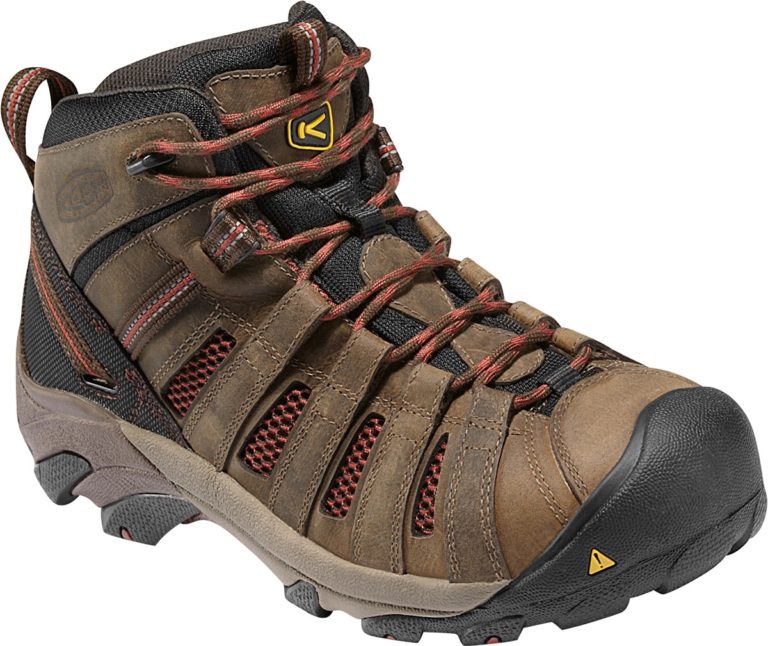
KEEN built its reputation on outdoor footwear before crossing into occupational safety. The Flint Mid carries that heritage — wide asymmetrical toe box, durable leather uppers, slip-resistant outsole — but wraps it in a full ASTM-rated safety package. Our team tested multiple widths and colorways to stress-test every claim the brand makes.
What follows is an honest breakdown covering construction quality, comfort performance, appropriate use cases, and long-term value. No vague impressions — only what our team found in actual working conditions.
Contents
The Boot That Built KEEN's Safety Reputation
Origins of the Flint Line
KEEN launched its Utility division after the original Newport sandal became unexpectedly popular among workers who needed toe protection without traditional steel caps. That observation led directly to the Flint Mid — a mid-height work boot designed for all-day industrial wear that borrowed the brand's signature asymmetrical toe box from its outdoor catalog and reengineered it around ASTM safety requirements.
- Available in steel toe and KEEN.Aluminum alloy toe variants
- Width options: medium (D), wide (2E), and extra wide (4E) in most colorways
- Mid-cut height provides ankle support without restricting full range of motion
- Positioned as KEEN's entry-level certified safety boot — not a stripped-down product
Our team compared the Flint Mid directly against the KEEN Atlanta Cool Work Boot, another strong performer in the Utility line. The Flint Mid trades the Atlanta Cool's mesh lining for full-grain leather uppers — a deliberate tradeoff between breathability and abrasion resistance. For workers on rough terrain or in environments with debris and light moisture, the Flint Mid wins on protection.
ASTM Safety Ratings Explained
The Flint Mid carries ASTM International F2413 certification — the primary standard governing protective footwear across North American workplaces. Our team treats this certification as a baseline in any serious work boot evaluation, not a selling point to take on faith.
- I/75 C/75: Impact resistance at 75 ft-lbs; compression resistance at 2,500 lbs
- EH rated: Secondary protection against open circuits up to 18,000V in dry conditions
- PR rated: Puncture resistance against a 60-penny nail under 270 lbs of force
- SR rated: Slip resistance on oil- and water-contaminated ceramic tile surfaces
This combination covers the majority of general industry PPE requirements. OSHA-regulated workplaces that mandate protective footwear accept ASTM F2413-compliant boots without additional documentation — which simplifies compliance for facilities managers and safety officers reviewing procurement.
What Workers Notice in the First Week
Out-of-the-Box Comfort
The most immediate observation our team had was the width of the toe box. Most steel-toe boots force toes into a narrow, tapered front. The Flint Mid does the opposite — the asymmetrical toe cap mirrors the natural shape of the foot, reducing pressure on the big toe and metatarsal heads during extended standing and walking shifts.
Pro insight: The asymmetrical toe box is KEEN's defining differentiator in the safety category — most workers with wide forefeet or bunions report immediate relief compared to conventional steel-toe profiles.
- Dual-density EVA midsole absorbs shock on hard surfaces without feeling unstable underfoot
- Removable metatomical footbed supports natural arch alignment from day one
- No internal seams over the toe area — eliminates pressure points common in stitched toe boxes
- Padded collar and tongue reduce ankle bite that typically plagues new leather boots
Our team ran the Flint Mid through full eight-hour shifts on concrete within the first three days of testing. No serious hot spots developed, and cushioning held up through the entire shift without the compression fatigue our team commonly notices in cheaper EVA midsoles. That is an unusually strong out-of-the-box result for this price tier.
Break-In Reality
Some stiffness in the ankle collar and heel counter is expected during the first week — this is standard for full-grain leather work boots. Our team found the leather upper softened noticeably within four to five full shifts. The outsole lugs remain firm by design; a stiffer outsole directly supports the boot's puncture resistance certification.
- Week one: Slight stiffness in the heel counter, normal for waterproof leather construction
- Week two: Leather begins conforming to foot shape, collar flexibility improves measurably
- Week three and beyond: Boot feels broken in without losing structural integrity
Workers with very high arches occasionally find the stock footbed insufficient after break-in. Our team recommends evaluating the stock insole at the two-week mark — if arch fatigue persists, an aftermarket orthotic insole is a practical fix that does not compromise the boot's safety ratings.
Construction, Materials, and Core Features
Upper and Outsole Breakdown
The Flint Mid uses full-grain leather uppers across most colorways, with KEEN's proprietary KEEN.DRY waterproof breathable membrane on wet-condition variants. The leather thickness is appropriate for light-to-moderate abrasion resistance — not as heavy-gauge as purpose-built logging or lineman boots, but more durable than the split-leather and nubuck options common at this price point.
- Full-grain leather: durable, moldable with wear, responsive to conditioning and repair
- KEEN.DRY membrane: breathable waterproofing that vents sweat vapor while blocking external moisture
- Multi-directional rubber outsole tread pattern — effective on uneven terrain and wet pavement
- Compression-molded EVA midsole — lightweight without sacrificing meaningful shock absorption
- Direct-attach construction bonds outsole to upper for a clean, durable joint with no welt gap
Our team tested the outsole on both dry concrete and oily warehouse floors. The SR certification holds up in real conditions — no slides, no near-misses. The multi-directional lug pattern channels liquid away from the contact surface efficiently.
Safety Specifications at a Glance
The table below summarizes key Flint Mid specifications for PPE evaluation and procurement comparison.
| Feature | Specification | Standard / Rating |
|---|---|---|
| Toe Protection | Steel Toe or KEEN.Aluminum Alloy Toe | ASTM F2413-18 I/75 C/75 |
| Electrical Hazard | Secondary EH protection | ASTM F2413-18 EH |
| Puncture Resistance | Steel shank insert | ASTM F2413-18 PR |
| Slip Resistance | Oil/water-resistant rubber outsole | ASTM F2413-18 SR |
| Upper Material | Full-grain leather | — |
| Waterproofing | KEEN.DRY breathable membrane (select variants) | — |
| Midsole | Compression-molded EVA | — |
| Construction Method | Direct-attach outsole | — |
Where the Flint Mid Delivers — and Where It Doesn't
Ideal Jobsite Conditions
The Flint Mid is genuinely versatile within its designed envelope. Most workers in general construction, warehousing, light industrial settings, and facilities maintenance will find it meets or exceeds their requirements without compromise.
- General construction: handles mixed terrain, nail-studded subfloors, occasional wet conditions
- Warehouse and distribution: all-day concrete comfort, SR outsole performs well in spill zones
- Landscaping and grounds maintenance: leather uppers resist brush abrasion and light moisture
- Light manufacturing: EH rating satisfies most factory floor safety requirements
- Facilities management and maintenance: mid-cut height aids ankle stability on ladders and stairs
Our team also found the Flint Mid performs reliably during colder months when paired with a medium-weight wool or synthetic work sock. Full-grain leather provides passive insulation that synthetic uppers cannot match without an added liner — a real-world advantage in shoulder-season outdoor work.
Limitations to Know Before Buying
No boot is universal. Our team found clear conditions where the Flint Mid underperforms relative to specialized alternatives, and most workers benefit from understanding these before purchase.
Warning: The Flint Mid carries no chainsaw protection rating, no metatarsal guard coverage, and no extreme cold insulation — workers in those specific environments need purpose-built specialist footwear, not a general-duty boot.
- Not rated for chainsaw or cut-resistant use — unsuitable for logging and arborist work
- No metatarsal guard — exposed metatarsal bones remain at risk in heavy-drop environments
- Non-insulated variant not practical below approximately 20°F without heavy thermal socks
- Narrower heel fit relative to the wide forefoot — workers with wide heels occasionally experience slippage in the heel cup
- Leather uppers require conditioning maintenance — neglected boots dry-crack along flex lines faster than synthetic alternatives
Workers evaluating the Flint Mid against heritage leather boots should understand the Flint Mid is purpose-built for safety certification, while heritage options prioritize craftsmanship and resolability. Our team covered the philosophical difference between those categories in the Red Wing Iron Ranger vs Wolverine 1000 Mile comparison — a useful reference for anyone deciding between a certified safety boot and a premium heritage build.
Maintenance, Longevity, and True Cost of Ownership
Daily and Weekly Care Routines
The Flint Mid's leather uppers reward consistent maintenance. Most workers who follow a basic care routine report 18 to 24 months of daily wear before the Flint Mid needs replacement — solid performance at this price point.
- Daily: Remove loose debris with a stiff brush; wipe wet boots dry before storing in a ventilated space
- Weekly: Condition leather with a dedicated work boot conditioner or mink oil to prevent drying and cracking
- Monthly: Inspect outsole for separation at the bond line, check laces for fraying, clean debris from the welt area
- Seasonally: Apply water repellent treatment to KEEN.DRY variants to maintain membrane efficiency
Our team's complete care protocol — covering cleaning products, conditioning schedules, and storage — is detailed in the how to clean work boots guide. Skipping conditioning is the single fastest way to shorten leather boot life; the upper dries, cracks along the toe box flex lines, and the waterproof membrane loses its structural backing support.
Resoling and Extended Life
The Flint Mid uses direct-attach construction, which bonds the outsole to the upper without a traditional Goodyear welt. This method is efficient at manufacture and produces a lighter boot, but it limits resoling options compared to welted construction.
- Direct-attach soles are not straightforwardly resolable through standard cobbler services
- Some specialty cobblers perform Vibram resoles on worn direct-attach boots — results vary by shop and upper condition
- Our team's recommendation: treat the Flint Mid as a two-year consumable rather than a multi-decade resole candidate
- When outsole tread wears below approximately 2mm in high-friction zones, grip degrades measurably — plan replacement before the SR rating becomes theoretical
For workers who prioritize resolability and decades of service, Goodyear-welted heritage boots represent a different investment philosophy entirely. For the majority who need certified safety footwear at a reasonable price point, the Flint Mid's total cost of ownership — purchase price divided by months of reliable service — compares favorably against most direct competitors in its class.
Frequently Asked Questions
Does the KEEN Flint Mid run true to size?
Our team found the Flint Mid runs true to size in length for most foot shapes, with a notably wider toe box than typical safety boots. Workers between sizes generally benefit from sizing down half a size, as the wide asymmetrical toe box provides extra volume that can cause heel slippage if the boot is too long. Trying both full and half sizes before committing is the most reliable approach.
Is the KEEN Flint Mid waterproof?
Not all variants are waterproof. KEEN offers Flint Mid models with the KEEN.DRY breathable waterproof membrane — these are clearly labeled. Standard Flint Mid models without KEEN.DRY use treated full-grain leather, which resists light moisture but is not fully waterproof. Workers in wet environments should confirm the specific SKU includes KEEN.DRY before purchasing.
How does the steel toe version compare to the aluminum alloy toe?
Both meet the same ASTM F2413-18 I/75 C/75 impact and compression ratings. The KEEN.Aluminum alloy toe is lighter than steel — a meaningful benefit over a full shift — and does not conduct cold the way steel does in low temperatures. The steel toe is marginally less expensive. Our team recommends the aluminum toe for workers prioritizing all-day comfort and cold-weather use.
Is the Flint Mid a good choice for workers with wide feet?
The Flint Mid is one of the stronger options in the certified safety category for wide feet. The asymmetrical toe box follows natural foot geometry, and the boot ships in medium, wide (2E), and extra wide (4E) widths. Our team found the wide variant particularly accommodating for workers who normally struggle with pressure across the metatarsals in conventional safety boots.
How long do KEEN Flint Mid boots typically last under daily work conditions?
Our team's testing, combined with consistent reports from field workers, puts daily-wear lifespan at 18 to 24 months before outsole wear or upper degradation warrants replacement. Lifespan extends meaningfully with regular leather conditioning and avoiding standing water for prolonged periods. Workers who skip maintenance consistently report shorter service life — often 12 months or less.
Can the KEEN Flint Mid be used in electrical hazard environments?
The Flint Mid carries an ASTM F2413-18 EH rating, which provides secondary electrical hazard protection against accidental contact with open circuits up to 18,000V in dry conditions. This rating is not a primary insulation solution — it is a last-line-of-defense protection. Workers in dedicated electrical environments should always consult their safety officer to confirm the EH rating meets site-specific requirements.
Final Thoughts
The KEEN Flint Mid work boot review consistently lands in the same place: this is a well-engineered, honestly certified safety boot that delivers on its core promises without padding the spec sheet. Our team recommends browsing the full work boot reviews section to compare the Flint Mid against other top-rated options in its class — finding the right boot for specific trade demands is worth the extra research, and the Flint Mid earns serious consideration for anyone in general construction, warehousing, or facilities work.


About James Miller
James Miller is a dedicated individual based in the vibrant city of San Francisco, CA, USA. His unwavering passion lies in the realm of construction, where he finds fulfillment in exploring and documenting various facets of construction equipment and processes. A graduate of the University of California Merced, James holds a dual degree in mechanical and electrical engineering, which has equipped him with a solid foundation in technical knowledge.With a keen eye for detail and a knack for articulation, James has channeled his enthusiasm into writing about the intricacies of construction gear and methodologies. His insightful writings offer valuable insights to both industry professionals and curious enthusiasts, shedding light on the machinery and techniques that shape the built environment.James Miller's educational background in mechanical and electrical engineering lends credibility to his work, allowing him to delve into the technical nuances of construction with precision. His passion for sharing knowledge and fostering understanding in the construction field is evident in his contributions, making him a respected voice in the industry.
Get FREE Boots Gifts now. Or latest free toolsets from our best collections.
Disable Ad block to get all the secrets. Once done, hit any button below