The Timberland PRO Anti-Fatigue Insole earns the top spot in 2026 — its cone-shaped geometry absorbs shock and returns energy so your legs feel fresh even after a 12-hour shift on concrete. If you clock long hours on your feet, the right insole matters more than almost any other gear upgrade you can make.
Most work boots ship with a flat foam liner that flattens out within a few weeks. That generic footbed doesn't account for heel strike, arch variance, or the brutal impact of hard industrial floors. Swapping it for a purpose-built insole can eliminate foot pain, reduce knee strain, and keep you productive through the end of your shift. Whether you're navigating a construction site, a warehouse floor, or a farm field, the insoles on this list are engineered specifically for demanding work environments in 2026.
We reviewed seven of the top-rated options across multiple categories — anti-fatigue, gel cushioning, memory foam, and orthotic arch support — to help you find the right fit for your job and your foot. Check out our full insoles and accessories guide for even more options. If you're also dealing with boots that run large, our best insoles for boots that are too big covers volume-filling solutions. And if you're still shopping for the boots themselves, our roundup of the best composite toe work boots is a solid place to start.
Contents
- Our Top Picks for 2026
- Our Hands-On Reviews
- Timberland PRO Anti-Fatigue Insole — Best Overall
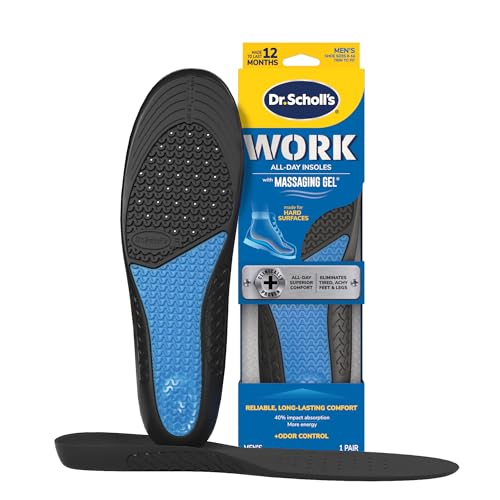
- Dr. Scholl's Work All-Day Insoles — Best Gel Cushioning
- Sof Sole Women's Work Anti-Fatigue — Best for Women
- Carhartt Insite Footbed — Best for Heavy-Duty Work
- Red Wing ComfortForce Footbed — Best Memory Foam
- PowerStep Pinnacle Work — Best Arch Support
- Thorogood Sock Zone Footbed — Best for Airflow
- What to Look For When Buying
- Questions Answered
- Key Takeaways
Our Top Picks for 2026
- #PreviewProductRating
- Bestseller No. 1
 Rating:

- Bestseller No. 2
 Rating:
 - Bestseller No. 3
 Rating:
- Bestseller No. 4
 Rating:
 - Bestseller No. 5
 Rating:
 - Bestseller No. 6
 Rating:
 - Bestseller No. 7
 Rating:
Our Hands-On Reviews

1. Timberland PRO Men's Anti-Fatigue Technology Insole — Best Overall
Timberland PRO built its Anti-Fatigue insole around a patented inverted cone geometry — an array of geometric shapes embedded in the midsole that compress on impact and push energy back into your foot with each step. The result is a measurable reduction in leg fatigue over long shifts. This isn't marketing language; the rebound is something you feel within the first hour on a concrete floor. The rubber outsole layer adds grip underneath, which means the insole stays put inside your boot rather than sliding around as the day goes on.
The fit runs true across a wide size range and the trim-to-fit edge markings make custom sizing straightforward. You'll notice the insole sits slightly thicker than a stock liner, so if your boots already run tight, go up half a size or pull the factory footbed before dropping these in. For workers in physically demanding trades — construction, roofing, landscaping — this insole consistently outperforms everything else at a similar price point. It's the benchmark that every other anti-fatigue insole is measured against in 2026.
Pros:
- Patented inverted cone geometry actively returns energy with every step
- Rubber outsole prevents sliding inside the boot
- Durable construction holds up through months of daily wear
- Available in a broad range of sizes
Cons:
- Thicker profile can feel tight in boots with limited volume
- Men's sizing only — not designed for narrower women's feet
2. Dr. Scholl's Work All-Day Superior Comfort Insoles — Best Gel Cushioning
Dr. Scholl's has been the go-to name in foot comfort for decades, and the Work All-Day insole is their most serious offering for industrial workers. The key feature here is the extended gel cushioning zone that runs from heel to toe — not just a gel pod under the heel like budget options. That extended gel layer absorbs and redistributes the repetitive impact of walking on asphalt, cement, and concrete hour after hour. Clinical data backs the comfort claims, which is rare in this category.
The insole distributes foot pressure evenly across the entire footbed, which directly reduces the localized fatigue and joint strain you get with a flat foam insert. If you've been coming home with sore ankles, aching knees, or tight calves after long shifts, this is the insole that addresses those symptoms at the source. It trims cleanly to fit most men's boot sizes and stays responsive throughout a full workday rather than packing out by mid-afternoon like cheaper foam insoles do. The price point is accessible, and a pair typically lasts six months under heavy daily use.
Pros:
- Full-length massaging gel cushioning reduces impact on joints
- Clinically proven all-day comfort — not just marketing claims
- Distributes foot pressure evenly to fight fatigue and muscle soreness
- Trim-to-fit design works in most boot styles
Cons:
- Less arch support than orthotic-grade options like PowerStep
- Gel can feel slightly firm in very cold environments
3. Sof Sole Women's Work Anti-Fatigue Insole — Best for Women
Most work insoles are designed around a men's foot shape and simply scaled down for women — Sof Sole takes a different approach with this anti-fatigue insole. The Anti-Fatigue Core at the center of the footbed is engineered to handle the specific pressure distribution of a woman's foot, redistributing stress away from the ball and heel to reduce full-body fatigue. If you've tried men's anti-fatigue insoles and found them uncomfortable or poorly fitted, this is the option built for you.
The COOLMAX fabric top cover wicks moisture effectively, keeping your feet cooler and drier than standard synthetic liners — a meaningful advantage during warm months or in hot work environments. The deep heel cup prevents heel slip, which is a common complaint with women's work boots that run slightly wide or have a shallower heel pocket. The full-length design gives you coverage across the entire footbed rather than leaving the forefoot without support. At the size range of Men's 8–13 (which maps to Women's 9–14), you get a wide coverage spread that fits most women's work boot sizes with a simple trim.
Pros:
- Anti-Fatigue Core redistributes pressure specifically for women's foot geometry
- COOLMAX top cover keeps feet cool and dry throughout the shift
- Deep heel cup eliminates heel slip
- Full-length coverage from heel to toe
Cons:
- Size labeling (Men's scale) can cause confusion when ordering
- Less arch structure than orthotic insoles for high-arch feet
4. Carhartt Men's Insite Footbed CMI9000 — Best for Heavy-Duty Work
Carhartt built their Insite Footbed for workers who need performance that matches the durability of the brand's outerwear. The Pulsion Rebound Foam is the standout technology here — it's engineered specifically to maximize rebound energy and reduce fatigue under sustained heavy load. Where a standard foam insole compresses and stays compressed, Pulsion foam cycles back to its original shape between steps, giving you fresh cushioning mile after mile. Combine that with the single-density foam layer in the heel and ball strike zones and you get superior shock absorption exactly where your foot needs it most.
The AX Sueded top cover material earns its place on this list for two reasons: it actively reduces heat buildup inside the boot, and it grips the bottom of your sock to minimize sliding. That grip matters on rough terrain and during heavy lifting when foot movement inside the boot can cause blisters and reduce stability. This footbed is a natural upgrade for anyone already wearing Carhartt boots, but it works equally well in boots from other brands. It runs at a moderate price point and holds up well under daily construction, manufacturing, or agricultural use through a full season.
Pros:
- Pulsion Rebound Foam provides maximum bounce-back under sustained load
- AX Sueded top cover reduces heat and prevents foot sliding
- Dual-density foam system targets heel and ball strike zones independently
- Durable enough for heavy industrial and agricultural environments
Cons:
- Minimal arch contouring — not ideal for flat-footed workers
- Black color shows minimal wear indicators — hard to tell when replacement is due
5. Red Wing Shoes Memory Foam ComfortForce Footbed — Best Memory Foam
Red Wing Shoes is synonymous with work boot quality, and their ComfortForce Footbed brings the same engineering philosophy to aftermarket insoles. The plush memory foam layer at the top conforms to the exact shape of your foot over the first few days of wear, creating a custom-fit feel without the cost of custom orthotics. Memory foam that shapes to your foot means pressure points disappear — the insole fills every contour rather than creating a generic flat surface that leaves gaps under your arch or beside your heel.
The polyethylene base layer is what separates this insole from cheap memory foam options. It provides structural support and durability while remaining lightweight and shock-absorbing. The molded arch support and heel cup maintain proper foot alignment, which reduces the cascade of stress that moves up through your ankles, knees, and lower back when your foot rolls inward or sits flat. The moisture-resistant base also prevents the common problem of foam insoles soaking through and developing odor. This is the insole to choose if you prioritize all-day personalized comfort over aggressive energy return.
Pros:
- Plush memory foam conforms to your foot shape for a custom fit
- Polyethylene base adds durability and moisture resistance
- Molded arch support and heel cup promote proper foot alignment
- Reduces joint stress and discomfort throughout the day
Cons:
- Memory foam can feel warm in hot environments compared to gel options
- Less energy return than anti-fatigue designs like Timberland PRO
6. PowerStep Pinnacle Work Insoles — Best Arch Support
If you deal with plantar fasciitis, flat feet, or overpronation, the PowerStep Pinnacle Work is the insole that addresses the root cause rather than just masking the pain. This is a true orthotic-grade insole — firm contoured arch support that holds your foot in neutral alignment rather than letting it roll inward under load. The deep heel cradle locks your heel in place, which prevents the micro-movements that cause blisters and aggravate heel pain over a long shift. Made in the USA, it's built to the quality standards you'd expect from a product backed by podiatrists.
The dual-layer cushioning system delivers both comfort and rebound without going flat. The bottom layer maintains structure and the top layer provides the softness you feel underfoot. This combination keeps the insole performing consistently through months of heavy use — you won't find yourself replacing it every six weeks the way you would with a budget foam insert. The neutral arch support is firm enough to provide real correction for mild to moderate pronation, but flexible enough that it doesn't feel like you're standing on a rigid orthotic plate. For workers who are on their feet all day and wake up with heel pain in the morning, this is the pick that makes the biggest difference in 2026.
Pros:
- Firm neutral arch support corrects mild to moderate overpronation
- Deep heel cradle prevents heel slip and reduces plantar fasciitis pain
- Premium dual-layer cushion bounces back without going flat
- Made in the USA — consistent quality control
- Works for both men and women
Cons:
- Firmer feel takes a short break-in period compared to softer options
- Higher price than basic gel or anti-fatigue insoles
7. Thorogood 889-8000L Sock Zone Footbed — Best for Airflow
Thorogood designed the Sock Zone Footbed as a first-party upgrade for their own boots, but it performs just as well in other work boot brands. The defining feature is the perforation pattern in the ball and arch zones that promotes air circulation through the insole. If you're working in a hot environment or simply have feet that run warm, that ventilation makes a genuine difference in how comfortable you feel by mid-day. Sweat-soaked insoles break down faster and contribute to blisters and odor — the Sock Zone design actively fights that problem.
The dual-density polyurethane construction gives you different performance in different zones. The single-density layer under the heel and ball strike areas delivers reliable shock absorption exactly where ground impact is highest. The arch and mid-foot zones get the lighter perforation layer that flexes with your foot while allowing air to move. It's a straightforward design without gimmicks, and that simplicity is part of the appeal. For workers who value longevity and breathability over aggressive cushioning technology, this is the insole that delivers consistent performance day after day without any break-in period. It fits cleanly into standard work boot sizing and installs in seconds.
Pros:
- Perforated ball and arch zones promote active airflow to keep feet cooler
- Dual-density polyurethane delivers zone-specific cushioning and shock absorption
- No break-in period — comfortable from the first wear
- Durable construction maintains performance through extended daily use
Cons:
- Less aggressive energy return than anti-fatigue designs
- Minimal arch contouring — not suited for workers needing orthotic correction
What to Look For When Buying Work Boot Insoles
Cushioning Technology: Anti-Fatigue vs. Gel vs. Memory Foam
The three main cushioning technologies serve different needs, and choosing the wrong one for your job makes a real difference in how you feel at the end of the day. Orthotic insoles and cushioned footbeds have been proven to reduce musculoskeletal fatigue in workers who stand for extended periods.
- Anti-fatigue foam (Timberland PRO, Carhartt): Uses geometric cone structures or engineered rebound foam to actively return energy with each step. Best for workers who are constantly moving — construction, warehousing, landscaping.
- Gel cushioning (Dr. Scholl's): Absorbs and disperses impact across a wide area. Best for workers who stand in one place on hard floors — assembly lines, factory floors, retail.
- Memory foam (Red Wing): Conforms to your specific foot shape for personalized comfort. Best for workers who prioritize a custom feel and relief from pressure points over aggressive shock absorption.
The best approach is to match the technology to your primary work posture — moving constantly favors anti-fatigue rebound, while standing still favors gel absorption, and varied work often benefits most from memory foam's adaptive fit.
Arch Support Level: Flat Foot vs. High Arch vs. Neutral
Your arch type determines which insole will actually fix your foot pain rather than just padding around it. An insole with too little arch support leaves you with the same overpronation problems you started with. An insole with too much arch support creates pressure points under the arch that cause their own discomfort.
- Flat feet / low arch: Choose a firm, structured insole with aggressive arch support — PowerStep Pinnacle Work is the clear choice here.
- Neutral arch: Most anti-fatigue and gel insoles work well. Timberland PRO and Dr. Scholl's are both strong neutral picks.
- High arch: Look for a cushioned insole with a moderate arch contour that fills the gap without over-correcting — Red Wing ComfortForce memory foam adapts well to high arches.
If you have a diagnosed foot condition like plantar fasciitis, orthotic-grade arch support is non-negotiable. The PowerStep Pinnacle Work was designed with podiatric input specifically for this case.
Moisture Management and Temperature Control
After an eight-hour shift, a soaked insole is a breeding ground for bacteria, odor, and material breakdown. Moisture management is a practical durability concern, not just a comfort feature. Here's what to evaluate:
- Fabric top cover: Sof Sole's COOLMAX and Thorogood's Sock Zone perforation actively move moisture away from your skin. Critical in hot environments.
- Moisture-resistant base layer: Red Wing's polyethylene base prevents liquid from soaking into the foam core, extending insole life significantly.
- Breathability perforations: Physical holes in the insole (Thorogood) allow air to circulate rather than trapping heat — best in warm seasons or hot work environments.
Fit, Sizing, and Compatibility with Your Boots
Even the best insole on the market won't perform if it doesn't fit your boot correctly. Before you buy, consider these factors:
- Remove the factory insole first: Most aftermarket insoles add 3–6mm of height. Dropping them on top of the factory liner creates a tight, uncomfortable fit. Pull the original out before installing your new insole.
- Trim-to-fit vs. pre-sized: Trim-to-fit insoles (Dr. Scholl's, Sof Sole) offer flexibility across half-sizes. Pre-sized insoles (Carhartt, PowerStep, Thorogood) give a more precise fit but require accurate sizing.
- Boot volume matters: Wide-toe-box boots (common in steel-toe designs) have more room for a thicker insole. Low-profile shoes have less tolerance — prioritize thinner gel options.
- Women's sizing: Unless the insole is explicitly designed for women (Sof Sole), check the size conversion chart carefully. Many "unisex" insoles are sized on a men's scale.
For anyone dealing with boots that don't fit quite right in addition to needing better cushioning, our guide to the best insoles for oversized boots covers volume-building options that solve two problems at once.
Questions Answered
How often should I replace work boot insoles?
Replace your insoles every 6 to 12 months under normal heavy use — sooner if you work 10+ hours daily on hard surfaces. The clearest sign is when the cushioning no longer springs back after a shift, or when you notice the return of foot pain you had eliminated. Most foam and gel insoles flatten out before the boot itself shows wear, so don't wait for visible damage. If you weigh over 200 lbs or work in physically demanding conditions, check at the 4-month mark.
Can I use the same insoles in multiple pairs of boots?
Yes, but you should have a dedicated pair for each set of boots you rotate through regularly. Transferring insoles daily allows the foam or gel to decompress and recover between wears, which extends their lifespan. If you have one primary pair of work boots, a single set of insoles is fine. If you rotate between two pairs, buy two sets — the recovery time doubles the effective life of each insole.
Are aftermarket insoles better than the factory insoles that come with work boots?
In almost every case, yes. Factory insoles are designed to a price point and rarely account for your specific foot type, work surface, or fatigue patterns. Even premium work boots like Red Wing and Thorogood include basic liners that compress quickly under daily use. A purpose-built aftermarket insole — especially one engineered with anti-fatigue geometry or orthotic arch support — delivers measurable comfort improvements that no stock liner can match after the first month of use.
What insole works best for plantar fasciitis in work boots?
The PowerStep Pinnacle Work is the definitive choice for plantar fasciitis in 2026. Its firm contoured arch support reduces tension on the plantar fascia, and the deep heel cradle prevents the heel movement that aggravates morning pain. For severe cases, consult a podiatrist about custom orthotics — but for mild to moderate plantar fasciitis, the PowerStep delivers clinical-grade results at a fraction of the cost. Pair it with a stretching routine before your shift for best results.
Do insoles help with knee and back pain from standing all day?
Yes — proper insoles directly reduce knee and lower back stress. When your foot overpronates or strikes without adequate cushioning, the impact energy travels up through your ankle, knee, and hip. Insoles with arch support correct the pronation at the source; anti-fatigue insoles reduce the raw impact force before it reaches your joints. Workers who switch from stock liners to quality insoles consistently report less knee ache and lower back tightness within the first few weeks of daily use.
Are gel insoles or foam insoles better for concrete floors?
Gel insoles are generally superior for workers who stand stationary on concrete — the gel material disperses impact energy across a wider area than foam and maintains its cushioning properties longer under constant compression. Foam insoles (especially anti-fatigue rebound designs) perform better for workers who move constantly, since the rebound cycle of stepping and lifting is what activates the energy-return geometry. If your job is a mix of both, a gel-foam hybrid or a full-length gel insert like Dr. Scholl's Work All-Day is the most versatile choice for concrete environments.
Buy on Walmart
- Timberland PRO Men's Anti Fatigue Technology Replacement Ins — Walmart Link
- Dr. Scholl's Work All-Day Superior Comfort Insoles (with) Ma — Walmart Link
- Sof Sole Women's Work Anti-Fatigue Full-Length Insole, Grey, — Walmart Link
- Carhartt Men's Insite Footbed CMI9000 Insole, Black, 11 M US — Walmart Link
- Red Wing Shoes Memory Foam ComfortForce Footbed Insoles, Mol — Walmart Link
- PowerStep Pinnacle Work Insoles, Work Boot Arch Support, Pla — Walmart Link
- Thorogood 889-8000L: Sock Zone Footbed, L — Walmart Link
Buy on eBay
- Timberland PRO Men's Anti Fatigue Technology Replacement Ins — eBay Link
- Dr. Scholl's Work All-Day Superior Comfort Insoles (with) Ma — eBay Link
- Sof Sole Women's Work Anti-Fatigue Full-Length Insole, Grey, — eBay Link
- Carhartt Men's Insite Footbed CMI9000 Insole, Black, 11 M US — eBay Link
- Red Wing Shoes Memory Foam ComfortForce Footbed Insoles, Mol — eBay Link
- PowerStep Pinnacle Work Insoles, Work Boot Arch Support, Pla — eBay Link
- Thorogood 889-8000L: Sock Zone Footbed, L — eBay Link
Key Takeaways
- The Timberland PRO Anti-Fatigue Insole is the best all-around pick for 2026 — its patented cone geometry actively returns energy so your legs stay fresh through long shifts on hard surfaces.
- If you have plantar fasciitis, flat feet, or overpronation, the PowerStep Pinnacle Work is the only insole on this list with true orthotic-grade arch support and a deep heel cradle to correct the problem at its source.
- For workers in hot environments or anyone who deals with sweaty feet, the Thorogood Sock Zone Footbed and Sof Sole COOLMAX top cover deliver the best moisture management and airflow of any option reviewed here.
- Replace your insoles every 6–12 months regardless of how they look — once the cushioning packs out, you're absorbing full impact with every step and undoing all the joint protection benefits these insoles provide.


About Jason Flores
Jason Flores is a multi-talented individual whose unique journey has led him to blend his passion for craftsmanship and fashion into a creative endeavor. During his formative years, he found himself immersed in the world of handiwork, spending countless hours in his grandfather's workshop. These early experiences allowed him to develop a deep understanding of practical skills and a keen eye for detail.Simultaneously, Jason harbored an innate love for fashion, drawn to the artistry and self-expression it offers. As he grew older, he recognized the potential to combine his proficiency in craftsmanship with his fashion sensibilities. This realization led him to a path where he began to explore and write about the intersection of fieldwork fashion.
Get FREE Boots Gifts now. Or latest free toolsets from our best collections.
Disable Ad block to get all the secrets. Once done, hit any button below