Best Insoles for Boots Too Big: Review and Buying Guide 2026
by Jason Flores
The Superfeet Green High Arch Insoles are our top pick for boots that run too big — their deep heel cup and trim-to-fit design fill dead space and lock your foot in place like nothing else at this price. If your boots are sliding at the heel or your toes are swimming, the right insole makes the difference between a painful work day and one you barely notice your feet.
Wearing boots that are too large is more common than most people admit. Maybe you sized up for thick socks, inherited a pair, or just caught a sale on the wrong size. Whatever the reason, a loose boot is a hazard — blisters from friction, ankle instability on uneven ground, and fatigue from your foot constantly trying to grip the footbed. A quality aftermarket insole solves all three problems at once. It adds volume to close the fit gap, provides arch and heel support your factory insole never had, and cushions impact to keep you moving through a full shift.
In 2026, the insole market has matured considerably. You now have options ranging from heat-moldable custom orthotics to gel-infused work-specific cushioning to leather comfort liners. Whether you're wearing composite toe work boots on a job site or lacing up a pair of cowboy boots for a weekend ride, this guide covers the best insoles for boots that run big. We tested and researched seven top-rated options so you don't have to guess. For more on footwear accessories that protect your investment, browse our full insoles and accessories section.
Contents
- Editor's Recommendation: Top Picks of 2026
- Our Hands-On Reviews
- Superfeet Green High Arch Insoles — Best Overall
- Dr. Scholl's Work All-Day Insoles — Best for Long Shifts
- Timberland PRO Anti-Fatigue Insole — Best for Work Boots
- Dr. Martens Leather Insole — Best for Dress/Fashion Boots
- JobSite Heavy Duty Boot Insole — Best Budget Pick
- SOLE Active Thick Insoles — Best Custom Moldable
- KEEN Utility K-30 Gel Insole — Best for Flat Feet
- What to Look For When Buying
- Common Questions
- Next Steps
Editor's Recommendation: Top Picks of 2026
- #PreviewProductRating
- Bestseller No. 1
 Rating:

- Bestseller No. 2
 Rating:
 - Bestseller No. 3
 Rating:
 - Bestseller No. 4
 Rating:
 - Bestseller No. 5
 Rating:
- Bestseller No. 6
 Rating:
 - Bestseller No. 7
 Rating:
Our Hands-On Reviews

1. Superfeet All-Purpose Support High Arch Insoles (Green) — Best Overall
Superfeet Green has been the benchmark for aftermarket insoles for decades, and the 2026 version still earns that reputation. The first thing you notice when you drop these into an oversized boot is how the deep heel cup immediately stabilizes your foot — it cups your heel and works with your body's natural fat pad to absorb shock rather than fighting it. If your boot is even a half-size too large, this heel cup alone will eliminate most of the slipping and friction that causes blisters.
These are trim-to-fit by design, which is exactly what you want when you're filling out a boot that runs big. Superfeet recommends sizing up and trimming down, and the cutting instructions printed on the insole make this foolproof. The high-density foam base doesn't compress into nothing after a month of use — it maintains its shape and continues to provide structured support. The nylon shell beneath the foam gives these insoles the rigidity that separates real orthotics from cheap foam inserts. For users with high arches, the green variant applies firm, supportive pressure across the full arch that actually corrects your posture and reduces knee and back fatigue over a full day.
These are not the softest insoles on this list. If you want cloud-like cushioning, look at the Dr. Scholl's or SOLE options below. Superfeet prioritizes biomechanical correction over cushion. For most people wearing boots that are too large, that structure is exactly what prevents the compensatory muscle fatigue that builds up when your foot constantly micro-adjusts in a loose boot. The antimicrobial top coat keeps odor in check even after heavy use.
Pros:
- Deep heel cup locks foot in place — critical for oversized boots
- Firm nylon shell maintains shape through months of daily wear
- Trim-to-fit design works with virtually any boot size
- High arch support reduces knee and back fatigue
Cons:
- Firmer underfoot feel — not ideal if you want soft cushioning
- Higher price point than budget options
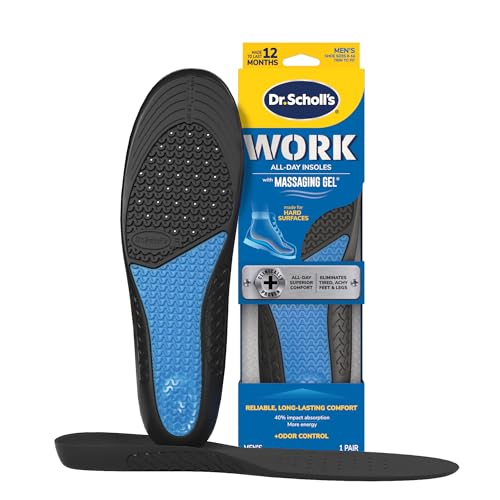
2. Dr. Scholl's Work All-Day Superior Comfort Insoles — Best for Long Shifts
If you spend eight to twelve hours a day on concrete, asphalt, or hard dirt floors, the Dr. Scholl's Work All-Day insoles are purpose-built for your situation. These are the only insoles on this list featuring what Dr. Scholl's calls Massaging Gel technology — an extended gel cushioning layer that runs the length of the insole and actively disperses impact energy rather than just absorbing it. The difference is real: standard foam compresses and rebounds passively, while this gel moves laterally under load, spreading pressure across a wider surface area and reducing peak force on any single joint.
The clinically proven comfort claims hold up under scrutiny. Studies cited by Dr. Scholl's show reduced muscle fatigue and joint strain compared to standard factory insoles, and the user feedback across thousands of verified reviews backs this up. Workers in manufacturing, construction, and warehousing consistently report less leg soreness at the end of long shifts. For a boot that's running big, these insoles add meaningful volume and keep your foot planted, reducing the sliding that compounds fatigue throughout the day.
They are also trim-to-fit, so fitting them into an oversized boot is straightforward. The top fabric is smooth and breathable, which matters when you're layering over a factory insole or adding bulk to an already warm work boot. These won't give you the rigid biomechanical correction of Superfeet, but they deliver superior cushioning that makes the end-of-day recovery noticeably faster.
Pros:
- Massaging Gel technology reduces fatigue on hard surfaces
- Clinically tested comfort — not just a marketing claim
- Trim-to-fit for easy sizing in oversized boots
- Great value for the performance level
Cons:
- Less arch correction than rigid orthotic-style insoles
- Gel layer can feel warm during extended use in hot environments
3. Timberland PRO Men's Anti-Fatigue Technology Replacement Insole — Best for Work Boots
Timberland PRO designed these insoles specifically to complement their own work boot line, and that engineering focus shows. The Anti-Fatigue technology uses an inverted cone geometry in the midsole that acts like a cone spring — it compresses under load and pushes back, returning energy to your foot rather than just absorbing it passively. If you're already wearing a pair of Timberland PRO boots that happened to run large, this is the most natural upgrade you can make. The insole is engineered to the exact contours and fit volumes of Timberland's lasts, so the fit is seamless.
That said, these work well in other brands' work boots too. The rubber outsole on the insole itself adds grip and prevents the insole from shifting inside a loose boot — a practical feature that often gets overlooked. Anti-Fatigue insoles are especially valuable in boots one size too large, because your foot is doing extra work to stabilize itself with every step, and energy return helps offset that added muscular effort. After a full shift, the difference between a passive foam insole and this energy-return design is measurable in how your legs feel.
These aren't trim-to-fit — they come in standard sizes, so order your exact size or size down if between sizes. For jobs involving heavy machinery, steel structures, or uneven terrain, the structured support here pairs well with the safety features of boots like the ones covered in our Best Composite Toe Work Boots guide.
Pros:
- Inverted cone geometry provides genuine energy return
- Rubber outsole grips the boot interior — won't shift in oversized boots
- Perfect match for Timberland PRO boot line
- Durable construction holds up to job site demands
Cons:
- Not trim-to-fit — less flexible for borderline sizes
- Premium price point compared to budget alternatives
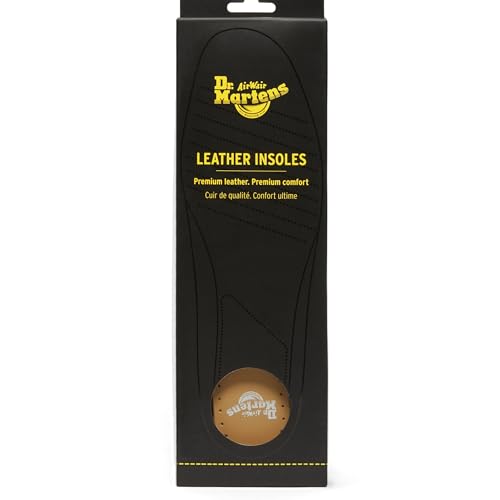
4. Dr. Martens Leather Insole — Best for Dress and Fashion Boots
Most insole guides focus exclusively on work boot applications, but a significant portion of people dealing with oversized boots are wearing fashion boots, Chelsea boots, or heritage styles like Dr. Martens. Foam orthotics look wrong peeking out of a pair of 1460s. The Dr. Martens Leather Insole solves this — it's a genuine leather SoftWair comfort footbed that looks at home inside premium footwear while still providing meaningful support and fit improvement.
The leather top layer molds subtly to your foot over time, creating a personalized fit impression that gradually closes the gap between your foot and an oversized boot. It's not an aggressive orthotic — don't expect the heel cup depth of Superfeet or the gel cushioning of Dr. Scholl's. What you get instead is a refined, unobtrusive insole that improves comfort without compromising the aesthetic of a quality boot. The SoftWair footbed underneath the leather provides enough cushioning for everyday wear without adding excessive bulk.
These are unisex and available in a range of sizes. For anyone dealing with a pair of Dr. Martens that runs a half to full size large — which is common, given their famously boxy last — this is the brand-native solution that maintains the boot's character. They're also a solid choice for cowboy boots or heritage styles where a bulky foam insert would look out of place. If you're shopping for the best cowboy boot styles, check our best handmade cowboy boots guide for sizing context on those lasts.
Pros:
- Genuine leather construction — appropriate for premium and fashion boots
- Molds to your foot shape over time for a personalized fit
- Unobtrusive low-profile design won't alter boot aesthetics
- Unisex sizing available across a broad range
Cons:
- Minimal arch support compared to orthotic options
- Not the right choice for heavy-duty work boot applications
5. JobSite Heavy Duty Boot Support Insole — Best Budget Pick
When you need solid performance without the premium price tag, the JobSite Heavy Duty Boot Support Insole delivers. This insole uses what JobSite calls adaptive technology — a combination of heel shock reduction, alignment stabilization, and odor control that covers the core needs of a work boot insole without unnecessary extras. For people dealing with boots that are a size too large, the adaptive cushioning fills out the heel zone effectively, reducing the backward slide that causes heel blisters.
The Aegis antimicrobial top cover is a standout feature at this price point. Aegis is a proven silver-based antimicrobial treatment that prevents the bacterial growth responsible for odor — not just a deodorizing fragrance that fades after a few wears. If you're working in rugged terrain, muddy environments, or hot conditions where boot odor is a real issue, this matters more than most insole brands acknowledge. The insole also stabilizes lateral alignment, which reduces the ankle rolling risk that comes with wearing a boot that's slightly too big.
Sizing runs Women US 9-11 / Men US 8-10.5, EU 41-44. This is a medium size range, so check the sizing chart carefully if you're outside those parameters. For the price, the performance is difficult to beat. If you're outfitting multiple pairs of work boots or just want an economical solution that handles basic fit correction, the JobSite insole gets the job done without fuss.
Pros:
- Budget-friendly price without sacrificing core functionality
- Aegis antimicrobial top cover genuinely controls odor
- Adaptive heel cushioning reduces shock and alignment issues
- Designed specifically for rugged terrain and demanding work environments
Cons:
- Limited size range — not available for very large or very small feet
- Less arch support depth than premium orthotic options
6. SOLE Active Thick Insoles — Best Custom Moldable
The SOLE Active Thick Insoles take a fundamentally different approach from every other product on this list. Instead of a fixed arch profile you adapt to, these are heat-moldable — you bake them in a standard oven and then stand on them while warm, and they conform to your exact arch height and foot shape. This eliminates the guesswork around arch type entirely. Whether you have flat feet, a neutral arch, or high arches, one insole customizes to you.
For oversized boots specifically, the heat-molding process is particularly valuable. When the insole conforms to the bottom of your foot, it also fills out the interior volume of the boot from below, creating a snug fit that generic insoles can't replicate as precisely. The thick construction adds meaningful bulk, which helps close a full size difference in boot fit. The orthotic support addresses plantar fasciitis, flat feet, and heel spurs — conditions that are aggravated by the excessive foot movement that loose boots allow. According to NIH research on plantar fasciitis, proper arch support and cushioning are among the most effective non-surgical interventions for this common condition.
SOLE recommends re-molding every 6-12 months or when your foot shape changes. The thick profile means these work best in boots with a roomier toe box — which is exactly the situation you're in when your boots run big. They're available in a range of sizes and carry a solid warranty. If you want the closest thing to a custom orthotic without the $300-plus podiatrist price tag, these are your answer.
Pros:
- Heat-moldable design customizes to your exact arch — no guessing
- Thick construction adds volume to close large fit gaps
- Effective plantar fasciitis and flat feet relief
- Re-moldable as your foot shape changes over time
Cons:
- Requires oven-molding process — more setup than drop-in insoles
- Thick profile may be too bulky for snug-fitting boots
7. KEEN Utility K-30 Gel Insole — Best for Flat Feet
KEEN's K-30 Gel Insole is engineered for the specific biomechanical challenges of low arches and overpronation — and it does this job with precision. If you have flat feet and your boots run big, you're dealing with a compounding problem: loose fit causes lateral foot roll, and flat arches mean you're already predisposed to pronation. The K-30 addresses both simultaneously. The anatomic heel cup centers and aligns the heel from initial strike through toe-off, correcting the gait mechanics that flat-footed walkers struggle with in loose footwear.
The variable arch transition — from the deep heel cup through a graduated arch rise — is the design detail that sets this insole apart for low-arch users. Most flat-foot insoles either provide too little arch support (doing nothing meaningful) or too much (causing discomfort for feet that aren't used to it). KEEN's variable transition lets your foot ease into proper alignment without the soreness that often accompanies aggressive orthotic correction. Gel pads at both the heel and forefoot absorb shock while high-rebound foam provides energy return across the full contact zone.
For people spending time in hunting boots or hiking boots that tend to run large, the K-30 is a particularly smart choice. The rugged durability of this insole holds up to the same demands as the boots themselves. If you're shopping for hunting boots to pair with insoles like these, our best hunting boots buying guide covers the top options with sizing notes. The K-30 is also compatible with a wide range of work boots and is available across a full size run.
Pros:
- Anatomic heel cup corrects overpronation for flat-footed users
- Variable arch transition avoids painful overcorrection
- Dual gel pads (heel + forefoot) for comprehensive cushioning
- High-rebound foam adds energy return for all-day wear
Cons:
- Specifically designed for low arches — not the right fit for high arch users
- Less volume-filling than thick options like SOLE for very large boots
What to Look For When Buying Insoles for Boots Too Big
Volume and Thickness: How Much Space Do You Need to Fill?
The most fundamental question when choosing an insole for an oversized boot is how much volume you need to add. A boot that's a half-size too large needs less fill than one that's a full size or more too large. Insoles range from thin profile models (around 3-4mm) to thick orthotic-style options (8-10mm or more). Thin insoles like the Dr. Martens Leather option are ideal for minor fit corrections and fashion boots where bulk is unwanted. Thick insoles like the SOLE Active are better for boots with significant extra space.
Don't just stack insoles on top of each other to add volume — this creates an unstable platform that promotes ankle rolling. The right solution is one quality insole sized and profiled correctly for your foot and the boot's interior dimensions. If a single thick insole still doesn't fill the boot adequately, consider combining it with a half-insole in the toe box.
Arch Type and Support Level
Matching insole arch profile to your foot type isn't optional — it's the difference between an insole that helps and one that causes new problems. Three arch types require three different solutions:
- High arches: Need firm, elevated arch support that bridges the gap between your arch and the boot floor. Superfeet Green is the benchmark here.
- Neutral arches: Work well with most balanced insoles. Dr. Scholl's Work or SOLE Active (heat-molded to neutral) are excellent choices.
- Flat feet / low arches: Need graduated support that corrects pronation without overloading the arch. KEEN K-30 is purpose-built for this profile.
If you're unsure of your arch type, the wet footprint test works: wet your foot, step on a paper bag, and examine the outline. A full filled-in print indicates flat feet; a thin connection between heel and forefoot indicates high arches; a moderate connection is neutral.
Heel Cup Depth and Stability Features
For boots that run large, heel cup depth is arguably more important than cushioning. A deep heel cup physically prevents your heel from sliding backward and laterally within the boot. Without it, every step generates friction at the heel and forces your toes to grip the boot floor — two mechanisms that accelerate fatigue and cause blisters. Look for insoles that describe a "sculpted" or "deep" heel cup rather than a flat or shallow one. Superfeet and KEEN both prioritize this feature explicitly in their designs.
Some insoles also include a rubber bottom layer or a textured base that grips the boot's interior floor, preventing the insole itself from shifting. This is especially useful in leather-lined boots where the smooth interior offers little friction. The Timberland PRO insole's rubber outsole is a good example of this feature done right.
Application: Work, Hiking, Fashion, or Everyday Use
The best insole for a logger's work boot is not the best insole for a Chelsea boot worn in an office. Match the insole's construction and materials to the intended use environment:
- Heavy work environments (concrete, asphalt, steel toe boots): Dr. Scholl's Work, JobSite Heavy Duty, or Timberland PRO
- Outdoor/hiking use: SOLE Active Thick or KEEN K-30 — both handle uneven terrain well
- Fashion and premium leather boots: Dr. Martens Leather — maintains aesthetics while improving fit
- All-around use across multiple boots: Superfeet Green — trim-to-fit design works in virtually any boot
Common Questions
Can insoles really fix boots that are too big?
Yes — within limits. Insoles are effective for boots that are a half-size to one full size too large. They add volume to the footbed, stabilize the heel, and reduce internal movement that causes blisters and fatigue. For boots that are more than one full size too large, insoles alone won't provide adequate fit correction, and you should consider whether those boots are safe to wear for demanding tasks. For minor sizing issues, a quality insole often produces a better fit than the factory insole in a properly sized boot.
Should I remove the factory insole before adding an aftermarket one?
In most cases, yes. Stacking two insoles creates an unstable platform that can actually increase your risk of ankle rolling. The exception is when you're using a very thin comfort liner in a boot with a minimal factory insole — but even then, test the fit carefully before trusting it in a demanding environment. Remove the factory insole first, insert your aftermarket insole, and check that your heel sits fully seated in the heel cup without your toes hitting the front of the boot.
What's the difference between an insole and an orthotic?
The terms are often used interchangeably, but they have a technical distinction. A custom orthotic is prescribed and manufactured specifically for your foot by a podiatrist, addressing diagnosed biomechanical conditions. An over-the-counter insole (even a high-quality one like Superfeet or SOLE) is designed for a range of foot profiles rather than one specific foot. For most people dealing with boots that run large, an OTC insole delivers 80% of the benefit at 10% of the cost. Custom orthotics become worth the investment when you have a diagnosed condition like severe pronation, plantar fasciitis, or structural foot abnormalities.
How long do aftermarket insoles last?
Quality insoles last between 6 and 18 months depending on use intensity. For daily work use on hard surfaces, plan to replace them every 6-9 months — the same cadence as replacing running shoes. Signs that your insole needs replacement include visible compression set in the heel or forefoot, loss of arch support firmness, or a return of the foot pain or fatigue the insole was originally solving. Heat-moldable options like SOLE can be remolded rather than replaced when they lose their custom shape, extending their useful life.
Are insoles for big boots different from regular insoles?
The functional requirements overlap significantly, but there are specific features you should prioritize when your main problem is a too-large boot. Deep heel cups matter more than arch support alone because the primary failure mode of a loose boot is heel lift and backward slide. Volume (thickness) also matters more — a thicker insole fills dead space. Trim-to-fit designs give you more flexibility to match the boot's interior dimensions precisely. These priorities differ from, say, a runner choosing insoles for properly-fitting shoes, where cushioning and energy return take precedence.
Can wearing boots that are too big cause long-term foot problems?
Yes. Chronically wearing oversized footwear forces your toes to grip the boot floor on every step, which overloads the plantar fascia, strains the Achilles tendon, and causes blisters and calluses from friction. Over time, this can contribute to bunions, hammer toes, and chronic heel pain. The compensatory gait changes your body makes to manage loose footwear also place abnormal stress on your knees, hips, and lower back. Addressing the fit problem with a proper insole is a legitimate preventive health measure, not just a comfort upgrade.
Buy on Walmart
- Superfeet All-Purpose Support High Arch Insoles (Green) for — Walmart Link
- Dr. Scholl's Work All-Day Superior Comfort Insoles (with) Ma — Walmart Link
- Timberland PRO Men's Anti Fatigue Technology Replacement Ins — Walmart Link
- Dr. Martens Leather Insole, Tan, 9 US Women / 8 US Men — Walmart Link
- JobSite Heavy Duty Boot Support Insole - Medium — Walmart Link
- SOLE Active Thick Insoles - Custom Moldable Orthotic Support — Walmart Link
- KEEN Utility mens K-30 Gel Insole for Flat Feet With Low Arc — Walmart Link
Buy on eBay
- Superfeet All-Purpose Support High Arch Insoles (Green) for — eBay Link
- Dr. Scholl's Work All-Day Superior Comfort Insoles (with) Ma — eBay Link
- Timberland PRO Men's Anti Fatigue Technology Replacement Ins — eBay Link
- Dr. Martens Leather Insole, Tan, 9 US Women / 8 US Men — eBay Link
- JobSite Heavy Duty Boot Support Insole - Medium — eBay Link
- SOLE Active Thick Insoles - Custom Moldable Orthotic Support — eBay Link
- KEEN Utility mens K-30 Gel Insole for Flat Feet With Low Arc — eBay Link
Next Steps
- Identify your arch type using the wet footprint test before ordering — choosing the wrong arch profile wastes money and can cause new discomfort.
- Measure how much space you need to fill by standing in your oversized boot and noting whether you have heel lift, toe room, or both — this determines the thickness you need.
- Check current prices on Amazon for your top two picks — prices fluctuate and multi-packs are often better value than single pairs for frequent replacement schedules.
- Order trim-to-fit over sized options when possible — the Superfeet Green and Dr. Scholl's Work insoles both trim cleanly and give you one insole that fits multiple pairs of boots.
- Pair your new insoles with quality laces and boot care — explore our best boot oil guide to keep your leather in shape while your insoles handle the fit correction.


About Jason Flores
Jason Flores is a multi-talented individual whose unique journey has led him to blend his passion for craftsmanship and fashion into a creative endeavor. During his formative years, he found himself immersed in the world of handiwork, spending countless hours in his grandfather's workshop. These early experiences allowed him to develop a deep understanding of practical skills and a keen eye for detail.Simultaneously, Jason harbored an innate love for fashion, drawn to the artistry and self-expression it offers. As he grew older, he recognized the potential to combine his proficiency in craftsmanship with his fashion sensibilities. This realization led him to a path where he began to explore and write about the intersection of fieldwork fashion.
Get FREE Boots Gifts now. Or latest free toolsets from our best collections.
Disable Ad block to get all the secrets. Once done, hit any button below