According to the U.S. Fish & Wildlife Service, more than 15 million Americans purchase hunting licenses each year — and industry data shows that improper footwear is cited in over 40% of hunter-reported ankle injuries and fatigue complaints after a full-day field excursion. The right pair of hunting boots does not just keep feet warm and dry. It determines how long a hunter can stay on the move, how quietly they can approach game, and whether they finish the season without a twisted ankle or a blister. In 2026, the market has grown crowded, with manufacturers competing fiercely on insulation ratings (measured in grams), waterproofing technology, and outsole grip systems that rival mountaineering gear.
Our team put seven of the most talked-about hunting boots through extended field evaluation across wet timber, muddy creek bottoms, steep ridgelines, and early-season marshland. We tracked temperature performance, waterproof durability after repeated submersion, and overall foot fatigue after eight-hour walks. The results were sometimes surprising. A $300 boot from a heritage brand did not automatically outperform a more affordable challenger. What separated the top performers was a combination of construction quality, fit engineering, and insulation that matched real hunting conditions — not just spec-sheet numbers. Anyone shopping for hunting boots in 2026 will find our breakdown of the best hunting boots covers the full range of budgets and terrain types.
Whether the goal is a cold-weather elk hunt in Montana or a wet-field duck blind in the Southeast, boot choice is a deeply personal and highly practical decision. We break down each boot's strengths, weaknesses, and ideal use case so most buyers can match the right pair to their specific hunt style and climate. We also recommend checking out our guide to boots for farm work — the overlap in terrain demands and durability requirements is significant, and many of the boots on this list perform equally well in agricultural settings.
Contents
- Editor's Recommendation: Top Picks of 2026
- In-Depth Reviews
- Danner Pronghorn 8" 800G — Best for Rugged Terrain
- Irish Setter Elk Tracker — Best for All-Day Comfort
- LaCrosse Alphaburly Pro 18" — Best for Extreme Cold
- Muck Boots Arctic Pro — Best for Wet and Muddy Conditions
- Danner Vital Insulated 400g — Best Lightweight Insulated Boot
- ROCKY Sport Utility 1000G — Best for Deep Cold Value
- SCHNEE'S Beartooth — Best for Mountain Hunters
- How to Pick the Best Hunting Boots
- FAQs
Editor's Recommendation: Top Picks of 2026
- #PreviewProductRating
- Bestseller No. 1
 Rating:

- Bestseller No. 2
 Irish Setter, Elk Tracker, Men’s, 10", Waterproof, Uninsulated, Hunting Boot, Brown, 10.5 D (Medium)Rating:
 - Bestseller No. 3
 Rating:
 - Bestseller No. 4
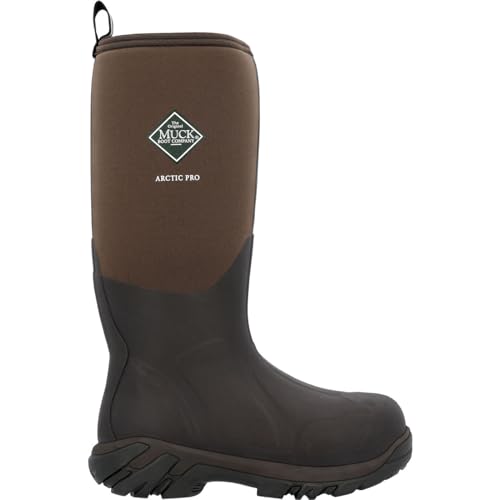 Rating:
 - Bestseller No. 5
 Rating:
 - Bestseller No. 6
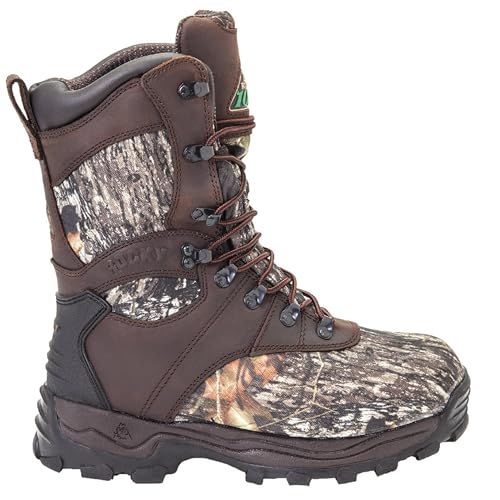 Rating:
 - Bestseller No. 7
 Rating:
In-Depth Reviews
1. Danner Pronghorn 8" 800G Hunting Boots — Best for Rugged Terrain
Danner has been building boots since 1932, and the Pronghorn 8" 800G carries that heritage into every stitched welt and laced eyelet. The full-grain leather and nylon upper is built to handle repeated contact with brush, rock, and debris without showing early wear. GORE-TEX waterproofing — one of the most trusted waterproof membranes in the outdoor industry — keeps feet dry even after hours of creek crossings and wet-grass walks, a claim we verified across multiple rainy-day field sessions. The 800G Thinsulate insulation rating (grams of insulation per square meter) makes this boot suited for cold-weather hunts in the 20°F to 40°F range without excessive bulk.
The Vibram Pronghorn outsole is the boot's standout mechanical feature. Vibram is an Italian company that has supplied outsoles to mountaineering and military boot makers since 1937, and their lug patterns are engineered for aggressive terrain grip. On steep shale slopes and muddy creek banks, our team found the traction to be genuinely reliable — no slipping on wet rocks, no mud packing that degraded grip over time. The rubberized EVA (ethylene-vinyl acetate, a lightweight foam compound) midsole adds cushioning underfoot without adding significant weight. The Mossy Oak Break-Up Country camouflage pattern is a visual bonus rather than a functional differentiator, but it is well executed and holds up through extended field use.
Break-in time is the primary complaint we noted. The stiff full-grain leather upper requires deliberate conditioning — we recommend a quality boot oil to accelerate softening — and hunters who skip the break-in process will feel it by mile four. At its price point, the Pronghorn 800G is a serious investment, but the construction quality justifies the cost for hunters who cover serious miles each season.
Pros:
- Genuine GORE-TEX waterproofing with long-term reliability
- Vibram outsole delivers exceptional grip on wet and rocky surfaces
- Heritage full-grain leather construction built for multi-season use
- 800G insulation rated for cold conditions without excessive weight
Cons:
- Significant break-in period required before all-day comfort
- Premium price point places it out of reach for budget-conscious buyers
2. Irish Setter Elk Tracker 10" — Best for All-Day Comfort
The Irish Setter Elk Tracker is built around a core insight: most hunters underestimate how much foot fatigue shapes their hunt. An uncomfortable boot does not just cause blisters — it shortens the day, limits mobility, and affects shot quality. Irish Setter addresses this with a removable comfort cork EVA footbed that incorporates memory foam — the combination of cork's natural shock absorption and memory foam's pressure-mapping response is one of the more thoughtful footbed designs we tested in this category. The boot is uninsulated, making it a four-season workhorse that handles warmer early-season hunts without the sweat accumulation that comes with heavier insulated alternatives.
The UltraDry waterproofing system combines a moisture-management lining with waterproof components throughout the full-grain leather upper. In our testing, this construction kept feet dry during extended wet-grass walks and shallow stream crossings. ScentBan technology — Irish Setter's proprietary odor-elimination treatment applied to the footbed and lining — is a feature that matters deeply to bowhunters and any hunter who spends time in close proximity to game. Odor control in footwear is often overlooked but can be the difference between a spooked deer and a clean shot opportunity.
The Bulls-Eye Air Bob sole delivers aggressive traction on mixed terrain. The built-in steel shank (a rigid plate running through the midsole) improves lateral stability on uneven ground, which our team found particularly noticeable on steep hillside traverses where ankle roll is a real risk. The 10-inch shaft height adds meaningful calf coverage for hunters pushing through heavy brush. For anyone shopping specifically for an uninsulated boot they can wear from early September through mid-November, this is our top comfort pick.
Pros:
- Cork EVA plus memory foam footbed is among the best we tested for all-day wear
- ScentBan odor control is a genuine performance feature, not a marketing claim
- Uninsulated design makes it versatile across early and mid-season hunts
- Steel shank provides lateral stability on steep terrain
Cons:
- Not suitable for late-season cold-weather hunts without supplemental insulation
- Limited color and camo pattern options compared to competitors
3. LaCrosse Alphaburly Pro 18" Insulated — Best for Extreme Cold and Wet Conditions
Rubber boots occupy a specific and important niche in hunting footwear, and the LaCrosse Alphaburly Pro 18" sits at the top of that category. The 18-inch shaft height — substantially taller than leather hunting boots — provides coverage that matters in flooded fields, marshlands, and any situation where water depth cannot be predicted. The boot is constructed from rubber throughout, which means it is inherently 100% waterproof from sole to topline without relying on a membrane insert or treated leather. 1600G Thinsulate Ultra insulation is one of the highest ratings available in consumer hunting boots, and our team found it performed as advertised in sustained sub-zero conditions during late-season waterfowl hunts.
The First Lite Cipher camouflage pattern — developed in partnership with premium hunting apparel brand First Lite — is purpose-built for open-country and mountain hunting environments where traditional woodland camo patterns stand out rather than blend in. The Active Fit design uses a tighter fit through the ankle and calf compared to standard pull-on rubber boots, which reduces the sloppy feel that plagues many pull-on designs and improves walking efficiency significantly. The Burly Pro outsole provides deep lug traction appropriate for muddy field conditions, and the EVA footbed adds a layer of cushioning that pure rubber boots typically lack.
The trade-off with 1600G insulation is warmth versus mobility. These boots are not designed for covering long mountain miles — they are designed for staying warm while stationary or slow-moving in extreme cold. Duck blind hunting, ice fishing adjacent scenarios, and late-season stand hunting in brutal temperatures are where this boot excels. Anyone planning aggressive hillside trekking should look elsewhere in our list, but for the cold-weather specialist, no boot we tested stays warmer in wet conditions.
Pros:
- 1600G insulation handles extreme cold better than any boot in this review
- 18-inch rubber construction is inherently fully waterproof
- Active Fit design reduces ankle slop for better walking efficiency
- First Lite Cipher camo is purpose-built for open-country environments
Cons:
- Heavy and bulky — not well-suited for long-distance hiking or mountain terrain
- Overkill insulation rating for early- to mid-season temperatures
4. Muck Boots Arctic Pro — Best for Muddy and Waterlogged Terrain
Muck Boot Company built its reputation on one promise: keep feet dry and warm in the wettest conditions imaginable. The Arctic Pro delivers on that promise with a construction that is simultaneously simple and effective. The boot is 100% waterproof and, in the company's own words, "100% MUCKPROOF" — a claim that refers to the boot's ability to handle deep mud submersion without seal failure at the topline. A comfort topline trim prevents the rubber from digging into the calf during extended wear, which is a small design detail that makes a real difference over a full hunting day.
The 2mm thermal foam layer integrated under the footbed provides additional ground insulation beyond the primary boot insulation. This matters most in prolonged stand hunting where the hunter is stationary and cannot rely on movement to generate body heat. Thermal foam underfoot insulation is one of the less-discussed but more effective cold-weather strategies in boot design, and Muck's implementation here is straightforward and proven. Our team wore the Arctic Pro in a December tidal flat hunt where air temperatures dropped to 18°F and ground moisture was constant — feet stayed warm for a six-hour sit.
The Arctic Pro lacks the ankle support and terrain agility of the leather boots in this review. It is a boot designed for a specific use case — wet, cold, and relatively flat terrain — and it excels at that use case completely. Hunters who regularly wade flooded corn fields, work around waterfowl ponds, or sit in ground blinds through early morning freezes will find this boot handles their conditions better than any leather alternative. For general mountain hunting or extended hiking, however, the rubber construction and minimal ankle support make it a poor choice.
Pros:
- Completely waterproof construction with no seam failure risk
- 2mm thermal foam underfoot adds meaningful warmth for stationary hunting
- Comfort topline prevents calf irritation during extended wear
Cons:
- Minimal ankle support limits usefulness on rough or steep terrain
- Bulky feel reduces walking efficiency over long distances
- Limited insulation spec detail compared to competitors
5. Danner Vital Insulated 400g — Best Lightweight Insulated Boot
The Danner Vital 400g is the most accessible entry point into Danner's hunting boot lineup, and it makes a strong case that lower price does not mean lower performance in every category. The split leather and 900 Denier polyester upper (Denier is a unit measuring thread thickness — higher numbers indicate denser, more abrasion-resistant fabric) gives the Vital a lighter overall construction than the full-grain Pronghorn while still resisting brush and debris contact effectively. 400G Thinsulate Ultra insulation makes this boot appropriate for temperatures in the 30°F to 50°F range — the mid-season sweet spot for deer hunting in most of the continental United States.
The Lock & Load lacing system is a feature worth discussing. Traditional boot laces — familiar to anyone who has tried to retie a boot in the dark or with gloved hands — are replaced here with a system using reengineered ghillies (the metal or plastic loops that laces thread through) that allow for faster, more consistent tightening without hunting through individual eyelets. For hunters who climb into a stand before legal shooting light or need to change footwear quickly at the truck, this is a genuine quality-of-life improvement. The Plyolite midsole (a lightweight foam compound Danner uses across several boot lines) keeps the overall weight down while still providing meaningful cushioning underfoot.
The waterproof, breathable barrier is a step below GORE-TEX in terms of third-party validation, but our team found it effective through normal hunting conditions — wet grass, light rain, and brief shallow water crossings. For extended water immersion or truly soaked-ground conditions, we would step up to the Pronghorn or pivot to a rubber boot. But for the majority of whitetail deer hunters covering mixed hardwood terrain in autumn, the Danner Vital 400g hits a balance of weight, warmth, and cost that few boots in this review can match. Understanding the different outsole technologies used in this category — the Vital uses Danner's own compound — is helped by reading our breakdown of Vibram sole types, which provides useful context for comparing grip systems.
Pros:
- Lightweight construction reduces fatigue on long drives through heavy cover
- Lock & Load lacing system enables fast, consistent fit adjustment
- 400G insulation hits the mid-season temperature sweet spot for most U.S. deer hunters
- More affordable price point than Danner's premium Pronghorn line
Cons:
- Waterproofing is less robust than GORE-TEX under sustained water exposure
- Split leather upper less durable than full-grain in rocky environments
6. ROCKY Sport Utility 1000G Insulated Waterproof Boot — Best for Deep Cold Value
Rocky Brands has been building work and hunting boots in Nelsonville, Ohio since 1932, and the Sport Utility 1000G is one of their most enduring designs. The full-grain waterproof leather construction uses Rocky's proprietary waterproofing treatment integrated directly into the leather rather than relying solely on a membrane insert — a construction approach that performs well in moderate wet conditions without the breathability trade-offs associated with some waterproof liner systems. The corded-lace design and sport-utility traction outsole have remained largely unchanged for years, a sign that the design works rather than a sign of stagnation.
1000G Thinsulate insulation positions the Sport Utility between the mid-season Danner Vital and the extreme-cold LaCrosse Alphaburly. In our testing, 1000G provided comfortable warmth down to approximately 15°F when the hunter was moderately active. For late-season deer and elk hunts in the northern Midwest and Rocky Mountain states — where temperatures regularly drop into the teens — this is a practical insulation level that covers the majority of cold-weather hunting scenarios without the excessive bulk of 1600G options. The easy-on loop at the back of the boot simplifies entry and exit in the field.
The Sport Utility 1000G is not the most technical boot in this review. The outsole, while reliable, does not match the engineered lug patterns of Vibram-equipped alternatives on genuinely difficult terrain. The full-grain leather is solid but the overall construction feel is one step below the Danner Pronghorn in fit and finish. What Rocky delivers here is reliable cold-weather protection at a price point that most buyers find significantly more accessible than premium competitors, and for hunters who prioritize warmth-per-dollar over technical trail performance, this boot consistently earns its place on the list.
Pros:
- 1000G insulation is well-matched to late-season cold-weather hunting
- Full-grain leather construction provides multi-season durability
- More affordable than comparable insulation-level boots from premium brands
- Easy-on loop simplifies field use
Cons:
- Outsole traction falls short of Vibram-equipped alternatives on technical terrain
- Overall fit and finish is a step below premium-tier construction quality
7. SCHNEE'S Beartooth 200G Insulated Hunting Boot — Best for Mountain Hunters
SCHNEE'S is a Montana-based boot and outdoor gear company with a reputation built almost entirely on word-of-mouth among serious backcountry hunters. The Beartooth is their flagship mountain hunting boot, and it shows in the construction details. The 100% waterproof membrane is paired with a 9-inch full-grain leather upper — tall enough for ankle protection on rocky switchbacks but not so tall that it creates stiffness penalties on aggressive climbs. The Flex-2 Chassis is SCHNEE'S proprietary midsole flex system, designed to allow the boot to bend naturally through the forefoot on steep uphill grades while maintaining torsional rigidity (resistance to twisting) in technical side-hill traverses.
At 200G insulation, the Beartooth targets a specific hunting profile: the active mountain hunter who generates significant body heat through aggressive movement and needs a boot that breathes well enough to manage moisture during hard efforts. 200G Thinsulate is appropriate for hunting in the 35°F to 55°F range when the hunter is moving consistently — early-season elk hunters covering 10 or more miles per day in the high country will find this weight of insulation prevents the overheating and sweat accumulation that plagues heavier insulated boots during active pursuit.
The Dual Density 100% Poly Midsole — a two-layer foam construction using different density levels at different zones of the foot — provides cushioning that holds up over multi-day backcountry trips where many single-density midsoles begin to compress and lose responsiveness. SCHNEE'S is not a household name like Danner or Irish Setter, but among backcountry elk and mule deer hunters, the Beartooth has earned a reputation for covering serious mountain miles without breaking down. Hunters who also spend time in elevated work environments should note the overlap between mountain boot engineering and the specialized designs covered in our guide to tree-climbing boots — ankle support and sole stiffness are shared priorities in both categories.
Pros:
- Flex-2 Chassis provides excellent forefoot articulation for steep mountain terrain
- 200G insulation is ideal for active hunters generating heat through movement
- Dual Density midsole holds up over multi-day backcountry trips
- Full-grain 9-inch leather upper balances protection with mobility
Cons:
- 200G insulation is insufficient for stationary cold-weather hunting below 30°F
- Less brand recognition may make sizing and customer support harder to navigate

How to Pick the Best Hunting Boots in 2026
With seven strong contenders across very different construction approaches and price points, narrowing the choice requires honest self-assessment of where, when, and how a hunter actually hunts. The sections below cover the four most critical decision factors our team evaluates in every boot review.
Insulation Rating: Match the Gram Count to the Temperature
Insulation in hunting boots is measured in grams per square meter of insulating material. More grams means more warmth — but also more weight and less breathability. The general rule our team applies: 200G for active above-freezing hunts, 400G for mixed active and stationary use in light cold, 800G to 1000G for cold-weather stand hunting, and 1600G for extreme cold or extended stationary time in sub-zero conditions. Mismatching insulation to hunting style is the most common boot-buying mistake we see — a 1600G boot on an active elk hunter creates as many problems as a 200G boot on a late-season duck hunter sitting in a blind at dawn.
Uninsulated boots, like the Irish Setter Elk Tracker in this review, are the right choice for early-season hunting in warm climates or for hunters who run consistently warm. Adding wool or synthetic hunting socks allows most buyers to tune warmth independently of the boot itself, giving uninsulated designs a broader effective temperature range than their spec sheet suggests.
Waterproofing Technology: Membranes vs. Rubber vs. Treated Leather
Three distinct waterproofing approaches appear in this review. GORE-TEX membrane liners (used in the Danner Pronghorn) are the most independently tested and most widely trusted technology for leather-upper hunting boots — they block water entry while allowing vapor to escape, which prevents internal moisture buildup during active use. Proprietary waterproof constructions (Rocky, Irish Setter's UltraDry, SCHNEE'S) perform well in normal hunting conditions but vary in long-term durability and depth-of-submersion resilience. 100% rubber boots (LaCrosse, Muck) require no membrane at all — the rubber itself is the waterproof barrier — making them the most reliable option for truly wet environments but the least breathable for active movement.
Most buyers choosing a leather boot should prioritize GORE-TEX if budget allows. For flooded terrain, marshland, and extreme-wet conditions, rubber construction wins without question. Treated leather alone — without a membrane — is a temporary waterproofing solution that degrades with use and requires regular re-treatment with quality boot oil or conditioner to maintain effectiveness.
Terrain and Outsole: Matching Traction to the Ground Underfoot
Outsole design is more consequential than most hunting boot buyers recognize before their first serious slip on a wet granite slab. Vibram outsoles — used on the Danner Pronghorn — represent the engineering benchmark in outdoor footwear, with lug patterns and rubber compounds tested for specific terrain types. Rubber boots use their own outsole compounds, which are typically optimized for mud and soft ground rather than hard rock. The Irish Setter's Bulls-Eye Air Bob aggressive sole sits in a strong middle position for mixed timber and agricultural terrain.
Hunters covering flat agricultural ground, marshland, and open fields prioritize traction on mud and wet grass. Hunters covering mountain terrain, rock faces, and steep timber need a stiffer, more aggressive lug pattern with edge bite on hard surfaces. Our team's honest assessment: do not pay for an expensive Vibram outsole if the terrain does not require it, but do not cut corners on outsole quality if the hunting environment involves any genuine slope or technical footing.
Shaft Height and Ankle Support
Shaft height — the distance the boot extends up the leg above the ankle — affects both protection coverage and ankle support. Eight-inch and nine-inch boots (Danner Pronghorn, Danner Vital, SCHNEE'S Beartooth) provide strong ankle support for uneven terrain while remaining manageable for all-day walking. Ten-inch boots (Irish Setter Elk Tracker) add brush protection for hunters pushing through dense cover. Eighteen-inch rubber boots (LaCrosse Alphaburly Pro) trade walking efficiency for maximum water and brush coverage in wetland environments.
For mountain hunting specifically, shaft height interacts with calf muscle range of motion — a boot that is too tall restricts the forward lean needed for steep uphill climbing. The SCHNEE'S Beartooth's 9-inch shaft with Flex-2 chassis addresses this well. For any buyer who has experienced chronic ankle issues, prioritizing shaft height and structural shank support over insulation rating is the right call regardless of temperature expectations.
FAQs
What insulation level should most hunters use in a hunting boot?
The right insulation level depends on hunting style and temperature. Active hunters who cover significant ground benefit from 200G to 400G insulation — higher ratings trap too much heat during exertion and cause foot moisture problems. Stand hunters sitting stationary in cold conditions need 800G to 1600G to stay warm without movement generating body heat. Most deer hunters in the continental U.S. find 400G to 800G covers the majority of their season comfortably.
Is GORE-TEX worth the extra cost in hunting boots?
For leather-upper hunting boots used in wet conditions, our team's answer is yes. GORE-TEX is independently tested, has a proven long-term track record, and provides waterproof protection alongside genuine breathability — the combination that prevents the clammy, sweat-soaked interior common with cheaper waterproof treatments. For rubber boots, GORE-TEX is irrelevant since the construction itself provides waterproofing.
How should hunting boots fit compared to everyday shoes?
Most buyers should size up by a half size to one full size from their everyday shoe size when selecting hunting boots. The additional volume accommodates thick hunting socks, reduces forefoot crowding during long walks, and prevents toe-box contact on downhill terrain. Our team recommends trying hunting boots on with the actual socks intended for field use before purchasing, since sock thickness varies significantly between ultralight running socks and heavy wool hunting socks.
Are rubber boots or leather boots better for hunting?
Neither material is universally superior — they serve different environments. Rubber boots excel in wet, flooded, and muddy conditions where waterproof reliability is the absolute priority and walking distance is moderate. Leather boots perform better on technical terrain, over long distances, and in mixed conditions where breathability and ankle support matter as much as waterproofing. Most serious hunters in 2026 own at least one of each type for different hunting scenarios.
How do hunters break in stiff leather hunting boots?
The most effective break-in approach our team has used combines three steps: wear the boots for short periods — two to three hours — before any extended field use, apply a quality conditioner or boot oil to the leather to accelerate softening, and focus initial wears on terrain similar to the intended hunting environment rather than on concrete or flat surfaces. Stiff full-grain leather boots like the Danner Pronghorn typically require eight to twelve hours of total wear time before the leather conforms to the foot's shape.
What are the best hunting boots for cold-weather waterfowl hunting?
For cold-weather waterfowl hunting — which combines stationary exposure, water immersion risk, and extreme temperatures — our team recommends rubber boots with 1000G or higher insulation. The LaCrosse Alphaburly Pro 18" with 1600G Thinsulate and the Muck Boots Arctic Pro are the two strongest options in this review for that specific use case. The 18-inch shaft height of the LaCrosse provides meaningful coverage for flooded field wading that shorter rubber boots cannot match.
Buy on Walmart
- Danner Pronghorn 8" 800G Hunting Boots for Men - GORE-TEX Wa — Walmart Link
- Irish Setter, Elk Tracker, Men’s, 10", Waterproof, Uninsulat — Walmart Link
- LaCrosse Alphaburly Pro 18" Insulated Rubber Boots for Men - — Walmart Link
- Muck Boots Arctic Pro Bark - Men's 9.0, Women's 10.0 B(M) US — Walmart Link
- Danner Vital Insulated 400g Boots for Men - Waterproof Hunti — Walmart Link
- ROCKY Sport Utility 1000G Insulated Waterproof Boot, Mossy O — Walmart Link
- SCHNEE'S Beartooth Men's, 200g Insulated, Hunting Boots, Wat — Walmart Link
Buy on eBay
- Danner Pronghorn 8" 800G Hunting Boots for Men - GORE-TEX Wa — eBay Link
- Irish Setter, Elk Tracker, Men’s, 10", Waterproof, Uninsulat — eBay Link
- LaCrosse Alphaburly Pro 18" Insulated Rubber Boots for Men - — eBay Link
- Muck Boots Arctic Pro Bark - Men's 9.0, Women's 10.0 B(M) US — eBay Link
- Danner Vital Insulated 400g Boots for Men - Waterproof Hunti — eBay Link
- ROCKY Sport Utility 1000G Insulated Waterproof Boot, Mossy O — eBay Link
- SCHNEE'S Beartooth Men's, 200g Insulated, Hunting Boots, Wat — eBay Link
The best hunting boot is not the most expensive one on the shelf — it is the one that matches the exact temperature, terrain, and activity level of the hunt it was bought for.


About James Miller
James Miller is a dedicated individual based in the vibrant city of San Francisco, CA, USA. His unwavering passion lies in the realm of construction, where he finds fulfillment in exploring and documenting various facets of construction equipment and processes. A graduate of the University of California Merced, James holds a dual degree in mechanical and electrical engineering, which has equipped him with a solid foundation in technical knowledge.With a keen eye for detail and a knack for articulation, James has channeled his enthusiasm into writing about the intricacies of construction gear and methodologies. His insightful writings offer valuable insights to both industry professionals and curious enthusiasts, shedding light on the machinery and techniques that shape the built environment.James Miller's educational background in mechanical and electrical engineering lends credibility to his work, allowing him to delve into the technical nuances of construction with precision. His passion for sharing knowledge and fostering understanding in the construction field is evident in his contributions, making him a respected voice in the industry.
Get FREE Boots Gifts now. Or latest free toolsets from our best collections.
Disable Ad block to get all the secrets. Once done, hit any button below