A single pair of handmade cowboy boots can require 80 to 200 individual hand-stitched steps to complete — a number that comes straight from craftsmen at legacy American boot shops. In 2026, finding boots built that way takes real effort. Most footwear brands have moved production overseas, but a handful of makers still do it the old way. The five pairs on this list represent the best of what's still available.
We spent weeks on this roundup — comparing construction methods, leather grades, sole builds, shaft heights, and owner feedback across thousands of verified reviews. Our focus was exclusively on handcrafted or hand-lasted boots with proven track records. For a broader view of what American bootmakers are producing across every price point, our guide to the best cowboy boots made in the USA is a solid companion read. And for keeping any leather boot in top shape for years, our best boot oil guide is worth bookmarking alongside this one.
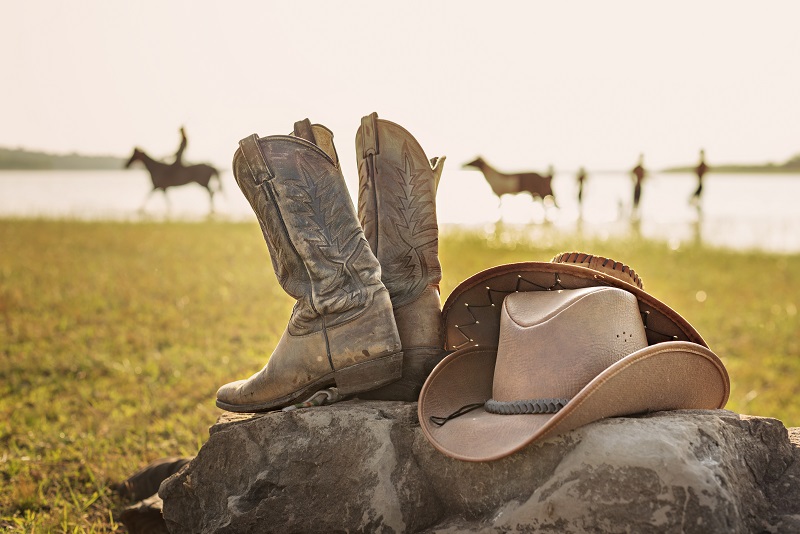
Whether most buyers are after a sleek exotic leather dress boot, a tall statement women's pair, or something rugged enough for a full ranch workday, we've broken it all down. Handmade boots are investments, not impulse purchases — and every pick on this list earns that price tag through construction quality and longevity. According to Wikipedia's history of the cowboy boot, the style traces back to 1800s cattle drives — and the best handmade versions today still use techniques that haven't changed much since then. Our full boot reviews section covers dozens of additional categories for anyone exploring beyond the western aisle.
Contents
Our Top Picks for 2026
- #PreviewProductRating
- Bestseller No. 1
 Rating:

- Bestseller No. 2
 Rating:
 - Bestseller No. 3
 Rating:
 - Bestseller No. 4
 Rating:
 - Bestseller No. 5
 Rating:
In-Depth Reviews
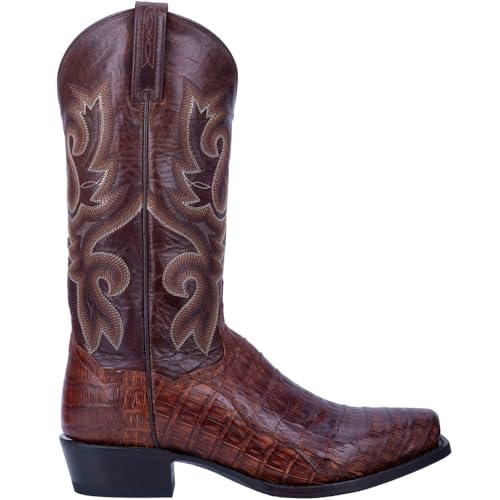
1. Lucchese Classic Cowboy Boot E2147.54 — Best for Dress and Formal Occasions
Lucchese has been handmaking boots in El Paso, Texas since 1883, and the Classic line is their crown jewel. The E2147.54 pairs a black caiman ultra belly vamp — the belly section of an alligator caiman, prized for its large, uniform scales and natural pattern — with a black buffalo shaft. The result is a boot that looks like it was custom-ordered from a high-end bootmaker. The 12" shaft is tall enough for tucking jeans, and the pointy square toe gives it a formal silhouette without cramping toes the way a snip toe does.
Construction-wise, this is a true handmade American boot. Every pair goes through Lucchese's hand-lasting process — the upper leather is shaped over a wooden last by hand, not machine-pressed. The welt stitch (the thread running around the base of the boot connecting upper to sole) is done by hand as well, which is what makes the sole replaceable later without destroying the upper. For serious buyers planning to own a pair of boots for 20-plus years, that resole-ability matters more than almost any other spec on the page.
The price is significant. These are not entry-level boots. But when we break down what goes into each pair — exotic caiman leather, buffalo shaft, hand-lasting, hand-welting, and over 140 years of American craft behind the name — the cost makes sense. Most buyers who invest in this pair will still be wearing them in 15 years. That's a cost-per-wear figure most dress shoes will never match. This is our top pick overall on this list. No hedging.
Pros:
- Genuine black caiman ultra belly vamp — premium exotic leather with natural pattern variation
- Handmade in the USA by a 140-year-old American brand
- Hand-lasted and hand-welted — resole-able for decades of use
- 12" shaft works for tucked or stacked denim, dress or casual
- Pointy square toe balances style and comfort better than a snip
Cons:
- Premium price — one of the highest on this list
- Caiman leather requires conditioning oil formulated specifically for exotic skins
- Sizing can run narrow — wide-foot buyers should confirm the E width fits before ordering
2. Old Gringo L1213 Womens Mayra Bis Boot — Best Tall Women's Statement Boot
Old Gringo is the brand that changed what women's western boots could look like. The Mayra Bis is one of their most eye-catching designs — a 17" tall, all-red leather boot with intricate inlay stitching and a pointy snip toe (the sharpest, most tapered profile in western boots). At 17 inches, the shaft clears most mid-calf and lands close to the knee — a real style statement. Old Gringo handcrafts these using traditional techniques the brand was founded on: hand-stitched uppers, full-grain leather throughout, and a construction quality that puts them leagues above fast-fashion western brands at similar price points.
The all-red leather is a bold choice, and it's executed well. Old Gringo uses full-grain leather — the top surface of the hide, the most durable and highest-quality cut — and the red dye is deep and consistent across both shaft and vamp. The snip toe is the narrowest profile we cover in this roundup. It's a dramatic look that works for dancing, shows, and events. But most buyers wearing these for ranch work or long city days will feel the pinch by hour four. These are a showcase boot. A great one — not a workhorse.
The handwork on the shaft stitching is where Old Gringo's craft really shows. The pattern density on the Mayra Bis is impressive up close in a way photos don't fully capture. For women's cowboy boots in this category, we haven't found anything with this level of handcraft detail at a comparable price. Our pick for best women's boot on this list, and it's not a close call.
Pros:
- 17" shaft height — dramatic silhouette designed to stand out
- Full-grain all-red leather — rich color with consistent finish throughout
- Hand-stitched decorative inlay — exceptional detail work for the price
- Pointy snip toe — sharp, traditional western profile
- Legacy handcraft construction that holds up over years of real wear
Cons:
- Snip toe is narrow — uncomfortable for wide feet or all-day wear
- 17" shaft can be difficult to pull on without boot hooks
- Bold red limits outfit versatility compared to brown or black
3. Dan Post Men's Cowboy Western Boot, Brass — Best Value Everyday Option
Dan Post has been making western boots for over 50 years, and the Brass is their proof that quality construction doesn't always require an exotic leather price tag. This is a full leather upper pull-on boot with a removable soft strike insole — a cushioned footbed that absorbs impact, which matters enormously for anyone standing or walking for hours at a time. The construction is solid throughout: full-grain leather upper, clean pull-on entry that's easier than laced alternatives when working in dirty conditions, and a heel height that hits the traditional western 1.5" mark.
What separates Dan Post from cheaper competitors is their cushioned footbed system. The removable insole means most buyers can swap in a custom orthotic insert (a custom-shaped support for the arch and heel) without fighting the boot's internal construction. For anyone who spends all day on their feet, that flexibility is a bigger deal than most boot marketing makes it sound. The outsole uses a classic leather and rubber combination — grippy enough for light work, presentable enough for events and church.
The Brass doesn't have the exotic leather drama of the Lucchese or the dramatic height of the Old Gringo. What it does offer is a well-built, comfortable, everyday western boot from a brand with genuine craft behind it. For most buyers who want a handcrafted boot they can actually wear to work, a family gathering, and a Saturday night out without overthinking it, this is our no-fuss recommendation.
Pros:
- Full-grain leather upper — quality material that ages and patinas well
- Pull-on entry — easy on and off, no lacing system to manage
- Removable soft strike insole — swap in custom orthotics if needed
- Most accessible price point on this list
- 50+ years of Dan Post western boot craft behind the construction
Cons:
- No exotic leather — plainer look compared to Lucchese or Macie Bean options
- Standard shaft height — not for buyers who want a tall, dramatic profile
- Limited style variety in the Brass line specifically
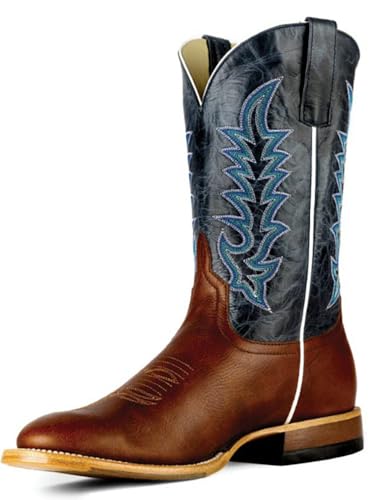
4. Anderson Bean Horsepower Top Hand Round Toe — Best Hybrid Sole Work Boot
Anderson Bean is a Texas bootmaker known for pushing design boundaries while keeping traditional handcraft at the center. The Horsepower Top Hand is their work-focused line, and this brown/blue colorway is one of the more striking combinations we've come across on a work-capable boot. The round toe — a wider, more relaxed profile than a snip, closer to a natural foot shape — makes this genuinely comfortable for all-day wear in ways a pointed toe simply isn't. The hybrid sole pairs a leather stacked heel with a modern rubber outsole, meaning buyers get the classic look of a leather heel with the grip and durability of rubber underfoot.
The premium removable insole is a feature we like seeing in work-oriented boots. Anderson Bean uses a quality foam-and-leather combination that provides real cushion without compressing flat after a few months of heavy use. The upper leather is full-grain, hand-lasted over a round toe last, and finished with Anderson Bean's signature attention to welt stitching. This is a boot built to handle ranch life, farm work, and job sites while still looking sharp enough to wear into town afterward. It's a rare combination.
The brown/blue colorway is a statement, not a neutral. Most buyers ordering this specific pair know what they're getting — a boot with personality. Anderson Bean offers the Horsepower line in traditional browns and blacks for anyone who wants something more subdued. But the blue shaft detail is what makes this pair worth featuring. American handcraft doesn't have to mean boring, and this boot makes that point clearly.
Pros:
- Round toe — more comfortable for wide feet and extended wear than snip or square profiles
- Hybrid sole — leather stacked heel aesthetic with rubber outsole grip and durability
- Premium removable insole — real cushion that holds up under daily heavy use
- Bold brown/blue colorway — distinctive without sacrificing any craftsmanship
- Anderson Bean's handcraft reputation built over decades of Texas bootmaking
Cons:
- Bold colorway won't suit buyers who need a neutral everyday boot
- Higher price than Dan Post — premium positioning narrows the buyer pool
- Hybrid sole won't satisfy purists who want all-leather welt construction
5. Antique Saddle Ostrich Boot by Macie Bean — Best Exotic Leather Pick
Macie Bean is a Fort Worth-based bootmaker with a loyal following among buyers who want serious craft without paying Lucchese prices. The Antique Saddle Ostrich is their standout exotic leather model — a full quill ostrich vamp (the raised, bumpy hide from the bird's leg, the most coveted cut for boot leather) paired with a bleached bone 12" shaft. The DB (double-broad) toe style listed in the specs is the widest, most comfortable toe box in traditional western design. For anyone who has avoided cowboy boots because of narrow toe boxes, this is the pair to try first — that wide front end changes the experience completely.
Ostrich leather earns its premium status for three reasons: softness, flexibility, and natural moisture-wicking properties. Full quill ostrich has those distinctive bumps most buyers recognize on sight — it's genuinely soft right out of the box, requiring no extended break-in period. The antique saddle color is a warm medium-brown with a slightly burnished finish that looks more expensive than the price suggests. Over time, with basic conditioning, full quill ostrich develops a patina that smooth leathers simply can't replicate.
The 12" bleached bone shaft gives the boot a two-tone look that's western without being garish. Construction follows Macie Bean's standard — hand-lasted, hand-welted, with decorative shaft stitching done by craftsmen. These are not the cheapest exotic leather boots available. But they are the best combination of exotic material, comfort, and handcraft we've found from a smaller American brand. For buyers who want exotic leather without the full Lucchese investment, Macie Bean is the right answer.
Pros:
- Full quill ostrich vamp — premium exotic leather, naturally soft from day one
- Double-broad (DB) toe — the most comfortable toe profile in the western style
- 12" bleached bone shaft creates a striking two-tone appearance
- Hand-lasted and hand-welted Macie Bean construction
- No extended break-in — ostrich leather conforms to the foot quickly
Cons:
- Ostrich leather requires conditioning products formulated specifically for exotic skins
- Bleached bone shaft shows scuffs and marks more visibly than darker shafts
- Limited size run compared to mainstream brands — check availability before committing
Choosing the Right Handmade Cowboy Boot: A Buying Guide
Toe Shape: The Decision Most Buyers Get Wrong
Toe shape is the most visible choice in western boot shopping — and the one most buyers get wrong by prioritizing looks over function. Here's how the common profiles actually compare:
- Snip toe — sharpest, most tapered profile. Dramatic look. Uncomfortable for wide feet or wear beyond a few hours. Best for events, dancing, and show purposes.
- Pointy square toe — sharp from the side, squarer from the front. More toe box room than a snip. Works well for dress and everyday wear, like on the Lucchese E2147.54.
- Round toe — closest to a natural foot shape. Best for all-day wear. Standard for ranch and farm work. Less flashy but far more functional over a full day.
- Double-broad (DB) toe — the widest western profile available. Maximum comfort. Traditional look. Best choice for wide-foot buyers and anyone on their feet all day.
Our recommendation is clear: go wider than instinct suggests. Most buyers moving from sneakers to cowboy boots consistently underestimate how narrow a snip toe feels after two hours. Unless the only priority is looks for a short event, round or double-broad is almost always the smarter choice.
Shaft Height: What Fits the Lifestyle
Shaft height changes how a boot wears — not just how it looks. The practical breakdown:
- 12" shaft (standard) — works with most jeans, either tucked or stacked over the boot. Most versatile option for everyday wear. Our default recommendation for most buyers.
- 17" shaft (tall, like the Old Gringo Mayra Bis) — must be tucked into jeans. Requires wider-leg or boot-cut denim. A statement look that demands more from wardrobe planning.
For buyers who ride horses, taller shafts provide more calf protection and help the boot stay in the stirrup. For everyday street wear, 12" is usually the right call. Most buyers who buy 17" boots for everyday use end up wishing they'd gone with a standard shaft after a few months.
Leather Type: Full-Grain vs. Exotic Skins
Not all leather is the same grade, and with handmade boots, the leather quality accounts for the biggest price gap between tiers:
- Full-grain leather — the top surface of the hide, left intact. Most durable, develops the richest patina over time. The baseline for any quality handmade boot.
- Caiman belly (Lucchese E2147.54) — large, uniform scales from the belly section of the hide. Supple and distinctive. Requires exotic-skin-specific conditioning.
- Full quill ostrich (Macie Bean) — raised quill-bump texture, naturally soft from the first wear. One of the most comfortable exotic leathers available, with no harsh break-in period.
One point worth stating plainly: exotic leather requires different care than standard cowhide. Anyone buying a caiman or ostrich boot and treating it with a generic all-purpose boot oil is shortening the boot's life. The right conditioning product matters as much as the boot itself.
Construction: What "Handmade" Actually Means
The word "handmade" is used loosely by a lot of brands. Here's what to look for to verify the claim actually holds:
- Hand-lasting — the upper leather is shaped over a wooden last (foot form) by hand. Machine-lasting is faster and less precise. Hand-lasting produces a better fit and longer-lasting shape retention.
- Hand-welting — the welt stitch connecting upper to sole is done by hand. This single feature determines whether the sole can be replaced without destroying the upper. It's the most important construction detail on this entire list.
- Goodyear welt — a strip of leather sewn between upper and outsole. The industry standard for resole-able construction. More water-resistant than direct-sewn alternatives.
- Cemented construction — sole bonded to upper with adhesive. Common in lower-cost boots. When the sole wears out, so does the boot. No resole option.
All five boots on this list use welt construction that supports resoling. For anyone cross-shopping American-made options across boot categories, our full guide to American made boots is a useful starting point that covers domestic construction standards across work, western, and casual styles.
What People Ask
What makes a cowboy boot truly "handmade"?
A genuinely handmade cowboy boot involves hand-lasting (shaping the upper leather over a wooden form by hand), hand-welting (stitching the welt that connects upper to sole by hand), and often hand-stitching of decorative shaft elements. Machine-made boots replace these steps with automated lasts and cement bonding, which speeds up production but reduces fit precision and eliminates resole-ability. The best brands on this list — Lucchese, Anderson Bean, Macie Bean — are transparent about which steps are actually done by hand.
Are handmade cowboy boots worth the price in 2026?
We think the answer is yes for anyone planning to own a boot for more than a few years. A well-made hand-welted cowboy boot can be resoled multiple times — meaning the upper, which is the hand-crafted expensive part, can last 20 to 30 years with proper care. A $400 machine-made boot replaced every three years costs more over a decade than a $900 handmade boot resoled twice. The math consistently favors the investment. The key is buying from a brand that actually delivers on the "handmade" claim.
How long do handmade cowboy boots typically last?
With proper leather conditioning and resoling when the sole wears down, a quality hand-welted cowboy boot can realistically last 15 to 30 years or more. The shaft and upper leather are typically the longest-lasting components — as long as they're conditioned regularly and not stored in wet or excessively dry conditions. The limiting factor is almost always the sole, which is the easily replaceable part in a hand-welted construction. Boot trees (wooden inserts that hold the boot's shape in storage) extend that lifespan further.
Can handmade cowboy boots be resoled?
Yes — and that's one of the primary reasons hand-welted boots cost more than cemented alternatives. The welt construction allows a cobbler to remove the worn sole and stitch on a new one without touching the upper leather at all. Machine-made or cemented boots bond the sole directly to the upper using adhesive. When that sole wears out, the boot is done. All five picks on this list use welt construction that supports resoling, which is one of the key reasons we recommended them over cheaper alternatives.
What's the difference between a Goodyear welt and McKay construction?
A Goodyear welt uses an extra strip of leather sewn between the upper and the outsole, creating a channel that makes resoling straightforward and adds a layer of water resistance at the sole junction. McKay construction stitches the insole directly to the outsole — simpler, lighter, and less expensive to produce, but harder to resole and less resistant to moisture wicking up through the sole. For a boot expected to last decades and handle real wear, Goodyear welt (or the similar hand-welt used by traditional bootmakers) is the clearly superior construction method.
How should handmade cowboy boots fit when first trying them on?
A new handmade cowboy boot should feel snug — not painful, but noticeably firm around the instep. The heel should have a slight slip, roughly a quarter inch, when walking. That slip reduces as the leather breaks in and conforms to the foot shape. The toe box should have space for toes to lay flat, and the ball of the foot should align with the widest part of the boot. If the ball is pushed forward into the toe area, the boot is too short. Most quality handmade boots require 20 to 40 hours of wear to fully break in and mold to the foot.
Buy on Walmart
- Men's Lucchese Classic Cowboy Boot E2147.54 Black Caiman Ult — Walmart Link
- Old Gringo L1213 Womens Mayra Bis Boot, Red - 8 — Walmart Link
- Dan Post Boots Men's Cowboy, Western Boot, Brass, 10 — Walmart Link
- Anderson Bean Horsepower Top Hand Round Toe Hybrid Sole Men' — Walmart Link
- Antique Saddle Ostrich Boot by Macie Bean — Walmart Link
Buy on eBay
- Men's Lucchese Classic Cowboy Boot E2147.54 Black Caiman Ult — eBay Link
- Old Gringo L1213 Womens Mayra Bis Boot, Red - 8 — eBay Link
- Dan Post Boots Men's Cowboy, Western Boot, Brass, 10 — eBay Link
- Anderson Bean Horsepower Top Hand Round Toe Hybrid Sole Men' — eBay Link
- Antique Saddle Ostrich Boot by Macie Bean — eBay Link
Next Steps
- Check current prices on Amazon for each pick — handmade exotic leather boots fluctuate in availability, and occasional sale events bring top-tier pairs like the Lucchese and Macie Bean into reach for buyers who've been watching.
- Measure foot width before ordering — most handmade cowboy boots run narrower than standard athletic sizing. A width measurement in inches rules out costly sizing mistakes before they happen.
- Pick up the right conditioning product before the boots arrive — caiman and ostrich leathers need exotic-skin-specific formulations, and our best boot oil guide covers exactly what to use for each type.
- Read the full comparison of American-made boot options at our American made boots guide if none of the five picks above is quite the right fit — it covers domestic options across western, work, and casual categories.
- Find a local cobbler who does welt repairs and resoling before the boots need it — the long-term value of any handmade boot depends entirely on being able to resole it when the time comes, and not every cobbler handles welt construction.


About Jason Flores
Jason Flores is a multi-talented individual whose unique journey has led him to blend his passion for craftsmanship and fashion into a creative endeavor. During his formative years, he found himself immersed in the world of handiwork, spending countless hours in his grandfather's workshop. These early experiences allowed him to develop a deep understanding of practical skills and a keen eye for detail.Simultaneously, Jason harbored an innate love for fashion, drawn to the artistry and self-expression it offers. As he grew older, he recognized the potential to combine his proficiency in craftsmanship with his fashion sensibilities. This realization led him to a path where he began to explore and write about the intersection of fieldwork fashion.
Get FREE Boots Gifts now. Or latest free toolsets from our best collections.
Disable Ad block to get all the secrets. Once done, hit any button below