If you're comparing the Clarks Bushacre vs Desert Boot, here's the direct answer: the Desert Boot is the slimmer, more refined option built for smart-casual versatility, while the Bushacre is the roomier, more casual sibling with a heftier sole and more forgiving fit. Both come from the same iconic Clarks lineage, but they serve different purposes in your wardrobe. Before you decide, take a look at our full boot reviews to see how each stacks up against the competition.
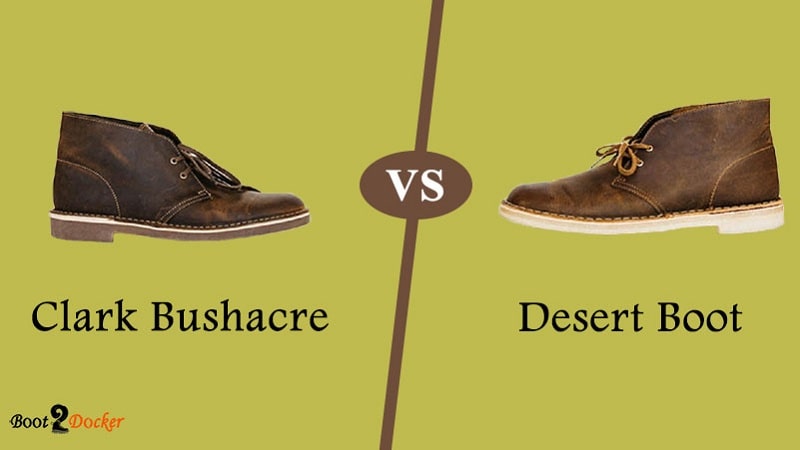
The confusion is understandable. Both are ankle-height chukka boots with two-eyelet lacing, offered in suede and leather, carrying Clarks' trademark understated styling. At arm's length they look nearly identical. But the differences run deeper than aesthetics — sole construction, last shape, traction, and long-term wear experience diverge in ways that matter once you're actually living in these boots day after day.
This guide breaks down everything that counts: specs, real-world performance, care, and exactly who each boot is right for. By the end, you'll know which one belongs in your rotation.
Contents
- At a Glance: What Sets the Clarks Bushacre vs Desert Boot Apart
- Common Misconceptions About These Two Boots
- Keeping Your Clarks Boots in Top Condition
- Investing in the Right Boot for Your Lifestyle
- Real-World Performance: What Wearers Actually Experience
- Best Practices for Maximizing Either Boot's Lifespan
- Frequently Asked Questions
- Final Thoughts
At a Glance: What Sets the Clarks Bushacre vs Desert Boot Apart
The fastest way to separate these two boots is to flip them over and look at the sole. The Desert Boot, introduced by Clarks in 1950, uses a natural crepe rubber sole — soft, lightweight, and flexible. The Bushacre uses a molded rubber outsole that's firmer, more structured, and more aggressively treaded. That single design choice cascades into every other difference between them.
Construction and Materials
The Desert Boot's crepe sole gives it a distinctive character. Crepe compresses under weight, molds gradually to your foot, and delivers a cushioned feel that improves with wear. It looks slightly vintage — an honest fit for a boot designed in the mid-20th century. The upper is typically unlined suede or burnished leather on a slim, tapered last that reads as dressed-down without being casual.
The Bushacre approaches the same silhouette with more visual mass. The molded rubber outsole is firmer underfoot from day one, providing immediate traction on mixed terrain. The toe box is noticeably roomier, and the overall profile sits slightly wider. Clarks designed it for wearers who want the chukka look but need more practical sole performance for daily life.
Here's how the two models compare on the core specs:
| Feature | Clarks Desert Boot | Clarks Bushacre |
|---|---|---|
| Sole Type | Natural crepe rubber | Molded rubber outsole |
| Sole Firmness | Soft, flexible | Firm, structured |
| Upper Material | Unlined suede or burnished leather | Suede or leather (some lined options) |
| Toe Shape | Slim, tapered | Rounder, roomier |
| Ankle Height | Chukka (two-eyelet) | Chukka (two-eyelet) |
| Best Terrain | Smooth pavement, office floors, city streets | Mixed surfaces, light outdoor terrain |
| Weight | Lighter | Slightly heavier |
| Price Range | $100–$140 | $80–$120 |
| Resole Friendly | Yes — cobbler can replace crepe sole | Yes — molded rubber resolvable by most cobblers |
Fit, Sizing, and Comfort
Both boots run true to size for most people, but the experience differs once they're on your feet. The Desert Boot's slim last suits medium-width feet best. If you have a wider foot and try the Desert Boot in your normal size, you'll feel the squeeze across the toe box — especially in the first few weeks before the leather softens.
The Bushacre's roomier last resolves that problem immediately. It's a more forgiving fit without sacrificing the clean chukka profile. You also get more vertical toe room, which matters during long days on your feet.
- Desert Boot: best for medium-width feet, requires a short break-in period for wider feet
- Bushacre: accommodates wider feet comfortably from day one
- Both: available in standard and wide widths depending on colorway and region
- Insole compatibility: the Bushacre's firmer sole works better with aftermarket insoles than the Desert Boot's soft crepe
- Break-in timeline: Desert Boot — 2 to 3 weeks; Bushacre — 1 to 2 weeks for most wearers
Common Misconceptions About These Two Boots
The internet recycles a lot of bad advice about the Clarks Bushacre vs Desert Boot comparison. Two myths in particular lead buyers toward the wrong choice. Here's what the evidence actually says.
Myth: They're the Same Shoe With a Different Name
This claim comes up constantly in forums and comment sections, and it's simply wrong. Yes, both are chukka boots from Clarks. But the lasts are different, the soles are different, and the intended use case is different. The Desert Boot is built on a slim last designed for a clean, tailored silhouette. The Bushacre sits on a wider, more casual last with a noticeably heftier sole stack.
Put them on a table side by side and the difference is obvious. The Desert Boot looks right with slim chinos and a blazer. The Bushacre looks at home with jeans and a canvas jacket. They may share a heritage and a general shape, but they do different jobs. Treating them as interchangeable leads people to buy the wrong boot and wonder why it doesn't feel the way they expected.
Pro tip: If you want a boot that works across business-casual and casual settings, go Desert Boot. If your daily wear is jeans and workwear and you want something more forgiving underfoot, the Bushacre is the call.
Myth: The Desert Boot Always Outlasts the Bushacre
The Desert Boot has a well-earned reputation for longevity, but that reputation comes with an asterisk. Crepe rubber ages gracefully on smooth urban surfaces — city pavement, office floors, restaurant interiors. On rough terrain, gravel, or consistently wet surfaces, the story changes.
On mixed surfaces, the Bushacre's molded rubber outsole wears more evenly and resists the kind of abrasion that degrades crepe quickly. And critically, the upper leather on both boots is roughly equivalent in quality — Clarks uses similar tanning and finishing processes across both models. How long either boot lasts comes down to how you care for it, not which model you chose.
- Crepe sole (Desert Boot): ages beautifully on smooth surfaces, prone to cracking in very dry climates or with heat exposure
- Molded rubber (Bushacre): holds up better across terrain types, more predictable wear pattern
- Upper leather: similar quality on both models — care routine is the determining factor for lifespan
- Resoling: both can be resoled by a competent cobbler; crepe resoling is a common service at most shoe repair shops
Keeping Your Clarks Boots in Top Condition
Both the Bushacre and the Desert Boot are predominantly suede footwear, and suede requires more attention than smooth leather. The difference between a boot that looks rough after a year and one that still looks sharp after five years is almost entirely down to maintenance. A basic care routine — not expensive products — is what separates a short-lived boot from a long-term investment.
Cleaning Suede and Leather Versions
Suede can't be wiped clean with a damp cloth the way smooth leather can. The nap — the raised fiber texture that gives suede its soft appearance — flattens, stains, and absorbs moisture in ways that require specific tools to address. For the smooth leather versions of either boot, our guide on how to clean leather boots walks through the process with product recommendations and technique specifics.
For suede care, these are the non-negotiable basics:
- Use a suede brush after every few wears to lift the nap and remove surface dust before it becomes embedded
- Address stains immediately — dried stains are significantly harder to remove than fresh ones
- Use a suede eraser on scuffs and dry marks before they set into the nap permanently
- Let wet suede dry naturally at room temperature — stuff the boot with newspaper to preserve toe shape
- Never machine wash suede — it destroys the nap irreversibly and can warp the sole
Warning: Never use a hair dryer or place your Clarks near a heat source to speed drying — heat cracks suede, warps the crepe sole on the Desert Boot, and can cause the upper to separate from the welt.
Conditioning and Waterproofing
Neither boot is designed for prolonged wet-weather use, but a quality suede protector spray applied before first wear adds meaningful water resistance and prevents staining. Reapply at the start of each season or after any deep cleaning session.
For the leather versions of either boot, conditioning every two to three months keeps the leather supple and prevents cracking at the flex points. Our guide on how to condition leather covers product selection and application technique in detail, including which conditioners work best on Clarks' tannage without darkening the color unexpectedly.
If your leather has already begun to darken unevenly from moisture exposure and you want to even it out intentionally, that's actually a straightforward process — our breakdown of how to darken leather boots explains exactly how to do it safely.
Investing in the Right Boot for Your Lifestyle
Buying boots is a long-term decision. The wrong choice doesn't just mean discomfort — it means spending money on a boot you reach for twice and then ignore. When you're deciding between the Clarks Bushacre and Desert Boot, the question isn't which one is objectively better. It's which one fits the way you actually live and work.
When the Desert Boot Is the Right Call
The Desert Boot earns its place when versatility across smart-casual settings is your priority. It transitions from a casual Friday at the office to dinner out without looking out of place in either context. If you want one boot that covers both your dressed-down days and your more polished occasions, this is the more capable crossover option.
- You regularly dress business-casual and need a boot that functions in that range
- You have narrow to medium-width feet and prefer a slimmer silhouette
- You walk primarily on pavement, office floors, and smooth interior surfaces
- You value a lightweight, flexible feel that improves significantly with time
- You're building a wardrobe around tailored and semi-tailored fits
The Desert Boot's crepe sole develops a character over time that's genuinely difficult to replicate with other materials. Many long-term owners describe it as their most comfortable shoe after the break-in period — and the boot's resolability means that character doesn't have to end when the sole wears out.
When the Bushacre Is the Better Pick
The Bushacre is the everyday workhorse of the two. It suits wearers who live in jeans and casual workwear, spend long stretches on their feet, or cover terrain that's more varied than city sidewalks. The firmer sole and roomier last make it the more immediately forgiving boot for most people's actual daily habits.
- You wear jeans and casual workwear the majority of the time
- You have wider feet or prefer a roomier toe box for all-day comfort
- You walk on mixed surfaces — pavement, gravel, grass, light construction site perimeters
- You want more reliable traction in damp or unpredictable conditions
- You need a boot that works with aftermarket insoles for orthopedic support
The Bushacre's firmer platform pairs well with aftermarket insoles, which is a meaningful advantage for wearers managing plantar fasciitis, flat arches, or any condition requiring underfoot correction. The Desert Boot's soft crepe doesn't cooperate with most insoles — it compresses unevenly and can make the fit unpredictable.
Real-World Performance: What Wearers Actually Experience
Spec comparisons only go so far. What matters is how each boot actually performs across a real day — through hours of walking, varied terrain, and the kind of use patterns that reveal what a boot is genuinely made of.
On Casual and Urban Terrain
In an urban environment, both boots perform well. The Desert Boot's crepe sole grips smooth pavement reliably and handles light moisture on city streets without issue. Over a full day of walking — six to ten thousand steps — the crepe progressively softens, and many wearers find it more comfortable than traditionally-soled footwear for this exact reason. It essentially becomes a custom footbed over months of wear.
The Bushacre delivers more consistent traction confidence in the same environment. The molded rubber outsole performs predictably on wet tiles, polished concrete, and the kind of mixed indoor-outdoor terrain that characterizes a working day. You give up some of that softening, broken-in feel in exchange for reliability — a tradeoff most everyday wearers find worthwhile.
It's worth being direct about one thing: neither boot is a work boot in the safety footwear sense. There's no steel or composite toe, no ASTM F2413 certification, no puncture-resistant midsole. These are lifestyle boots with serious build quality, appropriate for the kind of work that doesn't require hazard protection.
Light Work and Trade Use
If you're in a trade that splits your day between client-facing environments and occasional site walkthroughs — a contractor, a technician, an estimator — either boot can serve your off-duty hours and your cleaner work moments effectively.
- Bushacre: better on uneven ground, site perimeters, gravel paths, and outdoor transitions
- Desert Boot: better suited to finished interiors, showrooms, and client meetings
- Both: appropriate for tool shops, design studios, and roles where appearance matters alongside functionality
- Neither: suitable for sites requiring safety-rated footwear with toe and puncture protection
For a deeper look at how the chukka silhouette fits into a working wardrobe more broadly, our comparison of chukka vs desert boot differences covers the full category landscape beyond just these two Clarks models.
Best Practices for Maximizing Either Boot's Lifespan
Whether you go Bushacre or Desert Boot, the habits you build around these boots determine how long they look good and feel right. Most boot failures aren't manufacturing defects — they're the result of preventable wear patterns and missed maintenance windows.
Breaking In Your New Clarks
Plan for a gradual break-in regardless of which model you choose. The Desert Boot's crepe sole shortens the timeline somewhat, but both boots benefit from a phased approach rather than immediately wearing them for a full eight-hour day.
- Start with two to three hours of wear per day for the first week
- Wear medium-weight socks during break-in to reduce friction at the ankle collar
- Apply a light coat of leather conditioner to the upper before your first wear on leather versions — it softens the fibers and speeds the process
- If the heel rubs, a moleskin pad on the heel counter resolves it within days without affecting fit
- Walk on varied surfaces during break-in — different terrain helps the sole and upper flex along natural lines
Never try to force the break-in with heat, excessive moisture, or aggressive stretching. These approaches damage the upper, compromise the sole bond, and shorten the boot's overall lifespan. Patience is the only reliable method.
Storage, Rotation, and Longevity
Rotating between two pairs of boots extends the lifespan of both. Leather and suede need 24 to 48 hours to fully breathe and dry between wears. Daily wear on the same pair accelerates moisture buildup in the lining, which degrades both the upper and the insole over time.
- Use cedar shoe trees — they absorb residual moisture and maintain toe shape between wears
- Store in a cool, dry location away from direct sunlight — UV exposure fades suede unevenly and dries out leather
- Never store in plastic bags or airtight containers — leather and suede require airflow to stay supple
- Re-treat suede with a protector spray at the start of each season or after any deep clean
- Resole before the sole wears through to the upper — resoling costs a fraction of replacement
The Desert Boot's crepe sole is a well-established cobbler service. Many Desert Boot owners have resoled the same pair two or three times over a decade. The Bushacre's molded rubber outsole is also resolvable, though the specific method varies by construction. Ask a cobbler to inspect the welt before committing — most will give you an honest assessment of whether a resole is worthwhile.
Frequently Asked Questions
Is the Clarks Bushacre the same as the Desert Boot?
No. Both are ankle-height chukka boots from Clarks, but they use different lasts, different sole constructions, and are designed for different use cases. The Desert Boot uses a slim last and soft crepe rubber sole built for smart-casual wear. The Bushacre uses a roomier last and molded rubber outsole suited for casual everyday use across varied terrain. Treating them as interchangeable leads to buying the wrong boot for your needs.
Which Clarks boot is more comfortable for all-day wear?
It depends on your foot shape and the surfaces you cover. The Desert Boot's crepe sole molds to your foot over weeks of wear, making it exceptionally comfortable on smooth surfaces once broken in. The Bushacre provides more structured underfoot support immediately and handles varied terrain better. For wider feet or wearers who use aftermarket insoles, the Bushacre is the more comfortable choice from day one.
Can I wear the Clarks Desert Boot or Bushacre for work?
Yes — for client-facing, office, and light trade roles that don't require safety-rated footwear. Neither boot provides toe protection, puncture resistance, or ASTM F2413 certification. For any environment that legally or practically requires safety footwear, you need a dedicated work boot. But for contractors, estimators, technicians, and tradespeople who spend part of their day in clean environments, both Clarks models are solid choices.
How do I care for suede Clarks boots?
Apply a suede protector spray before first wear and reapply every few months. Use a suede brush regularly to lift the nap and remove surface dust. Treat stains immediately with a suede eraser before they dry and set. Let wet suede dry naturally at room temperature — never use a hair dryer or heat source. Avoid machine washing, which permanently destroys the nap texture.
Which offers better value — the Bushacre or the Desert Boot?
Both deliver strong value relative to their price point. The Desert Boot typically carries a slight premium but can last a decade or more with proper care and resoling, making its cost-per-wear extremely low over time. The Bushacre is generally more affordable and suits a wider range of casual everyday use cases. For a first-time buyer who prioritizes immediate comfort and versatility across daily wear, the Bushacre delivers more value per dollar.
Final Thoughts
The Clarks Bushacre vs Desert Boot decision comes down to one honest question: what does your day actually look like? If you need a boot that crosses into business-casual territory and rewards long-term wear with a custom-molded feel, the Desert Boot is the right investment. If you want a roomier, more immediately comfortable boot that handles everyday terrain without fuss, the Bushacre is the smarter choice. Head over to our boot reviews to compare both models against the broader market — and find the pair that earns a permanent spot in your rotation.


About James Miller
James Miller is a dedicated individual based in the vibrant city of San Francisco, CA, USA. His unwavering passion lies in the realm of construction, where he finds fulfillment in exploring and documenting various facets of construction equipment and processes. A graduate of the University of California Merced, James holds a dual degree in mechanical and electrical engineering, which has equipped him with a solid foundation in technical knowledge.With a keen eye for detail and a knack for articulation, James has channeled his enthusiasm into writing about the intricacies of construction gear and methodologies. His insightful writings offer valuable insights to both industry professionals and curious enthusiasts, shedding light on the machinery and techniques that shape the built environment.James Miller's educational background in mechanical and electrical engineering lends credibility to his work, allowing him to delve into the technical nuances of construction with precision. His passion for sharing knowledge and fostering understanding in the construction field is evident in his contributions, making him a respected voice in the industry.
Get FREE Boots Gifts now. Or latest free toolsets from our best collections.
Disable Ad block to get all the secrets. Once done, hit any button below