Best Walking Shoes for Plantar Fasciitis: Reviews, Buying Guide, and FAQs 2026
by Jason Flores
Nearly 2 million Americans seek treatment for plantar fasciitis every year — and the single biggest factor that separates daily misery from manageable pain is the shoe on your foot. If you spend any time at all on your feet, the wrong footwear can turn a minor heel ache into a months-long ordeal. The right walking shoe, on the other hand, can make the difference between dreading your morning commute and actually enjoying a long walk again.
Plantar fasciitis happens when the thick band of tissue running along the bottom of your foot gets inflamed. Arch support, cushioning depth, heel stability, and the shoe's overall motion control all play a direct role in how much stress that tissue absorbs with every step. You need a shoe that addresses all four — not just one. Our walking shoes for plantar fasciitis guide covers seven of the top-rated options available in 2026, with honest pros, cons, and a buying guide so you can match the right shoe to your specific situation.
Whether you're dealing with sharp morning heel pain, chronic arch tension, or both, this list has options for men and women across a range of budgets and foot types. We looked at arch support architecture, midsole cushioning, heel cup depth, and real-world wearability — not just manufacturer claims. You'll also find a quick FAQ section at the end to answer the questions most people have before they buy. For related foot relief, check out our guides on the best shoes for Achilles tendonitis and the best shoes for standing all day — two conditions that often show up alongside plantar fasciitis.

Contents
Our Top Picks for 2026
- #PreviewProductRating
- Bestseller No. 1
 Rating:

- Bestseller No. 2
 Rating:
 - Bestseller No. 3
 Rating:
 - Bestseller No. 4
 Rating:
- Bestseller No. 5
 Rating:
 - Bestseller No. 6
 Rating:
 - Bestseller No. 7
 Rating:
Full Product Breakdowns
1. Hoka Men's Bondi 9 — Best for Maximum Cushioning
The Hoka Bondi 9 is built around one idea: maximum underfoot cushioning without sacrificing forward momentum. The engineered mesh upper is breathable and soft against the foot, while the oversized foam midsole puts serious distance between your heel and the ground. If your plantar fasciitis pain spikes hardest on hard surfaces like sidewalks or warehouse floors, the Bondi 9's thick stack height absorbs impact before it ever reaches the fascia. The shoe rides on a rocker-style sole geometry that guides your foot from heel strike through toe-off in a smooth arc — reducing the bending stress that aggravates inflamed tissue.
Fit-wise, the Bondi 9 runs true to size with a wide enough toe box to avoid crowding. The heel counter is structured and deep, cradling the back of your foot without digging in. The textile lining is smooth and comfortable for all-day wear. One thing to know: the chunky profile looks bold. If you prefer a low-profile look, this shoe isn't it. But for pure pain relief, few options in 2026 deliver as much underfoot protection in a walking shoe.
Pros:
- Exceptional cushioning stack — outstanding shock absorption on hard surfaces
- Rocker sole geometry takes bending pressure off the plantar fascia
- Breathable engineered mesh upper stays comfortable in warmer conditions
- Deep, structured heel counter for strong rear-foot stability
- Smooth textile lining reduces friction for all-day wear
Cons:
- Bold, chunky silhouette won't appeal to everyone aesthetically
- Premium price point compared to traditional walking shoes
- Thick midsole reduces ground feel, which some wearers find disorienting initially
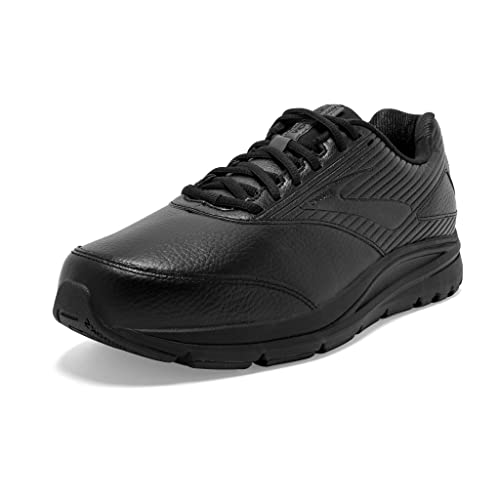
2. Brooks Men's Addiction Walker 2 — Best for Overpronation Control
Brooks built the Addiction Walker 2 for people who spend long hours on their feet and need their shoes to hold up — structurally and physically. This is a certified PDAC A5500 Diabetic shoe with the APMA Seal of Acceptance, which tells you it meets serious medical-grade standards for foot support and protection. The star feature is the Extended Progressive Diagonal Rollbar (PDRB), a motion-control device embedded in the midsole that guides your stride into a more natural gait pattern. If overpronation is contributing to your plantar fasciitis — and for many people it is — this shoe addresses the root cause rather than just masking the pain.
The BioMoGo DNA cushioning adapts to your specific weight and pace in real time. It's softer under lighter loads and firmer when you put more force into each step. In practice, this means the cushioning feels personalized rather than one-size-fits-all. The leather upper is durable and holds its shape well over months of use. This isn't a lightweight racing flat — it's a serious walking shoe built for serious wearers who prioritize function over fashion. If you're also on the hunt for pain-reducing footwear for work environments, our guide to the best shoes for standing and working on concrete floors is worth a read alongside this one.
Pros:
- PDRB motion control system directly addresses overpronation — a leading cause of plantar fasciitis
- BioMoGo DNA cushioning personalizes shock absorption to your stride
- APMA Seal of Acceptance and diabetic shoe certification — doctor-recommended
- Full-grain leather upper holds structure over long-term use
- Wide fit options available for broader foot shapes
Cons:
- Heavier than modern foam-forward alternatives
- More structured feel takes a break-in period for some wearers
- Limited color options compared to lifestyle walking shoes
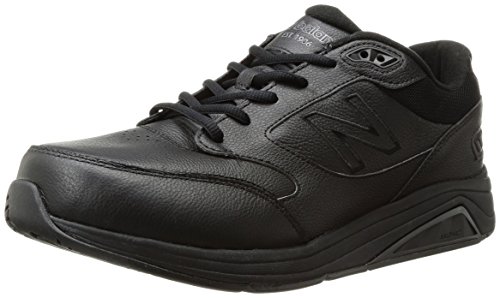
3. New Balance Men's 928 V3 — Best for Wide Feet and Long Days
The New Balance 928 V3 takes a traditional approach to plantar fasciitis relief: solid leather construction, a removable polyurethane footbed, and a supportive rubber outsole that grips reliably across different surfaces. The leather upper is stiff enough to protect the foot's structure without being uncomfortable, and it holds its shape through months of daily use. The removable footbed is a significant detail — it means you can swap in a custom orthotic if your podiatrist has prescribed one. Orthotics are one of the most effective plantar fasciitis treatments available, and a shoe that accommodates them gives you far more therapeutic flexibility than one that doesn't.
The 928 V3 also comes in multiple width options, including 4E (extra wide), making it one of the more accessible choices for people with wide or swollen feet. The rubber outsole provides genuine traction and long-term durability. This is a shoe that feels more like a traditional walking shoe than a modern performance sneaker — it's not flashy, but it's reliable, well-made, and built to last. If you've had trouble finding walking shoes that fit your foot shape, this model deserves serious consideration in 2026.
Pros:
- Removable footbed fully accommodates custom orthotics
- Available in multiple widths including 4E — great for wide or swollen feet
- Leather upper offers long-term durability and structural support
- Rubber outsole provides reliable traction on varied surfaces
- Classic, professional look suitable for work environments
Cons:
- Heavier than mesh or knit alternatives
- Stock footbed is basic — upgrading to a quality orthotic is recommended
- Design aesthetic is dated compared to newer walking shoe styles
4. Vionic Walk Strider 001 — Best for Full-Body Alignment
Vionic's approach to plantar fasciitis starts from the ground up — literally. Their VIO MOTION technology combines built-in arch support, cushioning, and pronation correction into a single integrated footbed system. This isn't just a soft insole — it's a biomechanically designed platform that positions your foot correctly from heel to toe with every step. The result is a shoe that doesn't just absorb shock but actively helps correct the alignment issues that cause plantar fasciitis pain to persist. Vionic specifically markets this shoe for heel pain from both plantar fasciitis and Achilles tendonitis, which makes sense given that these conditions often overlap.
The leather upper in white is clean and polished — appropriate for casual or light professional settings. The break-in recommendation is genuine: Vionic suggests wearing the shoe for a few hours at first to let your feet adapt to the new arch position. This is especially true if you've been wearing flat, unsupportive footwear for years. The correction takes getting used to. But after a week or two, most wearers find the arch support feels completely natural. Maintenance is straightforward: wipe with a dry cloth, keep out of standing water, and let them air dry if they get wet. According to the American Podiatric Medical Association, shoes with proper arch support are among the first-line treatments recommended for plantar fasciitis.
Pros:
- VIO MOTION technology addresses pronation and full-body alignment — not just cushioning
- Specifically designed to alleviate heel pain from plantar fasciitis and Achilles tendonitis
- Clean leather upper appropriate for casual professional settings
- Genuine biomechanical correction rather than just added padding
Cons:
- Noticeable break-in period required as your foot adjusts to the arch position
- White leather requires regular care to keep looking clean
- Sizing feedback on Amazon is mixed — worth checking width options carefully
5. Orthofeet Women's Coral Stretch Knit Sneaker — Best for Sensitive Feet
Orthofeet designed the Coral Stretch Knit specifically for feet that are harder to fit and easier to irritate. The breathable stretch knit upper flexes with your natural foot shape rather than imposing a rigid structure on it. If you have bunions, hammertoes, or swelling that makes traditional shoes uncomfortable, this soft, seamless design removes the friction points that cause problems. The interior is padded and completely seam-free — no stitching ridges to rub against sensitive skin. For nurses, teachers, or anyone who stands for hours at a stretch, this level of interior comfort matters more than people often realize.
The arch support and cushioning are purpose-built for plantar fasciitis relief. Orthofeet addresses the condition from multiple angles: cushioning to absorb heel impact, arch support to reduce fascia tension, and a roomy toe box to prevent forefoot crowding that worsens gait mechanics. The wide sizing (available in Wide) helps if your feet are broader or if swelling from diabetes or chronic conditions affects your fit. This is one of the few walking sneakers in 2026 that simultaneously addresses plantar fasciitis, flat feet, overpronation, and bunion discomfort in a single design. It doesn't look clinical — the lavender colorway is genuinely attractive — but function is clearly the priority here.
Pros:
- Seam-free interior eliminates friction and pressure points completely
- Stretch knit upper flexes with foot shape — ideal for bunions and swelling
- Addresses multiple conditions: plantar fasciitis, flat feet, overpronation, diabetes
- Wide sizing option available for broader feet
- Attractive design that doesn't look overtly orthopedic
Cons:
- Stretch knit upper offers less structural protection than leather or synthetic overlays
- Not suitable for wet or outdoor trail conditions
- Limited color options compared to mainstream sneaker brands
6. Saucony Women's Integrity WLK 3 — Best Leather Walking Shoe for Durability
The Saucony Integrity WLK 3 hits a reliable middle ground: genuine full-grain leather construction with modern PWRRUN midsole cushioning underneath. Leather uppers are stiffer than mesh, but they hold their shape longer, provide better lateral support, and develop a natural fit to your foot over time. For plantar fasciitis sufferers who need consistent, repeatable support — not a shoe that breaks down and loses its structure after three months — this is a meaningful advantage. The PWRRUN cushioning is Saucony's everyday comfort foam, and it delivers genuine shock absorption without the oversized bulk of maximalist designs.
The non-slip rubber outsole is one of this shoe's underrated strengths. Confidence on varied surfaces matters when you're protecting an injured foot — one bad landing on a slick floor can set recovery back weeks. The WLK 3 grips reliably on tile, pavement, and light outdoor terrain. The classic black colorway is professional enough for most work settings. This is a workhorse walking shoe that prioritizes longevity and consistent performance over trendiness. If you've burned through lightweight mesh walking shoes and want something that holds up longer, the WLK 3 deserves serious attention.
Pros:
- Full-grain leather upper holds structural support longer than mesh alternatives
- PWRRUN midsole delivers reliable, all-day cushioning
- Non-slip outsole provides confidence on varied surfaces
- Professional appearance suitable for most workplace environments
- Classic, durable construction with a proven track record
Cons:
- Heavier than modern foam-and-mesh designs
- Leather requires occasional conditioning to prevent cracking
- Limited color selection — primarily available in black
7. Dansko Women's Pace Walking Shoe — Best for Arch Support and Propulsion
Dansko is best known for its clogs, but the Pace walking shoe brings that same commitment to foot health into a proper lace-up athletic design. The standout feature is the Natural Arch Plus technology — a combination of built-in arch support, heel stability cup, and shock-absorbing heel cushion that works together as an integrated system. The "propel forepart" is a unique addition: it's a slightly stiff, curved forepart that helps push your foot forward through the toe-off phase of your stride. This reduces the effort required to complete each step and decreases bending stress on the plantar fascia during push-off, which is one of the most painful moments for many plantar fasciitis sufferers.
The mesh upper is treated with 3M Scotchgard protector, making it resistant to light stains and moisture — a nice practical detail for everyday use. The textile lining is smooth and comfortable. Dansko sizes their shoes in European sizing, so check your conversion before ordering. The Pace is a genuinely well-engineered walking shoe from a brand with a long history in therapeutic footwear. If propulsion support and heel stability are your priorities in 2026, this shoe earns consideration. Pair it with quality insoles for even better results — our review of the best insoles for work boots covers options that fit well in supportive walking shoes too.
Pros:
- Natural Arch Plus technology combines arch support, heel cup, and shock absorption
- Propel forepart reduces toe-off stress — directly addresses a common plantar fasciitis pain point
- Scotchgard-treated mesh upper resists stains and light moisture
- From a brand with a proven track record in therapeutic footwear
- Smooth textile lining for comfortable all-day wear
Cons:
- European sizing requires careful size conversion before ordering
- Slightly stiffer forepart takes a few days to break in
- Limited color availability compared to mainstream athletic brands
Key Features to Consider When Choosing Walking Shoes for Plantar Fasciitis
Arch Support: The Non-Negotiable
Plantar fasciitis develops when the fascia is overstressed. Proper arch support reduces that stress directly by distributing your body weight more evenly across the foot. Look for shoes with a firm, contoured footbed that doesn't flex completely flat when you press on it. A footbed that collapses under load offers no support when you need it most.
- Medium arches: most standard supportive walking shoes will work
- High arches: look for deep heel cups and forefoot cushioning
- Flat feet / low arches: prioritize motion control features like Brooks' PDRB or Vionic's VIO MOTION technology
- Custom orthotics: choose a shoe with a removable footbed (like the New Balance 928 V3) so your orthotic can seat properly
Cushioning Type and Stack Height
Not all cushioning is equal. Soft foam feels comfortable in the store but compresses quickly under daily use. What you need is cushioning that's responsive and durable over months of wear, not just plush for the first week.
- Maximum cushioning (Hoka Bondi 9): ideal if your pain spikes on hard surfaces like concrete or tile
- Adaptive cushioning (Brooks BioMoGo DNA): adjusts to your specific stride weight and speed
- Standard performance foam (Saucony PWRRUN): reliable all-day comfort without excessive bulk
- Avoid thin EVA midsoles — they bottom out quickly and offer no real protection
Motion Control and Heel Stability
Overpronation — where your foot rolls inward excessively with each step — places uneven tension on the plantar fascia. It's one of the most common mechanical causes of the condition. If you've been told you overpronate, or if you notice unusual wear patterns on the inner edge of your old shoes, prioritize motion control features.
- Look for medial post reinforcement or a built-in rollbar in the midsole
- Deep, structured heel cups prevent lateral rocking at heel strike
- A firm heel counter (the back wall of the shoe) prevents collapse and keeps your foot aligned
- Rocker sole geometry (Hoka Bondi 9, Dansko Pace) reduces bending stress at toe-off
Fit, Width Options, and Break-In
The best-supported shoe in the world won't help if it fits poorly. A poor fit creates new pressure points that can worsen plantar fasciitis rather than improving it. Here's what to check before you commit:
- Thumb's width of space between your longest toe and the end of the shoe
- Zero pinching or tightness across the widest part of your foot (the metatarsal heads)
- Heel should sit snugly without slipping — heel slippage changes your gait mechanics
- Wide width options matter: swelling, bunions, and orthotic use all require extra volume
- Allow a proper break-in period, especially for leather uppers and motion-control designs — don't judge a shoe in the first two days
What People Ask
What type of shoe is best for plantar fasciitis?
The best shoes for plantar fasciitis combine firm arch support, cushioned midsoles, a stable heel counter, and a slightly rocker-profile sole. Motion control features help if overpronation is a contributing factor. Look for shoes with removable footbeds if you use custom orthotics. There's no single universally "best" shoe — the right choice depends on your arch type, gait pattern, and how you spend your day.
Should I wear walking shoes with plantar fasciitis all day?
Yes — consistency matters. Walking barefoot or in unsupportive footwear, even just for short periods, allows the plantar fascia to be stressed without protection. Many podiatrists recommend wearing supportive shoes from the moment you get out of bed. Avoid going barefoot on hard floors, especially in the morning when the tissue is stiffest after a night of rest.
Are rocker-sole shoes good for plantar fasciitis?
Rocker-sole shoes are highly effective for many plantar fasciitis sufferers. The curved sole reduces the degree to which the foot has to bend during push-off — the phase of walking that creates the most strain on the plantar fascia. Shoes like the Hoka Bondi 9 and Dansko Pace use this geometry intentionally. However, the transition takes adjustment, especially if you're not used to the altered gait they encourage.
Can the wrong shoes make plantar fasciitis worse?
Absolutely. Flat, thin-soled shoes with no arch support are one of the most common aggravating factors. High heels shorten the Achilles tendon and increase fascia tension. Worn-out athletic shoes that have lost their cushioning and support structure are equally problematic. If your shoes are older than 12 months with significant daily use, the midsole has likely compressed past the point of providing meaningful protection.
Do I need a wide width shoe for plantar fasciitis?
Not necessarily — but it depends on your foot shape. If your foot is naturally wide, or if inflammation or swelling causes your foot to spread, a standard width shoe will create lateral pressure that disrupts your gait and can worsen symptoms. Shoes like the New Balance 928 V3 and Orthofeet Coral Stretch Knit offer wide or extra-wide options specifically for this reason. When in doubt, size up half a size before going narrow.
How long does it take for walking shoes to help plantar fasciitis?
Most people notice some improvement within two to four weeks of consistently wearing supportive shoes. Full recovery from plantar fasciitis typically takes three to twelve months depending on severity, how long the condition has been present, and whether other treatments — stretching, physical therapy, night splints — are used alongside better footwear. Shoes help significantly but are rarely the only factor in recovery. Consistent morning stretching of the calf and plantar fascia accelerates results considerably.
Buy on Walmart
- Hoka Men's Bondi 9 Black/White 8 Medium — Walmart Link
- Brooks Men's Addiction Walker 2 Walking Shoe - Black/Black - — Walmart Link
- New Balance Men's 928 V3 Lace-Up Walking Shoe — Walmart Link
- Vionic Walk Strider 001 Walking Shoes White Leather 10 M — Walmart Link
- Orthofeet Women's Orthopedic Coral Stretch Knit Walking Snea — Walmart Link
- Saucony Women's Integrity WLK 3 Walking Shoes, Black, 8 — Walmart Link
- Dansko Women's Pace Black Walking Shoe 8.5-9 M US - Added Su — Walmart Link
Buy on eBay
- Hoka Men's Bondi 9 Black/White 8 Medium — eBay Link
- Brooks Men's Addiction Walker 2 Walking Shoe - Black/Black - — eBay Link
- New Balance Men's 928 V3 Lace-Up Walking Shoe — eBay Link
- Vionic Walk Strider 001 Walking Shoes White Leather 10 M — eBay Link
- Orthofeet Women's Orthopedic Coral Stretch Knit Walking Snea — eBay Link
- Saucony Women's Integrity WLK 3 Walking Shoes, Black, 8 — eBay Link
- Dansko Women's Pace Black Walking Shoe 8.5-9 M US - Added Su — eBay Link
Final Thoughts
Plantar fasciitis responds well to the right footwear, but the right shoe for you depends on your foot shape, gait mechanics, and daily demands — no single pair wins for everyone. Take the buying guide criteria seriously, consider your arch type and whether overpronation plays a role, and don't underestimate the value of a removable footbed if orthotics are part of your treatment plan. Browse our full walking shoes for plantar fasciitis collection, pick the shoe that matches your specific needs, and get back on your feet — comfortably.


About Jason Flores
Jason Flores is a multi-talented individual whose unique journey has led him to blend his passion for craftsmanship and fashion into a creative endeavor. During his formative years, he found himself immersed in the world of handiwork, spending countless hours in his grandfather's workshop. These early experiences allowed him to develop a deep understanding of practical skills and a keen eye for detail.Simultaneously, Jason harbored an innate love for fashion, drawn to the artistry and self-expression it offers. As he grew older, he recognized the potential to combine his proficiency in craftsmanship with his fashion sensibilities. This realization led him to a path where he began to explore and write about the intersection of fieldwork fashion.
Get FREE Boots Gifts now. Or latest free toolsets from our best collections.
Disable Ad block to get all the secrets. Once done, hit any button below