Best Shoes for Standing All Day: Reviews, Buying Guide, and FAQs 2026
by Jason Flores
The average person takes between 8,000 and 10,000 steps per day, but if you work in healthcare, hospitality, retail, or construction, that number can easily double — and your feet bear every single consequence. Choosing the wrong footwear for a long shift doesn't just cause discomfort; it sets off a chain reaction of knee pain, lower-back strain, and fatigue that compounds over months and years. In 2026, the market for comfort-focused footwear has matured dramatically, giving you access to biomechanically engineered designs that were once reserved for elite athletes and medical professionals.
Whether you're a nurse pulling a 12-hour shift, a carpenter on concrete floors, or a warehouse worker clocking serious mileage, your shoe choice is one of the highest-leverage decisions you make for your long-term health. The products on this list were selected because they address the core demands of all-day standing and walking: superior cushioning, meaningful arch support, slip resistance, and durable construction that holds up over hundreds of shifts. For broader shoe category browsing, you can explore our shoes reviews section for additional options.
This guide covers seven top-performing options across different professions and foot types, followed by a thorough buying guide and answers to the most common questions we hear from readers who stand for a living. If you're also dealing with foot-specific issues like tendon strain, it's worth reading our guide to the best shoes for Achilles tendonitis alongside this one — the overlap in support features is significant.
Contents
- Editor's Recommendation: Top Picks of 2026
- Our Hands-On Reviews
- Brooks Men's Ghost 15 — Best for Road & Gym Cross-Training
- Hoka Men's Bondi 9 — Best Maximum Cushioning
- Dansko Women's Professional Clog — Best for Healthcare Professionals
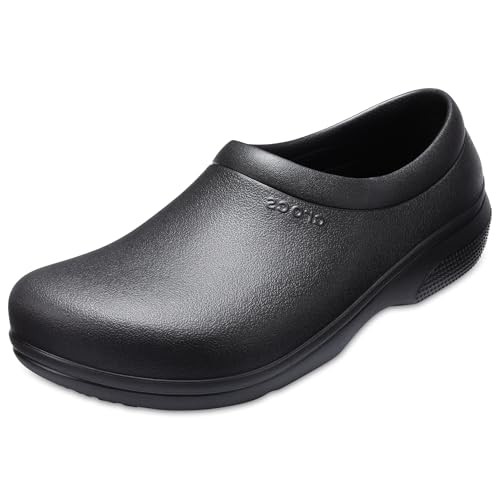
- Crocs On The Clock Work Clog — Best Slip-Resistant Budget Pick
- Reebok Walk Ultra 7 DMX — Best for Everyday Walkers
- Vionic Walk Strider — Best for Plantar Fasciitis Relief
- Timberland PRO Drivetrain Mid — Best Safety-Toe Work Shoe
- How to Pick the Best Shoes for Standing All Day
- FAQs
- Next Steps
Editor's Recommendation: Top Picks of 2026
- #PreviewProductRating
- Bestseller No. 1
 Rating:

- Bestseller No. 2
 Rating:
 - Bestseller No. 3
 Rating:
 - Bestseller No. 4
 Rating:
 - Bestseller No. 5
 Rating:
 - Bestseller No. 6
 Rating:
- Bestseller No. 7
 Rating:
Our Hands-On Reviews
1. Brooks Men's Ghost 15 Neutral Running Shoe — Best for Road & Gym Cross-Training
The Brooks Ghost 15 builds on one of the most trusted neutral running platforms in the industry, and in 2026 it remains a standout choice for anyone who spends long hours on their feet across varied surfaces. The headline upgrade is the DNA LOFT V2 midsole, a soft, lightweight cushioning compound that delivers a noticeably plush underfoot feel without the sloppy instability that plagues overly cushioned shoes. You feel the difference most during the third or fourth hour of a shift, when cheaper shoes start transmitting pavement shock directly into your knees.
Brooks also refined the 3D Fit Print upper on this version, creating a more seamless overlay structure that wraps your midfoot without pressure points or seam irritation. The fit is genuinely secure without feeling constricting, which matters enormously when your feet swell during extended wear. This shoe carries both the PDAC A5500 Diabetic certification and the APMA Seal of Acceptance — two independent validations that confirm its biomechanical design actively supports foot health rather than just feeling comfortable in the store. If you're also a runner dealing with lower-leg fatigue, our guide to running shoes for calf pain covers this platform in additional depth.
The outsole segmentation provides solid traction on gym floors, light trails, and pavement alike, making the Ghost 15 genuinely versatile across different work environments. It's not a safety-toe shoe and won't meet industrial hazard standards, but for professionals in education, healthcare support roles, or retail who need reliable cushioning over eight-plus hour days, it is one of the most consistently recommended options in its class.
Pros:
- DNA LOFT V2 cushioning delivers plush, fatigue-reducing comfort across long shifts
- PDAC A5500 Diabetic certification and APMA Seal validate its foot-health credentials
- 3D Fit Print upper creates a seamless, pressure-point-free fit
- Versatile outsole handles gym, road, and light cross-training surfaces effectively
- Lightweight enough for all-day wear without adding unnecessary load fatigue
Cons:
- No slip-resistance rating — not suitable for wet kitchen or hospital-floor environments
- No safety-toe protection, ruling it out for construction and heavy industrial settings
2. Hoka Men's Bondi 9 — Best Maximum Cushioning
Hoka built its reputation on maximum cushioning, and the Bondi 9 is the brand's most aggressively padded everyday shoe — a logical choice for anyone whose job involves standing on hard concrete or tile for a full shift. The engineered mesh upper provides a breathable, sock-like fit that adapts to your foot's natural shape throughout the day, reducing the hot-spots and constriction that rigid uppers cause after hour six. The Bondi platform is specifically engineered for high-mileage, high-fatigue environments, which is exactly what your feet experience during a long workday.
The extended heel geometry and full-compression EVA midsole work together to absorb impact from the moment your heel strikes to the toe-off, redistributing force across a larger surface area than traditional running shoes. This geometry is particularly valuable for individuals with plantar fasciitis or general heel sensitivity, as it reduces peak pressure at the heel strike point. The meta-rocker sole geometry also promotes a smooth, forward rolling gait that reduces the muscular effort required to propel yourself forward over thousands of steps.
The textile lining adds a soft interior feel that is noticeable during wear, particularly if you skip thick socks on warmer days. Where the Bondi 9 falls short is in lateral stability — the wide, marshmallow-style base makes it less suitable for jobs that require quick direction changes, agile movement, or uneven terrain navigation. For high-volume standing and straight-line walking, however, it is difficult to beat in terms of raw cushioning depth.
Pros:
- Maximum-volume EVA cushioning provides exceptional protection on hard concrete floors
- Engineered mesh upper breathes well and adapts to foot swelling across long shifts
- Meta-rocker geometry promotes efficient forward gait, reducing lower-leg fatigue
- Extended heel geometry reduces peak pressure for heel-sensitive wearers
Cons:
- Reduced lateral stability makes it poorly suited for agile or terrain-varied environments
- Bulky profile can feel cumbersome for users transitioning from minimal-stack footwear
- Higher price point relative to some competitors in this list

3. Dansko Women's Professional Slip-On Clog — Best for Healthcare Professionals
The Dansko Professional clog is, without exaggeration, an institution in the nursing and healthcare world — it has been the go-to footwear recommendation from podiatrists and occupational health professionals for over two decades, and it remains one of the most clinically validated comfort shoes available in 2026. The rocker sole geometry reduces metatarsal stress by rolling weight forward smoothly without requiring your foot to perform the full range of flexion, which is critical during 12-hour hospital shifts where every micro-stress reduction compounds into meaningful fatigue savings.
The leather and fabric uppers provide genuine durability — these shoes are built to survive the repeated sanitizing wipes, antiseptic exposure, and general punishment of clinical environments in ways that mesh-topped athletic shoes cannot. The padded instep collar eliminates the bite and rubbing that rigid-collar clogs often cause at the top of the foot, while the roomy, reinforced toe box gives your toes genuine freedom without the shoe feeling sloppy. You won't experience the toe-cramping that narrow-toe athletic shoes impose after hours of wear.
The outsole provides solid traction on polished hospital floors, though it is not formally slip-resistance rated to the ASTM F489 standard that some healthcare employers require — check your facility's specific footwear policy before purchasing. The slip-on design means zero lace-adjusting during busy shifts, and the clog construction means donning and doffing between procedures is genuinely fast. For women in healthcare specifically, this is the single most consistently recommended shoe category from podiatric professionals, according to data tracked by the American Podiatric Medical Association.
Pros:
- Rocker sole actively reduces metatarsal and forefoot stress during extended standing
- Durable leather construction withstands clinical environments and repeated sanitizing
- Padded instep collar prevents the collar-bite common in rigid clog designs
- Roomy reinforced toe box provides protection without compressing toes
- Slip-on design allows fast donning and doffing during busy shifts
Cons:
- Not formally ASTM slip-resistance rated — verify against your employer's footwear requirements
- The clog silhouette may not suit environments requiring closed-heel construction
4. Crocs Unisex On The Clock Work Clog — Best Slip-Resistant Budget Pick
Crocs built its work line around a single mandate: keep people from slipping on the surfaces that injure workers most — wet kitchen tile, hospital hallways, and buffed retail floors. The Crocs Lock tread pattern is the defining feature here, engineered specifically for the kind of greasy, wet, and polished surfaces found in food service and healthcare environments. This isn't decorative patterning; it's a functional slip-resistance system designed to channel liquids away from contact zones, maintaining grip when a standard rubber outsole would break down.
The enclosed toe and heel design marks a significant departure from traditional Crocs consumer footwear, and it exists specifically to meet common workplace safety guidelines in environments where open-toe footwear is prohibited. You're getting genuine workplace compliance in a lightweight, easy-to-clean package that won't weigh your feet down across a long kitchen or floor shift. The Croslite foam midsole provides the brand's characteristic lightweight cushioning, which is more than adequate for moderate-intensity standing and won't fatigue your feet with unnecessary mass.
One thing to know before ordering: these run large, and Crocs explicitly recommends sizing down if you fall between sizes. Get this wrong and you'll spend the shift fighting heel slippage, which undermines the very slip-resistance you're buying the shoe for. The all-black colorway and simple silhouette work in virtually any workplace uniform context, and the Croslite material wipes clean with minimal effort after a messy shift — a practical advantage that's easy to undervalue until you're cleaning shoes at the end of a 10-hour day.
Pros:
- Crocs Lock tread provides engineered slip resistance on wet, greasy, and polished surfaces
- Enclosed toe and heel meet typical workplace safety footwear guidelines
- Croslite foam delivers lightweight, fatigue-reducing cushioning for full-shift wear
- Easy-clean material wipes down in seconds after messy shifts
- Strong value proposition — workplace compliance at a budget-friendly price
Cons:
- Runs large — you must size down or risk heel slippage that defeats the slip-resistance
- Croslite foam provides less arch support depth than structured footbeds in higher-priced options
5. Reebok Men's Walk Ultra 7 DMX Max Shoe — Best for Everyday Walkers
The Reebok Walk Ultra 7 is one of the few walking shoes on this list that combines two independent cushioning systems — the brand's proprietary DMX air-transfer technology and a memory foam insole — into a single platform designed explicitly for men who spend their entire working day on their feet. DMX technology dynamically moves air from heel to forefoot and back as your weight shifts through each step, meaning the cushioning actively responds to your gait rather than passively compressing like standard foam. The practical result is measurably better energy management across the latter hours of a long shift, when static foam cushioning has compressed and lost its responsiveness.
The memory foam insole layer adds a secondary adaptive element, conforming to the specific contours of your foot over time and providing personalized cushioning that improves with wear rather than degrading. For men working in restaurant environments, medical support roles, or retail where you're alternating between standing and moderate-distance walking continuously, this dual-system approach addresses the full spectrum of daily foot stress. The rubber outsole provides reliable traction across gym, court, and street surfaces, making it a legitimate all-environment option for professionals who don't stay in one place.
The design is deliberately straightforward and non-athletic in appearance, which makes it appropriate for professional contexts where overtly sporty footwear would look out of place. It lacks the safety-toe and slip-resistance certifications of the work-specific options on this list, so it's best positioned for service-sector, healthcare support, or professional office environments where hazard exposure is low. If you're comparing this against dedicated work boots for demanding environments, our guide to the best orthopedic work boots covers more heavy-duty options.
Pros:
- DMX air-transfer cushioning actively responds to gait rather than passively compressing
- Memory foam insole conforms to your foot's specific shape and improves with wear
- Dual-cushioning system addresses both standing and walking stress across long shifts
- Professional appearance suits non-industrial workplace environments effectively
- Durable rubber outsole handles gym, street, and court surfaces reliably
Cons:
- No slip-resistance certification — unsuitable for wet kitchen or clinical floor environments
- No safety-toe protection for hazardous industrial settings
6. Vionic Walk Strider 001 Walking Shoe — Best for Plantar Fasciitis Relief
Vionic built its entire brand around addressing foot alignment and pain, and the Walk Strider is the flagship expression of that philosophy in everyday footwear. The VIO-MOTION technology built into the midsole and footbed specifically targets pronation correction and full-body alignment, working from the ground up to reduce the downstream stress that falls on your knees, hips, and lower back when your arch collapses over the course of a long shift. If you're dealing with plantar fasciitis or Achilles tendonitis — conditions that affect an estimated 10% of the population and that are significantly worsened by prolonged standing on inadequate footwear — this shoe's built-in biomechanical correction is clinically meaningful, not just a marketing claim.
Vionic recommends breaking these shoes in gradually, wearing them for a few hours initially before transitioning to full-shift use. This is standard advice for any orthotic-integrated footwear and reflects the fact that the support system is actually correcting your gait — a process that requires neuromuscular adaptation. The leather construction on the white model provides a clean, professional appearance that works in medical, retail, and customer-facing roles equally well, and leather durability means this is a shoe that will outlast several pairs of fabric-upper alternatives under the same conditions.
The cushioning layer works in concert with the support structure rather than independently of it, so you're not just getting padded comfort — you're getting biomechanically guided cushioning that maintains your foot in its optimal alignment even as fatigue accumulates. The shoe handles light moisture with a naturally dry cloth wipe, though submerging it in water or machine washing is explicitly not recommended, which is worth factoring in if your work environment involves wet conditions.
Pros:
- VIO-MOTION technology corrects pronation and promotes full-body alignment from the ground up
- Specifically designed to alleviate plantar fasciitis and Achilles tendonitis discomfort
- Leather construction provides professional appearance and long-term durability
- Cushioning works in concert with support structure for biomechanically guided comfort
Cons:
- Requires a deliberate break-in period before transitioning to full-shift wear
- Not suited for wet or submerged conditions — moisture exposure degrades leather and support components
- Premium price point may not suit budget-constrained buyers
7. Timberland PRO Men's Drivetrain Mid Composite Safety Toe — Best Safety-Toe Work Shoe
The Timberland PRO Drivetrain Mid is the safety-certified option on this list, and it addresses the specific needs of workers in construction, manufacturing, and industrial environments where both impact protection and electrical hazard management are non-negotiable daily realities. The CarbonShield composite toe cap uses nanotechnology-enhanced construction to achieve a lighter, asymmetrically shaped protective cap that meets ASTM F2412-18a and F2413-18 impact and compression standards without the weight and heat-conduction penalties of traditional steel toe designs. You get the protection without the foot-fatigue associated with heavier metallic toe caps.
Timberland's Anti-Fatigue Technology uses geometrically arranged cone structures in the midsole to absorb impact shock and return energy with each step — a functional design that translates to noticeably less lower-leg fatigue during the back half of long industrial shifts. The SD35 static-dissipative rating means this shoe safely manages electrostatic buildup and discharge risks in environments with sensitive electronics or flammable materials, meeting ASTM F2412-18a, F2413-18, and F2892-18 standards simultaneously. For workers who need comprehensive hazard coverage in one shoe, that multi-standard compliance is significant. If you're comparing this against boot options for demanding job sites, see our guide to best composite toe work boots for a deeper comparison of safety-rated footwear across different construction types.
The mid-height design provides meaningful ankle support for uneven terrain and ladder work, which full low-cut shoes cannot deliver. The athletic construction keeps the overall weight lower than traditional work boots, making all-day wear more manageable than older industrial footwear designs. The 2024 new colorway update brings a cleaner aesthetic that translates better from job site to office environments for tradespeople who move between both contexts in a single day.
Pros:
- CarbonShield composite toe meets ASTM F2412-18a and F2413-18 impact and compression standards
- Anti-Fatigue Technology uses geometric cone structures to absorb shock and return energy
- SD35 static-dissipative rating meets three separate ASTM safety standards simultaneously
- Mid-height construction provides ankle support for ladder work and uneven terrain
- Lighter than traditional steel-toe boots — reduces the lower-leg fatigue of all-day industrial wear
Cons:
- Heavier and more rigid than the non-safety-toe options on this list
- Mid-height cut may feel restrictive for workers who prefer low-cut footwear freedom of movement
How to Pick the Best Shoes for Standing All Day
Cushioning Type and Stack Height
Not all cushioning is equal, and the differences matter enormously over an eight-to-twelve-hour shift. High-stack cushioning — like you find in the Hoka Bondi 9 — places maximum foam between your foot and the ground, which is ideal for concrete and tile surfaces where impact energy is fully transferred upward without any ground give. Dynamic cushioning systems like Reebok's DMX actively respond to your gait cycle, providing adaptive compression that static foam cannot replicate. Memory foam insoles provide personalized comfort but compress over time and require replacement before the upper wears out. Match your cushioning type to your surface: hard concrete favors high-stack; mixed surfaces favor dynamic systems; soft carpet environments can tolerate lighter stack heights without fatigue penalty.
Arch Support and Foot Alignment
Your arch type — high, neutral, or flat — determines how much structural correction your footwear needs to deliver to keep your foot, ankle, knee, and hip in proper alignment over thousands of steps. Flat-footed or pronating wearers experience the most downstream damage from unsupportive footwear, as the arch collapses inward with each step, rotating the knee and stressing the hip over the course of a full shift. Biomechanically integrated support, like Vionic's VIO-MOTION technology, addresses this at the footbed level — correcting alignment before stress propagates upward. If your current shoes leave you with knee or back pain by shift's end, inadequate arch support is the most likely culprit, and it's worth investing in footwear with documented orthotic integration rather than relying on aftermarket insoles as a correction layer. For workers who already use insoles in work boots, our guide to best insoles for work boots covers compatible insert options.
Slip Resistance and Safety Certification
If you work in food service, healthcare, or any environment where liquids regularly reach the floor, slip-resistance certification is not optional — it's a baseline safety requirement. The relevant standards include ASTM F489 for leather and rubber outsoles and SATRA TM144 for wet and dry conditions; look for these on the product specification page rather than taking marketing language at face value. For industrial settings with impact, compression, or electrical hazard risks, ASTM F2412 and F2413 composite toe standards and the SD35 static-dissipative rating (as found in the Timberland PRO Drivetrain) provide the relevant compliance framework. Verify your workplace's specific footwear policy before purchasing, as some employers and insurers require specific certification codes that not all shoes on this list carry.
Fit Across Extended Wear
Feet swell during extended standing and walking — this is physiological and predictable, and failing to account for it when selecting footwear is one of the most common and costly fitting mistakes workers make. Shoes that fit perfectly in the morning become constricting by hour six, driving blood out of the forefoot, compressing nerves, and accelerating fatigue. When selecting shoes for all-day standing, fit them in the afternoon or evening when your feet are already at their daily maximum volume, and ensure you have at least a thumb's width of clearance at the toe box. Wide-toe-box designs like the Dansko Professional clog provide passive accommodation for daily foot expansion without requiring you to size up in ways that compromise heel fit and lateral support.
FAQs
What is the single most important feature in a shoe for standing all day?
Arch support and cushioning working in combination is the most impactful feature pair, but if forced to choose one, arch support wins — because inadequate arch support causes misalignment that no amount of cushioning can fully compensate for. When your arch collapses under load, the stress rotates through your ankle, knee, and hip, producing fatigue and pain in areas far removed from your foot. Shoes with biomechanically integrated footbeds — not just soft insoles — deliver the most meaningful all-day relief for people who stand professionally.
How often should I replace shoes I wear for standing all day?
Most footwear experts and podiatrists recommend replacing shoes used for eight-plus-hour daily wear every six to twelve months, depending on surface hardness and body weight. The midsole cushioning in athletic-style shoes loses approximately 40% of its shock-absorption capacity after 300 to 500 miles of use, often before the outsole shows visible wear. A useful test: if you press firmly on the midsole and it feels rigid rather than compressible, the cushioning is compromised and replacement is overdue regardless of how the upper looks.
Are slip-resistant shoes necessary for healthcare workers?
In clinical environments with patient bathrooms, procedure rooms, and supply corridors where liquid spills are a regular occurrence, slip-resistant footwear is a genuine safety necessity rather than a preference. Falls in healthcare settings account for a significant proportion of workplace injury claims, and footwear is consistently identified as a contributing factor. Many healthcare employers have formal footwear policies that specify slip-resistance standards; check your facility's policy before purchasing. The Crocs On The Clock and Dansko Professional are the most commonly cited options for healthcare workers on this list, though verify specific certification requirements with your employer.
Can I use running shoes for all-day standing at work in 2026?
High-quality neutral running shoes like the Brooks Ghost 15 or Hoka Bondi 9 are genuinely well-suited for all-day standing in environments without specific safety or slip-resistance requirements. Their cushioning systems are engineered for high-repetition impact loading, which maps closely to the biomechanical demands of extended standing and walking. The caveat is that running shoes are not designed or certified for workplace hazard environments — no safety toe, no formal slip-resistance rating, and typically no lateral stability for direction-change-intensive work. For office, retail, education, and light healthcare support roles, they're an excellent choice.
What is the difference between a composite toe and a steel toe for work shoes?
Both composite and steel toes meet the same ASTM impact and compression safety standards, but they differ in material composition, weight, and thermal properties. Steel toe caps are heavier, conduct temperature (becoming uncomfortable in extreme heat or cold), and trigger metal detectors — which is a practical issue in airport, courthouse, and some industrial environments. Composite toe caps, like the CarbonShield in the Timberland PRO Drivetrain, are lighter, non-conductive, and metal-detector-safe, making them the preferred option for most workers in 2026 unless a specific employer requires steel construction.
Should I size up when buying shoes for all-day wear?
Sizing up by a half-size is a widely recommended approach for shoes worn during extended standing, because feet typically swell 5 to 10% in volume over the course of a full shift. However, sizing up indiscriminately can create heel slippage, which causes friction blisters and undermines the shoe's lateral support function. A better approach is to shop for shoes in the afternoon when your feet are already at their maximum daily volume, choose designs with a naturally wide toe box, and ensure the heel cup fits snugly even when the forefoot has room to expand. The Crocs On The Clock is a notable exception — the brand explicitly recommends sizing down for that specific model.
Buy on Walmart
- Brooks Men's Ghost 15 Neutral Running Shoe - Green/Black/Sha — Walmart Link
- Hoka Men's Bondi 9 Black/White 8 Medium — Walmart Link
- Dansko Women’s Professional Slip-On Clogs –Rocker Sole and A — Walmart Link
- Crocs Unisex-Adult On The Clock Work Clogs | Enclosed Toe | — Walmart Link
- Reebok Men's Walk Ultra 7 DMX Max Shoe — Walmart Link
- Vionic Walk Strider 001 Walking Shoes White Leather 10 M — Walmart Link
- Timberland PRO Men's Drivetrain Mid Composite Safety Toe Sta — Walmart Link
Buy on eBay
- Brooks Men's Ghost 15 Neutral Running Shoe - Green/Black/Sha — eBay Link
- Hoka Men's Bondi 9 Black/White 8 Medium — eBay Link
- Dansko Women’s Professional Slip-On Clogs –Rocker Sole and A — eBay Link
- Crocs Unisex-Adult On The Clock Work Clogs | Enclosed Toe | — eBay Link
- Reebok Men's Walk Ultra 7 DMX Max Shoe — eBay Link
- Vionic Walk Strider 001 Walking Shoes White Leather 10 M — eBay Link
- Timberland PRO Men's Drivetrain Mid Composite Safety Toe Sta — eBay Link
Next Steps
- Identify your primary work surface and hazard environment — concrete and tile demand high-stack cushioning; wet floors require slip-resistance certification; industrial sites require safety-toe compliance. This single variable narrows your decision to two or three options on this list immediately.
- Check the current price on Amazon for your top choice — prices on footwear fluctuate frequently, and several options on this list go on sale during seasonal events that can reduce the cost by 20 to 30% relative to the standard listing price.
- Verify your employer's footwear policy before purchasing, especially if you work in healthcare, food service, or any industrial environment — specific ASTM certification codes are sometimes required, and not every comfortable shoe on this list meets every employer's compliance requirements.
- Try on shoes in the afternoon, when your feet are at their maximum daily volume, to ensure the fit you select accommodates the natural swelling that occurs during long shifts — a shoe that fits perfectly at 9 AM may be constricting by 3 PM.
- Plan for a break-in period with any new footwear, particularly support-integrated designs like the Vionic Walk Strider — wear new shoes for two to three hours per day during the first week before committing to a full shift, allowing your foot's musculature to adapt to the new support geometry without overloading.


About Jason Flores
Jason Flores is a multi-talented individual whose unique journey has led him to blend his passion for craftsmanship and fashion into a creative endeavor. During his formative years, he found himself immersed in the world of handiwork, spending countless hours in his grandfather's workshop. These early experiences allowed him to develop a deep understanding of practical skills and a keen eye for detail.Simultaneously, Jason harbored an innate love for fashion, drawn to the artistry and self-expression it offers. As he grew older, he recognized the potential to combine his proficiency in craftsmanship with his fashion sensibilities. This realization led him to a path where he began to explore and write about the intersection of fieldwork fashion.
Get FREE Boots Gifts now. Or latest free toolsets from our best collections.
Disable Ad block to get all the secrets. Once done, hit any button below