Your first day on a new site, you looked down and noticed something was off. Everyone else's boots had that distinct horizontal seam stitched across the toe — yours did not. That single observation, the difference between cap toe vs plain toe boots, is something most tradespeople encounter early and rarely think through carefully. Understanding what that extra strip of leather actually does — and when it works for or against you — helps you spend smarter and work more comfortably. For a broader look at footwear decisions, the boot tips and guides section covers the full range of work boot choices, but this post focuses entirely on one of the most debated style questions in the trade.
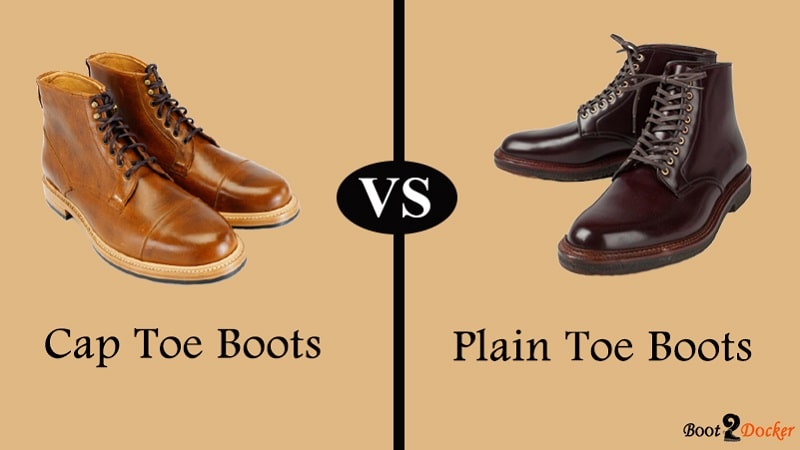
Cap toe boots feature a separate piece of leather stitched horizontally across the toe box, creating a reinforced front section. Plain toe boots use a single uninterrupted piece of upper material from tongue to tip. The difference sounds minor. In practice, it affects durability, break-in time, comfort across a full shift, and how professional you appear in client-facing situations.
Neither style wins outright. The better choice depends on your trade, your foot shape, your workplace's expectations, and what you actually demand from your footwear day after day. This guide breaks it all down.
Contents
- Cap Toe vs Plain Toe Boots: A Direct Comparison
- When a Cap Toe Boot Earns Its Place
- When Plain Toe Is the Smarter Choice
- Trade-by-Trade Recommendations
- Common Myths About Cap Toe and Plain Toe Boots
- Buying Your First Work Boot vs. Building a Collection
- Long-Term Durability, Boot Care, and Common Fit Problems
- Frequently Asked Questions
Cap Toe vs Plain Toe Boots: A Direct Comparison
Before getting into trade-specific nuances, a side-by-side look clarifies exactly what you're choosing between. The structural difference — one extra piece of material — creates a surprisingly wide range of downstream effects on durability, comfort, and usability.
| Feature | Cap Toe Boots | Plain Toe Boots |
|---|---|---|
| Toe Box Construction | Separate leather cap stitched over toe | Single uninterrupted upper piece |
| Durability at Toe | Higher — double layer resists scuffs and abrasion | Standard — relies on upper material quality |
| Break-In Time | Slightly longer — cap adds stiffness | Generally faster — fewer rigid layers |
| Professional Appearance | Traditional dress boot aesthetic | More casual or utilitarian look |
| Comfort for Wide Toes | Can feel restrictive — cap limits flex | More accommodating — no overlay to constrict |
| Typical Use Cases | Construction, supervision, client-facing roles | Light trades, electrical, HVAC, everyday work |
| Maintenance Complexity | More seams — requires consistent seam care | Fewer seams — easier to polish and condition |
| Entry-Level Price | Slightly higher on average | Often more affordable at entry level |
The cap's extra layer directly explains most of the differences above. More material means more structure and protection — but also more stiffness, a longer break-in curve, and more seam area that needs maintenance over time.
When a Cap Toe Boot Earns Its Place
Reinforcement and Jobsite Protection
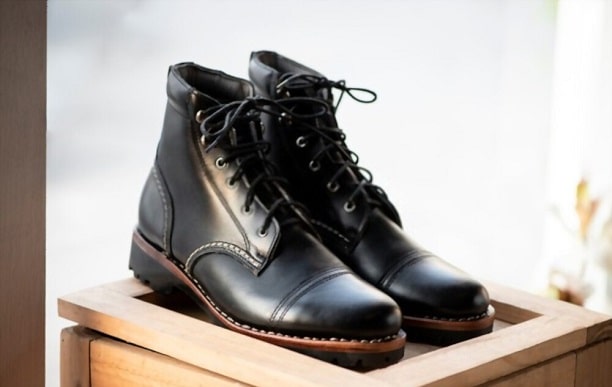
If you spend your shifts dragging heavy materials, toe-pushing lumber into position, or bumping the front of your foot against scaffolding and machinery, the cap toe's additional layer provides genuine protection. The double-layer toe construction acts as a secondary wear barrier, absorbing abrasion that would otherwise eat through the upper of a plain toe boot in a matter of months. This is particularly relevant on concrete-heavy jobsites and in warehouse environments where mechanical toe stress is constant and repetitive.
It's worth clarifying what the cap does not do. It doesn't replace a certified safety toe. Impact and compression protection are governed by ASTM F2413 impact standards, and that certification is independent of whether your boot has a cap. The cap is about surface durability, not crush resistance. But for everyday abrasion and scuff resistance, the cap extends your boot's functional life in ways a plain toe cannot match.
Client-Facing and Professional Settings
Cap toe boots carry a traditional, refined look that translates well beyond the jobsite. If your role involves regular client meetings, site inspections, or safety audits where your appearance is being evaluated alongside your work, a clean cap toe reads as professional without sacrificing practicality. The aesthetic roots of the cap toe run deep in dress boot tradition, and that heritage reads clearly even in industrial contexts.
Pro tip: A cap toe boot buffed with a matching cream conditioner recovers its presentation faster after a rough shift than almost any other work boot style — the defined cap hides surface scuffs that would stand out immediately on a plain toe.
When Plain Toe Is the Smarter Choice
Flexibility, Comfort, and Wider Toe Boxes
Plain toe boots tend to break in faster. Without the stiff leather cap reinforcing the front, the upper flexes more naturally from the first day, conforming to your foot's shape sooner. If you have a wider forefoot or high-volume toes, this matters considerably. The absence of an overlay means no hard edge pressing against the knuckles of your toes during the critical first weeks of wear — a problem that can make a cap toe boot genuinely uncomfortable for certain foot shapes.
If you're already managing foot fatigue or toe discomfort, pairing a plain toe boot with quality aftermarket insoles can close the gap considerably. The best insoles for work boots guide covers options that add cushioning and arch support without the added stiffness that a cap toe design brings to the equation.
Electrical and Precision Trades
Electricians, HVAC technicians, and plumbers frequently prefer plain toe boots for a practical reason. They spend a significant portion of their workday crouching, kneeling, and navigating confined spaces. The plain toe upper flexes through a wider range of motion. In tight crawlspaces or under raised flooring, a stiffer cap toe can create pressure points that a more flexible plain toe avoids entirely. When mobility is the priority — and in these trades, it often is — plain toe designs respect that demand without compromise.
Trade-by-Trade Recommendations
Construction, Carpentry, and Heavy Industry
In framing, concrete work, and heavy construction, the cap toe is frequently the right call. Your boots absorb repeated mechanical stress — dropped lumber, shifting gravel, steel edge contact — and the extra layer at the toe survives that punishment longer. Carpenters specifically benefit from cap toe durability, since kneeling and toe-pushing heavy material is part of the daily routine. For more on footwear built around these demands, the best shoes for carpenters page covers options across multiple toe styles and safety ratings relevant to the trade.
Light Trades, Supervisory Roles, and Mixed Environments
If your work involves moving regularly between office environments, client sites, and active work areas, plain toe boots offer a versatility that cap toes can struggle to match. They're easier to maintain, look less overtly industrial in professional settings, and transition more naturally between a client presentation and a walk-through inspection. Supervisors and estimators who split time between desk and field often gravitate toward plain toe designs precisely because those boots don't look out of place in either setting.
Common Myths About Cap Toe and Plain Toe Boots
Myth: Cap Toes Always Offer More Protection
The cap reinforces the surface of the toe box against abrasion and minor impacts. It does not add meaningful crush or impact protection. That requires a safety toe rating — steel, alloy, or composite — that meets certified performance standards independently of toe style. A cap toe boot without a safety toe rating provides no more drop protection than a plain toe boot without one. Don't confuse aesthetic reinforcement with certified safety performance. Check the boot's actual safety markings and always match those ratings to your trade's requirements.
Myth: Plain Toe Boots Wear Out Faster
This depends almost entirely on material quality, not toe design. A well-constructed full-grain leather plain toe boot will outlast a cheaply built cap toe boot in nearly every scenario. The cap adds durability specifically at the toe — but if the rest of the boot is built from inferior materials, that single reinforcement doesn't save the pair. Your investment in quality leather, a durable outsole, and a well-executed welt construction matters far more than whether there's a cap involved. Consistent conditioning and timely resoling — the boot heels repair guide covers the basics — extend any work boot's usable life dramatically regardless of toe style.
Buying Your First Work Boot vs. Building a Collection
What First-Time Buyers Should Prioritize
If this is your first serious work boot purchase, don't lead with toe style. Lead with the safety rating required for your trade, proper fit across the widest part of your foot, and outsole traction appropriate for your work surface. Toe style is a secondary consideration — important, but not the deciding factor. Once you understand how a well-fitted work boot should feel and how it breaks in over several weeks, you'll have the context to make a more intentional choice on your next pair.
Most first-time buyers default to plain toe because the lower price point and faster break-in feel like lower risk. That instinct is reasonable for a first boot. As your experience grows, you'll develop a clearer sense of where your toe box actually takes damage across a typical workday — and whether a cap would have meaningfully protected that area.
How Experienced Workers Use Both Styles Strategically
Experienced tradespeople often own both styles. A cap toe for active fieldwork and heavy-contact days. A well-broken-in plain toe for supervisory tasks, lighter site visits, or warmer months when flexibility and breathability matter more. Rotating between two pairs also extends the life of both — boots last considerably longer when they get time to dry and decompress between shifts. Once you've worn enough pairs to understand your own wear patterns, matching toe style to the day's demands becomes a deliberate and worthwhile habit.
Long-Term Durability, Boot Care, and Common Fit Problems
Extending the Life of Either Style
Cap toe boots require specific attention to the seam where cap meets upper. Moisture, dirt, and repeated flex stress work their way into that junction over time. Once the stitching begins to fail, the cap can start to lift — creating a mud trap and accelerating upper deterioration from the inside out. Clean and condition that seam consistently. A quality leather conditioner keeps the stitching supple and prevents the leather from cracking at the highest flex point. Plain toe boots lack that seam vulnerability, but the toe area still needs regular conditioning to prevent surface cracking, particularly in dry or cold working environments.
Troubleshooting Fit and Break-In Issues
If your cap toe boot is creating pressure on the top of your toes during break-in, the cap itself is almost certainly the source. Unlike the rest of the upper, the cap doesn't flex independently — it moves as a rigid unit. Wearing thick socks and using a boot stretcher specifically on the toe box can help accelerate the softening process. For plain toe boots, toe box tightness is usually a width issue rather than a structural one. Trying a wider last or a half size up often resolves it without any need for stretching. In either case, don't push through sharp or persistent pain — that's a fit problem, not a break-in problem, and it will not correct itself over time.
Frequently Asked Questions
Are cap toe boots actually safer than plain toe boots?
Not in the certified sense. Safety ratings — steel toe, composite toe, alloy toe — are independent of toe style and governed by ASTM F2413 standards. A cap toe adds surface durability at the front of the boot but does not provide additional impact or compression protection. Always check a boot's safety certification directly rather than assuming the cap contributes to its protective rating.
Do cap toe boots take longer to break in than plain toe boots?
Generally yes. The additional leather layer across the toe box adds stiffness that takes more time to flex and conform to your foot. Applying leather conditioner from day one and wearing thick socks during the initial break-in period can speed the process. Plain toe boots typically conform to your foot faster because the upper flexes without the constraint of a rigid overlay at the toe.
Which toe style is better for wide feet?
Plain toe boots are typically more accommodating for wider feet. Without the overlay cap, there's no hard edge pressing against the knuckles of the toes, and the upper flexes more freely across the full width of the toe box. If you have a wide forefoot and find cap toe boots uncomfortable, prioritizing a plain toe boot on a wide-width last is usually the more practical solution.
Final Thoughts
The cap toe vs plain toe boots decision comes down to what your workday actually looks like — not what looks toughest on a shelf. Take stock of where your current boots are wearing out, whether your job demands flexibility or durability at the toe, and whether your role ever puts you in front of clients or inspectors. Then pick the style that honestly fits those conditions, invest in quality construction, and maintain what you buy. If you're ready to explore specific models, head over to the boot tips and guides section to find reviews and comparisons matched to your trade and budget.


About James Miller
James Miller is a dedicated individual based in the vibrant city of San Francisco, CA, USA. His unwavering passion lies in the realm of construction, where he finds fulfillment in exploring and documenting various facets of construction equipment and processes. A graduate of the University of California Merced, James holds a dual degree in mechanical and electrical engineering, which has equipped him with a solid foundation in technical knowledge.With a keen eye for detail and a knack for articulation, James has channeled his enthusiasm into writing about the intricacies of construction gear and methodologies. His insightful writings offer valuable insights to both industry professionals and curious enthusiasts, shedding light on the machinery and techniques that shape the built environment.James Miller's educational background in mechanical and electrical engineering lends credibility to his work, allowing him to delve into the technical nuances of construction with precision. His passion for sharing knowledge and fostering understanding in the construction field is evident in his contributions, making him a respected voice in the industry.
Get FREE Boots Gifts now. Or latest free toolsets from our best collections.
Disable Ad block to get all the secrets. Once done, hit any button below