The Frye boots size chart confirms that most buyers should order their true US shoe size — Frye runs true to size across the majority of its lineup, with a few model-specific exceptions worth knowing before checkout. For anyone building out a footwear rotation, the boot tips and guides section covers sizing fundamentals that apply far beyond a single brand.
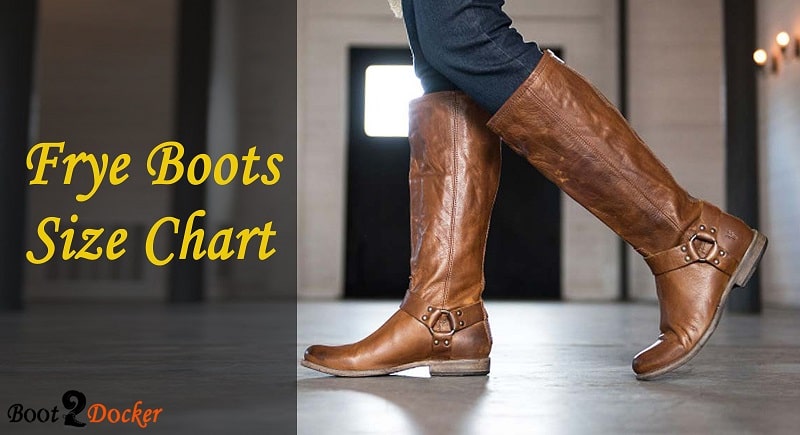
Frye is one of America's oldest boot manufacturers. Founded in 1863, the brand built its reputation on full-grain leather construction and traditional welted soles — materials that behave very differently from synthetic uppers when it comes to fit and break-in. That heritage matters for sizing because genuine leather stretches, molds, and conforms to the foot over time in ways that a printed size chart alone cannot fully capture.
This guide breaks down how to read the Frye size chart accurately, compares sizing across the most popular models, identifies the mistakes that derail an otherwise straightforward purchase, and provides practical fixes when the fit doesn't land right out of the box.
Contents
How the Frye Boots Size Chart Works
Frye publishes sizing in US measurements for domestic customers and provides EU and UK conversion tables on its product pages. The standard size range for men spans US 7 through 13 (including half sizes up to 12.5), and women's boots run US 5.5 through 12, also with half sizes. Understanding what those numbers mean in practice — not just on paper — is where most buyers go wrong.
Men's vs. Women's Sizing
Frye does not produce unisex sizing. Men's and women's lasts are cut differently, and women's models account for a slightly narrower heel and lower instep. Buyers who try to cross-size between men's and women's lines typically find the heel too loose or the toe box disproportionately wide. The conversion is not a simple 1.5-size step the way it is with some athletic brands — the shape of the last changes enough that cross-gender sizing is not recommended.
Women shopping for wider widths sometimes look at men's models as a workaround. That approach occasionally works for slip-on styles like the Frye Harness, but it introduces heel slippage in lace-up or zip styles where the ankle collar sits lower on a men's last.
Width Options and What They Mean
Frye offers limited width options compared to work-specific boot brands. Most styles ship in medium width only — B for women, D for men. Select styles are available in wide (E for men, D for women), but availability depends on the specific model and colorway. Buyers with feet wider than standard D should measure foot width at the ball before ordering and check the product page for width availability rather than assuming it exists.
Frye Sizing by Model — A Direct Comparison
Frye's lineup spans casual lifestyle boots, western-inspired designs, and heritage workwear styles. Each category uses a slightly different last shape, which affects how the Frye boots size chart translates to real-world fit. The table below summarizes the sizing behavior of the most commonly purchased models.
Campus, Harness, and Veronica Lines
The Campus boot — Frye's iconic pull-on — fits true to size for most foot shapes. The Harness, with its distinctive ring-and-strap hardware, also runs true but has a roomier toe box that benefits buyers with wider forefeet. The Veronica line (women's) runs slightly narrow at the ball of the foot; half-sizing up is advisable for anyone with a medium-to-wide foot profile.
Engineer and Western Models
The Engineer boot and western-influenced styles like the Billy and Jet collections sit closer to the foot through the ankle. These models tend to feel snugger in the instep during the first two to three weeks before the leather conforms. Ordering true to size remains the right call — do not size up to compensate for initial tightness, as the boot will stretch and the heel will slip after break-in if sized too large.
| Frye Model | Sizing Behavior | Width Available | Recommended Action |
|---|---|---|---|
| Campus Pull-On | True to size | Medium (D/B) | Order your standard US size |
| Harness 12R / 15R | True to size, roomy toe box | Medium (D/B) | Order standard; wide feet may prefer this naturally |
| Veronica Slouch (Women's) | Runs narrow at ball | Medium (B) only | Half size up for medium-wide feet |
| Engineer Boot | Snug instep initially; stretches | Medium, some Wide (E) | Order true to size; allow 2–3 weeks break-in |
| Billy Boot (Western) | Snug through ankle collar | Medium (D/B) | Order true to size; do not upsize |
| Lena Short (Women's) | True to size | Medium (B) only | Order standard US size |
Sizing Mistakes That Ruin the Fit
Most Frye sizing problems are self-inflicted. The same errors show up repeatedly in return queues and buyer reviews, and they almost all trace back to a misunderstanding of how leather footwear behaves over time.
Ignoring Leather Stretch
Full-grain leather stretches between 10 and 15 percent in width over the course of normal use. A boot that feels correct out of the box will feel noticeably roomier after six to eight weeks. Buyers who size up because new boots feel tight almost always end up with boots that are too large to wear comfortably. The break-in period is not a defect — it is a feature of quality leather construction.
Pro tip: If a Frye boot feels slightly snug across the ball of the foot but the heel is locked in place, that is the correct starting fit — the width will open up with wear.
Overlooking Sock Thickness and Foot Volume
Sock selection changes effective fit more than most buyers expect. A heavy wool work sock adds meaningful volume, particularly in the toe box and across the instep. Buyers who measure their feet barefoot and then wear thick socks with a true-to-size Frye boot will find the fit tighter than anticipated. The fix is simple: measure and order wearing the socks that will actually be used with the boot.
Foot swelling is a secondary factor. Feet expand by as much as half a size over the course of a full workday. Measuring in the morning and ordering based on that reading leads to boots that feel fine initially but compress the forefoot uncomfortably by afternoon. Foot measurements taken in the evening — or after standing for an extended period — produce more reliable data. For more on how cowboy-style boot fits interact with heel shape, see Different Types of Heels in Cowboy Boots.
Fixing a Poor Fit After Purchase
When the Frye boots size chart leads to an imperfect fit, the options depend on whether the boot runs too long or too narrow. Most issues have practical solutions that do not require a return.
When the Boot Runs Long
A boot that is a half size too long creates heel slippage — the foot slides backward, the heel lifts on every step, and blisters form at the back of the ankle. The standard fix is a heel grip insert, which adds a thin layer of cushioning at the heel collar and reduces the internal length by approximately 3–4mm. This is enough to stabilize a half-size discrepancy without affecting the toe box.
Volume insoles are a secondary option. A thicker insole raises the foot slightly, pressing it into the heel cup more firmly. This works best when the boot is long in the overall internal length rather than specifically wide at the collar. The guide on How to Break in Cowboy Boots covers additional strategies for managing fit during early wear, many of which apply directly to Frye heritage styles.
Warning: Avoid sizing down to fix heel slip — a boot that is too short creates pressure on the toes that leather stretch will not correct.
When the Boot Runs Narrow
Narrow fit in the toe box or across the ball of the foot usually resolves with wear. For buyers who need faster relief, a boot stretcher applied overnight with stretching spray loosens full-grain leather by 3–5mm in targeted areas without damaging the material. Professional cobblers can stretch specific zones — such as a pressure point over a bunion — with greater precision than consumer stretchers allow.
If the boot is narrow throughout the shaft and instep rather than just in the toe box, the issue is likely the last shape itself rather than a sizing error. In that case, exchanging for a model with a roomier last — such as the Harness instead of the Engineer — is the more reliable path forward.
Keeping Frye Leather in Shape After Getting the Fit Right
Once a pair of Frye boots fits correctly, maintaining that fit requires consistent leather care. Neglected leather shrinks, stiffens, and distorts — all of which change fit in ways that no size chart adjustment can fix. Good care also extends the life of boots that represent a significant investment.
Conditioning and Break-In
Frye uses full-grain leather on its flagship lines, which requires conditioning every three to six months under normal use, or more frequently in dry climates or after significant water exposure. Leather conditioner restores the natural oils that keep the material supple and prevent cracking at flex points — particularly at the vamp where the foot bends on every step. The detailed walkthrough at How To Condition Leather covers product selection and application technique that applies directly to Frye's leather grades.
Key conditioning practices:
- Clean the boot before conditioning — conditioning over dirt seals contaminants into the leather
- Apply conditioner with a soft cloth in circular motions, covering the entire upper
- Allow conditioner to absorb fully before buffing — typically 15 to 20 minutes
- Avoid silicone-based products, which coat the surface without penetrating the grain
Heel Wear and Sole Maintenance
Frye boots use leather or stacked leather heels on heritage models, which wear faster than rubber. Once heel wear becomes visible — typically a 3–5mm reduction at the back corner — replacement is necessary to prevent structural damage to the heel counter and welt. Replacing heels at the right time costs a fraction of a full resole. Many cobblers can rebuild a worn Frye heel in under an hour.
Midsole and outsole care is equally important. Leather soles benefit from a thin coat of neatsfoot oil applied to the bottom two to three times per year. This prevents drying and cracking without making the sole slippery. Rubber half-soles added by a cobbler extend sole life substantially and improve traction on hard floors without altering the boot's appearance from the outside.
Frequently Asked Questions
Does the Frye boots size chart use US sizing?
Yes. Frye's primary sizing is in US measurements. EU and UK conversions are available on individual product pages. Men's sizes run from US 7 to 13 and women's from US 5.5 to 12, with half sizes available throughout most of the range.
Do Frye boots run true to size?
Most Frye models run true to size. The Veronica Slouch (women's) tends to run narrow at the ball and may warrant a half-size up. Engineer and western-style boots feel snug initially due to the close-fitting last but conform to true size after break-in — ordering up to compensate is a common mistake that results in heel slippage.
How much do Frye boots stretch over time?
Full-grain leather stretches approximately 10 to 15 percent in width over six to eight weeks of regular use. Length does not stretch meaningfully. Buyers should expect a correctly sized Frye boot to feel slightly snug at first and progressively more comfortable as the leather conforms to their foot shape.
Are Frye boots available in wide widths?
Select Frye models are available in wide widths — E for men, D for women — but availability is model- and colorway-specific. The majority of the lineup ships in medium width only. Buyers with wide feet should check the individual product listing rather than assuming a wide option exists.
Can Frye boots be resoled to extend their life?
Yes. Frye boots built on traditional welt construction — including the Campus, Harness, and Engineer lines — can be resoled by a qualified cobbler. The welt stitching allows the outsole to be removed and replaced without damaging the upper. This is one of the primary value arguments for Frye's price point compared to cemented-sole footwear.
Next Steps
- Measure both feet at the end of the day while wearing the socks intended for use with the boots — use the larger foot's measurement to select size from the Frye size chart.
- Cross-reference the specific model against the sizing table in this guide before adding to cart — Campus and Harness behave differently from Engineer and Veronica styles.
- Order from a retailer with a free return policy for the first pair, since even true-to-size leather boots require a short trial period to confirm the fit is correct for that individual foot shape.
- Condition the boots with a quality leather conditioner within the first week of ownership to accelerate break-in and protect the grain from the start.
- Monitor heel wear at the 6-month mark and schedule a cobbler appointment if wear exceeds 3mm — replacing heels early preserves the welt and doubles the usable life of the boot.


About Jason Flores
Jason Flores is a multi-talented individual whose unique journey has led him to blend his passion for craftsmanship and fashion into a creative endeavor. During his formative years, he found himself immersed in the world of handiwork, spending countless hours in his grandfather's workshop. These early experiences allowed him to develop a deep understanding of practical skills and a keen eye for detail.Simultaneously, Jason harbored an innate love for fashion, drawn to the artistry and self-expression it offers. As he grew older, he recognized the potential to combine his proficiency in craftsmanship with his fashion sensibilities. This realization led him to a path where he began to explore and write about the intersection of fieldwork fashion.
Get FREE Boots Gifts now. Or latest free toolsets from our best collections.
Disable Ad block to get all the secrets. Once done, hit any button below