Have you ever peeled off your work boots after a long shift only to find painful cracks forming beneath your toes? You're not alone — and knowing the skin splitting under toes causes is the first step toward fixing it for good. Whether you spend your days in construction, manufacturing, warehousing, or any trade that keeps you on your feet, your footwear plays a bigger role than you might think. This guide from the TopWorkBoots Boot Tips & Guides section breaks down every major cause, gives you real treatment options, and shows you how to stop it from happening again.

Skin splitting under the toes — clinically called fissures — can range from mildly annoying to genuinely painful. Left untreated, those small splits can deepen, bleed, and open the door to infection. The causes aren't always obvious. Sometimes it's your boots. Sometimes it's a fungal infection. Sometimes it's just the dry air inside your work environment.
The good news? Once you pinpoint what's driving the problem, fixing it is usually straightforward. Let's start with the basics — how this actually happens, and why that specific spot under your toes is so vulnerable in the first place.
Contents
Understanding Skin Splitting Under Toes
How Skin Fissures Form
Your skin is designed to flex and move with your body. But when the outer layer — called the stratum corneum (the tough, protective top layer of skin) — loses its elasticity, it can no longer flex without cracking. A skin fissure is exactly that: a crack that forms when dry, thickened, or overly stressed skin splits under pressure.
Here's the basic chain of events that leads to a split:
- Skin loses moisture or becomes mechanically stressed
- The outer layer thickens or hardens as a protective response (callus formation)
- Pressure, friction, and movement stress the hardened skin
- The skin splits along weak points — usually at the base or between the toes
- The crack deepens with continued activity and pressure
- If left untreated, the split can reach deeper layers and bleed
This process can happen surprisingly fast — sometimes within a few days of heavy activity in the wrong conditions. And once a crack opens up, every step you take in a work boot makes it worse.
Why the Area Under Your Toes Is So Vulnerable
The skin under and between your toes takes more mechanical abuse than almost any other part of your foot. Here's why that spot is such a common trouble zone:
- It flexes with every single step you take
- It's often compressed between your toes and the boot insole or toe cap
- Sweat collects there and stays trapped in closed-toe boots
- Friction from socks and boot lining constantly irritates the area
- It's a prime environment for fungal growth
- There are fewer oil glands here than on other areas of the foot, making the skin naturally drier
You can also develop related damage — cuts and surface splits in the same region — from slightly different causes. Our detailed breakdown of what causes cuts under toes covers some of those overlapping mechanisms if you want to dig deeper.
Pro Tip: The interdigital spaces (the skin between and under your toes) have fewer sebaceous (oil-producing) glands than the rest of the foot, which makes them naturally more prone to dryness and cracking — especially in low-humidity environments.
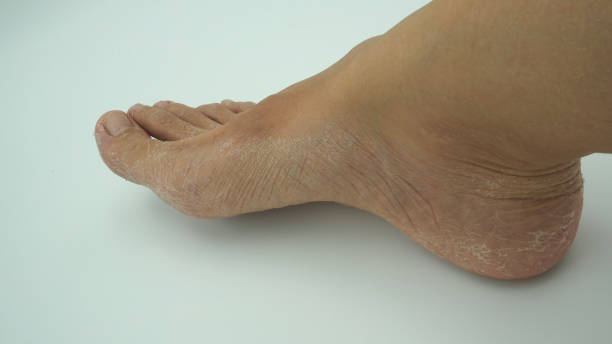
The Main Skin Splitting Under Toes Causes at a Glance
Before going deep on each one, here's a side-by-side overview. Use this table to identify which cause most closely matches what you're experiencing — then jump to the relevant section below.
| Cause | Key Signs | Common Treatment | Typical Severity |
|---|---|---|---|
| Dryness / Low Humidity | Flaky, tight skin; no redness or odor | Daily moisturizer, urea cream | Mild to Moderate |
| Excess Moisture / Sweat | Soft, white, waterlogged skin; soggy feel after boot removal | Moisture-wicking socks, antifungal powder, boot rotation | Mild to Moderate |
| Athlete's Foot (Tinea Pedis) | Itching, burning, scaling, strong odor | Antifungal cream (clotrimazole, terbinafine) | Moderate to Severe |
| Poorly Fitted Footwear | One-sided splits, calluses, blisters in predictable spots | Properly fitted boots, cushioned insoles | Mild to Moderate |
| Eczema / Psoriasis | Red patches, silvery scales, intense itching | Prescription creams, dermatologist care | Moderate to Severe |
| Nutritional Deficiencies | General dryness across the foot, slow wound healing | Vitamin E, Omega-3 supplements, dietary adjustments | Mild |
Excess Moisture and Sweat
Ironically, too much moisture is just as damaging as too little. When your feet sweat heavily inside work boots all day, the skin under your toes becomes waterlogged — a condition called maceration. Macerated skin turns soft, pale, and fragile. When you finally take your boots off and it dries out, it cracks quickly and easily.
Signs your splits are moisture-related:
- Skin looks white or pale before the cracks appear
- The area has a musty or sour smell
- Splits get worse after long boot-wearing days
- The problem is worst in summer or in warm, humid work environments
- Your socks feel damp or heavy by midday
Dryness and Dehydrated Skin
On the flip side, extremely dry skin cracks just as readily. Low humidity, cold weather, hot showers, and inadequate water intake all strip moisture from your skin — including the delicate skin under your toes.
Workers in climate-controlled environments like cold storage facilities, air-conditioned offices, or outdoor winter conditions are especially vulnerable to dryness-driven splits. The fix is simple but takes commitment: moisturize daily, every day — not just when the skin looks bad.
Dry skin also tends to build up calluses faster. Those thick patches feel protective but are actually more prone to cracking than normal skin because they've lost flexibility.
Fungal Infections
Athlete's foot (tinea pedis) is one of the most commonly overlooked skin splitting under toes causes. This fungal infection thrives in warm, moist environments — exactly the conditions inside a work boot after an eight-hour shift.
Classic signs of athlete's foot include:
- Itching and burning between the toes — often starting between the fourth and fifth toes
- Scaly, peeling, or flaking skin
- Redness and inflammation around the affected area
- Unpleasant or unusual foot odor
- Skin that cracks and splits, especially in the toe web spaces
Warning: Ignoring athlete's foot will not make it go away — it will spread. An untreated fungal infection can reach your toenails (onychomycosis) and become far harder to treat. Start antifungal treatment at the very first sign of symptoms.
Footwear Fit Issues
Boots that are too tight, too loose, or simply the wrong shape for your foot create repeated friction and pressure in specific spots — including directly under your toes. That constant mechanical stress thickens and eventually cracks the skin over time.
Common fit problems that lead to splits:
- Narrow toe box — compresses toes together and creates friction at the sides and base
- Boot too long — foot slides forward with every step, driving toes into the front
- Wrong arch support — shifts weight unevenly across the forefoot and toe area
- Thick or bunched-up socks — add friction between the skin and the boot interior
- Stiff, unconditioned leather — creates pressure points at the toe flex line
If you're not sure what type of boot works best for your foot shape and trade, our guide on the types of work boots breaks down the options across construction, electrical, and general labor categories.
Who Gets Skin Splitting Most Often
Tradespeople and Outdoor Workers
People who wear work boots for eight to twelve hours a day are in the highest-risk group. Your feet spend most of the day in a warm, enclosed, low-airflow environment. Add physical labor that generates heat and sweat, heavy footwear pressing on the toe area, and concrete or rough terrain underfoot — and the conditions for skin splitting become nearly ideal.
Trades most commonly affected include:
- Construction workers and laborers
- Electricians and plumbers
- Warehouse and distribution workers
- Landscapers and roofers
- Manufacturing floor workers
- First responders and military personnel
- HVAC technicians
The specific type of protective toe cap in your boot can also affect how much room your toes have. Steel toe caps are often narrower and more rigid than composite options, which can crowd the toes and increase friction. If fit is a concern, it's worth reading up on steel toe vs. composite toe work boots to understand the ergonomic differences between them.
Other Risk Factors Worth Knowing
Even outside of your work environment, certain factors make skin splitting under the toes more likely:
- Diabetes — reduces circulation and nerve sensitivity, slows wound healing significantly
- Psoriasis or eczema — inflammatory skin conditions that weaken the skin's structural integrity
- Thyroid disorders — can cause systemic skin dryness as a side effect of hormone imbalances
- Older age — skin naturally produces less oil as you age, making it drier and less flexible
- Vitamin deficiencies — especially Vitamin E, B3 (niacin), and Omega-3 fatty acids, which all support skin barrier function
- Hot showers — strip natural oils from the skin surface daily
- Certain medications — diuretics and retinoids are known to cause dry skin
If your skin splits heal very slowly or keep returning in the exact same spot even with treatment, it may be worth talking to a doctor. There could be an underlying condition making your skin more vulnerable than average.
How to Treat and Heal Cracked Skin Under Your Toes
Home Remedies That Actually Work
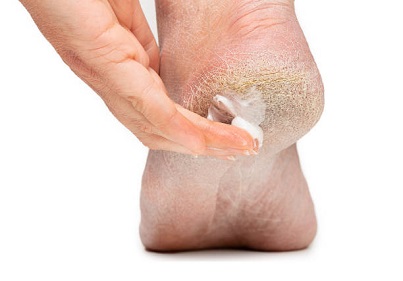
Most cases of skin splitting under the toes respond well to home treatment. Here's a simple step-by-step evening routine that makes a real difference:
- Wash thoroughly — use mild soap and warm (not hot) water, and get between every toe
- Soak for 10 minutes — warm water softens hardened skin and prepares it for exfoliation
- Gently exfoliate — use a pumice stone to reduce thickened skin; don't scrub aggressively
- Pat completely dry — especially between and under the toes; lingering moisture encourages fungal growth
- Apply a thick moisturizer — look for products containing urea (10–25%), lactic acid, or shea butter; these penetrate callused skin effectively
- Protect overnight — cover the split with a bandage or toe sleeve to keep the moisturizer in place and shield the crack from friction
Done consistently every evening, most mild to moderate fissures start showing real improvement within a week to ten days.
Other useful products to keep on hand:
- Antifungal cream — if itching or scaling suggests athlete's foot is involved
- Liquid bandage — seals painful, deep splits and lets you stay active
- Petroleum jelly — inexpensive and effective as a nighttime moisture barrier
- Hydrocolloid bandages — promote moist wound healing and cushion painful splits from boot pressure
Tip: Apply moisturizer within two minutes of washing your feet — while the skin is still slightly damp. This seals in moisture far more effectively than applying to completely dry skin, and it makes a noticeable difference in how fast cracks heal.
When to See a Doctor
Home care handles most cases. But some situations call for professional help. See a doctor or podiatrist (a foot specialist) if:
- The split is deep, bleeds repeatedly, or shows signs of infection — pus, spreading redness, warmth, or swelling
- You have diabetes — foot wounds can escalate to serious complications quickly
- Over-the-counter antifungal treatments haven't worked after two full weeks of consistent use
- The problem keeps returning within weeks of healing, suggesting an underlying cause
- You notice spreading redness or red streaking (possible cellulitis — a bacterial skin infection that needs antibiotics)
How Your Work Boots Contribute to the Problem
Poor Ventilation and Moisture Buildup
Most work boots are engineered for durability, protection, and safety compliance — not breathability. That's an acceptable trade-off for the hazards you face on the job, but it means your feet spend most of the day in a warm, humid, low-airflow environment. The direct result is moisture buildup that softens and weakens the skin under your toes over time.
Factors that make poor ventilation worse:
- Full-leather construction with no mesh panels or moisture-wicking interior lining
- Wearing the same pair every single day without letting them fully dry out between uses
- Non-breathable synthetic socks, especially cotton blends that hold sweat against the skin
- Working in hot environments or near heat sources
- Not using boot inserts that promote airflow
The material your boot is made from plays a big role in how moisture is managed. If you're weighing your options, our comparison of leather vs. synthetic work shoes explains how each material handles sweat and breathability differently — useful reading before your next boot purchase.
Fit Problems That Cause Friction
Even a well-built, well-ventilated boot causes problems if it doesn't fit your foot correctly. A too-narrow toe box squeezes your toes together and creates ongoing friction. A too-long boot lets your foot slide forward with every step. Both scenarios create chronic mechanical stress directly under the toes — exactly the pattern that leads to thickened, cracked skin.
How to check whether your current boot fit is contributing to the problem:
- There should be roughly a thumb's width of space between your longest toe and the front of the boot
- Your heel should stay firmly in place when you walk — no lifting
- The widest part of your foot should align with the widest part of the boot, not be compressed by it
- No single toe should feel pinched or consistently numb by midday
- After removing your boots, you shouldn't see deep red pressure marks under your toes
Lace-up and slip-on styles also give you different levels of fit control. If you're unsure which style suits your needs, our comparison of lace-up vs. slip-on work boots walks through the practical trade-offs for different work situations.
Your insole matters too. A flat, worn-out insole shifts your body weight unevenly across the forefoot and toe area. A properly cushioned insole with good arch support distributes pressure more evenly, reducing the load that concentrates under and around your toes with every step.
Building a Long-Term Prevention Routine
Daily Foot Care Habits
Preventing skin splits long-term is about consistency, not elaborate routines. Here's what actually makes a measurable difference over time:
- Wash and dry your feet every day — focus on getting completely dry under and between every toe
- Moisturize every evening — even when the skin looks healthy right now; prevention is easier than treatment
- Rotate your boots — give each pair at least 24 hours to fully dry and air out between wears
- Change socks mid-shift if your feet sweat heavily — carrying a fresh pair takes thirty seconds
- Use antifungal foot powder inside your boots, especially in summer
- Trim your toenails straight across — nails that curve at the edges press into adjacent skin and cause friction
- Stay hydrated throughout the day — your skin's moisture level reflects your overall hydration
- Check your feet regularly — catch splits early before they deepen
These are small actions. But done consistently, they prevent the exact combination of moisture imbalance and mechanical stress that drives skin splitting under the toes.
Choosing the Right Footwear
Your boot choice is one of the biggest variables you can control. If you're prone to skin splits, here's what to specifically look for:
- Wide or roomy toe box — gives your toes room to sit naturally without compressing together
- Moisture-wicking interior lining — pulls sweat away from the skin surface rather than letting it pool
- Breathable upper materials — mesh panels or perforated leather allow airflow that reduces temperature and humidity inside the boot
- Quality insole with arch support — keeps your foot in the right position so pressure distributes evenly
- Proper length sizing — eliminates forward sliding that drives toes into the toe cap
Socks are just as important as the boots themselves. Choose:
- Merino wool or moisture-wicking synthetic blends — not 100% cotton, which holds sweat against the skin
- Seamless toe construction — eliminates one source of constant friction
- Thickness matched to your boot interior — too thick a sock creates compression inside the toe box
If you want a solid foundation for making better footwear decisions across the board, the Boot Tips & Guides section covers fit, materials, safety ratings, and trade-specific recommendations in one place.
Final Thoughts
Skin splitting under your toes is painful and persistent, but it's rarely mysterious once you understand what's driving it. Use the comparison table in this guide to identify your most likely cause, work through the treatment steps consistently each evening, and take a hard look at whether your current work boots are making things worse. If you're ready to upgrade to a boot that fits properly and manages moisture better, start with the Boot Tips & Guides section — it's the fastest way to find the right footwear for your trade, your foot type, and your daily conditions.


About Jason Flores
Jason Flores is a multi-talented individual whose unique journey has led him to blend his passion for craftsmanship and fashion into a creative endeavor. During his formative years, he found himself immersed in the world of handiwork, spending countless hours in his grandfather's workshop. These early experiences allowed him to develop a deep understanding of practical skills and a keen eye for detail.Simultaneously, Jason harbored an innate love for fashion, drawn to the artistry and self-expression it offers. As he grew older, he recognized the potential to combine his proficiency in craftsmanship with his fashion sensibilities. This realization led him to a path where he began to explore and write about the intersection of fieldwork fashion.
Get FREE Boots Gifts now. Or latest free toolsets from our best collections.
Disable Ad block to get all the secrets. Once done, hit any button below