My first week on a roofing crew, I watched a coworker sprint across a pitched surface in slip-on work boots without breaking stride. Meanwhile, I was still crouched by my truck, threading laces through hooks. That one moment started a years-long curiosity about footwear choices on the job. The lace up vs slip on work boots debate comes up constantly in the trades, and the honest answer is that neither style wins every situation. Whether you spend your days on a construction site, in a warehouse, or out in the field, the guides in our boot tips and guides section can help you choose smarter.
Both styles can meet ASTM F2413 standards (the industry benchmark for protective footwear), and both come in steel-toe and composite-toe versions. The real differences come down to fit precision, ankle support, convenience, and how each style handles the specific conditions of your work environment. Choosing the wrong one can leave you uncomfortable or fighting your footwear all day long.
Before you decide, it helps to understand what each style is built for, which jobs favor each, and what long-term wear actually looks like once the boots are broken in. Let's walk through it all.
Contents
Two Styles, One Purpose: A Quick Overview
What Lace-Up Work Boots Are
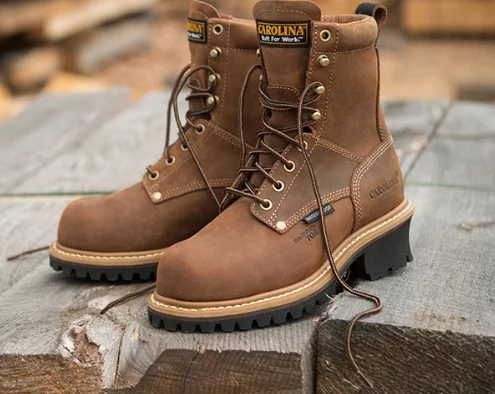
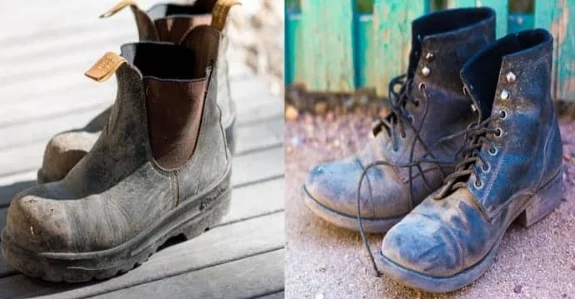
Lace-up work boots use eyelets or D-rings along the shaft so you can tighten the boot precisely around your foot and ankle. This adjustability is their defining quality. You can cinch them snug for heavy lifting, loosen them slightly during a long drive between sites, or use a specific lacing method to relieve pressure on a particular spot. They've been a staple of the trades for generations — and for good reason.

If you've ever dealt with knots coming undone mid-shift, learning how to tie work boot laces so they stay tied can save you real aggravation. A small technique change makes a bigger difference than you'd think. Lace-ups typically run from ankle height to above-the-ankle — six to eight inches — and are the standard choice across construction, electrical, and general labor trades.
What Slip-On Work Boots Are
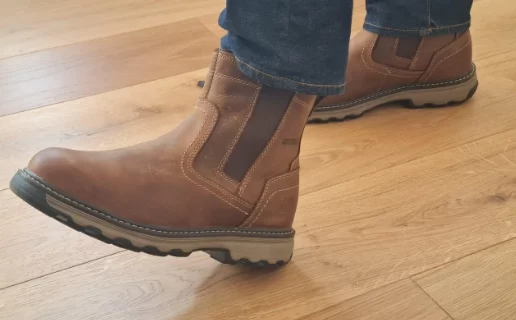
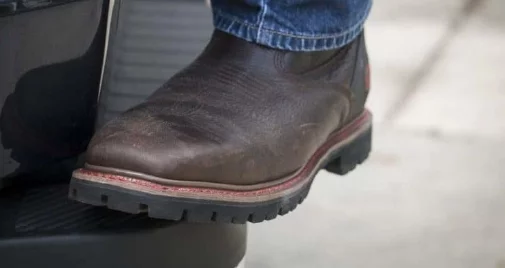
Slip-on work boots — sometimes called pull-on boots or Chelsea boots in work settings — have no laces. You pull them on using a tab or a side gusset and they hold their shape around your foot through construction alone. The trade-off is convenience for adjustability. Once you find a slip-on that fits your foot shape well, they can be surprisingly secure and comfortable. The downside is that if the fit isn't right, there's no way to correct it once you're on the clock.
Matching Your Boot Style to Your Job
Jobs Where Lace-Ups Shine
Lace-up boots are the go-to for anyone working on uneven terrain, scaffolding, or in environments where ankle stability is non-negotiable. Roofers, ironworkers, and site laborers typically prefer them because they can dial in the fit to match whatever the terrain demands that day. When you're carrying heavy loads up ladders or navigating debris-covered floors, a snug and adjustable lace-up gives you control that a pull-on simply can't match.
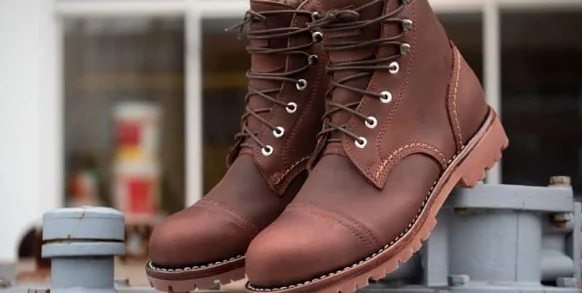
Electricians also tend to favor lace-ups because the secure fit reduces the chance of catching a boot edge on a rung or cable tray. A boot like the Keen Utility Men's Milwaukee Work Boot shows how lace-up design pairs well with all-day comfort on demanding job sites — six-inch height, lace-to-toe coverage, and solid ankle support built right in.
Jobs Where Slip-Ons Excel
Slip-ons earn their place in settings where you're putting boots on and pulling them off frequently. Think security checkpoints, industrial facilities with contamination protocols, or jobs that move between indoor and outdoor environments several times a day. Speed matters when you're gearing up ten times per shift. Warehouse supervisors, delivery drivers, and plant operators often prefer slip-ons for exactly this reason. Ranch hands and equine workers have relied on pull-on boots for decades — a riding context where laces can snag is a non-starter.
Key Features Worth Comparing
Support and Stability
Ankle support is where lace-up and slip-on boots differ most noticeably. Lace-ups let you customize pressure along the ankle and lower leg throughout the day. Slip-ons rely entirely on the boot's construction — shaft stiffness, heel cup depth, and insole thickness — to hold your foot in place. Neither is inherently unsafe, but lace-ups give you more control when conditions change. According to OSHA's foot and leg protection guidelines, both styles are acceptable as long as they meet the applicable ASTM standards for your specific hazard class. The environment determines which safety ratings you need — not whether the boot has laces.
Convenience and Speed at a Glance
| Feature | Lace-Up Work Boots | Slip-On Work Boots |
|---|---|---|
| Time to put on | 1–2 minutes with proper lacing | Under 30 seconds |
| Fit adjustability | High — adjustable any time of day | Low — set once broken in |
| Ankle support | Strong with correct lacing | Depends on shaft construction |
| Wide foot accommodation | Good — extra lacing room helps | Varies by boot last (shape) |
| Break-in experience | Moderate — loosen laces to ease it | Can take longer, no adjustment available |
| Best work settings | Construction, roofing, electrical, logging | Warehouses, ranches, facilities, driving |
| Maintenance needs | Lace replacement adds upkeep | Simpler — no lace hardware to maintain |

What Workers Actually Experience in the Field
The Lace-Up Reality
Talk to anyone who's worn lace-up work boots for a full career and you'll hear two things consistently: they love the fit control, and they've wasted time re-lacing during long shifts. Laces break, hooks bend, and knots come undone at the worst moments. These aren't dealbreakers — they're just part of the routine. Most experienced workers settle on a lacing system that works for them and stick with it. If you haven't tried a surgeon's knot or a lock-lacing method yet, those are worth experimenting with before you write off lace-ups entirely.
Pro tip: If your lace-up boots feel tight after lunch when your feet swell, loosen just the top two hooks — it relieves pressure without sacrificing the ankle support you built into the lower lacing.
The Slip-On Reality
Slip-on wearers tend to describe strong loyalty once they find the right fit — and real frustration when they don't. The boot either works for your foot shape or it doesn't, and there's no middle ground. Some workers add aftermarket insoles to improve heel lock and take up excess volume. Others report that slip-ons break in faster than lace-ups because the leather or neoprene shaft softens and molds to the leg with repeated wear. If heat is an issue on your job, check out how to stop feet sweating in work boots — slip-ons with poor ventilation tend to trap more moisture than lace-ups, particularly in warmer months.
When to Choose Lace-Ups — and When to Go Slip-On
Lean Toward Lace-Ups When...
Go with a lace-up boot when your job puts you on unstable ground, at height, or in conditions that change throughout the day. If ankle twists are a genuine risk in your environment, lace-ups provide better protection. They're also the stronger choice if you have narrow feet, high arches, or a previous ankle injury that benefits from added support. Workers logging ten or more hours on their feet often find that the ability to adjust laces mid-shift prevents the gradual foot fatigue that accumulates when a fit can't be modified at all.

Lean Toward Slip-Ons When...
Slip-ons make sense when you work in a stable, flat environment and your priority is speed. If you've struggled to find lace-up boots that accommodate a wide forefoot or high instep, some slip-on lasts (the foot-shaped mold a boot is built around) offer a more generous fit from the start. They're also worth considering if you find yourself wasting time at the start and end of every shift with laces. Just be honest with yourself about whether your work environment is actually low-risk enough to trade ankle adjustability for that convenience.
Solving Common Fit and Wear Problems
Lace-Up Fit Fixes
If your lace-up boots feel too tight across the toe box even with the laces loosened, the boot may be too narrow or simply hasn't broken in yet. Before giving up on a pair, read how to stretch work boots — a targeted stretch can often resolve width issues without buying a new pair. Lace-up boots that slip at the heel despite tight lacing usually have a heel counter (the rigid cup at the back of the boot) that's too wide for your foot shape. A thicker insole lifts your foot slightly and can solve this without any other adjustment.
Slip-On Fit Fixes
Heel slippage is the most common complaint with slip-ons, and some of it resolves naturally as the shaft softens and molds during break-in. If slippage doesn't improve after two weeks of regular wear, the boot's last is likely wrong for your foot shape. Swapping insoles is always the first fix to try — a thicker insole raises your foot and improves heel lock noticeably. If you're unsure whether a boot is genuinely wrong-sized versus just needing adjustment, how to tell if boots fit right gives you a clear checklist to work through before buying a replacement pair.
Planning Your Work Boot Investment Over Time
Durability and Longevity
Both lace-up and slip-on work boots can last years with the right treatment. Lace-up boots tend to hold their structural integrity longer because the lacing system distributes stress more evenly across the upper as you flex your foot. Slip-ons concentrate wear around the shaft opening and heel, which can break down faster under heavy daily use. That said, a well-constructed pull-on from a quality maker will outlast a cheaply built lace-up every time. Construction quality matters more than closure style when you're thinking in terms of years, not months. A useful point of comparison is the Red Wing Iron Ranger vs Wolverine 1000 Mile breakdown — it illustrates how construction philosophy affects long-term wear in ways that apply equally when evaluating slip-ons.
Keeping Your Boots in Shape
Consistent maintenance is what extends the life of either style. Cleaning off mud after every shift, conditioning the leather every few weeks, and storing boots in a cool dry spot are habits worth building from the start. For a complete routine, how to clean and care for work boots covers every step from removing debris to final conditioning. Lace-up boots add one extra maintenance task: replacing laces. Budget for this and do it proactively — a snapped lace on the first step of a busy morning is a frustrating and avoidable problem.
Next Steps
- Be honest about your actual work environment — if ankle stability is genuinely at risk, that single factor should steer you toward lace-ups before anything else.
- Try on both styles in person with the socks you actually wear to work, walk on an incline if the store has one, and check specifically for heel lift in both.
- If you go with lace-ups, read how to tie work boot laces so they stay tied before your first shift — the right technique prevents most common lacing problems from day one.
- If fit feels borderline in either style, use how to tell if boots fit right as a checklist before committing to the purchase.
- Set up a basic maintenance schedule once you've chosen your boot — condition every few weeks, clean after rough shifts, and replace laces proactively if you go lace-up. Small habits add years to your investment.


About Jason Flores
Jason Flores is a multi-talented individual whose unique journey has led him to blend his passion for craftsmanship and fashion into a creative endeavor. During his formative years, he found himself immersed in the world of handiwork, spending countless hours in his grandfather's workshop. These early experiences allowed him to develop a deep understanding of practical skills and a keen eye for detail.Simultaneously, Jason harbored an innate love for fashion, drawn to the artistry and self-expression it offers. As he grew older, he recognized the potential to combine his proficiency in craftsmanship with his fashion sensibilities. This realization led him to a path where he began to explore and write about the intersection of fieldwork fashion.
Get FREE Boots Gifts now. Or latest free toolsets from our best collections.
Disable Ad block to get all the secrets. Once done, hit any button below