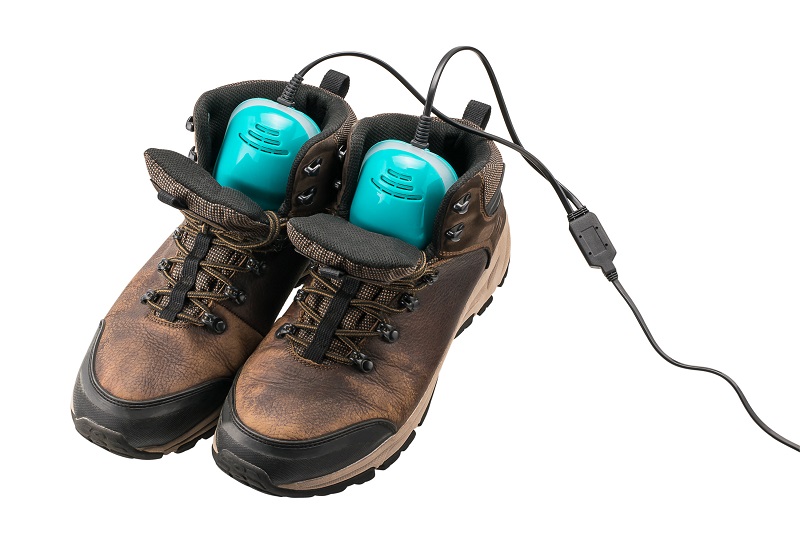
The PEET Original Boot Dryer is the best boot dryer for most people — silent overnight drying, zero energy waste, and a 25-year warranty that proves the company stands behind their product. If you wear work boots, ski boots, or hiking boots in wet conditions, a reliable boot dryer is one of the smartest gear investments you'll make in 2026.
Wet boots break down faster, develop mold and odor, and can cause real foot health problems. Studies from NIOSH highlight that persistent moisture inside footwear accelerates material degradation and contributes to skin conditions — the same issues we cover in our breakdown of what causes skin splitting under toes. A quality boot dryer prevents all of that. It protects your boots, keeps them smelling fresh, and means you always have a dry pair ready when the alarm goes off at 5 AM.
We've reviewed seven of the best boot dryers available right now — from passive convection units that run silently 24/7, to powerful fan-and-heat models that tackle soaking ski boots in under two hours. Whatever your budget, boot type, or drying timeline, one of these fits your setup. If you're also looking to extend the life of your footwear, browse our full range of boot insoles and accessories for complete care solutions.
Contents
- Our Top Picks for 2026
- Detailed Product Reviews
- PEET Original Boot Dryer — Best Overall
- PEET Advantage Plus — Best Fast Dryer
- JobSite Boot Dryer — Best Budget Silent Dryer
- Kendal Boot Dryer with Ozone — Best with Deodorizer
- PEET Multi Boot and Glove Dryer — Best for Winter Sports
- DryGuy Electric Dryer — Best for Tall Boots
- Dr. Prepare Boot Dryer — Best Versatile Dryer
- Buying Guide
- FAQs
- Key Takeaways
Our Top Picks for 2026
- #PreviewProductRating
- Bestseller No. 1
 Rating:

- Bestseller No. 2
 Rating:
 - Bestseller No. 3
 Rating:
 - Bestseller No. 4
 Rating:
 - Bestseller No. 5
 Rating:
 - Bestseller No. 6
 Rating:
 - Bestseller No. 7
 Rating:
Detailed Product Reviews
1. PEET Original Boot Dryer — Best Overall
The PEET Original is the gold standard in passive boot drying. There are no fans, no moving parts, and no noise — just a patented DryPort system that gently warms air and circulates it through AirChambers directly into your boots. You plug it in, set your boots on it before bed, and wake up to dry footwear. It's that simple, and that reliable.
What separates this from cheaper convection dryers is engineering precision. The airflow path is optimized for the interior of standard boot shafts up to 11 inches tall. For taller boots, PEET sells 12-inch DryPort Extension attachments separately — worth noting if you wear logging boots or knee-high work boots. The system draws less power than a low-wattage light bulb, so you can leave it running 24/7 without worrying about your electricity bill or safety.
The 25-year warranty is real. PEET has been making this product in the USA for decades, and the warranty reflects a product built to last. If you're serious about extending the life of quality boots — whether that's a pair reviewed in our Wolverine Overpass Work Boot Review or a premium pair of hikers — this dryer is the smartest companion investment you can make.
Pros:
- Completely silent — no fan, no motor, no noise
- Safe to leave plugged in 24/7
- Ultra-low energy draw (less than a low-watt light bulb)
- 25-year warranty, proudly Made in USA
- Expandable with helmet, glove, and extension attachments
Cons:
- Slower than fan-powered models — not ideal for same-day emergency drying
- Extension tubes needed for boots over 11 inches (sold separately)
2. PEET Advantage Plus Boot Dryer — Best Fast Dryer
If you need boots dry in hours — not overnight — the PEET Advantage Plus is built for exactly that. This unit adds an ETL-approved fan to the trusted DryPort system, letting you choose between fan-plus-heat mode (220W) for a 1-to-4 hour turnaround or fan-only mode (36W) for quieter, energy-efficient drying. That flexibility alone makes it one of the most practical dryers in this roundup.
The large base handles two pairs simultaneously, which is a genuine time-saver for families, ski lodges, or anyone running multiple pairs of boots in rotation. Ski boots, ice skates, work boots — the wide platform accommodates bulky footwear without tipping. Up to four times faster than passive convection models, this is the pick when you don't have the luxury of an overnight cycle.
You give up some warranty coverage compared to the Original (5 years vs. 25 years), but the trade-off is serious drying power when you need it most. Like all PEET products, it's Made in the USA and accepts the full range of Helmet and Glove DryPort attachments. If you run through ski season with multiple gear sets and need everything ready by morning, this is the dryer that keeps up with you.
Pros:
- Fan + heat mode dries in 1-4 hours — dramatically faster than passive models
- Dries two pairs simultaneously on one cycle
- Fan-only mode for sensitive materials or quieter operation
- Compatible with all PEET attachment accessories
- Made in USA, ETL-approved
Cons:
- Only 5-year warranty (vs. 25 years on the Original)
- Higher power draw in heat mode (220W)
3. JobSite Boot Dryer — Best Budget Silent Dryer
The JobSite Boot Dryer is a straightforward, no-frills passive convection unit that does exactly what it promises — dries your boots quietly and safely while you sleep. It uses fanless thermal air that rises naturally through the boot shaft, drawing out moisture without over-drying or shrinking materials. At 36 watts, it uses less electricity than most light bulbs and is completely silent in operation.
The drying timeline is honest and clearly communicated by the manufacturer: 30 minutes to warm up, 8 hours for damp boots, 12 hours for truly soaked footwear. Set it up before you go to bed and you're covered — no timers, no settings, no complexity. It also handles gloves, which makes it a practical choice for tradespeople and outdoor workers who need a single unit that covers multiple gear items.
If you're on a tighter budget or simply don't need the speed of a fan-powered unit, the JobSite delivers reliable results without the premium price tag. It's a solid entry-level choice for workers who come home with damp boots and need a simple solution. Pair this with quality insoles from our boot accessories collection and your work boots will thank you for years.
Pros:
- Completely silent — no fan or motor
- Ultra energy-efficient at 36W
- Works for boots, shoes, and gloves
- Helps eliminate moisture-caused odor
- Budget-friendly price point
Cons:
- 12 hours for thoroughly soaked boots — no quick-dry option
- Basic design with no attachments or expansion capability
4. Kendal Boot Dryer with Ozone Deodorizer — Best with Built-In Deodorizing
The Kendal Boot Dryer stands apart with one feature the other units don't have: built-in ozone deodorizing. While most dryers address odor indirectly by removing moisture, this unit actively neutralizes odor-causing bacteria with ozone. If your boots develop a persistent smell even after drying, this is the dryer you want. The built-in timer also lets you control the cycle without babysitting the unit.
The 250W drying system is one of the most powerful in this roundup, and the four extendable tubes give you real versatility. Two thin tubes and two thick tubes handle different footwear types — ski boots, short sneakers, gloves, hats, and helmets all fit. The one-piece design improves airflow compared to traditional multi-piece tube setups, and with 20% increased airflow over comparable models, the Kendal dries faster than most fan-based competitors at a similar price point.
The timer is a practical feature that passive convection dryers lack. You set it, walk away, and the unit shuts off automatically — no wasted energy, no risk of over-running on delicate materials. The adjustable tubes also lock in place during use, which prevents the frustrating flopping that cheaper tube-style dryers suffer from.
Pros:
- Built-in ozone deodorizer actively eliminates odors — not just moisture
- Powerful 250W system with 20% increased airflow
- Four versatile extendable tubes for different footwear and gear
- Built-in timer for hands-free operation
- One-piece design improves drying efficiency
Cons:
- Louder than passive convection models due to the fan
- Ozone output requires ventilated space — not ideal for small enclosed rooms
5. PEET Multi Boot and Glove Dryer — Best for Winter Sports Gear
If you ski, snowboard, or play hockey, you know the grind of coming home with soaking boots and damp gloves and trying to sort out which dries first. The PEET Multi solves that entirely. It features built-in Glove DryPort attachment points that let you dry ski boots and gloves simultaneously in a single overnight cycle. One unit, full kit ready by morning.
Like the PEET Original, this model uses completely silent passive convection — AirChambers and DryPorts circulate gently warmed air without fans or forced heat. It draws less power than a standard light bulb and is safe to leave plugged in year-round. For skiers who read our guide to the best alpine touring boots, this dryer is the natural companion — it keeps your AT setup in peak condition session after session.
The 25-year warranty backs this up as a long-term investment. It also accepts the optional Helmet DryPort and 12-inch Boot Extension attachments, making it a complete single-base drying system for your entire winter sports kit. If you're spending serious money on ski boots and gloves, spending a little more on a dryer that protects that investment is straightforward math.
Pros:
- Dries boots and gloves simultaneously — no rotation needed
- Completely silent passive convection
- 25-year warranty, Made in USA
- Expandable with helmet and extension attachments
- Safe to leave plugged in 24/7
Cons:
- Passive only — no fast-dry option for heavily saturated gear
- Helmet DryPort and extensions sold separately
6. DryGuy Electric Dryer — Best for Tall Boots
The DryGuy earns its spot in this roundup primarily because of its extra-tall drying ports. If you wear knee-high work boots, hunting boots, or any tall footwear that other dryers struggle to reach inside effectively, DryGuy's optimized port height makes a noticeable difference in drying performance. Most 2-port dryers leave tall boots damp at the toe — DryGuy addresses that directly.
The gentle heating element dries most boots in about 8 hours overnight. It also functions as a boot warmer, which is a practical bonus if you live somewhere cold and hate stepping into icy footwear on winter mornings. The thick plastic base construction is built to support heavy footwear without tipping — a small but meaningful quality-of-life detail that cheaper models get wrong. If you wear boots covered in our guide to types of work boots, especially heavier safety-toe styles, that stable platform matters.
The DryGuy is a simple, reliable 2-port passive dryer that fills a specific gap: tall boot owners who want something purpose-built for their footwear. It's not the fastest unit here, and it doesn't have the attachment ecosystem of PEET products, but for what it does, it does it well.
Pros:
- Extra-tall drying ports optimized for tall and oversized footwear
- Also functions as a boot warmer — ready for cold mornings
- Thick, stable base supports heavy boots without tipping
- Silent operation — no fan noise
- Energy-efficient gentle heating element
Cons:
- Only 2 ports — one pair per cycle
- No attachment accessories or expansion options
7. Dr. Prepare Boot Dryer — Best Versatile Dryer
The Dr. Prepare boot dryer takes a different approach than the tube-style models in this list. It features an adjustable rack with a heat blower that handles boots, sneakers, gloves, hats, socks, and helmets all from the same unit. The folding design makes storage easy when it's not in use — a practical consideration if garage or mudroom space is at a premium.
The heat blower maintains a constant 104–122°F output, which is warm enough to eliminate moisture quickly without damaging most boot materials. The built-in timer adds convenience — set your drying window and the unit handles the rest. The adjustable rack lets you configure the setup for different footwear heights and item types, which gives Dr. Prepare a versatility edge over single-purpose tube dryers.
If you need one dryer to handle every type of footwear and gear in your household — kids' shoes, hiking boots, work gloves, ski helmets — the Dr. Prepare is built for exactly that scenario. It won't match the silent passive elegance of the PEET Original, but the heat blower approach means faster drying times and broader compatibility across gear types.
Pros:
- Handles boots, shoes, gloves, hats, socks, and helmets
- Adjustable rack accommodates different footwear heights
- Folding design for compact storage
- Built-in timer for hands-free operation
- Constant 104–122°F heat eliminates moisture efficiently
Cons:
- Heat blower produces some noise — not silent like passive models
- Rack design less precise than tube-style DryPorts for directing airflow inside boot shafts
Buying Guide: How to Choose the Best Boot Dryer
Not all boot dryers work the same way, and the best one for you depends on how wet your boots get, what type of footwear you own, and how fast you need results. Here's what to evaluate before you buy.
Passive Convection vs. Fan-and-Heat
This is the most fundamental decision. Passive convection dryers use a gentle heating element — no fan, no motor, no noise. They circulate warm air naturally through the boot shaft and typically dry footwear in 8–12 hours overnight. They're energy-efficient, silent, and safe to leave plugged in indefinitely. The PEET Original and PEET Multi fall into this category.
Fan-and-heat dryers force warm air through the boots actively. They're significantly faster — the PEET Advantage Plus achieves a 1-to-4 hour turnaround — but draw more power and produce some noise. If you work multiple shifts in wet conditions and need boots dry mid-day, a fan model earns its keep. If you have the luxury of an overnight window, passive is the smarter choice for long-term boot care.
- Choose passive if you dry boots overnight, own leather or sensitive materials, or want set-and-forget simplicity
- Choose fan-and-heat if you need same-day drying or work in extremely wet conditions where boots come home soaked
Drying Capacity and Port Count
Most units in this roundup handle one pair (2 ports) at a time. The PEET Advantage Plus handles two pairs simultaneously, which matters for households with multiple users or anyone rotating several pairs through a work week. The PEET Multi adds integrated glove ports — critical for winter sports where you're always drying two types of gear at once.
Consider your weekly boot rotation. If you're pairing a boot dryer with quality footwear like the models covered in the Wolverine Floorhand Work Boot Review, having capacity for multiple pairs means you're never caught waiting. For most solo users, a standard 2-port unit is sufficient.
Boot Height and Compatibility
Standard drying tubes and DryPorts work well for boots up to about 11 inches tall. For taller boots — knee-high hunting boots, logging boots, or certain ski shells — you'll need either a dryer with extra-tall ports (like the DryGuy) or extension attachments (sold separately for PEET models). Check your boot shaft height before you buy. A dryer that can't reach the toe box of a tall boot isn't doing the full job.
- Standard boots under 11 inches: any unit in this list works
- Tall boots over 11 inches: DryGuy (built for tall boots) or PEET models with 12-inch Extension attachments
- Ski boots and bulky footwear: PEET Advantage Plus wide base handles the extra bulk
Odor Elimination
Drying eliminates the moisture that causes odor, but it doesn't always kill odor that's already embedded in the material. If your boots have a persistent smell even after drying, look at the Kendal Boot Dryer — the only unit in this roundup with built-in ozone deodorizing that actively neutralizes bacteria rather than just removing water. For everyday prevention, any dryer combined with regular boot maintenance keeps odor in check.
Warranty and Build Quality
Boot dryer warranties vary wildly — from no stated warranty on budget models to 25 years on PEET's passive units. A longer warranty signals confidence in component longevity. Passive models with no moving parts last longer by nature. Fan-and-heat units have more components that can fail over time, which is why the PEET Advantage Plus carries a 5-year warranty rather than 25. Buy according to how long you plan to use the dryer, not just the upfront price.
FAQs
How long does a boot dryer take to dry wet boots?
It depends on the dryer type and how wet the boots are. Passive convection dryers like the PEET Original and JobSite typically take 8 hours for damp boots and up to 12 hours for thoroughly soaked ones — overnight drying works perfectly. Fan-and-heat models like the PEET Advantage Plus cut that down to 1–4 hours depending on saturation level and the heat setting you select.
Is it safe to leave a boot dryer plugged in overnight or 24/7?
Yes — for passive convection models specifically. The PEET Original and PEET Multi are designed to stay plugged in continuously. They use less electricity than a low-wattage light bulb and operate at safe temperatures that won't damage boot materials. Fan-and-heat models with timers should be used with the timer running rather than left on indefinitely to avoid overheating sensitive materials.
Can a boot dryer damage my boots?
A quality boot dryer operated correctly won't damage your boots. The danger zone is high, direct heat — like placing boots next to a radiator or using a hair dryer on leather. All the dryers reviewed here use controlled, gentle heat well below the threshold that damages leather, synthetic materials, or adhesives. Passive convection models are the safest option for premium leather boots or any footwear with heat-sensitive components.
Do boot dryers actually help with odor?
Yes, and the mechanism is direct: odor-causing bacteria thrive in moist environments. By removing moisture from the interior of your boots after each wear, a dryer eliminates the conditions bacteria need to grow. For most boots, regular drying prevents odor from developing in the first place. If you already have embedded odor, the Kendal Boot Dryer with its built-in ozone deodorizer is the most effective option — ozone actively neutralizes bacteria rather than just drying the moisture away.
Can I dry ski boots and gloves at the same time?
Yes — the PEET Multi Boot and Glove Dryer is purpose-built for exactly this. Its integrated Glove DryPort attachment points let you dry a pair of ski or snowboard boots and gloves simultaneously in a single overnight cycle. The PEET Advantage Plus also accepts optional Glove DryPort attachments for the same result. For winter sports athletes, this combined drying capability is a significant time and convenience advantage.
What's the difference between a boot dryer and a boot warmer?
A boot dryer removes moisture from inside the boot — its primary purpose is drying wet footwear. A boot warmer heats the boot interior before you put it on, making cold footwear comfortable on winter mornings. Many dryers — including the DryGuy — serve both functions. Leave a boot dryer running overnight and your boots will be both dry and warm when you reach for them in the morning. Dedicated warmers with no drying capability typically run at lower wattage and shorter cycles.
Buy on Walmart
- PEET Original Boot Dryer for Work Boots - Portable Electric — Walmart Link
- PEET Advantage Plus Boot Dryer with Fan and Heat - Portable — Walmart Link
- JobSite Boot Dryer - Silent Shoe Dryer & Warmer For Work Boo — Walmart Link
- Boot Dryer for Work Boots, Shoe Dryer and Ozone Deodorizer, — Walmart Link
- PEET Multi Boot and Glove Dryer - Portable Electric Shoe Dry — Walmart Link
- DryGuy Shoe, Boot, Garment & Gear Electric Dryer, Quick Dryi — Walmart Link
- Dr. Prepare Boot Dryer Shoe Dryer, Glove Dryer & Boot Warmer — Walmart Link
Buy on eBay
- PEET Original Boot Dryer for Work Boots - Portable Electric — eBay Link
- PEET Advantage Plus Boot Dryer with Fan and Heat - Portable — eBay Link
- JobSite Boot Dryer - Silent Shoe Dryer & Warmer For Work Boo — eBay Link
- Boot Dryer for Work Boots, Shoe Dryer and Ozone Deodorizer, — eBay Link
- PEET Multi Boot and Glove Dryer - Portable Electric Shoe Dry — eBay Link
- DryGuy Shoe, Boot, Garment & Gear Electric Dryer, Quick Dryi — eBay Link
- Dr. Prepare Boot Dryer Shoe Dryer, Glove Dryer & Boot Warmer — eBay Link
Key Takeaways
- The PEET Original is the best overall boot dryer for 2026 — silent, energy-efficient, and backed by a 25-year warranty that no competitor matches.
- If you need boots dry in hours rather than overnight, the PEET Advantage Plus with its fan-and-heat system is the fastest and most capable option for two pairs at once.
- Winter sports athletes get the most value from the PEET Multi, which dries boots and gloves simultaneously in one silent overnight cycle.
- The Kendal Boot Dryer is the only unit with built-in ozone deodorizing — the right choice if odor is your primary concern alongside drying performance.


About Jason Flores
Jason Flores is a multi-talented individual whose unique journey has led him to blend his passion for craftsmanship and fashion into a creative endeavor. During his formative years, he found himself immersed in the world of handiwork, spending countless hours in his grandfather's workshop. These early experiences allowed him to develop a deep understanding of practical skills and a keen eye for detail.Simultaneously, Jason harbored an innate love for fashion, drawn to the artistry and self-expression it offers. As he grew older, he recognized the potential to combine his proficiency in craftsmanship with his fashion sensibilities. This realization led him to a path where he began to explore and write about the intersection of fieldwork fashion.
Get FREE Boots Gifts now. Or latest free toolsets from our best collections.
Disable Ad block to get all the secrets. Once done, hit any button below