Nearly 60,000 workers suffer foot injuries on the job each year in the United States, and the vast majority are preventable with properly rated footwear. Our Caterpillar Brode steel toe review breaks down exactly how this athletic-style work shoe holds up against those odds. The Brode targets workers who need steel toe protection without the bulk and stiffness of a traditional boot — a category that's grown steadily as warehouses, light manufacturing floors, and service environments become more common worksites. We cover many options in our work shoe reviews, and the Brode earns a close look for the right kind of worker.
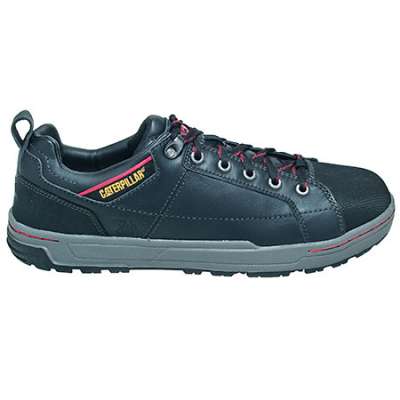
The Brode is Caterpillar's push into the athletic work shoe segment. Built on a sneaker-style platform with a leather and mesh upper, it targets workers in environments where ankle support and waterproofing matter less than all-day comfort and toe protection. Caterpillar has outfitted trade workers for decades, and the brand carries real credibility in the safety footwear space. The Brode takes that reputation into different territory — lighter, more breathable, and more approachable than the company's heavier offerings.
What our testing found is that the Brode rewards workers who understand what it is — and disappoints those who push it beyond its design envelope. The sections below break down exactly where it excels, where it reaches its limits, and how most people can get the most out of it long-term.
Contents
Who the Caterpillar Brode Is Built For
Light-Duty and Service Workers
The Brode is designed for workers who need ASTM F2413 steel toe protection but spend their shifts in environments that don't demand heavy ankle support or waterproofing. Warehouse associates, retail stockroom workers, light manufacturing floor staff, and restaurant kitchen employees are among the groups this shoe serves well. Anyone moving through climate-controlled, flat-floor environments will find the Brode fits naturally into their work routine.
What the Brode gets right for this group:
- Lightweight construction — noticeably lighter than traditional steel toe boots
- Athletic shoe silhouette — easier to wear through an 8–10 hour shift without lower-leg fatigue
- Breathable mesh upper — reduces heat buildup on smooth indoor surfaces
- Slip-resistant outsole — meets ASTM traction standards for controlled-surface environments
For workers stepping into steel toe footwear for the first time — perhaps because a new employer mandates it — the Brode is one of the more accessible entry points on the market. It doesn't feel dramatically different from an everyday athletic shoe in terms of weight or flexibility. That similarity shortens the adjustment period considerably compared to lace-up boots.
Where the Brode Reaches Its Limits
The Brode is not built for outdoor jobsites, heavy construction, or environments with exposure to water, chemicals, or rough terrain. Roofing crews, landscapers, and foundry workers will quickly find that the mesh upper and flat sole aren't suited to those conditions. It also carries no electrical hazard (EH) rating, which rules it out for electrical trade workers entirely. For demanding environments, a traditional steel toe boot is the more appropriate choice.
Caterpillar Brode Steel Toe Review: Fit and Sizing Mistakes to Avoid
The Sizing Issue Most People Miss
The single most consistent theme in community feedback about the Caterpillar Brode steel toe review is sizing. The Brode runs roughly a half size small, and the steel toe cap consumes additional volume at the front of the shoe. Most people benefit from going up a half size — sometimes a full size — from their standard athletic shoe size.
Pro tip: Our team always recommends measuring feet in the afternoon when they're slightly swollen from daily activity — that produces the most accurate sizing for all-day work wear.
The steel cap creates a firm boundary at the toe box, and if there isn't adequate clearance, toes press into the cap during the toe-off phase of walking. Over a full shift, that becomes genuine discomfort. The fix is simple — size up before ordering — but it's a mistake many people make on the first purchase.
Break-In Expectations
The Brode has a moderate break-in period. The leather upper softens over the first 20–30 hours of wear, and the rest of the shoe adapts around the foot gradually:
- The midsole compresses slightly, lowering the overall ride height
- The leather at the ankle collar softens and stops rubbing
- The insole flattens and loses some of its initial cushioning
That last point matters. The stock insole is serviceable for the first few months but doesn't hold up well under heavy daily use. Replacing the stock insole early — rather than waiting for discomfort to develop — is one of the better habits most people can adopt with this shoe from the start.
Cleaning and Care for Long-Term Wear
Caring for the Leather and Mesh Upper
The Brode's upper combines leather and breathable mesh — two materials that require different care approaches. Treating them incorrectly is the fastest way to shorten the shoe's lifespan.
For the leather portions:
- Wipe down with a damp cloth to remove surface dirt and grime after each shift
- Apply a leather conditioner every 4–6 weeks to prevent cracking and stiffness
- Keep oil-based products off the mesh sections — they saturate the fabric and trap grime
The ongoing debate between boot oil vs. mink oil applies to the leather sections of the Brode. Both are effective conditioners, though mink oil tends to darken leather slightly more than neutral boot oils. For a shoe with mixed materials, lighter conditioners are generally preferred by our team — they penetrate the leather without leaving residue that migrates into the mesh.
Midsole and Outsole Maintenance
The rubber outsole holds up well under normal wear, but debris caught in the tread pattern can compress over time and gradually reduce traction. Our team recommends cleaning the outsole weekly with a stiff brush — especially in environments where dust, sawdust, or fine particles accumulate.
Warning: Never machine-wash the Brode — heat and agitation can compromise the steel toe cap's bond to the upper and distort the EVA midsole foam.
Storing the shoe in a cool, dry place away from direct sunlight or heat sources prevents premature EVA foam degradation. Rotating between two pairs when possible significantly extends the lifespan of both and keeps cushioning consistent across shifts.
Steel Toe Shoe Myths the Brode Puts to Rest
Myth: Steel Toe Shoes Are Always Heavy and Clunky
This is one of the most persistent misconceptions in the work footwear space. Many workers associate steel toe protection with heavy, rigid boots that cause fatigue by midday. The Brode directly challenges that assumption. At approximately 14 ounces per shoe in size 10, it's within the weight range of many casual athletic shoes — not a significant departure from what most people wear off the clock.
Modern construction techniques and lightweight EVA foam midsoles have narrowed the gap between safety footwear and standard athletic shoes considerably. According to Wikipedia's overview of steel-toe boots, contemporary steel toe caps are engineered to minimize added weight while still meeting impact and compression resistance thresholds. The weight difference is real, but manageable — most people adapt within the first week of regular wear.
Myth: Athletic-Style Shoes Can't Be Truly Safe
Some supervisors and safety coordinators hold the view that a shoe-style safety option isn't as protective as a traditional work boot. In terms of toe protection specifically, that isn't accurate. The Brode's steel cap meets ASTM F2413 impact (I/75) and compression (C/75) standards — the same benchmark required of bulkier safety boots.
Where shoe-style and boot-style safety footwear genuinely differ is in ankle support, upper durability, and specialized ratings like EH or puncture resistance. The protective cap rating at the toe is equivalent. The real consideration is always matching footwear to the specific hazard profile of the jobsite — not defaulting to "bigger is safer."
Price Breakdown and Value
Specs and Pricing at a Glance
The Brode sits in the mid-range of safety footwear pricing. The table below shows where it stands against comparable tiers in the market:
| Feature | Caterpillar Brode | Budget Steel Toe Shoe | Premium Steel Toe Sneaker |
|---|---|---|---|
| Safety Rating | ASTM F2413 I/75 C/75 | ASTM F2413 basic | ASTM F2413 + EH |
| Upper Material | Leather + Mesh | Synthetic only | Full-grain leather |
| Midsole | EVA foam | Basic foam | Dual-density foam |
| Outsole | Slip-resistant rubber | Basic rubber | Premium rubber compound |
| Typical Price Range | $70–$90 | $40–$60 | $110–$150 |
| Expected Lifespan (Daily Use) | 9–14 months | 4–7 months | 14–24 months |
How It Compares to Similar Options
At its price point, the Brode delivers solid value. The leather and mesh upper outperforms pure synthetic constructions in durability under daily wear. Where it concedes ground to premium options is in long-term cushioning depth and sole compound durability — characteristics that become noticeable around the 10–12 month mark of heavy use.
For workers who cycle through footwear quickly due to environment demands, the Brode's mid-range price makes it a practical choice. Replacing it annually is more cost-effective than buying a premium option at nearly twice the price. Workers in environments where demands exceed what the Brode offers will find our detailed look at the Carhartt CMF6366 composite toe work boot covers a meaningful step up in protection rating and durability.
Best Practices for Getting the Most from the Brode
Insole Upgrades Worth Considering
The stock insole is the weakest component of the Brode package. For workers standing on concrete or hard tile for 8 or more hours, the factory insole compresses within a few months and begins to feel noticeably thin underfoot. Swapping in an aftermarket insole from day one — rather than waiting for discomfort to prompt it — is one of the most effective upgrades available for this shoe.
Workers managing arch fatigue, heel pain, or general foot soreness after long shifts will find that the right insole transforms the Brode's comfort profile significantly. Our team has consistently seen positive outcomes from pairing the Brode with quality aftermarket insoles, particularly for anyone who hasn't found relief through traditional boot options. Our guide to the best work shoes and boots for sore feet covers insole recommendations alongside broader footwear choices for workers dealing with ongoing foot fatigue.
Sock Pairing for All-Day Comfort
The Brode's mesh upper breathes well, but sock choice changes the thermal and moisture profile of the shoe meaningfully across a full shift. Key considerations:
- Moisture-wicking synthetic or merino wool socks are strongly preferred — the mesh upper performs best when paired with materials that pull moisture away from the foot
- Thick cushioned socks can fill toe box space needed for clearance from the steel cap — medium-weight options tend to work better for most people
- Cotton socks are the least effective pairing in warm environments — they retain moisture and increase blister risk during extended shifts
It's also worth noting that the Brode is not a cold-weather shoe. No sock pairing fully compensates for the absence of insulation when temperatures drop significantly. Workers in colder environments who still want an athletic-style work shoe will find that insulated alternatives are worth exploring before committing to the Brode year-round.
Frequently Asked Questions
Does the Caterpillar Brode run true to size?
The Brode runs approximately a half size small, and the steel toe cap occupies additional volume at the front of the shoe. Most people benefit from ordering a half to full size up from their standard athletic shoe size. Measuring foot length in the afternoon — when feet are at their largest after daily activity — tends to produce the most accurate fit results.
Is the Caterpillar Brode waterproof?
No. The Brode is not waterproof or water-resistant. The mesh upper allows moisture to pass through easily, making it unsuitable for wet outdoor environments or jobsites with standing water or liquid spills. It's designed specifically for dry, climate-controlled indoor settings such as warehouses, stockrooms, and light manufacturing floors.
What safety standards does the Caterpillar Brode meet?
The Brode meets ASTM F2413 standards for impact resistance (I/75) and compression resistance (C/75) at the steel toe. It does not carry an electrical hazard (EH) rating or a metatarsal guard rating. Workers in electrical trades or environments with overhead falling hazard exposure should verify whether additional protection ratings are required before selecting this shoe.
How long does the Caterpillar Brode last with daily use?
Under typical daily use on hard indoor floors, most people report 9 to 14 months of solid performance before the outsole or cushioning begins to degrade noticeably. Replacing the stock insole early, rotating between two pairs, and following consistent cleaning routines can push that range further for workers in less demanding conditions.
Can the insole be replaced in the Caterpillar Brode?
Yes. The insole in the Brode is removable and compatible with standard aftermarket insoles. Since the factory insole is one of the weaker elements of the overall package, upgrading to a cushioned or orthotic aftermarket option is one of the most straightforward ways to improve long-term comfort — and our team recommends doing it from the start rather than waiting for the stock insole to wear down.
Is the Caterpillar Brode suitable for workers with wide feet?
The Brode is available in both standard and wide widths. Workers with wider feet generally find that the leather and mesh upper adapts reasonably well after break-in, but the steel cap's rigid boundary can create pressure points if the width fit isn't right. Combining the wide width option with a half-size increase is a solution that tends to work well based on community feedback our team has reviewed.
Next Steps
- Check the sizing chart carefully before ordering — measure both feet in the afternoon and plan to go up at least a half size from the standard athletic shoe size to account for the steel toe cap's volume.
- Order an aftermarket insole at the same time as the shoe — starting with better cushioning from day one avoids the gradual comfort decline that comes from running the stock insole until it compresses completely.
- Confirm the Brode meets the specific safety requirements for the relevant jobsite — verify that ASTM F2413 I/75 C/75 is sufficient and that no EH rating or metatarsal protection is required by the employer or site regulations.
- Set a cleaning and conditioning schedule — weekly outsole brushing and monthly leather conditioning are the two highest-impact maintenance habits for extending the shoe's service life.
- Plan to rotate pairs when budget allows — alternating between two pairs across shifts extends the lifespan of both and keeps cushioning performance more consistent through the workweek.


About James Miller
James Miller is a dedicated individual based in the vibrant city of San Francisco, CA, USA. His unwavering passion lies in the realm of construction, where he finds fulfillment in exploring and documenting various facets of construction equipment and processes. A graduate of the University of California Merced, James holds a dual degree in mechanical and electrical engineering, which has equipped him with a solid foundation in technical knowledge.With a keen eye for detail and a knack for articulation, James has channeled his enthusiasm into writing about the intricacies of construction gear and methodologies. His insightful writings offer valuable insights to both industry professionals and curious enthusiasts, shedding light on the machinery and techniques that shape the built environment.James Miller's educational background in mechanical and electrical engineering lends credibility to his work, allowing him to delve into the technical nuances of construction with precision. His passion for sharing knowledge and fostering understanding in the construction field is evident in his contributions, making him a respected voice in the industry.
Get FREE Boots Gifts now. Or latest free toolsets from our best collections.
Disable Ad block to get all the secrets. Once done, hit any button below