Last winter, a pair of full-grain work boots came back from a long wet season on the jobsite looking rough — the leather cracked at the toe box, faded along the sides, and stiff enough to hurt. There was no conditioner in the shop, but there was a jar of coconut oil in the kitchen. Two thin applications later, the leather was soft, flexible, and looked dramatically better. Using coconut oil as a leather conditioner is a practical solution tradespeople have relied on for decades, and it genuinely works — when you apply it to the right leather, the right way. For a full boot maintenance routine, start with the boot care guide.
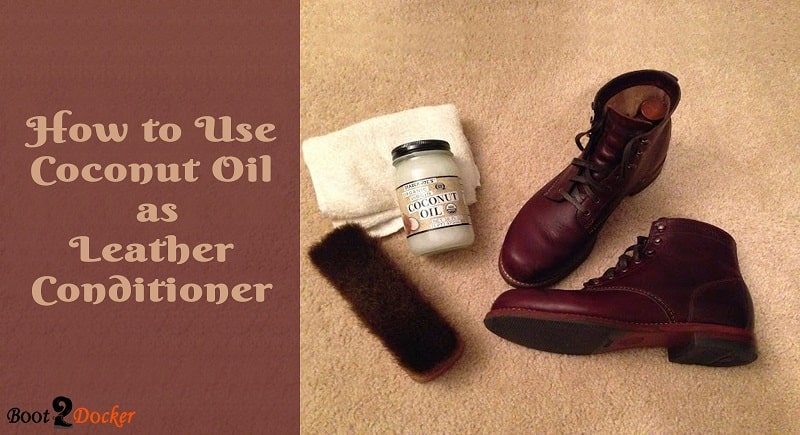
Coconut oil contains medium-chain fatty acids — particularly lauric acid — that penetrate leather fibers and restore suppleness from the inside out. According to Wikipedia's article on leather, treated hides require regular conditioning to prevent the fibers from drying out and cracking — and coconut oil delivers exactly that kind of fiber-level nourishment. The catch is knowing when it's the right tool and when it isn't.
This guide walks you through which boots benefit most, which to avoid, a step-by-step application method, and an honest look at the pros and cons. Whether you work construction, agriculture, or any trade that destroys footwear fast, you'll have a clear answer before you open that jar.
Contents
When Coconut Oil Works — And When to Avoid It
Not every work boot should get a coconut oil treatment. The type of leather determines whether you'll restore a great pair of boots or damage them. Get this part right first — it takes thirty seconds and saves you from a costly mistake.
Leather Types That Respond Well
Full-grain leather, pull-up leather, and vegetable-tanned leather all absorb coconut oil leather conditioner effectively. These are the dense, quality leathers found in most heavy-duty work boots built for demanding trades.
- Full-grain leather — the highest quality cut, showing the natural grain; porous and absorbs conditioning oils deeply
- Pull-up leather — wax-impregnated leather common in lineman and engineer boots; visually shows absorption as scuffs fade
- Vegetable-tanned leather — naturally tanned, very porous, drinks up oils readily
- Chrome-tanned smooth leather — works well but absorbs more slowly than vegetable-tanned
Before you condition, make sure the boots are clean. Coconut oil bonds better to clean leather, and any embedded dirt gets sealed in permanently. If you need a refresher, read our guide on how to clean work boots before you start.
Leather and Boot Types to Skip
Some materials react badly to coconut oil. Avoid it on these:
- Nubuck and suede — oil permanently darkens and flattens the nap; there's no correcting it afterward
- Patent leather — the oil causes peeling and surface damage to the lacquer finish
- Synthetic leather (PU or PVC) — oil breaks down the synthetic coating over repeated applications
- Boots with bonded waterproof membranes — oil can compromise membrane adhesion and void the waterproofing
Test before you commit. Apply a small amount of coconut oil to a hidden spot — like the inner ankle panel — and wait 24 hours. Light-colored leathers often darken permanently, so confirm the result is acceptable before treating the full boot.
How to Apply Coconut Oil to Your Leather Work Boots
Technique matters as much as the product. Too much coconut oil and the leather goes greasy, attracts dirt, and risks going rancid. Too little and you won't get real penetration. Here's the method that works.
What You'll Need
- Pure, unrefined virgin coconut oil — solid form, not liquid or refined
- A clean lint-free cloth or old cotton t-shirt
- A toothbrush or small stiff brush for seams and welt areas (the welt is the stitched strip that connects the upper to the sole)
- A horsehair brush for final buffing — optional but worth it
- A damp cloth for pre-cleaning
Stick to unrefined coconut oil. The refining process strips out the beneficial fatty acids that aid leather penetration. Refined coconut oil still conditions, but it's noticeably less effective for deep restoration work on dry, cracked boots.
Step-by-Step Application
- Clean the boots first. Remove all dirt, mud, and salt residue with a damp cloth and let them dry completely. Applying oil to wet leather traps moisture inside and encourages mold growth. If your boots are soaked from a wet shift, check our guide on how to dry work boots before conditioning.
- Scoop a small amount. Start with roughly a teaspoon per boot. A thin coat that absorbs fully outperforms a thick coat that sits on the surface.
- Melt the oil in your palms. Rub the coconut oil between your hands until it liquefies. This helps it spread evenly and penetrate faster.
- Work in circular motions. Apply the oil across the leather in small circles, focusing on the toe cap, heel counter, and any visible crease lines where cracking starts.
- Work the seams. Use the toothbrush to push oil into the welt and around any eyelets or hardware. These areas dry out fastest.
- Let it absorb for 15–20 minutes. Don't rush. In cooler environments, extend the wait to 30 minutes. The leather needs time to drink the oil in.
- Buff off the excess. Use a clean cloth to remove any oil still sitting on the surface. A greasy film attracts dirt and can make the leather feel tacky underfoot.
- Apply a second coat if needed. Severely dry or cracked boots may need a second application after 24 hours. Let the first coat absorb completely before layering.
Work Boots That Benefit Most From Coconut Oil
Results vary based on leather type, boot age, and how dry the leather is. Here's where coconut oil delivers the most dramatic improvement.
Full-Grain and Pull-Up Leather Boots
These are the prime candidates. Full-grain leather from heritage boot brands develops a rich patina over time, and coconut oil leather conditioner accelerates that natural aging while keeping the fibers flexible. Pull-up leather visually shows you the conditioning is working — you'll see scuffs and stress marks fade as the leather feeds on the oil.
If your boots have turned stiff in cold weather, conditioning is your first move before anything mechanical. Stiff leather is often the precursor to needing to stretch your work boots — but a good conditioning treatment frequently resolves that stiffness without any tools. If you wear cowboy-style work boots with smooth leather shafts, the same technique applies, and you can follow conditioning with our guide on how to polish cowboy boots for a complete finish.
Older Boots Due for Revival
Older boots showing surface cracking or color fading often respond dramatically to coconut oil. The oil fills micro-cracks in the leather surface, restores depth of color, and adds flexibility that stops surface cracks from spreading into full splits.
Signs your boots are ready for a conditioning treatment:
- Leather feels papery or rigid when you flex the toe box
- Visible surface cracks around the instep, toe cap, or heel counter
- Color has faded to a dusty, grayish tone
- Boots squeak more than usual — conditioning the leather sometimes resolves it. If the squeak persists, see our guide on how to stop boots from squeaking
- Water soaks in instead of beading on the surface
| Boot/Leather Type | Coconut Oil Suitable? | Expected Result | Notes |
|---|---|---|---|
| Full-grain leather | Yes — ideal | Deep conditioning, improved patina | May darken slightly; usually desirable |
| Pull-up leather | Yes — ideal | Scuffs fade, suppleness restored | Color change visible during absorption |
| Vegetable-tanned leather | Yes — excellent | Deep penetration, softening | Very porous; absorbs quickly |
| Chrome-tanned smooth leather | Yes — works well | Conditioning, minor darkening | Absorbs more slowly; buff thoroughly |
| Nubuck leather | No | Permanent darkening, nap destroyed | Use nubuck-specific products only |
| Suede | No | Permanent staining, texture ruined | No fix once applied |
| Synthetic/PU leather | No | Coating breakdown over time | Use manufacturer-approved products |
| Patent leather | No | Peeling, surface damage | The lacquer finish reacts badly |
Pros and Cons of Using Coconut Oil on Leather Work Boots
Coconut oil is effective, but it isn't perfect for every situation. Here's an honest comparison so you can decide if it's right for your boots.
How It Compares to Commercial Conditioners
Many commercial conditioners rely on silicone, petroleum distillates, or synthetic waxes. These coat the surface and create a temporary sheen without really penetrating the leather fibers. Coconut oil's medium-chain fatty acids work at the fiber level, delivering conditioning that lasts longer and penetrates more deeply — which matters when you're putting boots through daily abuse on concrete, gravel, or wet grass.
That said, purpose-made conditioners have real advantages: consistent formulation, added antimicrobial agents, and compatibility testing with waterproof membranes. If your boots use Gore-Tex or a similar bonded membrane, check the manufacturer's care instructions before applying coconut oil. When your work keeps you in cold, wet conditions, well-conditioned leather also helps retain heat — but if warmth is a major concern, read our guide on how to keep feet warm in boots for a complete strategy.
The Rancidity Issue
Most guides skip this entirely: coconut oil goes rancid inside leather if you over-apply and skip proper buffing. Always remove excess oil after every application, and store conditioned boots in a cool, dry place. If a boot develops an odd smell several months after conditioning, that's rancid oil trapped in the fibers. A thorough clean with saddle soap followed by a single fresh thin coat resolves it completely.
Other Leather Gear That Benefits From Coconut Oil
Your work boots aren't the only leather taking a beating on the job. If you work a trade, you likely have other leather items alongside them that respond just as well to coconut oil conditioning.
Trade Gear Worth Conditioning
- Leather work gloves — softens stiffened fingers and restores grip feel after repeated cycles of wetting and drying
- Tool belt pouches — heavy leather dries and cracks just like boots; one application per season extends life considerably
- Leather boot laces — a light coat keeps them supple and prevents the cracking that snaps laces mid-shift. For lacing technique once they're conditioned, see our guide on how to tie work boot laces so they stay tied
- Leather safety harness straps — always check manufacturer specifications first; some load-bearing safety equipment requires specific conditioning agents approved for that use
How Often to Condition
Frequency depends on how hard your gear works. A worker in outdoor trades needs to condition boots roughly every four to six weeks. Someone wearing leather dress boots on occasional site visits might condition twice a year. Use these indicators instead of a fixed calendar:
- Leather no longer beads water on contact
- Surface feels dry or rough when you run your hand across it
- Visible color fade or early surface cracking appearing
Conditioning alone won't fix a boot that doesn't fit properly. If you're putting time into boot care but still experiencing discomfort or heel movement, learn how to tell if boots fit right — because the right fit matters as much as the right conditioning routine.
Frequently Asked Questions
Can I use coconut oil on waterproof work boots?
It depends on the construction. Boots with a waterproof membrane like Gore-Tex bonded to the leather interior can be compromised by oils that penetrate the leather and reach the membrane adhesive. If your boots have a waterproofing membrane, stick to the manufacturer's recommended conditioner. For boots that are waterproofed through wax-treated leather without a membrane, coconut oil is generally safe.
Will coconut oil darken my leather work boots?
Yes, it typically will — at least initially. Full-grain and pull-up leathers darken when oil is absorbed, and light-colored leathers darken more noticeably. For dark brown or black work boots, the slight darkening is barely perceptible and often improves the appearance. Always test on a hidden area first if your boots are tan, sand, or any light color.
How often should I apply coconut oil to leather work boots?
For boots used in demanding outdoor trades — construction, landscaping, agriculture — condition every four to six weeks. For moderate use, every two to three months is sufficient. The best signal is the leather itself: when it starts to feel dry or stops shedding water effectively, it's time to condition.
Is refined coconut oil as effective as unrefined for leather?
Unrefined (virgin) coconut oil is better. The refining process removes some of the medium-chain fatty acids that penetrate leather fibers most effectively. Refined coconut oil still conditions, but it works more like a surface treatment than a deep conditioner. If unrefined is what you have, use it — it's still far better than no conditioning at all.
Can coconut oil replace commercial leather conditioners entirely?
For standard full-grain and pull-up leather work boots, coconut oil handles the conditioning job well on its own. Where commercial conditioners have the edge is in formulations that include antimicrobial agents, added UV protection, or specific compatibility with waterproofing technologies. For most tradework boots, coconut oil is a legitimate standalone conditioner — just apply thin coats and buff thoroughly.
Does coconut oil waterproof leather boots?
Coconut oil improves water resistance by filling the leather fibers and reducing porosity, but it does not waterproof leather in the way that a dedicated wax or waterproofing spray does. Think of it as a conditioner that has a mild water-resistance side effect. If waterproofing is your primary goal, apply a dedicated beeswax or silicone-based waterproofer after conditioning — the conditioning treatment actually helps waterproofers bond better to the leather.
Next Steps
- Identify your boot's leather type before opening the jar — check the brand's product page or feel the surface texture to confirm it's full-grain, pull-up, or smooth chrome-tanned leather, not nubuck or suede.
- Clean your boots with a damp cloth and let them dry completely — this takes at least a few hours and is non-negotiable before conditioning.
- Do a test application on the inner ankle panel and wait 24 hours to check for unexpected darkening or adverse reactions before treating the full boot.
- Apply your first thin coat using the circular-motion technique, get into the seams with a toothbrush, and buff off all excess oil after a 20-minute absorption period.
- Set a conditioning reminder based on your work environment — every four to six weeks for heavy outdoor trades, every two to three months for lighter use — and stick to it so your boots stay in working condition for years.


About Jason Flores
Jason Flores is a multi-talented individual whose unique journey has led him to blend his passion for craftsmanship and fashion into a creative endeavor. During his formative years, he found himself immersed in the world of handiwork, spending countless hours in his grandfather's workshop. These early experiences allowed him to develop a deep understanding of practical skills and a keen eye for detail.Simultaneously, Jason harbored an innate love for fashion, drawn to the artistry and self-expression it offers. As he grew older, he recognized the potential to combine his proficiency in craftsmanship with his fashion sensibilities. This realization led him to a path where he began to explore and write about the intersection of fieldwork fashion.
Get FREE Boots Gifts now. Or latest free toolsets from our best collections.
Disable Ad block to get all the secrets. Once done, hit any button below