Your feet contain roughly 250,000 sweat glands per foot — more concentrated than almost anywhere else on your body. All of that moisture has to go somewhere, and a significant portion soaks straight into the lining of your leather shoes. If you've been searching for ways to remove odor from leather shoes and nothing seems to stick, the problem likely runs deeper than the surface. This guide walks through the root causes, the most effective treatments, and how to prevent the smell from returning shift after shift. For more footwear maintenance tips, check out our boot care section — it's packed with practical guides for keeping your work boots in top shape.
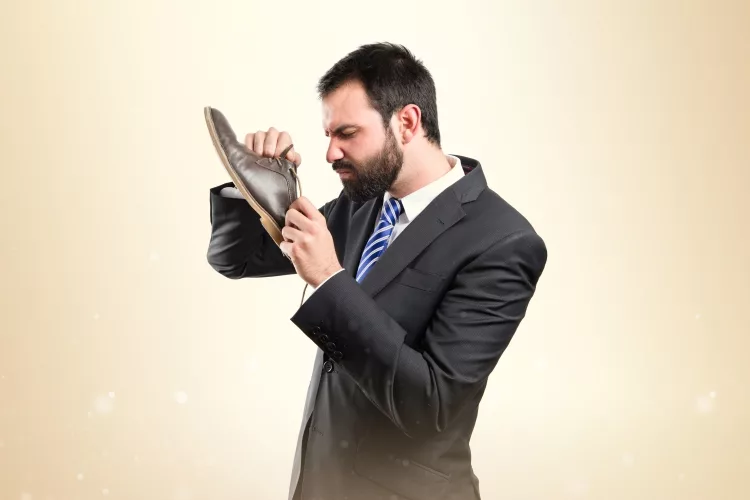
Shoe odor isn't just a nuisance — it's a signal that bacteria and moisture have colonized the interior of your footwear. Over time, that buildup breaks down the leather lining and shortens the life of boots you paid good money for. The method you choose should match how severe the odor is, what type of leather you're working with, and the conditions you face on the job every day.
Whether you're a construction worker peeling off steel-toes after a long shift or a warehouse associate on your feet all day, there's a method here that fits your situation. Let's dig in.
Contents
Why Leather Shoes Develop Odor
Before you can successfully remove odor from leather shoes for good, you need to understand what's actually causing it. The smell doesn't come from the leather itself — it comes from what grows inside when conditions are right.
The Bacteria Behind the Smell
Your feet sweat, and that moisture creates a warm, dark, nutrient-rich environment that bacteria love. The primary culprit is a group of skin-dwelling bacteria that feed on dead skin cells and produce isovaleric acid (a compound that smells distinctly like rancid cheese) as a metabolic byproduct. The more you sweat, the faster they multiply.
- Bacteria thrive at body temperature, roughly 98°F — exactly what's inside your boot all day
- A single shoe can harbor millions of bacteria after just a few wears without treatment
- Closed-toe leather shoes trap moisture far more effectively than open footwear styles
- Synthetic linings tend to accelerate bacterial growth compared to natural materials
- Wearing the same pair two days in a row without airing out dramatically speeds up odor development
How Leather Holds Onto Moisture
Leather is a porous material — it breathes, which is a good thing, but it also absorbs. The lining inside most work shoes is especially absorbent, and over time, sweat salts and bacteria become embedded deep in the material. Surface sprays and deodorizers only mask the smell temporarily because they never reach the embedded source.
- Full-grain leather absorbs sweat more slowly but holds odor deeply once it becomes saturated
- Leather linings are harder to clean thoroughly than synthetic alternatives
- Insoles act like dense sponges — they absorb the most moisture and are often the primary odor source
- The toe box traps heat and sweat and is frequently overlooked during cleaning
Why Work Boots Are a Bigger Challenge
Work boots are worn for longer hours in more demanding conditions than most other footwear. Heavy insulation, steel or composite toe caps, and waterproof membranes all reduce airflow inside the boot. During physical labor, your feet can produce up to half a pint of sweat per foot per day — that's a significant amount of moisture for any boot to manage.
If you're shopping for new footwear that manages heat and moisture better, check out our Boot Insulation Guide to understand how different insulation levels affect warmth and breathability — because the two are often in direct tension with each other.
- Heavily insulated boots trap heat and increase sweat output significantly
- Waterproof membranes keep water out but slow down moisture escape from the inside
- Composite and steel toes create heat pockets at the front of the boot
- Long shifts mean boots rarely get a full dry-out between uses
How to Remove Odor from Leather Shoes, Step by Step
This is the core process. Follow it in order and don't cut corners on the drying step — that's where most people go wrong and undo all their work.
Step 1 — Start with the Interior
- Remove the insoles first and set them aside — you'll treat them separately in the next step.
- Mix a solution of equal parts white vinegar and water in a small bowl or spray bottle.
- Dampen a clean cloth or sponge with the solution — don't soak it; you want it damp, not dripping.
- Wipe down the entire interior of the shoe thoroughly, including the toe box, heel cup, and sidewalls.
- Let the interior air out for 10–15 minutes. The vinegar smell fades completely as it dries — don't be put off by the initial scent.
- Sprinkle a generous layer of baking soda inside each shoe and let it sit for at least 8 hours. Overnight is better.
- Shake or vacuum out the baking soda completely before wearing — any residue can cause skin irritation over a long shift.
Step 2 — Target the Insole
The insole absorbs the largest concentration of sweat and is almost always the primary odor source. Give it its own dedicated treatment rather than just cleaning around it.
- Brush off any visible dirt, debris, or dried material from the surface.
- Scrub the top surface firmly with the vinegar-water solution using an old toothbrush or stiff-bristle brush.
- Rinse lightly with clean water if the insole is foam — don't saturate it or it will take days to dry fully.
- Sprinkle baking soda generously on both sides and allow it to sit for several hours minimum.
- If the odor is fully embedded and won't shift after two or three treatments, it's time to replace the insole entirely — no amount of cleaning will fix a fully saturated foam core.
Wearing the right work boot socks is one of the most underrated ways to reduce how much moisture reaches your insoles in the first place. Moisture-wicking materials pull sweat away from your skin and limit how much ends up soaking into the boot lining over a full shift.
Step 3 — Dry Everything Completely
This step matters more than any product you apply. Putting a damp shoe back into rotation restarts the bacterial growth cycle immediately and undoes your work.
- Never dry leather shoes with direct heat — no hair dryers, no radiators, no direct sunlight; heat cracks leather and weakens adhesives
- Stuff shoes loosely with crumpled newspaper or cedar shoe trees to absorb interior moisture and help the shoe hold its shape while drying
- Allow at least 24 hours of air drying in a well-ventilated area before wearing again
- If your job demands daily boot wear, rotating between two pairs is the single most effective habit you can build
The Best Products and Tools for the Job
You don't need a cabinet full of specialty products to remove odor from leather shoes effectively. Most of the best options are inexpensive, widely available, and genuinely work when used consistently.
Natural Options That Work
- Baking soda — absorbs moisture and neutralizes acid-based odor compounds. Best applied overnight and shaken out before wearing.
- White vinegar — kills bacteria on contact and breaks down odor-causing compounds. Always dilute 1:1 with water before applying to leather.
- Cedar shoe trees — absorb interior moisture, deodorize naturally via cedarwood oils, and maintain the shoe's shape while drying. A worthwhile long-term investment for any serious boot owner.
- Activated charcoal inserts — excellent passive odor absorbers that work continuously between wears. Drop a pair into each boot overnight and reuse for several months.
- Tea tree oil — a natural antibacterial and antifungal agent. Add 8–10 drops to a cup of water, dampen a cloth, and wipe the interior thoroughly.
- Rubbing alcohol (isopropyl) — kills bacteria quickly on contact with the insole surface. Safe for most leather interiors when used sparingly and allowed to dry completely.
Store-Bought Products Worth Trying
| Product Type | How It Works | Best For | Leather Safe? | Frequency |
|---|---|---|---|---|
| Antibacterial shoe spray | Kills surface bacteria on contact | Mild to moderate odor | Yes (most brands) | After each wear |
| Enzymatic spray (e.g., OdoBan, Zymox) | Breaks down odor-causing organic compounds | Stubborn, deep-set odor | Check label first | Weekly as needed |
| Activated charcoal inserts | Passively absorbs moisture and odor continuously | Daily maintenance | Yes | Every night |
| UV sanitizer device | Ultraviolet light kills bacteria without chemicals | Severe bacterial buildup | Yes | Weekly or as needed |
| Odor-control insoles | Combines cushioning with built-in odor management | Replacing worn-out insoles | Yes | Replace every 6 months |
| Leather conditioner | Restores natural oils after cleaning strips them | Post-treatment leather care | Yes | After every deep clean |
After any deep-cleaning treatment, always condition the exterior leather. Vinegar and most cleaners strip natural oils from the surface, which can cause cracking over time. Our comparison of boot oil vs. mink oil breaks down the differences so you can choose the right conditioner for your specific leather type and climate.
Maintaining a consistent polish and cleaning schedule also protects the leather from premature breakdown. Our guide on how often to polish shoes covers the right cadence depending on how hard you're working your boots and the conditions you work in.
What Different Workers Deal With on the Job
Not all shoe odor problems are the same. Your trade, shift length, and work environment all shape how severe the issue gets — and which solutions will actually hold up for you.
Physically Demanding Trades
Construction workers, roofers, landscapers, and other laborers sweat heavily during sustained physical output. Their boots tend to be heavier, more insulated, and less breathable than light-duty work footwear. The combination of high sweat volume and limited airflow creates ideal conditions for rapid bacterial growth.
- Prioritize boots with moisture-wicking mesh or leather linings when buying new
- Use antibacterial insoles as a first line of defense — replace them every four to six months
- Rotate between two pairs to allow each pair a full 24-hour dry-out between shifts
- Run the baking soda treatment every one to two weeks as a baseline habit
- Change socks at lunch if physical output is high — it meaningfully reduces moisture transfer to the boot lining
If foot fatigue is also an issue alongside odor, our roundup of the best work boots for sore feet covers options that prioritize both comfort and durability — two things that often correlate with better breathability as well.
Confined or Hot Work Environments
Welders, foundry workers, and anyone working near heat sources face extreme sweating conditions even without heavy physical exertion. High ambient temperatures accelerate bacterial growth inside the boot and drive sweat deeper into the leather lining faster than in normal conditions.
- Use tea tree oil or eucalyptus-based sprays after each shift — both have strong antibacterial properties
- Cedar shoe trees every single night, not just occasionally — the continuous moisture absorption makes a compounding difference
- UV sanitizer devices are worth the investment for workers at this level of daily sweat output
- Consider moisture-wicking liner socks worn under heavier outer socks to create a two-layer moisture barrier
Long Shifts in Waterproof Boots
Waterproof boots do an excellent job of keeping water out — but that same barrier keeps sweat in. If you're wearing waterproof footwear for 8 to 12 hours, interior moisture buildup is essentially unavoidable. Our review of the best waterproof boots for men covers options that balance weather protection with interior breathability, including models with ventilated membranes that handle moisture better than sealed constructions.
- Choose boots with breathable membranes (like GORE-TEX) over fully sealed waterproof constructions when you have the option
- Use activated charcoal inserts every night — they're especially effective in the slower-drying environment of a waterproof boot
- Remove and separately air out insoles after each shift — this accelerates drying significantly
- Don't skip the 24-hour rotation rule — waterproof boots hold interior moisture far longer than standard leather footwear
Quick Wins for Immediate Relief
Sometimes you need results before tomorrow morning — before a meeting, before an early shift, or simply before bringing your boots into the house. These methods won't replace a full treatment, but they'll give you meaningful relief fast.
Overnight Fixes
- Baking soda dump — pour a generous amount inside each shoe, leave overnight, shake out completely in the morning. Costs almost nothing and works reliably.
- Freeze method — place shoes in a sealed plastic bag and leave them in the freezer overnight. Cold temperatures kill odor-causing bacteria without damaging leather. Always thaw at room temperature — never with heat.
- Activated charcoal bags — drop a pouch inside each shoe before bed. They work passively and continuously, and most can be recharged in sunlight and reused for months.
- Dryer sheets — not a lasting fix, but effective for masking smell in a pinch. Stuff one or two inside each shoe overnight and remove before wearing.
- Newspaper stuffing — plain newspaper absorbs moisture well and is free. Replace it in the morning if still damp.
Between-Shift Fresheners
- Spray the interior lightly with a diluted tea tree oil solution (about 10 drops per cup of water) and let air-dry for 20 to 30 minutes before wearing
- Pull insoles out during your lunch break and lay them flat in a ventilated spot — even 30 minutes of airflow helps reduce moisture accumulation
- Keep a small container of baking soda in your work bag — a quick sprinkle during downtime adds up over a week of consistent use
- Spray the insole with rubbing alcohol, let dry for five minutes, then replace — it kills surface bacteria quickly without leaving moisture behind
Matching the Method to Your Situation
There's no universal fix for shoe odor. The right method depends on how severe the problem is, what type of leather your shoes are made from, and the demands of your daily routine.
Mild Smell vs. Stubborn Odor
Not every odor problem requires the same level of treatment. Matching your approach to the severity of the problem saves time and avoids over-treating leather unnecessarily.
- Mild odor (noticeable after wearing but fades when aired out): baking soda overnight, activated charcoal inserts, cedar shoe trees — low effort, high consistency
- Moderate odor (smell lingers even after airing out for several hours): vinegar treatment plus baking soda, antibacterial spray after each wear, fresh aftermarket insoles
- Severe odor (smell returns within hours of putting boots on): enzymatic cleaner, UV sanitizer, full insole replacement, and a serious look at whether the leather lining itself is beyond recovery
Full-Grain vs. Lined Leather
The type of leather in your shoes affects which treatments are safe and how well they penetrate to the odor source.
- Full-grain leather — vinegar is safe when diluted 1:1; always follow up with a leather conditioner to restore the oils that cleaning removes
- Suede or nubuck — avoid all liquid treatments; use only dry baking soda and cedar shoe trees to protect the nap
- Fabric-lined leather — the lining absorbs odor deeply; enzymatic sprays reach embedded compounds better than vinegar in this case
- Patent leather — minimal porosity means the exterior won't absorb odor; focus all treatment on the insole, which carries essentially all of the smell
If your boots need more than just odor treatment — including worn-down heels or sole separation — our boot heels repair guide walks through what you can handle yourself at home and when it makes more sense to see a cobbler.
When to Replace the Insole
Sometimes cleaning isn't enough, and continuing to treat a saturated insole is a waste of effort. If you've completed two or three full treatment cycles and the smell returns within a day or two of wearing, the insole is almost certainly the problem — and no cleaning product will fix a fully saturated foam core.
Clear signs it's time to replace rather than clean:
- Visible discoloration, staining, or visible grime across the surface that won't scrub off
- The foam has compressed flat with no cushioning or spring left
- Odor returns within a few hours of wearing even immediately after treatment
- The surface is cracking, peeling, or delaminating from the edges
Aftermarket insoles are inexpensive — often under $20 — and frequently better than the originals. Many feature built-in odor control, improved arch support, and added cushioning. If foot fatigue is also a factor, replacing the insole is one of the most cost-effective upgrades you can make to an existing pair of boots.
Frequently Asked Questions
Can I use baking soda directly inside leather shoes?
Yes. Baking soda is safe for most leather shoes when used correctly. Sprinkle a light-to-moderate layer inside the shoe, leave it overnight, then shake or vacuum it out before wearing. Avoid leaving it in wet shoes — the paste that forms when baking soda mixes with excess moisture can stain light-colored linings and is harder to remove.
How often should I treat my leather work boots for odor?
For heavy daily use, a light treatment with baking soda or activated charcoal every one to two weeks keeps odor under control. A deeper vinegar treatment once a month works well as a maintenance schedule for most workers. If the smell returns quickly after treatment, increase frequency or look at replacing the insoles — they may be beyond cleaning at that point.
Is white vinegar safe for all types of leather?
Diluted white vinegar (1:1 with water) is generally safe for full-grain and smooth leather. Avoid it on suede, nubuck, or patent leather — liquid treatments damage those surfaces. Always test in a small hidden area first, and always follow up with a leather conditioner to replace the natural oils that cleaning strips away.
Does freezing shoes actually remove odor?
Freezing kills odor-causing bacteria, which temporarily reduces the smell. It's not a permanent fix — bacteria will regrow once conditions become warm and moist again — but it's a useful overnight option when you need quick results without time for a full treatment. Always let shoes thaw at room temperature, never with direct heat, which can crack the leather.
Why do my work boots smell worse than regular shoes?
Work boots are typically more insulated, less breathable, and worn for significantly longer hours than casual footwear. Heavy physical labor also produces far more sweat than light activity. The combination of high heat, trapped moisture, and extended wear time creates ideal conditions for rapid bacterial growth inside the boot — far more aggressive than in a regular dress shoe or sneaker.
Can I put leather shoes in the washing machine to remove odor?
No. Machine washing will damage leather shoes — it causes surface cracking, warping of the structure, and can dissolve the adhesives holding the sole and upper together. Stick to hand-cleaning methods using a damp cloth, diluted vinegar solution, or a specialty leather cleaner. Never submerge leather shoes in water or use a high-heat dryer on them.
What's the most effective long-term strategy for preventing shoe odor?
Consistency matters more than any single product. Rotate between two pairs of boots so each pair gets a full 24-hour dry-out between wears. Wear moisture-wicking socks, remove insoles to air out after each shift, and use cedar shoe trees or activated charcoal inserts every night. Treating odor early — before it becomes severe — is dramatically easier than trying to reverse deep bacterial buildup later.
Final Thoughts
Getting rid of leather shoe odor takes consistency more than it takes expensive products — start with the vinegar and baking soda method tonight, invest in a pair of cedar shoe trees, and build the habit of rotating your boots and airing out insoles after every shift. When you're ready to take your boot maintenance further, head over to our boot care section for more practical guides on cleaning, conditioning, and protecting the footwear you rely on every day at work.


About James Miller
James Miller is a dedicated individual based in the vibrant city of San Francisco, CA, USA. His unwavering passion lies in the realm of construction, where he finds fulfillment in exploring and documenting various facets of construction equipment and processes. A graduate of the University of California Merced, James holds a dual degree in mechanical and electrical engineering, which has equipped him with a solid foundation in technical knowledge.With a keen eye for detail and a knack for articulation, James has channeled his enthusiasm into writing about the intricacies of construction gear and methodologies. His insightful writings offer valuable insights to both industry professionals and curious enthusiasts, shedding light on the machinery and techniques that shape the built environment.James Miller's educational background in mechanical and electrical engineering lends credibility to his work, allowing him to delve into the technical nuances of construction with precision. His passion for sharing knowledge and fostering understanding in the construction field is evident in his contributions, making him a respected voice in the industry.
Get FREE Boots Gifts now. Or latest free toolsets from our best collections.
Disable Ad block to get all the secrets. Once done, hit any button below