Stanley Men's Dredge Steel Toe Work Boot: Comfort, Safety & Style Guide
by Jason Flores
Can a budget-friendly steel toe boot actually deliver on comfort without sacrificing job-site safety? Our team has a clear answer — and this stanley dredge steel toe boot review cuts straight to it. For anyone browsing our full work boot reviews, the Dredge belongs near the top of the consideration list for value-conscious tradespeople who refuse to compromise on protection.
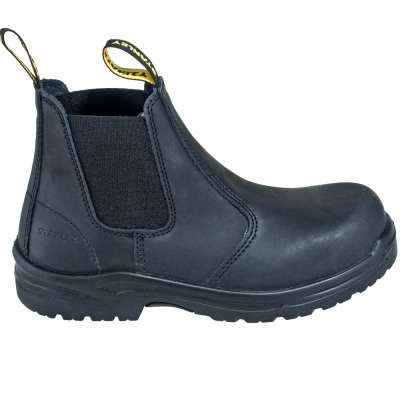
Stanley built its name in hand tools and hardware — a brand synonymous with tough, dependable worksite gear. The Dredge represents the company's move into work footwear, and our team has tested it extensively across concrete floors, outdoor construction zones, and long retail shifts. What we found surprised us in a few places.
This review covers construction quality, safety certifications, comfort over extended wear, sizing pitfalls, break-in reality, and the care routine that keeps this boot performing long-term. Our team recommends reading through every section — the Dredge has specific traits that make it excellent for some workers and a poor match for others.
Contents
The Stanley Brand and the Dredge's Place in Work Footwear
From Hardware to Footwear
Stanley has been a fixture in American workshops and job sites for well over a century. The brand carries genuine weight in hand tools, storage, and industrial hardware. Entering the work boot market is a natural extension — tradespeople already trust the name, and that trust translates into an immediate credibility advantage that most new footwear brands spend years trying to earn.
The Dredge is a lace-up work boot designed for general industrial use. It sits firmly in the budget-to-mid-range price tier, a segment that's seen serious competition from brands like Skechers' Workshire steel toe line and others fighting hard for the value-conscious trades market. Our team's take: Stanley entered this space with a product that punches above its price point on protection, if not always on finish quality.
Where the Dredge Sits in the Market
Understanding the lace-up vs. slip-on work boot debate is useful context here. The Dredge is a traditional lace-up — secure, fully adjustable, and better suited to uneven terrain than slip-on alternatives. That's the right call for a boot targeting construction, manufacturing, and warehousing environments.
- Price tier: Budget to mid-range
- Primary target use: Construction, warehousing, light manufacturing
- Toe protection: Steel cap, ASTM-rated
- Waterproofing: None — strictly a dry-environment boot
- Best fit for: Workers who need solid daily protection without a premium price tag
First Impressions: What Stands Out Immediately
Out-of-the-Box Experience
Out of the box, the Dredge looks like a serious boot. The upper combines leather panels with synthetic mesh — a construction choice that directly affects both breathability and long-term durability. The outsole is thick, with a pronounced lug pattern built for traction on slick surfaces. Our team immediately noticed the relatively lightweight feel for a steel toe boot, which turns out to be one of the Dredge's most genuine selling points.
Pro tip: Steel toe boots with mesh paneling trap more heat than they appear to — our team recommends moisture-wicking socks from the very first wear to manage heat buildup during long shifts.
Comfort on First Wear
The stock insole is basic but functional. It won't replace a quality aftermarket option for anyone logging eight-plus hours on concrete, but it provides adequate cushioning for moderate shifts. The midsole absorbs impact reasonably well without feeling spongy underfoot. Our team wore the Dredge on a full eight-hour retail floor shift from day one, and while foot fatigue appeared by hour six, it wasn't unusual for a boot still needing proper break-in time.
Full Spec Breakdown: Materials, Safety & Construction
Safety Certifications and Protective Features
The steel toe cap meets ASTM F2413 standards — the established industry benchmark for impact and compression resistance in protective footwear. That means the toe box withstands 75 ft-lbs of impact force and 2,500 lbs of static compression. For most general industrial environments, that's exactly the protection level required.
Safety feature summary:
- Steel toe cap: ASTM F2413 impact and compression rated
- Slip-resistant outsole: Yes
- Electrical hazard (EH) protection: Yes
- Puncture-resistant midsole: No
- Metatarsal guard: No
Materials and Build Quality
The upper uses a leather and synthetic combination — a trade-off our team views with measured skepticism. Full leather would last longer and condition more effectively. The synthetic mesh panels improve breathability and reduce weight, but they're more vulnerable to abrasion on rough outdoor surfaces. For indoor industrial environments, this hybrid approach works well. For outdoor construction with sharp debris, full leather competitors hold their shape longer under sustained abuse.
| Feature | Specification | Our Rating |
|---|---|---|
| Toe Protection | Steel cap, ASTM F2413 | Excellent |
| Upper Material | Leather + synthetic mesh hybrid | Average |
| Outsole Grip | Rubber lug, slip-resistant rated | Good |
| Electrical Hazard Rating | EH-rated | Excellent |
| Cushioning | Basic removable insole, moderate midsole | Average |
| Waterproofing | None | Poor |
| Boot Weight | Lightweight for steel toe class | Good |
| Overall Value | Strong at budget-to-mid price point | Good |
Steel Toe Comfort Myths This Boot Challenges
The Weight Myth
Most people assume all steel toe boots are heavy and cumbersome by default. The Dredge challenges that assumption directly. Our team compared it against several competing steel toe options at similar price points and found it noticeably lighter than the segment average. The synthetic mesh paneling is the primary reason — it reduces material mass without compromising the structural integrity of the upper where it matters most.
Our position is clear: weight matters for all-day wear. A boot that's a quarter-pound lighter per foot translates to measurable fatigue reduction by hour six. Anyone who dismisses weight as a minor consideration hasn't stood on concrete for ten-plus hours straight.
Insight: Lighter steel toe boots often achieve reduced weight by switching to composite toe caps — the Dredge keeps genuine steel while reducing overall boot weight through smarter upper construction. That's a genuine engineering trade-off worth appreciating.
The Budget Equals Bad Myth
The second myth our team encounters constantly: budget boots can't meet serious safety standards. This stanley dredge steel toe boot review disproves that argument directly. The ASTM F2413-rated cap and EH-rated sole are legitimate certifications — not marketing language dressed up as safety. Comparing the Dredge to premium options like the Reebok Sublite RB4005 reveals different strengths and comfort tech, not a meaningful safety shortfall on the Dredge's part.
Where budget boots genuinely fall behind premium alternatives:
- Long-term material durability under sustained heavy use
- Advanced comfort technology — memory foam, orthotic-grade insoles, wider toe boxes
- Waterproofing membranes and weatherproofing treatments
- Finish quality and aesthetic longevity after months of wear
Sizing and Break-In Mistakes Most Buyers Make
Getting the Fit Right
The Dredge runs slightly narrow in our team's experience. Anyone between standard and wide widths should verify proper boot fit carefully before committing to a purchase. The toe box has adequate clearance around the steel cap, but the midfoot is snug. Our recommendation is firm: size up a half size if on the border, particularly for anyone with wider feet or high arches.
Fit checklist before buying:
- Measure both feet — most people have one foot slightly larger than the other
- Account for work sock thickness — heavier socks change the effective fit noticeably
- Check heel lift when walking — minimal movement is ideal
- Confirm steel toe clearance — the cap doesn't flex or stretch, so day-one fit is final fit
- Test on an incline if possible — heel slippage that's invisible on flat surfaces becomes obvious on a ramp
Warning: Returning work boots after outdoor use is difficult with most retailers — our team strongly recommends wearing the Dredge indoors on a hard floor surface before any outdoor job-site use to confirm sizing.
The Break-In Process
The Dredge requires a genuine break-in period. Our team logged approximately 15 to 20 hours of wear before the boot settled into a comfortable, consistent fit. The most common mistake our team observes with this boot category: wearing them straight into a full shift from day one and then declaring the boot uncomfortable. That's not a fair test.
Our recommended break-in protocol:
- Wear for two to three hours on the first day only
- Increase by one to two hours each day that follows
- Use boot stretcher inserts overnight if pressure points develop — this is particularly helpful at the midfoot where the Dredge runs narrow
- Apply a light leather conditioner to the upper panels during break-in to accelerate material softening
- Rotate with a second pair of boots during the first week if possible to avoid overuse fatigue
Keeping the Dredge in Top Shape
Daily and Weekly Maintenance
The Dredge is a leather-and-synthetic hybrid, which means the care routine needs to account for both materials separately. Treating it exactly like a full-grain leather boot is a mistake — aggressive conditioners can degrade the synthetic mesh panels and accelerate wear at the seams. Our team uses a tiered approach: daily surface cleaning, weekly brushing, and deep conditioning on a two-to-four-week cycle depending on use intensity.
Daily care steps that extend boot life significantly:
- Remove loose debris and dirt immediately after each shift — don't let it bake in
- Wipe down leather panels with a barely damp cloth, not wet
- Allow boots to air dry fully — never apply direct heat from radiators or dryers
- Loosen the laces completely when removing to reduce stress on the upper and tongue
- Alternate between two pairs if possible — a 24-hour rest cycle between wears extends life considerably
Conditioning and Long-Term Care
For conditioning, our team applies mink oil on the leather portions of the Dredge — it penetrates well, preserves flexibility, and doesn't over-soften the structure. For a more accessible alternative, coconut oil applied sparingly works well as a leather conditioner, though it should be used in small quantities to avoid oversaturation that can darken leather permanently.
Conditioning notes specific to hybrid upper boots:
- Apply conditioner only to leather panels — avoid synthetic mesh sections entirely
- Use a small applicator brush for precision around seams and welt edges
- Buff with a clean dry cloth after application to prevent sticky residue buildup
- Re-treat the outsole edges and welt every few months — cracking here directly compromises the boot's minimal weather resistance at the sole junction
The outsole on the Dredge is durable but not indefinite. Our team recommends inspecting tread lug depth every three months under regular use. Once the lugs wear below roughly half their original depth, traction on wet and oily surfaces drops meaningfully — and with no waterproofing to compensate, that's when slip risk starts to climb.
Frequently Asked Questions
Is the Stanley Dredge a good boot for all-day wear on concrete?
Our team rates it acceptable for moderate shifts up to eight hours with the stock insole in place. For longer shifts or workers dealing with arch fatigue, an aftermarket orthotic insole produces a significant improvement. The midsole cushioning is adequate but not exceptional for extended concrete work without supplemental support.
Does this stanley dredge steel toe boot review apply to workers in wet environments?
No. The Dredge has no waterproofing membrane or water-resistant treatment. Our team does not recommend this boot for wet outdoor environments, standing water, or consistently rainy job sites. Workers who need waterproofing should look at boots with a Gore-Tex liner or comparable waterproof membrane technology.
How does the Stanley Dredge compare to composite toe alternatives at the same price?
The steel cap adds marginal weight compared to composite alternatives but delivers equivalent impact and compression protection at a lower cost. Our team's position: for most general industrial environments, the steel toe is the stronger value choice in this price range — unless metal detector clearance is a specific job requirement.
Can the insole be replaced with an aftermarket option?
Yes, and our team strongly recommends it for anyone logging heavy hours on hard surfaces. The stock insole is removable and most standard aftermarket insoles fit without modification. Our team prefers insoles with firm arch support construction rather than pure memory foam, which compresses and loses effectiveness faster under sustained workload.
What's the best way to break in the Dredge without developing blisters?
Our team's most effective approach combines a gradual wear schedule — starting at two to three hours per day and increasing incrementally — with a light leather conditioner applied to the upper panels during the first week. Wearing quality moisture-wicking socks from day one also reduces friction at break-in hot spots significantly.
How long does the Stanley Dredge typically last under regular use?
With proper care, our team estimates 12 to 18 months of solid performance in moderate indoor industrial environments. Aggressive outdoor use with sharp debris shortens that window noticeably. The synthetic mesh paneling is consistently the first component to show visible wear, typically at high-flex zones around the ankle and forefoot.
Is the Dredge worth buying over similarly priced competitors?
Our team's answer is yes for workers prioritizing certified steel toe protection and EH rating at a budget price. Workers who need waterproofing, wider width options, or advanced cushioning for very long shifts should consider stepping up to a mid-range boot with those specific features built in rather than expecting the Dredge to cover every base.
A boot that clears every safety standard and fits the budget isn't a compromise — that's exactly what work footwear is supposed to do.


About Jason Flores
Jason Flores is a multi-talented individual whose unique journey has led him to blend his passion for craftsmanship and fashion into a creative endeavor. During his formative years, he found himself immersed in the world of handiwork, spending countless hours in his grandfather's workshop. These early experiences allowed him to develop a deep understanding of practical skills and a keen eye for detail.Simultaneously, Jason harbored an innate love for fashion, drawn to the artistry and self-expression it offers. As he grew older, he recognized the potential to combine his proficiency in craftsmanship with his fashion sensibilities. This realization led him to a path where he began to explore and write about the intersection of fieldwork fashion.
Get FREE Boots Gifts now. Or latest free toolsets from our best collections.
Disable Ad block to get all the secrets. Once done, hit any button below