Over 40 million Americans work in physically demanding jobs where foot injuries are a daily risk — and foot protection violations are among the most cited OSHA safety failures year after year. Understanding the different types of boots available before you buy is one of the most practical decisions you can make for your long-term safety and on-the-job comfort. Whether you are just starting a trade or rethinking your current setup, our boot tips and guides offer deeper coverage on specific styles, care routines, and safety standards.
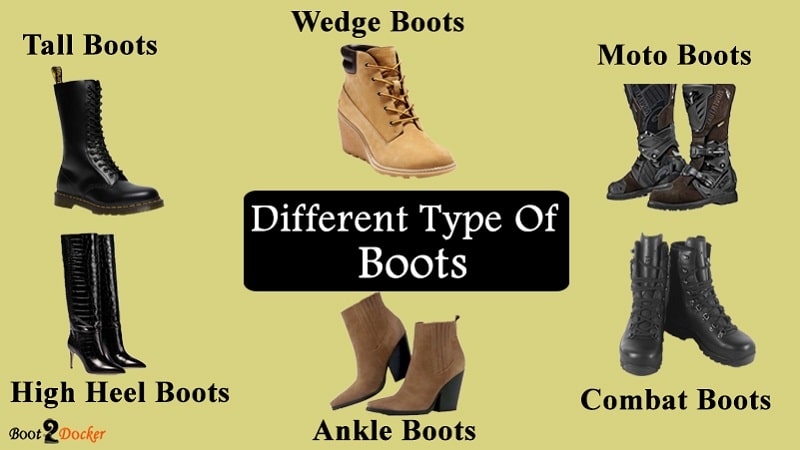
Boot design did not evolve from fashion. It came from necessity. Loggers needed ankle support on uneven terrain. Steel workers needed metatarsal protection. Soldiers needed lightweight boots that could handle rough ground fast. Every major boot style you see today traces back to a specific set of working demands. The challenge now is making sense of dozens of overlapping options on the market.
This guide walks you through the major boot categories, helps you match the right type to your job, compares entry-level to professional-grade options, and gives you a long-term strategy for maintaining your investment. Use the table of contents to jump straight to the section most relevant to you.
Contents
Understanding Boot Design: Where It All Started
Boot styles are not arbitrary. Each one solved a real problem for a real group of workers. Understanding that history helps you cut through marketing language and identify what a boot was actually built to do.
How Work Requirements Shaped Boot Styles
- Loggers and linemen needed tall lace-up boots with aggressive outsoles to grip uneven, muddy terrain and climb wooden poles.
- Steel and iron workers needed metatarsal guards, heat-resistant soles, and heavy toe protection against falling materials.
- Military and law enforcement needed lightweight ankle support for fast movement over varied ground — which gave rise to the modern tactical boot.
- Cowboys and ranchers needed a stacked heel to lock into stirrups and a tall shaft for snake and brush protection — the Western boot.
- Desert soldiers and travelers developed the low-profile suede chukka and desert boot for hot, dry climates where a heavy boot became a liability.
That legacy is why a chukka and a desert boot look so different from a steel-toe work boot — they were solving completely different problems for completely different environments.
The Core Boot Categories You Need to Know
At the broadest level, boots fall into five families:
- Work boots — Safety-rated, heavy-duty, built for construction, manufacturing, and trades
- Cowboy and Western boots — Tall shaft, stacked heel, slip-on design for equestrian and ranch work
- Tactical and military boots — Lightweight, fast-lacing, designed for law enforcement and field use
- Hiking and hunting boots — Waterproof, high ankle support, aggressive traction for outdoor terrain
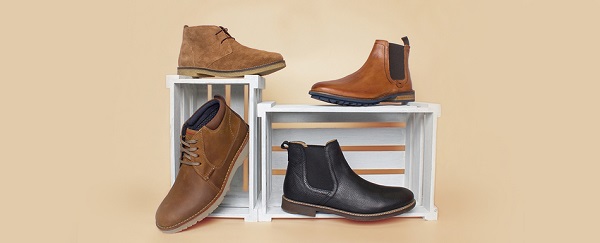
- Casual boots — Chelsea, chukka, and similar low-profile styles for everyday wear without heavy safety features
Knowing which family a boot belongs to immediately narrows your search and tells you what that boot was optimized to do.
Matching Different Types of Boots to Your Job
The most common boot-buying mistake is choosing based on appearance rather than function. Your job site dictates your boot requirements, and no single boot type works everywhere. Getting this right protects you and saves money over the long run.
Construction and Heavy Industry
If you work in construction, steel fabrication, roofing, or oil and gas, your priority list should look like this:
- Safety toe — steel, composite, or alloy (more on those differences in the safety features section below)
- Electrical hazard (EH) rating — protects against open-circuit electrical shock
- Puncture-resistant midsole plate — guards against nails, rebar, and sharp debris
- Oil-and-slip-resistant outsole — critical on wet surfaces and around lubricants
- Ankle support — 6-inch or 8-inch shaft for stability on uneven terrain
For a rugged, proven option in this category, the Danner Men's Bull Run Work Boot delivers the combination of durability and all-day comfort that demanding job sites require.
Trades and Skilled Work
Electricians, plumbers, HVAC technicians, and finish carpenters often move between job sites and shop environments. Your needs are slightly different from heavy-construction workers:
- Comfort for long shifts on concrete floors
- EH rating for electrical work situations
- Lighter overall weight than full construction boots
- Flexible sole for climbing ladders and sustained kneeling
- A trim profile that fits through tight crawl spaces and under equipment
Outdoor and Hunting Boots
Hunting and outdoor work boots solve a different problem set: weather, terrain, and extended wear far from a supply store. Key features to look for include:
- Waterproof membrane (Gore-Tex or a proprietary equivalent) to keep feet dry in wet ground conditions
- Insulation rating matched to your typical temperature range — 200g for mild climates, 800g–1200g for cold-weather use
- Aggressive lug outsole engineered for mud, loose rock, and uneven terrain
- Correct fit for field use — boots that fit fine in a store can become a problem after hours on uneven ground
Read our breakdown on how hunting boots should fit before you commit to a pair, especially if you plan to wear them over heavy wool socks or aftermarket insoles.
| Boot Type | Best For | Key Feature | Typical Shaft Height | Safety Rating |
|---|---|---|---|---|
| Heavy work boot | Construction, manufacturing | Safety toe + EH rating | 6–8 inch | ASTM F2413 |
| Tactical/military boot | Law enforcement, security | Lightweight, fast-lace | 6–8 inch | Varies |
| Western/cowboy boot | Ranch, equestrian | Stacked heel, tall shaft | 10–12 inch | None standard |
| Hunting/hiking boot | Outdoor, field work | Waterproofing + insulation | 6–10 inch | None standard |
| Chelsea/chukka boot | Casual, light daily wear | Low profile, slip-on | 3–5 inch | None |
| Logger boot | Logging, forestry | Caulked outsole, tall lace-up | 10–16 inch | ASTM varies |
Entry-Level vs. Professional-Grade Work Boots
Price is a real factor. But it matters differently depending on how many hours per day you wear your boots and how hazardous your environment is. Buying cheap once often means buying twice — or dealing with the physical consequences of poor support.
What You Get at Each Price Point
Budget boots ($50–$100) typically offer:
- Basic safety-toe certification, often composite
- Minimal cushioning with little to no orthotic support
- Synthetic or split-grain leather uppers that wear out faster
- 6–12 months of lifespan under heavy daily use
Mid-range boots ($100–$200) add:
- Better leather quality — often full-grain or nubuck
- More reliable waterproofing with sealed seams
- Proper insole support that reduces fatigue on long shifts
- 1–2 year lifespan with basic care
Professional-grade boots ($200+) deliver:
- Full-grain leather or premium engineered uppers
- Goodyear welt or direct-attach construction that allows resoling
- Superior midsole cushioning and arch support built to last
- 3–5+ years of service life with consistent maintenance
When to Upgrade Your Boots
If you spend 8–10 hours a day on your feet, a $70 boot is almost always a false economy — the cost-per-wear of a quality $200 pair is often lower once you factor in replacement frequency and the physical toll of inadequate support.
Watch for these signs that your current boots have run their course:
- Knee, hip, or lower back pain that worsens after a shift
- Midsole compression — press your thumb in; if it barely rebounds, the cushioning is gone
- Outsole worn smooth in high-contact zones like the heel and forefoot
- Water leaking through areas marketed as waterproof
- The boot no longer holds its shape around the heel or ankle collar
How to Choose the Right Boot Every Time
Good boot buying comes down to three fundamentals: fit, material, and certification. Get any one of these wrong and the other two stop mattering. Here is how to approach each one systematically.
Fit and Sizing Fundamentals
- Measure both feet — most people have one foot slightly larger; always fit to the larger one
- Shop in the afternoon — feet swell during the day, so afternoon sizing reflects your working foot more accurately
- Check toe box clearance — your longest toe should have at least a thumb's width of space at the front
- Try boots with your work socks — a boot that fits with dress socks may be too tight with thick work socks
- Test heel slippage — a small amount of heel lift when new is normal; excessive movement signals the wrong last shape for your foot
Even the right-sized boot needs a break-in period. Read our guide on how to break in work boots to manage the first few weeks without blisters or pressure points.
Material and Sole Considerations
Upper material affects durability, breathability, and maintenance requirements:
- Full-grain leather — the most durable option; molds to your foot over time; resole-able; requires conditioning
- Nubuck leather — soft and breathable; less naturally water-resistant than full-grain; needs protective treatment
- Split-grain leather — lighter and more affordable; less durable under sustained heavy use
- Synthetic uppers — lightweight and often vegan-friendly; typically shorter service life
For outsoles, the main options are:
- Rubber — best overall traction and durability across temperature ranges
- Polyurethane (PU) — lighter than rubber, good chemical resistance, but can crack in sustained cold
- TPU (thermoplastic polyurethane) — very stiff and abrasion-resistant; common in heavy industrial boots
Safety Features That Set Work Boots Apart
Not every boot on the market meets occupational safety standards. Always verify ASTM or ANSI certification before purchasing boots for a hazardous work environment. According to the Occupational Safety and Health Administration (OSHA), employers in many industries are required to provide or mandate appropriate foot protection — and that starts with knowing what certifications to look for.
Toe Protection Options
Toe protection is the first certification most people look at. Here is how the options break down:
- Steel toe — the original standard; heavy, but highly resistant to both compression and impact loads; not EH-safe since it conducts electricity
- Composite toe — no metal, so it passes through security checkpoints and stays warmer in extreme cold; slightly bulkier profile than steel
- Alloy toe — thinner profile than steel with similar protection levels; a good middle ground for trades where a slim toe box matters
- Soft toe — no safety rating; appropriate only for non-hazardous work environments
Our detailed comparison of composite toe vs. steel toe walks through the tradeoffs for specific trades and environmental conditions.
Slip Resistance, EH Rating, and More
Beyond the toe, look for these ratings depending on your environment:
- SR (Slip Resistant) — tested against oil and water contamination; look for ASTM F2913 compliance
- EH (Electrical Hazard) — insulates against open circuits up to 600V; governed by ASTM F2412/F2413
- PR (Puncture Resistant) — steel or composite midsole plate; protects against nail and debris penetration
- MT (Metatarsal Guard) — protects the long bones across the top of the foot; available in internal and external designs
- WP (Waterproof) — sealed seam construction with a membrane; not the same as water-resistant, which is a much lower standard

Building a Boot Collection That Lasts
The smartest long-term strategy is not to find one perfect boot and wear it until it falls apart. It is to build a small rotation of two or three pairs matched to your specific work situations. Rotating boots extends each pair's lifespan by giving the foam midsole time to decompress overnight and allowing leather uppers to dry fully between wears — both of which dramatically reduce premature breakdown.
Maintaining Your Investment
Leather boots need consistent care to hold up through tough conditions. Here is a basic maintenance schedule:
- After every wear — knock off dirt and debris with a stiff brush before it works into the leather grain
- Weekly — wipe down with a slightly damp cloth and inspect for new wear spots, cracking, or delamination
- Monthly — condition the leather to keep it supple and prevent stress cracks; our guide on how to condition leather covers the right products and technique for different leather types
- Every 3–6 months — deep clean and apply a fresh waterproofing treatment; see how to clean leather boots for a complete step-by-step process
- Annually — evaluate outsole wear depth and consider resoling before the upper is compromised by uneven ground contact
When to Repair vs. Replace
Some boots are worth repairing. Others are not. A few key factors help you decide:
- Construction type — Goodyear welt and Norwegian welt boots can be resoled multiple times; cemented (glued) construction generally cannot be resoled economically
- Upper condition — cracked leather across flex points, delaminating overlays, or blown-out heel counters are typically signs of full replacement
- Heel wear — moderate heel wear, especially on leather-soled dress or Western boots, is often worth repairing rather than replacing the whole boot
- Cost comparison — resoling typically runs $60–$120 depending on the cobbler and sole material; if a comparable new pair costs only slightly more, the math may not favor repair
- Safety certification status — once the outsole or midsole of a safety-rated boot is compromised, no repair restores its original certification rating
Frequently Asked Questions
What are the main different types of boots for work?
The main categories include steel-toe and composite-toe work boots, tactical and military boots, cowboy and Western boots, hunting and hiking boots, and casual styles like Chelsea and chukka boots. Each type was engineered for a specific set of physical demands and environmental conditions, so the right choice depends on where and how you work.
How do I know which boot type is right for my specific job?
Start with your job's hazards — identify whether you need a safety-toe rating, electrical hazard protection, puncture resistance, or waterproofing. Then consider your terrain, climate, and shift length. Match the boot to your primary work environment first, and secondary comfort preferences second. If you are unsure, check your employer's PPE requirements and your industry's applicable ASTM standards.
How long should a quality pair of work boots last?
A quality work boot in the $150–$250 range, worn daily and properly maintained, should last 1.5 to 3 years. Professional-grade Goodyear welt boots can last significantly longer if resoled periodically. Budget boots under $100 typically hold up for 6–12 months under heavy daily use before cushioning and structural support begin to break down.
Next Steps
- Write down the specific safety certifications your work environment requires — check OSHA guidelines or your employer's PPE policy if you are unsure — then narrow your boot search to only ASTM-rated options that meet those specs.
- Measure both of your feet in the afternoon while wearing your typical work socks, and use the larger measurement as your sizing baseline before you shop.
- Use the boot type comparison table in this guide to match your job category to the right boot family, then shortlist two or three models in your price range.
- Read targeted expert reviews for the models you are considering — detailed breakdowns like the Danner Bull Run review reveal real-world performance that spec sheets miss.
- Set a recurring reminder to condition and clean your new boots within the first week of wear and monthly after that — starting your maintenance routine early extends the life of the boot significantly and protects your investment from day one.


About James Miller
James Miller is a dedicated individual based in the vibrant city of San Francisco, CA, USA. His unwavering passion lies in the realm of construction, where he finds fulfillment in exploring and documenting various facets of construction equipment and processes. A graduate of the University of California Merced, James holds a dual degree in mechanical and electrical engineering, which has equipped him with a solid foundation in technical knowledge.With a keen eye for detail and a knack for articulation, James has channeled his enthusiasm into writing about the intricacies of construction gear and methodologies. His insightful writings offer valuable insights to both industry professionals and curious enthusiasts, shedding light on the machinery and techniques that shape the built environment.James Miller's educational background in mechanical and electrical engineering lends credibility to his work, allowing him to delve into the technical nuances of construction with precision. His passion for sharing knowledge and fostering understanding in the construction field is evident in his contributions, making him a respected voice in the industry.
Get FREE Boots Gifts now. Or latest free toolsets from our best collections.
Disable Ad block to get all the secrets. Once done, hit any button below