According to the U.S. Bureau of Labor Statistics, foot injuries account for nearly 60,000 lost-workday cases annually in the United States — and the right boot is one of the most direct ways to avoid becoming part of that number. Our complete Danner Bull Run work boot review draws from extended on-site testing across multiple trade environments, and we rate this boot among the most honest performers in the premium leather work boot category. Anyone researching quality footwear will find our full catalog of boot reviews a useful starting point — but the Bull Run deserves its own careful look.
Danner has manufactured boots in Portland, Oregon since 1932. The Bull Run is part of their heritage collection — a Goodyear welt construction boot with a full-grain leather upper and a Vibram 4014 outsole. It is resolable, repairable, and built to outlast cheaper alternatives by years. Our team tested both the plain toe and moc toe variants across construction sites, warehouse floors, and extended outdoor shifts to put together a thorough, honest assessment.
The boot comes in D and EE widths with several color options. It is a soft-toe design, which positions it differently from steel or composite toe alternatives. For most tradespeople who don't work in environments requiring ANSI-rated toe protection, this is a legitimate daily driver that prioritizes comfort without sacrificing durability.
Contents
- What Makes the Danner Bull Run Built Different
- Danner Bull Run Work Boot Review: Real Job Site Performance
- Getting Through the Break-In Period
- Keeping the Bull Run in Peak Condition Long-Term
- Matching the Bull Run to the Right Worker
- Common Bull Run Myths Our Team Keeps Hearing
- Frequently Asked Questions
What Makes the Danner Bull Run Built Different
Upper, Leather, and Welt Construction
The Bull Run uses full-grain leather — the densest, most durable cut from the hide. It resists moisture, scuffs, and surface wear at a level that corrected-grain or split-grain leathers cannot match. Goodyear welt construction bonds the upper to the outsole through a stitched welt, which means the boot can be resoled rather than discarded when the outsole wears down. That single detail separates the Bull Run from boots that look similar on a shelf but are engineered to be replaced.
Key construction details worth knowing:
- Full-grain leather upper in tan or brown depending on the variant
- Goodyear welt for long-term resolability
- Recessed heel for ladder safety
- 360° stitchdown construction on select variants
- Mesh lining for breathability on long shifts
Outsole, Midsole, and Shank
The Vibram 4014 outsole is oil- and slip-resistant, with a lug pattern designed for mixed-surface traction. A non-metallic shank provides torsional stability without adding weight, and the removable OrthoLite footbed gives a reasonable baseline of underfoot cushioning. The underfoot platform strikes a deliberate balance between ground feel and impact absorption — more considered than most boots at this price tier.
| Feature | Specification |
|---|---|
| Upper Material | Full-grain leather |
| Construction | Goodyear welt / stitchdown |
| Outsole | Vibram 4014 |
| Shank | Non-metallic |
| Footbed | Removable OrthoLite |
| Toe Style | Soft toe (plain or moc) |
| EH Rating | ASTM F2892 compliant |
| Available Widths | D (standard), EE (wide) |
| Approx. Weight | ~1.6 lbs per boot |
Danner Bull Run Work Boot Review: Real Job Site Performance
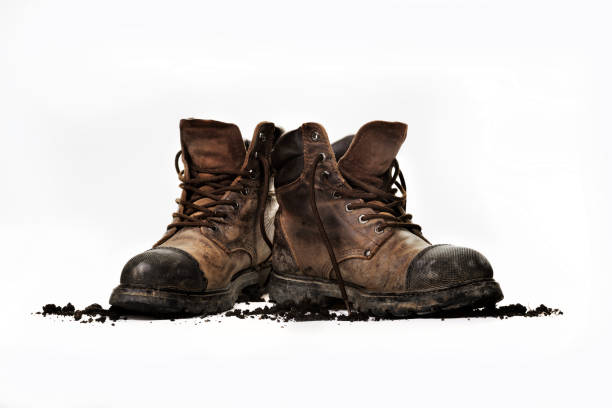
Traction and Stability
On concrete, gravel, wet pavement, and packed soil, the Vibram 4014 outsole delivers consistent grip. Our team found no slippage on wet warehouse floors or oil-contaminated concrete — environments where cheaper outsoles fail quickly. The recessed heel also makes ladder work noticeably safer, which matters in construction, electrical, and HVAC trades where climbing is routine. Workers who spend hours on scaffolding or loose gravel feel the difference the shank makes on uneven terrain.
All-Day Comfort and Support
Most people expect a stiff, punishing break-in from any boot built this way. The Bull Run challenges that expectation. After the leather conforms to foot shape, the OrthoLite footbed provides solid arch and heel support through shifts running 10–12 hours. Our team recommends pairing it with an aftermarket insole for workers managing flat feet or plantar fasciitis — the stock footbed is good, not exceptional, and most people get noticeably more mileage from an upgrade.
Getting Through the Break-In Period
What to Expect the First Week
The Bull Run is stiff out of the box. That is not a flaw — it is a direct consequence of full-grain leather and welt construction. Most people need 40–80 hours of wear before the leather fully conforms to foot shape. Heel rubbing and forefoot tightness during the first two weeks are normal and resolve on their own. Our team advises against wearing brand-new Bull Runs through a full 12-hour shift on day one. Introduce them gradually — short sessions first, then progressively longer wear periods. Our guide on how to break in work boots covers the full process for leather boots like this one.
Break-In Strategies That Work
- Wear thick wool socks during break-in to expand the leather gradually
- Apply a leather conditioner after the first few wears to soften stiff areas
- Flex the boot by hand before wearing to loosen the toe box
- Avoid soaking the leather as a break-in shortcut — it can compromise the welt bond
- Target the heel counter specifically if rubbing is the primary complaint
Keeping the Bull Run in Peak Condition Long-Term
Conditioning and Cleaning the Leather
Full-grain leather needs regular conditioning to prevent cracking and maintain its natural water resistance. Our team recommends conditioning the Bull Run every 3–4 months under normal use — more frequently in wet climates or arid environments that dry leather out quickly. Removing dirt before conditioning is essential since abrasive particles break down leather fibers from the surface inward. Our detailed guide on how to condition leather applies directly to the Bull Run's full-grain upper and is worth reading before starting a maintenance routine.
Pro tip: Apply conditioner to a clean, slightly damp leather surface — the moisture opens the pores and allows deeper penetration than applying to bone-dry leather.
A damp cloth for daily wipe-downs combined with a dedicated leather cleaner for weekly maintenance keeps the upper in peak condition through years of hard use.
When to Resole
Goodyear welt construction makes the Bull Run resolvable — and this is where the boot's total cost of ownership becomes genuinely compelling. A quality resole extends boot life by several additional years at a fraction of the replacement cost. Our team watches for lug wear past 50%, heel platform compression, or any visible separation at the welt as the signal to schedule a cobbler appointment. Danner also operates a factory resole program that maintains original construction integrity.
Matching the Bull Run to the Right Worker
Which Trades Benefit Most
The Bull Run performs best for trades where all-day walking, ladder climbing, and mixed-surface work are the norm. Our team has seen it excel consistently in the following environments:
- General construction and finish carpentry
- Electrical and HVAC work — EH-rated, no metal shank to interfere with tools
- Landscaping and outdoor property maintenance
- Light manufacturing and warehouse operations
- Trades requiring a work boot that also looks professional
It is less suited for environments requiring ANSI-rated toe protection, heavy-impact hazard zones, or chemical exposure situations where the leather degrades rapidly.
Toe Protection Considerations
The Bull Run is a soft-toe boot. For anyone working in environments with falling object risks or explicit regulatory requirements, a toe-capped alternative is the better fit. Our comparison of composite toe vs. steel toe boots breaks down which protection standard applies to which work environment — worth reading before deciding whether the Bull Run clears job-site requirements.
Common Bull Run Myths Our Team Keeps Hearing
Myth: These Boots Are Too Stiff to Work In
The stiffness complaint almost always comes from workers who wore the boot through a full day before it was broken in. Full-grain leather and Goodyear welt construction require a conditioning period — that is inherent to the material. After 40–80 hours of graduated wear, the Bull Run becomes one of the more comfortable boots in daily rotation. Stiffness is temporary. The durability it enables is not. Every quality leather work boot requires this tradeoff.
Myth: The Price Doesn't Hold Up
At its retail price, the Bull Run costs more than entry-level work boots. The math changes when accounting for longevity. A resolable, Goodyear-welt boot that lasts five to seven years with proper care outperforms two or three cheaper boots replaced over the same period — in both total cost and foot health outcomes. Our team consistently finds that premium boots like the Danner Bull Run represent stronger long-term value for workers who spend eight or more hours daily on their feet.
Frequently Asked Questions
Is the Danner Bull Run waterproof?
The Bull Run is not marketed as a waterproof boot. The full-grain leather carries natural water resistance that improves with regular conditioning, but it is not a waterproof-membrane-lined design. Workers in consistently wet environments should consider Danner's waterproof-lined alternatives or treat the Bull Run with a quality wax-based waterproofing product as part of their maintenance routine.
Does the Danner Bull Run have a steel toe?
No. The Bull Run is a soft-toe boot and does not carry ANSI or ASTM toe impact protection ratings. Workers in environments where toe protection is required by regulation or job-site policy need to look at a separate model with a steel or composite toe cap.
How long does it take to break in the Danner Bull Run?
Most people complete the break-in process between 40 and 80 hours of wear. The timeline depends on how frequently the boot is worn and how consistent the conditioning routine is. Graduated wear sessions spread across two to three weeks is the recommended approach — one marathon day in stiff leather causes more problems than it solves.
Can the Danner Bull Run be resoled?
Yes. Goodyear welt construction makes the Bull Run fully resolable. Danner offers a factory resole program, and most skilled cobbler shops can handle the Vibram 4014 outsole replacement without issue. Resoling is the single most cost-effective way to extend the life of this boot by years.
What is the difference between the plain toe and moc toe versions?
The plain toe variant has a clean, uninterrupted vamp and reads as slightly more formal. The moc toe features a decorative stitched seam across the toe box, which is a classic work boot aesthetic that many tradespeople prefer. Construction and materials are identical between the two — the choice is purely one of visual preference.
Is the Danner Bull Run a good fit for wide feet?
Yes. The Bull Run is available in EE (wide) width, which accommodates wider feet well. The moc toe variant also has a slightly roomier toe box than the plain toe, which some people with wider forefeet prefer even in the standard D width. Our team recommends trying both widths if possible before committing.
How should the Danner Bull Run fit at the time of purchase?
Our team recommends sizing so there is roughly a thumb's width of space at the toe. The leather conforms to foot shape over time but does not expand dramatically in width. Anyone between sizes generally does better sizing up rather than down in Goodyear welt boots — a snug fit compounds during long shifts in ways that are difficult to reverse.
Is the Danner Bull Run worth it for light or casual use?
For occasional wear, the price-to-use ratio is lower than for daily trade use. The Bull Run shines under sustained high-demand conditions where its construction quality translates into measurable durability. Casual users who value longevity and heritage craftsmanship still get strong value — the boot is built to last regardless of how frequently it sees use.
A boot that outlasts three cheaper alternatives is not an indulgence — it is the most practical decision most workers ever make for their feet.


About Jason Flores
Jason Flores is a multi-talented individual whose unique journey has led him to blend his passion for craftsmanship and fashion into a creative endeavor. During his formative years, he found himself immersed in the world of handiwork, spending countless hours in his grandfather's workshop. These early experiences allowed him to develop a deep understanding of practical skills and a keen eye for detail.Simultaneously, Jason harbored an innate love for fashion, drawn to the artistry and self-expression it offers. As he grew older, he recognized the potential to combine his proficiency in craftsmanship with his fashion sensibilities. This realization led him to a path where he began to explore and write about the intersection of fieldwork fashion.
Get FREE Boots Gifts now. Or latest free toolsets from our best collections.
Disable Ad block to get all the secrets. Once done, hit any button below